GTRI’s reported objection is that India should not introduce a merchant discount rate (MDR) on UPI simply to address US trade complaints—not that the available reporting confirms it demanded withdrawal of the announced framework. The call for an independent audit appears in coverage of a separate Supreme Court petition, not as an established GTRI position. The distinction matters for merchants and users: the Ministry of Finance’s September 15, 2026 framework describes fees for some merchant transactions, while saying person-to-person payments remain free and customers should not be charged MDR.
What GTRI said—and what the reports do not establish
PTI coverage published August 6 and 7, 2026, reported that the Global Trade Research Initiative (GTRI) urged India to preserve its policy autonomy and not change UPI policy under US pressure. GTRI founder Ajay Srivastava was quoted saying: “India must not rewrite its UPI policies under US pressure. It must defend competition, policy autonomy and the long-term sustainability of its payments ecosystem,” Moneycontrol/PTI, August 6.
In the same coverage, Srivastava said: “India should not introduce MDR simply to address US trade complaints or protect the profits of Visa, Mastercard and other foreign payment companies,” Moneycontrol/PTI, August 6. This is GTRI’s reported argument about the rationale for MDR. It does not establish that US pressure caused the government’s decision; the Finance Ministry rejected the claim that the change was made under external pressure.
GTRI reportedly accepted that UPI may need a sustainable funding model, while arguing that a general merchant fee is not the only way to fund it. Alternatives it cited included targeted budgetary support or government incentives, charges on large commercial transactions, cross-subsidies from financial services, and narrowly targeted fees for high-turnover merchants. GTRI also argued for retaining payment-data localisation rules, citing fraud investigation, cybersecurity and national security. These are GTRI’s proposals and reasoning, not independently verified findings about the system’s costs or the effects of localisation. Economic Times/PTI, August 7
Do these 3 things before closing this tab:
1Repair Windows errors before they cause bigger problems2Scan for outdated or missing drivers - takes under a minute3Clear out junk files and repair common Windows errors#1 Best Overall

- Use the, easy-to-use, and customizable POS to get started.
- Accept contactless payments, chip cards, Apple Pay, and Google Pay from anywhere, with improved connectivity, extended battery life, and enhanced security. Pay one low rate for every tap or dip.
- No long-term commitments or contracts, no monthly fees- and with offline payments, keep taking payments for up to 24 hours.
- Safely and securely accepts payments anywhere. Plus, get data security, 24/7 fraud prevention, and payment-dispute management at no extra cost.
- Use the, easy-to-use, and customizable POS to get started.
The available reporting does not confirm that GTRI separately demanded withdrawal of the September framework. Nor does it support attributing the independent-audit request to GTRI.
What the Finance Ministry’s framework says
The Ministry first described the legislative change on August 8, 2026, as an enabling provision: any MDR would be threshold-based and limited, with the UPI and Services Steering Committee headed by NPCI to decide on MDR after the legislative process. The Ministry also cited 2,366 crore UPI transactions worth ₹29.9 lakh crore in July 2026. Those are figures published by the Ministry, not an independent assessment of operating costs. Ministry of Finance/PIB, August 8, 2026
Rank #2

- Pay one transparent rate per swipe for Visa, Mastercard, Discover and American Express.
- Works in conjunction with most downloadable Square point-of-sale apps on your device. Customers can pay, tip and sign directly on your device. Track payments in cash, gift cards and more. Also lets you send receipts via e-mail or text message, makes it easy to apply discounts, keeps a data and sales history log and more.
- Accepts magstripe credit card payments, including those from Visa, Mastercard, Discover and American Express (fees apply).
- App sends deposits to your bank account within 1 to 2 business days, or enjoy instant deposits (fees apply).
On September 15, the Ministry described a specific framework. Business Standard reported that the notification was set to take effect on October 15, 2026; implementation timing and terms are time-sensitive, so the notification and subsequent official updates govern. Business Standard, September 17, 2026
| Payment or merchant category | Framework described by the Ministry |
|---|---|
| Person-to-person (P2P) UPI | Free, regardless of transaction amount |
| Merchant payments up to ₹2,000 | Zero MDR |
| Qualifying small merchants in the P2PM category | Exempt if they receive up to ₹1 lakh per month through UPI QR codes |
| Specified merchant transactions above ₹2,000 | 0.4% MDR; for transactions of ₹75,000 and above, the MDR is capped at ₹300 |
| Specified essential and thin-margin sectors, for transactions above ₹2,000 | Flat ₹5 MDR |
| Specified capital-market transactions | 0.02% MDR, capped at ₹300 |
These are the Ministry’s published categories and rates; the September release does not provide an independently audited transaction-level analysis of who will pay or how much. The Ministry estimated that approximately 96% of merchant transactions would remain unaffected. That percentage is its estimate, not an independently reproduced impact calculation. Ministry of Finance/PIB, September 15, 2026
What’s actually slowing this PC down?
Pick the symptom - the matching free tool is one click away.
Rank #3

- Accept all major credit and debit cards and pay one low rate
- No hidden fees and no long-term contracts
- Mobile card reader that accepts payments anywhere & anytime
- Use the free SumUp App on your smartphone or tablet to start accepting transactions
- Simply pay 2.6% +10 per in-person transaction
Who pays MDR, and what might users notice?
MDR is a merchant-side fee in the Ministry’s description, not a fee charged directly to a customer for making a UPI payment. The Ministry said banks have been advised to ensure merchants do not pass MDR on to customers. It also said MDR is distributed among payment ecosystem participants and is “neither a tax nor a charge collected by the Government or NPCI.” That is the Ministry’s account of the fee and its distribution, not a guarantee that merchants’ costs can never have indirect effects on prices or service decisions. Ministry of Finance/PIB, September 15, 2026
For a customer, the practical distinction is between a direct payment surcharge and any indirect effect of a merchant’s operating costs. The Ministry says customers should not be charged MDR; the coverage of the separate court petition reports concern that the economic burden could still be transmitted indirectly. The available sources do not establish that such pass-through has occurred.
Rank #4
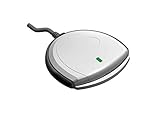
- Fully Compliant - Complies With All Major Industry Standards, Including Iso/Iec 7816, Usb Ccid, Pc/Sc, And Microsoft Whql. As Well As, Emv 2011 Ver 4.3 Level 1 And Gsa Fips 201.
- Seamless Integration - With Identiv-Specific Smartos You’Ll Get Easy, Complete Support Of All Major Contact Smart Card Ics And Technologies In One Simple Reader.
- Universal Compatibility - Works With Virtually All Contact Chip Cards And Pc Operating Systems, Including Windows, Macos, Linux And Android.
- Fast And Convenient- Shorten Your Transaction Time With A Reader That’S Optimized For Speed. It’S Ultra-Compact And Robust Design Is Streamlined For Mobile Operation, Making This Reader The Best Choice For Convenience, Security And Reliability.
- Ergonomic and cost efficient design
Why the two sides differ on how to fund UPI
The disagreement is not simply whether UPI should be sustainable. The Ministry says the framework is intended to support sustainability while preserving free access for citizens, and its August statement described UPI as “India’s own innovation” that should remain free for citizens. GTRI’s reported position is that a need for funding does not by itself justify a broad merchant fee, especially if the policy rationale is to respond to US trade complaints.
| Question | Ministry’s stated approach | GTRI’s reported approach |
|---|---|---|
| Who bears the fee directly? | Applicable merchants pay MDR; the Ministry says customers must not be charged it. | GTRI objects to introducing MDR simply to answer US trade complaints and suggests more targeted ways to fund the system. |
| Who is exempt? | P2P payments, merchant payments up to ₹2,000, and qualifying small P2PM QR merchants are free or exempt under the described terms. | GTRI proposed narrowly designed fees for high-turnover merchants rather than a general charge; the reporting does not specify a full alternative rate schedule. |
| How is the fee set? | The Ministry’s September framework sets category-specific rates, thresholds and caps. | GTRI’s published proposals in the cited coverage do not provide comparable rates, thresholds or caps. |
| Where does the money go? | The Ministry says MDR is distributed among payment ecosystem participants; an amount equivalent to 5% of total MDR collections is to go to a dedicated small-merchant support fund. | GTRI cited public support, incentives, large-transaction charges and financial-services cross-subsidy as possible funding alternatives. |
| What evidence supports the policy? | The Ministry published its estimated unaffected share and framework terms; the reviewed releases do not supply an independently audited cost study or independently reproduced transaction-level impact analysis. | GTRI’s proposals are reported policy arguments, not independent cost findings proving that its alternatives would fund UPI adequately. |
The Ministry’s August 8 release cited USTR criticism of India’s UPI and RuPay framework in its 2026 National Trade Estimate Report. The USTR report itself is not among the sources cited here, so its precise wording and legal significance should not be inferred from secondary coverage. The Ministry’s account and GTRI’s warning frame a dispute about policy rationale; they do not independently establish a causal link between US criticism and the MDR decision.
Best Value

- An intuitive interface to easily accept payments and manage your sales.
- Strong, reliable Wi-Fi connection. Free SIM card and mobile data so you can process payments anywhere.
- Great battery capability with an additional charging station.
- A truly portable device. Stay in control of your business, wherever you go.
- Support when you need it. Get in touch with our US-based support through phone, email and chat.
Where the independent-audit request comes from
ETLegalWorld’s September 2026 coverage of a separate Supreme Court petition says the petitioner sought disclosure of the regulatory record, including a cost study, impact assessment, methodology and safeguards. As alternative relief, the petitioner reportedly asked for reconsideration through a transparent process involving public consultation, merchant and consumer representation, empirical data, small-enterprise protections, an independent audit, periodic review and a sunset clause. ETLegalWorld, September 2026
Those are reported requests made by the petitioner, not a Supreme Court finding or an order granting an audit. The cited coverage does not establish that GTRI made the request, and the petition’s filing was not independently reviewed here.
Quick Recap
Product prices and availability are accurate as of the date/time indicated and are subject to change. Any price and availability information displayed on Amazon at the time of purchase will apply.




