What’s actually slowing this PC down?
Pick the symptom - the matching free tool is one click away.
Judge Amit Mehta’s final judgment against Google was entered on December 5, 2025, and became effective on February 3, 2026. It restricts certain exclusive search-distribution deals, requires Google to provide qualified competitors with specified search data and syndication access, and creates continuing compliance oversight. It does not require Google to sell Chrome, Android, or its search business. As of August 18, 2026, the remedies are binding but still being implemented and challenged on appeal.
Which Google case does this cover?
This is the 2020 U.S. Department of Justice and state attorneys general case alleging that Google unlawfully maintained monopolies in general search services and general-search-text advertising. The court found liability under Section 2 of the Sherman Act. It is separate from the DOJ’s digital-advertising-technology case.

The case concerned distribution arrangements involving browsers, device manufacturers, wireless carriers and Apple, including agreements affecting default search placement. The operative documents are collected on the DOJ case page.
How the case reached the final judgment
| Date | Event |
|---|---|
| October 20, 2020 | DOJ filed the original complaint. |
| December 17, 2020 | Colorado and additional states filed a related complaint. |
| September 2023 | Liability trial began. |
| August 5, 2024 | The court issued findings that Google unlawfully maintained the relevant monopolies. |
| May 2025 | The court held a 15-day remedies trial. |
| September 2, 2025 | The court entered additional remedies findings. |
| December 5, 2025 | Judge Mehta entered the Final Judgment. |
| February 3, 2026 | The judgment’s prohibitory and operative provisions became effective. |
| May 4, 2026 | Plaintiffs filed their first compliance status report. |
| May 7, 2026 | The district court denied Google’s request for a partial stay without prejudice. |
| July 28, 2026 | DOJ and the states filed an appellate response and opening cross-appeal brief listed on the case page. |
The timeline and filings are available through the DOJ docket page.
Crashes, No Sound, or Screen Glitches?
Random freezes, missing sound and display glitches usually trace back to one bad driver. Find and replace yours safely.Free scan · under a minuteWindows Errors? Fix Them Before They Spread
Repair common Windows errors and clear accumulated junk for a smoother, more stable PC - no reinstall needed.Free scan · no reinstall#1 Best Overall

- Attention-grabbing design meets the latest evolution of the Google Pixel Camera on the new Google Pixel 11 Pro XL; Gemini Intelligence helps manage details so you can live in the moment[1]; and the phone is available in two sizes
- Unlocked Android phone gives you the flexibility to change carriers and choose your own data plan: Works with Google Fi, Verizon, T-Mobile, AT&T, and other major carriers[2]
- Stay informed without looking at your screen: When your phone is face down, Pixel HiLight gently alerts you with subtle glowing lights when your favorite contacts are calling or you’re talking with Gemini; exclusive to Google Pixel 11 Pro phones
- Magic Capture catches the moment as you live it: With just one tap, Pixel 11 Pro captures video and photos, and automatically edits, crops, and unblurs a curated collection, ready to share – and you get the memory of how it felt to be in the moment
- Two new cameras for more brilliant photos: A larger telephoto sensor captures 30% more light for clear, beautiful photos and videos, even in the dark[3]; Pixel’s longest zoom ever helps you capture details from impressive distances[4]
What Google is prohibited from doing
The judgment contains targeted prohibitions rather than a blanket ban on every default-search payment. Key restrictions include:
- Google may not condition licensing Google Play or other Google applications on distributing, preloading, placing, displaying, using or licensing Google Search on U.S. devices.
- Similar conditions cannot be attached to Chrome, Google Assistant or Google generative-AI products.
- Google may not condition payments or software licenses on device makers or wireless carriers refraining from developing, distributing, preloading or licensing third-party search, browser or generative-AI products.
- Google may not bundle or cross-condition certain placement payments for Search, Chrome, Assistant or generative-AI products across devices.
- Certain default-placement agreements generally must terminate within one year.
- Covered browser developers and Apple must be allowed to promote third-party search and generative-AI products.
The exact obligations and exceptions are in Sections III.A–N of the Final Judgment. The order therefore restricts specified exclusive arrangements; it does not outlaw every agreement involving default search.
What Google must make available
Search-index information
Within 30 days after a qualified competitor’s certification, Google must provide, at marginal cost, specified information from the web-search index used for Google.com, the Google Search application and future general-search products. Covered fields include unique document identifiers, duplicate-document relationships, document-ID-to-URL mappings, first-seen and last-crawled times, spam scores and device-type flags.
The order does not transfer third-party intellectual-property rights in the index. The requirement is detailed in Section IV.A of the Final Judgment.
User-side data
Google must make available, on a nondiscriminatory basis and subject to privacy and security safeguards, user-side data used to build, create or operate its GLUE statistical models and data used to train, build or operate RankEmbed models. The court will determine the precise number and frequency of disclosures after consultation with the plaintiffs and Technical Committee, with at least two disclosures required.
Rank #2

- Google Pixel 10a is a durable, everyday phone with more[1]; snap brilliant photography on a simple, powerful camera, get 30+ hours out of a full charge[2], and do more with helpful AI like Gemini[3]
- Unlocked Android phone gives you the flexibility to change carriers and choose your own data plan; it works with Google Fi, Verizon, T-Mobile, AT&T, and other major carriers
- Pixel 10a is sleek and durable, with a super smooth finish, scratch-resistant Corning Gorilla Glass 7i display, and IP68 water and dust protection[4]
- The Actua display with 3,000-nit peak brightness shows up clear as day, even in direct sunlight[5]
- Plan, create, and get more done with help from Gemini, your built-in AI assistant[3]; have it screen spam calls while you focus[6]; chat with Gemini to brainstorm your meal plan[7], or bring your ideas to life with Nano Banana[8]
This is not an order to hand over Google’s ranking algorithms, ranking signals, post-trained large language models or other expressly excluded trade secrets. Sections IV.B–C also impose licensing, security, privacy and oversight conditions.
Who can qualify
Access is limited to a “Qualified Competitor.” An applicant must meet the judgment’s competition, investment, privacy, security and national-security requirements, accept audits and use the information only for permitted search, search-advertising or third-party generative-AI purposes. Simply requesting Google’s data is not enough.
Search-result syndication
For five years, Google must offer qualified competitors a real-time API license for covered search syndication. The required material includes desktop and mobile ranked organic results, Google’s user-facing query-rewriting functions, and covered Local, Maps, Video, Images and Knowledge Panel content.
The Tool Desk
Outbyte PC Repair FREERepair Windows errors before they cause bigger problemsFix Now →Outbyte Driver Updater FREEScan for outdated or missing drivers - takes under a minuteDriver Scan →Terms must be no worse than those offered to comparable users of Google’s syndication products, with functionally equivalent latency and reliability. The program covers queries from human end users in the United States; it is not a worldwide restructuring of Search.
Use is deliberately transitional. During the first year, a qualified competitor may use Google syndication for no more than 40% of its annual U.S. queries. The percentage is expected to decline over the five-year period as the court, plaintiffs and Technical Committee set the tapering and measurement rules. The purpose is to lower entry barriers while pushing a rival toward independent crawling, ranking and other infrastructure.
Rank #3

- Google Pixel 10 Pro is the ultimate Pixel experience, featuring advanced AI with Gemini, unbelievable camera quality, impeccable design in two sizes, and the next-gen Google Tensor G5 chip[1]
- Unlocked Android phone gives you the flexibility to change carriers and choose your own data plan[2]; it works - Google Fi, Verizon, T-Mobile, AT&T, and other major carriers
- Get a head start on syncing your data before it even arrives: After you purchase your new Pixel, look for an email that explains how to transfer your photos, videos, passwords, and more in just a few quick steps[11]
- Pixel’s pro camera system makes everything look amazing, even in low light; capture more of the scene with advanced Google AI models, and bring out incredible details with 100x Pro Res Zoom, stunning 50 MP images, and super steady videos in 8K[10]
- Pixel 10 Pro is built with durable aluminum and Corning Gorilla Glass Victus 2 for scratch and drop resistance; the 6.3-inch Super Actua display with 3,300-nit peak brightness is easy on the eyes, even in direct sunlight[3,13,18]
Search-text advertising obligations
Section VI requires a five-year search-text-ad syndication license for qualified competitors. It must provide:
- Functionally equivalent latency, reliability and performance.
- Financial terms no worse than those offered to other users of Google’s search-text-ad syndication services.
- Access to all types of search-text ads available through those products.
- Nondiscriminatory advertiser access.
- Inclusion in Google’s Search Partner Network.
- Freedom to use other ad providers or display the competitor’s own advertising.
Google must also report certain covered changes to its search-text-ad auction to the plaintiffs and Technical Committee, while ordinary experiments and protected trade secrets remain outside the reporting requirement. The terms appear in the Final Judgment.
What the judge did not order
The government sought more structural relief than the court ultimately adopted. Judge Mehta rejected or declined to impose:
- Chrome divestiture.
- Mandatory consumer choice screens.
- A complete ban on payments for default placement.
- Other remedies that would have directly broken up Google’s distribution ecosystem.
Google therefore keeps Chrome under the entered judgment. The court chose contractual limits, data access, search and advertising syndication, auction transparency and continuing oversight instead. The court’s reasoning is set out in the Final Judgment opinion.
When the judgment applies and how long it lasts
The Final Judgment was entered on December 5, 2025. Its prohibitory injunctions and other operative provisions took effect 60 days later, on February 3, 2026. Technical Committee provisions took effect upon entry. Unless extended or ended earlier, the judgment lasts six years from the effective date—nominally through February 3, 2032. See Section VIII of the Final Judgment.
Implementation is active, not complete
The plaintiffs’ May 4, 2026 compliance report said the Section III contractual injunctions were in effect and that Google had told plaintiffs it believed it had taken the steps necessary to comply with them. Work on Sections IV–VI was still underway, including data-sharing safeguards, license templates and Technical Committee operations.
The report also described the compliance-officer process: Google’s initially proposed officer was rejected, and plaintiffs later approved Terry Morrison-Wells, Alphabet’s Head of Enterprise Risk Management. The report did not state that every data-sharing and syndication obligation was fully operational.
Implementation details are set out in the Plaintiffs’ First Compliance Status Report. Before a qualified competitor can begin using a data-sharing or syndication remedy, plaintiffs must give Google and the court 45 days’ notice. That window allows Google to seek another stay.
Independent reader supportYour contribution helps us test, update, and keep practical guides available for everyone.What the appeals change
Google filed its appeal on January 16, 2026. The plaintiffs filed cross-appeals on February 3, 2026. These proceedings raise separate questions:
- Liability: whether the underlying monopoly findings were legally correct.
- Remedy scope: whether the judge ordered too much or too little relief.
- Implementation: whether particular obligations should be paused during appellate review.
On May 7, 2026, the district court denied Google’s partial-stay request without prejudice. That ruling left the judgment operative but did not eliminate the possibility of renewed stay requests when a qualified competitor is ready to access a remedy. The order is available here.
Best Value
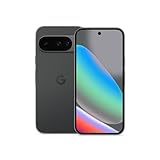
- Google Pixel 10 is the everyday phone unlike anything else; it has Google Tensor G5, Pixel’s most powerful chip, an incredible camera, and advanced AI - Gemini built in[1]
- Unlocked Android phone gives you the flexibility to change carriers and choose your own data plan[2]; it works with Google Fi, Verizon, T-Mobile, AT&T, and other major carriers
- Unlocked Android phone gives you the flexibility to change carriers and choose your own data plan[2]; it works - Google Fi, Verizon, T-Mobile, AT&T, and other major carriers
- The upgraded triple rear camera system has a new 5x telephoto lens - up to 20x Super Res Zoom for stunning detail from far away; Night Sight takes crisp, clear photos in low-light settings; and Camera Coach helps you snap your best pics[3]
- Pixel 10 is designed - scratch-resistant Corning Gorilla Glass Victus 2 and has an IP68 rating for water and dust protection[21]; plus, the Actua display - 3,000-nit peak brightness is easy on the eyes, even in direct sunlight[4]
What this could mean for competition, consumers and businesses
Search and AI entrants
The order can reduce the cost and time required to launch a competing search or answer product by supplying results, index information, selected user-side data and advertising access. It does not create a finished rival: a participant still needs a user-facing product, safety systems, spam controls, localization, independent infrastructure and a sustainable business model.
Browsers, devices and carriers
Restrictions on conditioning app licenses and payments should give browser developers, device manufacturers and wireless carriers more room to promote alternatives. Consumers should not expect an automatic choice screen, however; the judgment does not require one.
Advertisers and publishers
More search and ad distribution options could eventually affect traffic allocation, auction competition and pricing. Those effects depend on whether qualified competitors actually enter, attract users and build independent capacity before the syndication allowance tapers.
Privacy and security
User-side data sharing is constrained by privacy-enhancing techniques, security safeguards, licensing limits, audits and Technical Committee oversight. The judgment is not an unrestricted transfer of personal search histories.
Free tools Windows power users keep installed
One-click scans. No signup required.
The practical test ahead
The remedy’s success will turn on execution: how quickly qualified competitors can be certified, whether the required APIs deliver comparable reliability, how privacy protections work in practice, and whether entrants can reduce their reliance on Google as the 40% ceiling declines. Existing syndication agreements are not automatically void; the judgment provides specific treatment for qualified competitors that already have such arrangements.
In short, the court has imposed a legally meaningful framework intended to open Google’s search ecosystem without ordering a breakup. The judgment is final and effective, but its competitive consequences will be determined by certification, technical access, supervision and the pending appeals.
Quick Recap
Product prices and availability are accurate as of the date/time indicated and are subject to change. Any price and availability information displayed on Amazon at the time of purchase will apply.




