Do these 3 things before closing this tab:
1Repair Windows errors before they cause bigger problems2Scan for outdated or missing drivers - takes under a minute3Clear out junk files and repair common Windows errorsThe U.S. government proposed that Google sell Chrome and face a possible Android breakup, but those were requests—not court orders. A federal judge rejected both structural remedies in September 2025. A final judgment entered December 5, 2025 instead imposed rules on certain distribution arrangements, data access, search syndication and oversight.
What the government proposed—and what happened
The case is a U.S. federal antitrust proceeding in the District of Columbia. The Justice Department and state plaintiffs alleged that Google unlawfully monopolized general search and general search text advertising. In August 2024, the court found Google liable. That liability finding did not determine which remedies would follow; the court considered remedies separately in 2025.
In a proposed final judgment filed March 7, 2025, the government asked the court to require Google to divest Chrome, including assets or services needed to complete a sale. It also sought limits on Google using related products such as Android to give its search products preferential access. The proposal included contingent structural relief involving Android if competition did not increase after five years. These were plaintiffs’ requests for relief, not decisions already made by the court.
The scale of the markets helps explain the dispute, but the available figures describe different things. The Justice Department’s April 2026 update described Google as holding approximately 90 percent of U.S. search queries “for years.” Separately, the district court’s September 2025 remedies opinion described Chrome as accounting for “20% of all searches in the United States,” citing evidence in the case record. The Chrome figure is not a fresh 2026 measurement and should not be treated as the same metric as the DOJ’s search-query estimate.
What’s actually slowing this PC down?
Pick the symptom - the matching free tool is one click away.
#1 Best Overall

- SLIM. LIGHTWEIGHT. READY TO GO: The all-new slim design is perfect for busy lives on the go.
- SKILLFULLY DESIGNED. MILITARY TOUGH: Built with premium craftsmanship to withstand the occasional drop or ding.
- ALL-DAY, ALL-IN-ONE CHARGING: Power through your school day – and beyond – with a long-lasting 12-hour battery.¹
- 3X FASTER THAN THE PREVIOUS GENERATION OF WIFI: Crush your schoolwork in record time with Wi-Fi that’s three times faster than the previous generation of Wi-Fi.
- YOUR PHONE AND CHROMEBOOK WORK BETTER TOGETHER: Easily transfer files between devices, and control your phone right from your Chromebook.
Why the judge rejected a Chrome sale and an Android breakup
On September 2, 2025, Judge Amit P. Mehta rejected the proposed Chrome divestiture. The court concluded that plaintiffs had not shown behavioral remedies would be ineffective without selling Chrome and had not met the causal standard for imposing structural relief. The opinion also considered the technical and operational dependencies involved in separating Chrome from Google.
The judge rejected the proposed contingent Android divestiture as well. The court reasoned that plaintiffs had not alleged that Google’s ownership of Android caused the relevant anticompetitive effects, and had not established an evidentiary basis for ordering a future structural remedy.
Rank #2
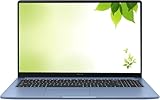
- Intel Processor Up to 2.80GHz, 4GB DDR4, 128GB Storage
- 15" FHD IPS Display, Intel UHD Graphics
- 1x USB Type C, 1 x USB Type A, 1x Headphone/Microphone Combo Jack, HDMI
- Super Fast WiFi and Bluetooth, Integrated Webcam
- Chrome OS, AC Charger Included, Pastel Blue
Rejecting those remedies did not undo the earlier liability finding. In its April 2026 case update, the DOJ quoted the court’s August 2024 conclusion: “Google is a monopolist, and it has acted as one to maintain its monopoly.” That statement concerns liability—not an order to break up the company.
What the court ordered instead
The final judgment, entered December 5, 2025, imposes behavioral remedies: obligations governing specified business practices, rather than a transfer of ownership. Its provisions address distribution terms, access to certain data, search-related syndication and court-supervised monitoring.
Outdated Drivers Are Slowing You Down
One free scan finds every outdated or missing driver and matches the right update for your exact hardware.Free scan · exact hardware matchWindows Errors? Fix Them Before They Spread
Repair common Windows errors and clear accumulated junk for a smoother, more stable PC - no reinstall needed.Free scan · no reinstallRank #3

- Intel Celeron N4120: 4 Cores & Threads, 1.1GHz Base Clock, Up to 2.6GHz Boost Clock, 4MB Cache, Intel UHD Graphics 600. The perfect combination of performance, power consumption, and value helps your device handle multitasking smoothly and reliably with four processing cores to divide up the work.
| Issue | What plaintiffs proposed | What the final judgment does |
|---|---|---|
| Chrome | Prompt, complete divestiture of Chrome, including assets or services needed for a sale. | Does not require Google to sell Chrome. |
| Android and distribution | Restrictions on preferential access through related products, plus contingent structural relief involving Android if competition failed to increase after five years. | Bars specified forms of conditioning Google app licensing and distribution payments on exclusive placement of Google Search, Chrome, Assistant or Google generative-AI products. It does not require Google to sell Android. |
| Competitor access | The proposal sought relief intended to open distribution to competitors. | Provides for specified search-index and user-side data disclosures to qualified competitors, as well as search and search-text-ad syndication. |
| Oversight | Structural relief would have changed ownership or control of products. | Creates a technical committee and provides for court oversight of the judgment’s obligations. |
The table distinguishes the government’s proposal from the operative judgment; they are not two remedies still awaiting a ruling. The final judgment is the source for the obligations now being implemented, while the remedies opinion explains why the judge declined the requested divestitures.
Independent reader supportYour contribution helps us test, update, and keep practical guides available for everyone.What is happening with the case now
The latest official status document identified here is the plaintiffs’ Second Status Report, filed September 17, 2026. It says all five Technical Committee members had been onboarded by June 15, 2026, and describes work to implement and enforce the judgment and monitor Google’s compliance. That is evidence of ongoing implementation, not a finding that every remedy is complete or that all compliance questions have been resolved.
Rank #4

- FOR HOME, WORK, & SCHOOL – With an Intel processor, 14-inch display, custom-tuned stereo speakers, and long battery life, this Chromebook laptop lets you knock out any assignment or binge-watch your favorite shows..Voltage:5.0 volts
- HD DISPLAY, PORTABLE DESIGN – See every bit of detail on this micro-edge, anti-glare, 14-inch HD (1366 x 768) display (1); easily take this thin and lightweight laptop PC from room to room, on trips, or in a backpack.
- ALL-DAY PERFORMANCE – Reliably tackle all your assignments at once with the quad-core, Intel Celeron N4120—the perfect processor for performance, power consumption, and value (2).
- 4K READY – Smoothly stream 4K content and play your favorite next-gen games with Intel UHD Graphics 600 (3) (4).
- MEMORY AND STORAGE – Enjoy a boost to your system’s performance with 4 GB of RAM while saving more of your favorite memories with 64 GB of reliable flash-based eMMC storage (5).
The materials available for this account do not establish the case’s appellate posture as of October 4, 2026. The status report should therefore be read as an implementation update, not as a final determination of the judgment’s lasting status.
Quick Recap
Best Value

- YOUR DAY SIMPLIFIED – Enjoy crisp calls, vibrant views, and real connection. The Lenovo Chromebook m 14” laptop features a stunning WUXGA 16:10 screen, a full set of ports, and a lightweight yet tough, military-grade build.
- BRILLIANTLY IMMERSIVE – The vibrant WUXGA 1920x1200 display lets you see, hear, and create your world in thrilling new ways. Audio that's tuned with MaxxAudio delivers rich, balanced sound that pulls you deeper into every scene, playlist, and project.
- TOUGH, LIGHT, READY FOR LIFE – Carry with confidence. At just under 3lbs, the Chromebook m 14” laptop is easy to handle and reinforced with military-grade durability to withstand daily bumps, drops, and spills.
- LOOK SHARP STAY SECURE – Take charge of your privacy with the webcam’s physical privacy shutter. Open it confidently for video calls or livestreams and close it securely when you’re done, hassle-free.
- CONNECT MORE TO DO MORE – Switch between devices and displays effortlessly while collaborating, studying, and sharing your screen. The built-in USB-C, USB-A, and HDMI ports let you charge, connect and present dongle-free.
Product prices and availability are accurate as of the date/time indicated and are subject to change. Any price and availability information displayed on Amazon at the time of purchase will apply.




