The Tool Desk
Outbyte Driver Updater FREEScan for outdated or missing drivers - takes under a minuteDriver Scan →Outbyte PC Repair FREERepair Windows errors before they cause bigger problemsFix Now →Virtual cards can make online shopping safer, but “fraud-proof” overpromises what they do. A virtual card gives you a separate card number, expiration date, and security code for online purchases. If that number appears in a retailer’s data breach, you may be able to lock or delete it without replacing your physical card.
That limits the damage from stolen card details. It does not stop phishing, fake websites, malware, account takeovers, or a purchase you accidentally approve. Think of a virtual card as an extra layer between your primary card number and an online merchant—not as a substitute for checking statements and reporting suspicious activity.
What a virtual card actually protects
A virtual card is usually connected to your existing credit-card account. It is not a separate bank account or a prepaid balance. Purchases normally appear with your other card transactions and reduce the same available credit.
The security benefit is that the merchant receives the virtual number rather than the number printed on your physical card. Depending on the provider, you may be able to create a number for general online use, lock one to a particular merchant, restrict its spending, or close it after a purchase.
#1 Best Overall

- Accept all major credit and debit cards and pay one low rate
- No hidden fees and no long-term contracts
- Mobile card reader that accepts payments anywhere & anytime
- Use the free SumUp App on your smartphone or tablet to start accepting transactions
- Simply pay 2.6% +10 per in-person transaction
| Card type | Useful for | Main limitation |
|---|---|---|
| General-use virtual card | Ordinary online shopping | If stolen, it may work at more than one merchant until you lock or replace it |
| Merchant-locked card | A recurring bill or one retailer | It can decline if the payment descriptor does not match the expected merchant |
| Single-use card | A one-time purchase | It may not work for subscriptions, deposits, or merchants that verify the card later |
| Category-locked card | Controlling spending by merchant category | Availability and categories depend on the provider and plan |
For example, Capital One offers eligible customers general-use and merchant-specific virtual cards. Privacy offers Merchant-Locked, Single-Use, Category-Locked, and Privacy Everywhere cards, depending on the plan. Availability is not universal: eligibility depends on the issuer, card product, and account role. Chase’s current explainer says Chase does not offer virtual credit-card numbers.
How to create a virtual card
Capital One
Capital One’s labels can vary slightly between the app and website. Current paths include:
- Sign in to the Capital One mobile app or website.
- Select Get your Virtual Card on the home page, or select the relevant card account.
- Find the Virtual Card or Your Virtual Cards tile.
- Select View All if necessary.
To manage one you already created, open the account, select Virtual Card Manager, and choose the card. You may then see options such as Delete and replace. A merchant-specific card can generally be deleted. If you delete a number used for a subscription, future payments using that number will be declined and you will need to update the merchant’s payment details.
Capital One virtual cards are generally intended for online transactions. They may not work at a physical checkout, and the billing address entered at checkout must match the address on file. Capital One’s help material gives differing wording about digital wallets, so follow the wallet and issuer instructions shown in your own account rather than assuming Apple Pay or Google Wallet support.
Privacy
Privacy provides several ways to create a card:
- On the Privacy website, click the blue New Card + button and choose an available card type.
- In the mobile app, click the purple + button at the bottom right and choose an available card type.
- In the browser extension, click New Card at the top and choose an available card type.
Depending on the plan, available types include Merchant-Locked, Single-Use, Shared, and Category-Locked cards. Privacy Everywhere cards can be used at multiple merchants, subject to the card’s controls and limits.
To apply a card-specific spending limit, select a new or existing card, click Spend Limit, enter the amount or move the slider, and choose the duration. A $50 limit is an authorization control—not $50 loaded onto the card. Privacy describes daily, monthly, and yearly windows as rolling 24-hour, 30-day, and 364-day periods.
Choose the right number for the purchase
Use the strongest restriction that will not interfere with the transaction.
Rank #2
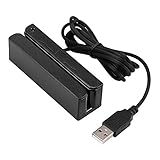
- MSR90 is a USB emulation keyboard interface that not need any driver or software,USB simply plug and play
- Reads up to 3 tracks of information,can reads ISO7811, AAMVA, CA DMV and most other card data formats
- Threaded inserts for mounting. LED indicator, green light is on when connecting,green light blinks when cards swiped
- Bi-directional swipe reading, superior reading of high jitter, scratched, and worn magstripe cards, reliable for over 1,000,000 card swipes
- Configuration software makes configuration changes easy,works with: Windows OS and Mac OS
- One-time retailer purchase: A single-use card can reduce the value of the number after the transaction.
- Subscription: Use a reusable merchant-specific card. Do not assume a disposable number will support recurring billing.
- Several purchases from one retailer: A merchant-locked card can prevent the number from being used elsewhere while allowing legitimate repeat charges.
- Budget-controlled spending: Add a card-specific limit where the provider supports it.
- Hotel, rental car, or event pickup: Check acceptance first and be prepared to use the physical card.
Merchant locks depend on the descriptor sent through the payment network, not necessarily the brand name you see on the website. A marketplace may submit a charge under a descriptor such as “Amazon.com” or “AMAZON MKTPL*.” A subscription, fulfillment company, or marketplace seller can therefore produce an unexpected decline even when the purchase is legitimate.
Important limits: what virtual cards do not prevent
Phishing and fake stores
If you enter a virtual card number into a convincing fake store, the scammer can still charge that number. A merchant-locked card may restrict where it works, but it does not tell you whether the website is genuine. Check the retailer’s address yourself, avoid links in unexpected texts and emails, and be skeptical of prices that are dramatically below normal.
Account takeover
If a criminal takes over your shopping or card account, they may be able to generate a new virtual number or use saved payment credentials. Protect the underlying account with a unique password, multifactor authentication, and transaction alerts.
Malware and compromised devices
Malware can capture credentials or manipulate a checkout session. A virtual number does not clean an infected laptop or phone. Keep your operating system and browser updated, use reputable security software, and avoid making purchases over an unsecured or unfamiliar device.
Authorized transactions
A virtual card does not make an approved charge automatically unauthorized. If you are tricked into authorizing a payment, you may need to work with the merchant, card issuer, and—if it was a scam—the appropriate authorities.
Why a legitimate purchase may be declined
Virtual cards are not accepted everywhere ordinary cards are accepted. Common causes of failure include:
| Problem | What to check |
|---|---|
| Wrong billing details | Use the billing address attached to the virtual card, not automatically the shipping address |
| Insufficient available credit or funds | Remember that the virtual card uses the underlying account’s available credit or funding source |
| Expired or incorrect details | Generate or retrieve current card information and check the expiration date and security code |
| Merchant restriction | Check whether the card is locked to another merchant or category |
| Single-use number reused | Use a new card if the first successful transaction consumed it |
| Physical-card verification | Use the physical card when the merchant requires in-person identification, a deposit, or pickup |
| Provider risk controls or funding issue | Review whether the merchant is blocked as high-risk, the card is paused or closed, or the funding connection failed |
Hotels and car-rental companies are particularly important exceptions. Even if you reserve online, the counter may require the physical card for identity verification or an incidental deposit. Event tickets with will-call pickup can create a similar issue. Confirm the policy before booking rather than discovering the problem at check-in.
Rank #3

- An intuitive interface to easily accept payments and manage your sales.
- Strong, reliable Wi-Fi connection. Free SIM card and mobile data so you can process payments anywhere.
- Great battery capability with an additional charging station.
- A truly portable device. Stay in control of your business, wherever you go.
- Support when you need it. Get in touch with our US-based support through phone, email and chat.
Single-use cards have nuances
“Single-use” does not always mean the number disappears immediately after every checkout attempt. Privacy says its Single-Use Card closes after a successful authorization greater than $1. If the initial authorization is $0 or is declined, it closes automatically 24 hours later.
That matters because some merchants perform a zero-dollar verification before placing the real charge. There may be a short window in which the number remains available. A declined purchase also may not have consumed the card under the provider’s rules, so read the transaction status before trying again.
Recommended Free Tools
Locking a card does not reverse a charge
Pausing or closing a virtual card normally blocks future authorizations. It does not automatically cancel a transaction that has already been authorized or settle a charge that is already moving through the payment network.
Privacy says a closed card remains visible under the Closed filter on the Cards page. Keep that information available if you need a refund or dispute. Privacy says a merchant-initiated refund can still reach the original funding source after the virtual card is closed; timing can depend on the bank.
Keep monitoring the underlying account
Even with virtual numbers, review your statements and transaction alerts. The Consumer Financial Protection Bureau says stolen card data can be used months after the original theft. A virtual card reduces exposure of the physical number, but the underlying credit account remains active.
If you spot a transaction you did not authorize, contact the issuer promptly and follow its dispute process. For U.S. credit-card billing errors, the Consumer Financial Protection Bureau says to send a written billing-error notice within 60 calendar days after the statement containing the error was sent. The issuer generally has 30 days to acknowledge the dispute and up to two billing cycles—but no more than 90 days—to resolve it. Continue paying undisputed amounts while the dispute is pending.
Windows Errors? Fix Them Before They Spread
Repair common Windows errors and clear accumulated junk for a smoother, more stable PC - no reinstall needed.Free scan · no reinstallCrashes, No Sound, or Screen Glitches?
Random freezes, missing sound and display glitches usually trace back to one bad driver. Find and replace yours safely.Free scan · under a minuteFederal law generally limits liability for unauthorized credit-card charges to $50, although issuer and network policies may offer stronger protection. Those protections have conditions and exclusions, so do not delay notification while trying to determine exactly how the number was compromised.
Rank #4

- Ergonomic design: Simple but effective- The credit card reader was created with a thorough awareness of the audience's lifestyle as well as customer demands and requirements. It's made of genuine material, so it looks good and works well. This little but powerful machine comes with a unique cable management system to keep your workspace neat and clean.
- Plug and Play: Posunitech Magnetic credit card reader is easy to operate. Connect it to your laptop or desktop computer with the provided USB cable, and you're ready to go– no further software or power supply necessary. The swiper light turns green, and it's ready to go.
- Cost effective: This low-cost card reader is fully configurable and has three tracks, allowing it to perform triple duty in your business, accept payments, collect data, limit access, verify identification, and keep track of time using it.
- Compatibility: It works with both Windows and Mac operating systems and may be used on both desktop and laptop computers.
- Capacity: Posunitech magnetic card Swipe reading in directions, improved reading of high jitter, scratched, worn magstripe cards and over 1,000,000 card swipes of reliability.
A practical setup for safer online shopping
- Turn on account alerts. Use notifications for every transaction or at least for transactions above a low threshold.
- Use a merchant-specific number for subscriptions. This limits reuse without creating predictable failures from a single-use number.
- Use a single-use number for a genuine one-time purchase. Avoid it for hotels, rental cars, deposits, or recurring billing.
- Set a realistic spending limit. Leave enough room for tax, shipping, tips, or a temporary authorization hold.
- Save the card’s details and merchant name. This makes refunds and disputes easier after closing a number.
- Check the checkout domain. A virtual card cannot compensate for a fake retailer or phishing page.
- Review statements. Report suspicious activity even if the virtual card has already been paused or deleted.
The best protection comes from matching the card type to the transaction and combining it with ordinary security habits. A restricted virtual number can contain the fallout from a merchant breach; it cannot make an untrustworthy seller trustworthy.
Sources and further reading
- Capital One: Using virtual credit cards
- Chase: Benefits and limitations of virtual card numbers
- Privacy: Creating and comparing Privacy Cards
- Consumer Financial Protection Bureau: Disputing a credit-card charge
- Federal Trade Commission: Online-shopping security tips
FAQ
Do virtual cards eliminate online fraud?
No. They hide the physical card number and can restrict where a replacement number works, but they do not prevent phishing, fake stores, account takeovers, malware, or purchases you authorize after being deceived.
Can I use a virtual card for a subscription?
Usually, use a reusable merchant-specific virtual card rather than a single-use card. Deleting the number will cause future recurring payments tied to it to decline, so update the subscription before closing it.
Free tools Windows power users keep installed
One-click scans. No signup required.
What happens if I close a virtual card after a purchase?
Closing generally blocks future authorizations. It does not necessarily cancel an already authorized charge. Keep the closed-card details available for refunds or disputes.
Why might a virtual card be declined at a hotel or rental-car counter?
The merchant may require the physical card for identity verification, an in-person deposit, or pickup, even when the reservation was made online. Confirm the merchant’s policy before relying on a virtual number.
When does a Privacy Single-Use Card close?
Privacy says it closes after a successful authorization greater than $1. If the initial authorization is $0 or is declined, it closes automatically 24 hours later.
Does closing a virtual card prevent a refund?
Privacy says a merchant-initiated refund can still reach the original funding source after the card is closed. Timing depends on the bank.
What’s actually slowing this PC down?
Pick the symptom - the matching free tool is one click away.
Quick Recap
Product prices and availability are accurate as of the date/time indicated and are subject to change. Any price and availability information displayed on Amazon at the time of purchase will apply.




