Crashes, No Sound, or Screen Glitches?
Random freezes, missing sound and display glitches usually trace back to one bad driver. Find and replace yours safely.Free scan · under a minutePC Slower Than It Used to Be?
A free scan shows the junk files, broken settings and background clutter dragging Windows down - then fixes them in one click.Free scan · Windows 10 & 11Starting a food-trailer business means planning the menu, operating workflow, approvals, locations, and budget together—not buying a trailer first and trying to make it fit later. In the United States, retail mobile-food requirements are generally set by state and local authorities, and the rules depend on what you serve, how you handle food, and where you operate. Confirm the applicable requirements with the health agency and other local authorities before committing to a build or equipment installation.
Start with the menu and the way you will operate
Write down each item you plan to sell and map how it gets from ingredients to customer. For each item, identify where ingredients will be received, stored, prepared, cooked, held, and served, and which of those steps happen inside the trailer. Also decide whether you expect to cater, operate from recurring locations, travel between sites, or do some combination.
These details can affect how an agency classifies your operation and what facilities or equipment it expects. Florida, for example, separates certain mobile businesses selling only prepackaged or non-potentially hazardous food from food-service vendors handled by a different state department. That is an illustration of state variation, not a template for other states.
Keep the first version of the menu and workflow specific. A plan for packaged baked goods is not necessarily reviewed like one that involves cooking, temperature-controlled holding, or extensive preparation in the unit. Ask the local authority how your actual menu and handling steps affect the review before you choose a trailer layout.
#1 Best Overall
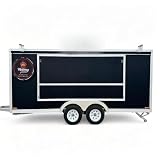
- 【Tailored to Your Vision】 As your direct factory partner with over a decade of experience, we bring your unique concept to life. Customize your food trailer's dimensions, layout, color, and exterior materials to fit your brand and operational workflow. Please message us before ordering to discuss your specific requirements.
- 【The Direct Factory Advantage】 By working directly with our facility, you eliminate middlemen. This allows for more competitive pricing, rigorous hands-on quality control, and seamless communication. We could offer live video calls and progress updates throughout the manufacturing process.
- 【Adaptable Layout for Various Equipment】 Configure your ideal workspace. The trailer is designed with a versatile layout and multiple electrical access points to accommodate a wide range of appliances, from griddles and freezers to coffee makers and blenders, perfect for food, beverages, or a mobile bar.
- 【Proven Global Reliability】 Our food truck trailers are trusted by entrepreneurs worldwide. We have successfully delivered units to customers across the USA, Europe, Australia, and Southeast Asia, building a reputation for dependable performance and consistent quality.
- 【Dedicated Support with 1-Year Warranty】 We provide a comprehensive 1-year warranty on our trailers. If any issues arise, our dedicated support team is ready to assist you, ensuring a reliable partnership.
What permits and approvals might a food trailer need?
There is no single U.S. permit checklist that applies to every food trailer. The U.S. Food and Drug Administration says retail food establishments such as food trucks are generally regulated by state and local government, and directs operators to the agencies with jurisdiction in their area. Health approval may be only one part of the process: business licensing, fire review, zoning, tax requirements, site permission, and event-specific approvals may also apply.
Ask the local health agency which office handles your operation and request its mobile-food application or plan-review packet. Then confirm which other agencies and property owners must approve your business and each place where you intend to vend. A county health permit should not be assumed to authorize operation in every city, at every event, or on every private property.
Rank #2

- 【Tailored to Your Vision】 As your direct factory partner with over a decade of experience, we bring your unique concept to life. Customize your food trailer's dimensions, layout, color, and exterior materials to fit your brand and operational workflow. Please message us before ordering to discuss your specific requirements.
- 【The Direct Factory Advantage】 By working directly with our facility, you eliminate middlemen. This allows for more competitive pricing, rigorous hands-on quality control, and seamless communication. We could offer live video calls and progress updates throughout the manufacturing process.
- 【Adaptable Layout for Various Equipment】 Configure your ideal workspace. The trailer is designed with a versatile layout and multiple electrical access points to accommodate a wide range of appliances, from griddles and freezers to coffee makers and blenders, perfect for food, beverages, or a mobile bar.
- 【Proven Global Reliability】 Our food truck trailers are trusted by entrepreneurs worldwide. We have successfully delivered units to customers across the USA, Europe, Australia, and Southeast Asia, building a reputation for dependable performance and consistent quality.
- 【Dedicated Support with 1-Year Warranty】 We provide a comprehensive 1-year warranty on our trailers. If any issues arise, our dedicated support team is ready to assist you, ensuring a reliable partnership.
Examples of how local rules differ
| Jurisdiction | What its guidance illustrates |
|---|---|
| Massachusetts | The state says a mobile food establishment needs a separate permit from the local board of health for each mobile facility and each municipality where it intends to operate. It also describes a servicing area as a base for recurring tasks such as cleaning, waste discharge, water refilling, and food loading. Source: Massachusetts mobile food establishment guidance. |
| San Bernardino County, California | The county lists food vehicles, including trucks and trailers, and provides mobile-food permit, plan-check, and approved-commissary resources. Source: San Bernardino County Environmental Health Services. |
| Florida | The state assigns specified mobile-food categories to the Department of Agriculture and Consumer Services (FDACS), while food-service vendors are permitted through the Department of Business and Professional Regulation (DBPR). The responsible agency therefore depends on the operation. Source: Florida mobile food guidance. |
| Texas | Texas DSHS says that, beginning July 1, 2026, all mobile food vendors must be licensed by DSHS under the state change described on its mobile food vendors page. Its published fee examples are shown below; they are Texas figures, not a national estimate. Source: Texas Department of State Health Services, 2026 licensing information. |
These examples show why the relevant agency, permit scope, location coverage, inspection sequence, renewal schedule, and fees need to be checked where you plan to operate. A state page can explain statewide rules, but city, county, site, and event requirements may still matter.
Texas DSHS fee examples
| Texas license type | Application fee | Pre-licensing inspection fee |
|---|---|---|
| Type I | $309 | Not stated in the Texas DSHS fee examples cited here. |
| Type II | $618 | $400 |
| Type III | $876 | $500 |
These amounts are the Texas DSHS fee schedule figures shown on its mobile food vendors page as of October 8, 2026. They apply to the listed Texas license types and are subject to change; check the current state schedule before budgeting or applying. They do not include the full cost of starting or operating a business.
Rank #3
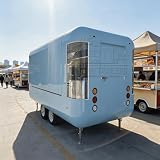
- Commercial Towable Food Trailer Unit: Designed as a professional mobile catering trailer for daily food service operations, easily towed by trucks or SUVs for flexible business locations.
- Custom Concession Trailer Configuration: Interior layout and equipment can be customized to support coffee service, fast food, ice cream, snacks, and catering businesses.
- Built for Commercial Use and Mobility: Durable structure engineered for long-term outdoor operation, frequent transport, and continuous food service environments.
- Flexible Pricing Based on Equipment Setup: Listed price reflects a basic trailer shell. Final pricing varies depending on kitchen equipment, size, and customization requirements.
- One-Year Warranty: We stand behind our food trailer with a one-year warranty. Our team is always here to help if you need support or have questions.
How to get approval before buying or fitting out a trailer
- Contact the health authority for your intended operating area. Ask which agency has jurisdiction over your menu and service model, whether plan review is required, what documents and drawings it expects, whether a commissary or servicing base is required, how inspections are scheduled, and whether separate approvals apply in each city or at events.
- Prepare the proposed plan for review. Gather the menu, equipment list, floor plan, and operating information the authority requests. King County describes review of equipment floor plans, equipment lists, menus, and supporting documents, with the operating-permit fee separate from the plan-review fee. Philadelphia advises submitting plan review before installing new food equipment or changing an already approved mobile unit.
- Confirm specifications before purchase or installation. Check trailer dimensions, utilities, water and wastewater arrangements, ventilation, fire requirements, and equipment against the reviewed plan and local requirements. A trailer marketed for food service is not automatically compliant with the rules for your menu or jurisdiction. The cited agencies do not establish one universally compliant trailer design.
- Complete inspections and the remaining approvals. Ask the relevant offices what must happen before opening, what inspections are required, and what approvals apply to your business and operating locations. California’s small-business guide notes that local, state, and federal requirements may apply; the actual list depends on your location and business.
Get requirements in writing where possible, especially when an answer affects a major purchase or installation. If you change the menu, equipment, layout, or operating model later, ask whether the approved plan or permits must be updated.
Do you need a commissary or servicing base?
Do not assume that every food trailer must—or does not need to—use a commissary. Ask the responsible health agency whether your operation needs an approved commissary or servicing base and what it must provide. Depending on local rules and your workflow, a base may support preparation, cleaning, water replenishment, wastewater disposal, or storage.
Rank #4

- What's inside the food trailer?:The food Trailer includes a basic water system,electrical wiring, operator's workbench,and concession window.More equipment is available for additional customization, such as hoods, refrigerators,fryers and more.
- Designed for Professional Operators:Suitable for street vendors,catering teams,and event operators seeking a mobile solution for temporary or semi-permanent food service.
- How do I customise my food truck trailer? :We offer two different customisation options for hot dog cart.Fully customized or space reserved for proprietary equipment of food cart.Whether starting fresh or integrating existing gear for your burger venture,we provide renderings to visualize your success before we build.
- How can I be sure the truck is Real?:Benefit from 15 years of specialized expertise in food trucks for sale manufacturing.From durable catering trailers to efficient compact units,we build to withstand daily commercial use.You can request a visit to our factory,also you can always watch the progress of your food trucks production on video.
- What's the starting price?:The listed price for mobile food truck is only a portion of the total price; prices vary depending on the configuration. We will provide a complete pro forma invoice based on your specific needs for the food truck!
Massachusetts describes servicing-area functions including cleaning, waste discharge, refilling water, and loading food. San Bernardino County publishes an approved-commissary list, and King County points operators toward rental-kitchen resources. Those examples do not establish that a particular facility is acceptable for your menu or in another jurisdiction.
Before signing a lease or paying a deposit, confirm that the specific facility is acceptable to the local authority and can support the tasks your operation needs. Include any commissary rent, access charges, travel, and scheduling constraints in the operating plan.
What’s actually slowing this PC down?
Pick the symptom - the matching free tool is one click away.
Best Value

- ✅ All-in-One Portable Hand Washing Station – This concession sink combines a portable sink, hand wash sink, and 4-compartment design in one compact unit—ideal for food trucks, catering, pop-ups, concession stands, and outdoor events. Note: Contact local agencies to determine applicable requirements before purchasing any sink or component.
- 💧 Hot & Cold Water with Built-In Tank – Equipped with a 2.5-gallon electric hot water heater adjustable thermostat (50°–140°F) and a 5-gallon freshwater tank, this portable sink with hot water delivers reliable hot and cold water for handwashing and light dishwashing. The 15% larger wastewater tank supports multiple wash cycles.
- 🛡️ Durable 4-Compartment Design – Four stainless steel basins (22-gauge, 18/8 stainless steel) allow washing, rinsing, sanitizing, and handwashing in sequence. Each basin includes a beveled bar drain with basket strainer, making it perfect as a portable handwashing station or portable concession sink. Made in the USA with Domestic and Imported Parts.
- ⚡ Commercial-Grade Faucets & Self-Contained System – Two gooseneck faucets (12" high-rise + 6" standard) provide ample space for large items. Pre-installed drain traps, vinyl tubing, and an electric pump ensure consistent water delivery and fast, hassle-free setup.
- 🚚 Quick Setup & Portable Design: Ships fully assembled and sets up in just 10 minutes. Freestanding cabinet design allows easy relocation, making this an ideal portable kitchen sink, outdoor sink station, or portable vendor sink for mobile food operations, outdoor kitchens, festivals, and farmers markets.
How much does it cost to start a food-trailer business?
The available official fee examples do not support a reliable national startup total. They illustrate that plan review and operating permits can have separate fees and that some state licensing fees vary by operation type; neither is a full business-cost estimate. Build a location-specific budget rather than relying on a single headline number.
Price the project in stages
- Get the regulatory requirements first. Ask what the approved layout and equipment must include so you can price a trailer and fit-out that match the planned operation.
- Get itemized quotes. Separate the trailer, equipment, installation, utilities, water and wastewater systems, and any tow vehicle you need. Compare total installed cost rather than the trailer’s advertised price alone.
- Collect local and state charges. Ask each relevant agency for current application, plan-review, permit, inspection, and renewal fees. Record which are one-time, recurring, or dependent on the permit type.
- Estimate recurring operating expenses. Include insurance, ingredients, labor, fuel or generator costs, utilities, maintenance, site or event fees, and commissary costs if required.
- Plan for delays and repairs. Set aside a reserve for downtime, repairs, and costs that arise while approvals, installation, or inspections are being completed. The appropriate amount depends on your business plan and available cash; the cited sources do not provide a standard reserve figure.
Compare trailer options against the approved operation
Once you understand the local requirements, compare candidate trailers on the points that can affect both cost and whether the unit works for your business:
- Total installed cost and what is excluded from the seller’s quote.
- Fit with the reviewed menu, workflow, and equipment plan.
- Water, wastewater, utility, ventilation, and fire specifications.
- Towability and compatibility with the vehicle you will use.
- Serviceability, parts access, warranty, and delivery timing.
- Whether the relevant authority will accept the proposed plan and equipment.
- Whether the locations and operating hours you can secure support the business model.
Do not treat seller assurances or a “food trailer” label as local approval. Verify the specification, warranty, installation, and plan-review acceptance before committing funds.
Check whether the operating plan can support the investment
A trailer can be technically approvable and still be a poor financial fit if the locations, schedule, or service model do not support your costs. Before committing to a build, list the sites you expect to use, the permission needed for each, and any event or site charges. Consider how often you can operate, how far you must travel to a servicing base, and what happens to revenue during inspections, repairs, or seasonal downtime.
Use estimates tied to your own menu and planned operating calendar. Separate costs you incur before opening from recurring costs, and identify which commitments are difficult to reverse, such as a custom fit-out or long-term lease. This does not predict profitability; it helps show how much cash is required and which assumptions need to be confirmed before you spend.
Quick Recap
A practical opening checklist
- Menu and food-handling workflow documented.
- Correct health authority and mobile-food application packet identified.
- Plan-review documents, equipment, and layout requirements confirmed.
- Commissary or servicing-base requirement clarified, with any facility approved for the intended work.
- Trailer and fit-out specifications checked against the reviewed plan before purchase or installation.
- Inspection sequence and operating-permit requirements confirmed.
- Business, fire, zoning, tax, site, and event approvals checked with the relevant authorities and property owners.
- Location-specific startup budget and operating calendar prepared.
Product prices and availability are accurate as of the date/time indicated and are subject to change. Any price and availability information displayed on Amazon at the time of purchase will apply.




