Recommended Free Tools
On Friday, August 7, 2026, the S&P 500 rose 0.6% to a record close of 7,757.64, while the Dow Jones Industrial Average rose 0.3% to 54,036.93 and the Nasdaq Composite gained 1.3% to 26,690.62, according to the Associated Press. That strength does not make a downturn inevitable. It does mean household investors are exposed to a market in which expectations, earnings and a small group of very large companies are doing much of the work, with inflation, employment, interest rates and geopolitical energy risks capable of producing sharper price moves.
What is driving the market higher?
The rally has a substantial earnings foundation. As of August 4, about 62% of S&P 500 companies had reported second-quarter 2026 results, and blended earnings growth was approximately 47% year over year, according to FactSet data cited by Axios.


That headline figure is unusually dependent on a few large companies. Excluding Alphabet and Amazon, the blended growth rate would have been approximately 28.8%, rather than 47.4%, according to the same FactSet analysis cited by Axios. That is still strong, but the difference shows why index-level earnings can look healthier than the results of the typical constituent.
Goldman Sachs Research projects S&P 500 earnings per share of $340 for 2026, up 24% from the prior year, followed by $385 in 2027. Goldman says the 2026 advance has been driven mainly by profit growth rather than a major expansion in the valuation multiple, which it expects to remain near 21 times earnings, according to Goldman Sachs Research.
#1 Best Overall
That distinction matters. The market is not rising solely because investors are paying dramatically more for unchanged profits. Companies are reporting stronger profits and analysts have raised expectations. But a high valuation still leaves less room for disappointment if earnings growth slows, costs rise or future AI-related investment produces weaker returns than expected.
Why the index can hide weakness underneath
The S&P 500 is weighted by float-adjusted market capitalization, so its largest companies have a much greater effect on the index than smaller companies, according to S&P Dow Jones Indices. S&P Global reported that the ten largest companies represented almost 40% of the index by mid-2025, a concentration level not seen since the mid-1960s, in its analysis of index concentration.
Much of the leadership is connected to artificial intelligence, semiconductors, cloud infrastructure and the capital spending required to build those businesses. Goldman Sachs describes AI-linked companies as a substantial share of concentration in the S&P 500 and Nasdaq in its discussion of AI and market concentration. This concentration can be rational when the biggest companies are delivering the strongest earnings growth. It also creates a specific failure mode: a disappointing forecast from a handful of companies can affect the whole index, even if most other businesses remain stable.
Investors using an S&P 500 fund should understand that they are not buying an equal slice of 500 companies. They are buying a portfolio whose returns are heavily influenced by the largest constituents. A broad index fund remains diversified compared with owning one stock, but it is less diversified by company size and sector than its name may imply.
Quick wins for a faster PC:
Clear out junk files and repair common Windows errorsFree Scan →Fix the driver behind crashes, sound loss and screen glitchesFind Drivers →Low volatility can change quickly
The Cboe Volatility Index, or VIX, closed at 14.90 on August 7, 2026, near the lower end of its 52-week range of 13.38 to 35.30, according to Cboe market data. The VIX is derived from S&P 500 option prices and measures the market’s expectation of near-term volatility.
Rank #2

- As a day trader, you can live and work anywhere in the world. You can decide when to work and when not to work.
- You only answer to yourself. That is the life of the successful day trader. Many people aspire to it, but very few succeed. Day trading is not gambling or an online poker game.
- To be successful at day trading you need the right tools and you need to be motivated, to work hard, and to persevere.
It is not a crash probability, a recession forecast or a prediction of whether stocks will rise or fall. A low reading means options markets were pricing relatively modest near-term movement at that point. It does not mean that a shock cannot cause volatility to rise.
For a household investor, the practical risk of a volatility spike depends on timing. Someone investing money needed for a house deposit in six months faces a different problem from someone contributing to a retirement account for 25 years. The same market decline can be inconvenient for one investor and financially damaging for another.
Inflation keeps the Federal Reserve in focus
The Federal Reserve left its federal-funds target range at 3.50% to 3.75% on July 29, 2026. The decision passed by a 9–3 vote, with Beth Hammack, Neel Kashkari and Lorie Logan preferring a 25-basis-point increase, according to the Federal Reserve’s July 29 statement.
Windows Errors? Fix Them Before They Spread
Repair common Windows errors and clear accumulated junk for a smoother, more stable PC - no reinstall needed.Free scan · no reinstallOutdated Drivers Are Slowing You Down
One free scan finds every outdated or missing driver and matches the right update for your exact hardware.Free scan · exact hardware matchThe Fed said economic activity was expanding at a solid pace and that productivity growth and capital investment were strong. It also said inflation remained elevated relative to its 2% goal and cited supply shocks, including energy-related price increases, in the statement.
June consumer prices fell 0.4% month over month on a seasonally adjusted basis but were still 3.5% higher than a year earlier. Core CPI, which excludes food and energy, was unchanged in June and rose 2.6% year over year, according to the Bureau of Labor Statistics (BLS).
Rank #3

- McGraw-Hill Books
- Great one for reading
- Easy to read text
The next immediate test is the July CPI report, scheduled for August 12, 2026, at 8:30 a.m. Eastern time, according to the BLS release calendar. A hotter-than-expected report could reduce expectations for rate cuts or increase pressure for tighter policy. A cooler report could support stock valuations, although very weak economic data could hurt earnings expectations.
The labor market is sending a less comfortable signal
July nonfarm payroll employment fell by 23,000, while the unemployment rate was 4.1%. The report also revised May payroll growth down by 66,000 and June growth down by 37,000, reducing the combined estimate for those two months by 103,000, according to the BLS Employment Situation report.
Other details point to a labor market that deserves more than a glance at the unemployment rate. The labor-force participation rate was 61.4% in July, down 0.7 percentage point since January. The employment-population ratio was 58.9%, down 0.5 percentage point over the same period. Average hourly earnings for private-sector workers rose 3.2% from a year earlier, according to the BLS report.
This creates a difficult policy mix. If employment weakens while inflation stays high, the Fed may have less freedom to respond quickly with lower rates. If inflation falls and the labor market deteriorates further, rate cuts could help stock valuations, but falling employment and consumer spending could weigh on company profits.
Energy and geopolitical risks remain live
The Strait of Hormuz disruption has already made energy prices more volatile. The U.S. Energy Information Administration (EIA) said average daily Brent price swings in April and May 2026 were approximately $4 per barrel, compared with about $1 during the same months in 2025, in its market analysis.
The United States and Iran signed a memorandum of understanding on June 18, 2026, intended to end the conflict and reopen the strait. However, the EIA said shipments were not expected to return immediately to pre-conflict levels in its Short-Term Energy Outlook. The market rebound benefited from falling oil prices and hopes that reopening efforts would progress, according to the Associated Press.
Free tools Windows power users keep installed
One-click scans. No signup required.
A renewed disruption, attacks on shipping or a breakdown in negotiations could push energy prices higher again. That would affect consumers through fuel and transport costs and could also pressure corporate margins. It is one reason a rally supported partly by improving energy conditions remains vulnerable to a reversal.
Dates worth watching
| Date | Release or event | Why it matters |
|---|---|---|
| August 12, 2026, 8:30 a.m. ET | July CPI and real earnings | Tests whether inflation is moving closer to the Fed’s target. Source: BLS release calendar. |
| August 13, 2026, 8:30 a.m. ET | July Producer Price Index | Provides information about input costs and wholesale inflation. Source: BLS release calendar. |
| August 28, 2026, 10:00 a.m. ET | Preliminary annual employment benchmark revision | May alter the picture of recent payroll growth, although BLS says official estimates will not be updated immediately. Source: BLS Employment Situation report. |
| September 4, 2026, 8:30 a.m. ET | August Employment Situation | Shows whether July’s payroll decline and downward revisions were isolated or part of a trend. Source: BLS release information. |
Second-quarter earnings reports are another major catalyst. Because aggregate growth is unusually high and concentrated in large companies, individual guidance updates may have an outsized effect on index sentiment, according to FactSet data cited by Axios.
Independent reader supportYour contribution helps us test, update, and keep practical guides available for everyone.What personal-finance investors can do
- Match risk to the time you need the money. Keep near-term spending needs, emergency savings and known obligations out of assets that could lose value during a market decline. A record index level does not change the appropriate cash reserve for your circumstances.
- Check concentration rather than relying on fund labels. Review the largest holdings in your S&P 500, technology or AI-related funds. If several funds own the same mega-cap companies, your actual exposure may be much narrower than the number of funds suggests.
- Use a contribution plan you can maintain. Regular contributions can reduce the temptation to make an all-or-nothing decision after a sharp rise or fall. The objective is not to predict the next CPI number or earnings announcement.
- Rebalance by rule. If stocks have grown far beyond the allocation you selected, rebalancing can restore the intended risk level. A predetermined threshold or calendar date is generally easier to follow than an emotional decision made during a selloff.
- Do not treat a low VIX as a green light for leverage. Options, margin and leveraged funds can magnify losses precisely when volatility rises. A calm market is not a guarantee that those risks will remain cheap or manageable.
- Separate market risk from cash-flow risk. A diversified retirement portfolio may withstand volatility over decades, but a portfolio funding tuition, a property purchase or a tax bill soon may not have enough time to recover.
FAQ
Does the S&P 500 reaching a record high mean a correction is imminent?
No. A record high is a description of the index’s level, not a timing signal. Stocks can continue rising after setting records, and they can also fall for many reasons. The more useful questions are whether your allocation fits your time horizon and whether you can meet near-term obligations without selling investments.
Why can the S&P 500 rise when many stocks are lagging?
It is a float-adjusted, market-capitalization-weighted index. Its largest companies have the greatest effect on its return, so strong performance from a small group can lift the index even when smaller or less represented companies perform poorly, as explained by S&P Dow Jones Indices.
The Tool Desk
Outbyte Driver Updater FREEFix the driver behind crashes, sound loss and screen glitchesFind Drivers →Outbyte PC Repair FREERepair Windows errors before they cause bigger problemsFix Now →Best Value
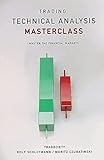
- Language: english
- Book - trading: technical analysis masterclass: master the financial markets
- It is made up of premium quality material.
What does a VIX reading of 14.90 mean?
It indicates that S&P 500 option prices were implying relatively low near-term volatility on August 7, 2026, according to Cboe. It does not measure the probability of a crash, predict market direction or guarantee that volatility will stay low.
Could inflation cause stocks to fall even if company earnings are strong?
Yes. Higher inflation can reduce the likelihood of interest-rate cuts, raise borrowing costs and increase business expenses. Strong current earnings may not fully offset lower valuations or weaker forecasts for future profits.
What is the biggest risk in the current rally?
There is no single certain risk. The market is particularly sensitive to disappointment among large AI- and technology-linked companies, persistent inflation, weaker employment, renewed energy disruption and any combination of those developments.
The Bottom Line
The record close is supported by real earnings growth, but the market is also concentrated, valued for continued progress and exposed to several near-term economic and geopolitical tests. Investors do not need to forecast the next market swing to respond sensibly. Keep short-term money protected, inspect overlapping holdings, maintain a sustainable allocation and use rebalancing rules rather than reacting to headlines.
Those steps do not remove volatility. They reduce the chance that volatility will force a damaging financial decision.
Quick Recap
Product prices and availability are accurate as of the date/time indicated and are subject to change. Any price and availability information displayed on Amazon at the time of purchase will apply.




