Recommended Free Tools
EPA set biomass-based diesel (BBD) volumes at 2.82, 3.04, and 3.35 billion gallons for 2023–2025. For 2026–2027, it set base requirements of 8.86 and 8.95 billion renewable identification numbers (RINs), then added partial reallocation of small refinery exemption (SRE) volumes, bringing the applicable totals to 9.07 and 9.20 billion RINs. The figures use different units across the two rule periods, so they should not be read as a direct gallons-to-gallons growth comparison.
What EPA set for BBD in each compliance year
The Renewable Fuel Standard (RFS) requires regulated parties to meet annual renewable-fuel obligations. EPA establishes the standards through rulemaking; the resulting volume figures are legal requirements, not measurements of fuel actually produced, blended, or used.
| Compliance year | EPA BBD figure | Measure in EPA’s published figure | How to read it |
|---|---|---|---|
| 2023 | 2.82 billion | Gallons | Final 2023–2025 Set Rule. EPA also established a separate 0.25-billion-gallon supplemental renewable-fuel requirement for 2023; that is not an additional BBD figure. |
| 2024 | 3.04 billion | Gallons | Final 2023–2025 Set Rule. |
| 2025 | 3.35 billion | Gallons | Final 2023–2025 Set Rule. |
| 2026 | 8.86 billion base; 0.21 billion reallocated; 9.07 billion total applicable | RINs | Final 2026–2027 Set 2 table. |
| 2027 | 8.95 billion base; 0.25 billion reallocated; 9.20 billion total applicable | RINs | Final 2026–2027 Set 2 table. |
These values are reported in EPA’s Final Renewable Fuels Standards Rule for 2023, 2024, and 2025 and Final Renewable Fuel Standards for 2026 and 2027. The 2023–2025 summary labels its BBD line in physical gallons. The later final table labels its requirements and totals in RINs and explains that one RIN represents one ethanol-equivalent gallon of renewable fuel. That equivalence does not make the two tables’ BBD figures interchangeable: retain EPA’s unit for each period when quoting them.
How SRE reallocation changed the 2026–2027 totals
Small refinery exemptions can exempt eligible refineries from some RFS obligations. In the 2026–2027 Set 2 rule, EPA finalized a 70 percent partial reallocation of volumes exempted for 2023–2025 into the later standards. The table separates each year’s base BBD requirement from the reallocated amount and the resulting total applicable volume.
#1 Best Overall

- Dual-phase effective in both diesel fuel and water as recommended by major diesel engine manufacturers
The reallocation is partial, not a restoration of the entire exempted volume. EPA said its approach was intended to balance biofuel demand while maintaining a stable, functioning credit market. That is EPA’s stated rationale, not proof that the policy produced a particular market outcome.
What EPA’s production estimate does—and does not—say
EPA said biodiesel and renewable diesel production and use would need to rise by over 60 percent compared with 2025 to meet the 2026–2027 volume levels. This is the agency’s estimate of what meeting the standards would require; it does not mean production or use had already increased by that amount. The rule’s volume requirements and the market’s eventual production, blending, and compliance outcomes are distinct.
Rank #2

- Dual-Phase, effective in both diesel fuel and water, and does not contain alcohol of any kind
- Effective as a “quick-kill” biocide and for long-term diesel fuel maintenance, effective in all diesel fuels, including Ultra Low Sulfur Diesel (ULSD), biodiesel and biodiesel blends
- Kills microbes (bacteria and fungus) that grow in dispersed and free water associated with diesel fuels, safe for use in all diesel engines
- Prevents fuel-filter plugging – helps prevent fuel system failures; Protects fuel system components against organic acids created by microbial growth – prevents fuel tank corrosion
- Improves fuel performance and reduces engine maintenance costs and will not void engine manufacturer's when used as directed
Other Set 2 decisions are separate from BBD volumes
EPA’s March 27, 2026 announcement of the final Set 2 rule also described a partial waiver of the 2025 cellulosic biofuel requirement and removal of renewable electricity as a qualifying RFS fuel. Those are changes to other parts of the program, not adjustments to the BBD figures in the table. EPA identifies April 1, 2026 as the final rule’s publication date.
How the RFS standards fit together
EPA describes the four RFS standards as nested. A renewable fuel or its RIN that satisfies a higher greenhouse-gas threshold may also satisfy a lower-threshold standard; EPA gives advanced biofuel counting toward the total renewable-fuel standard as an example. The program’s regulations are in 40 CFR Part 80, Subpart M.
Rank #3
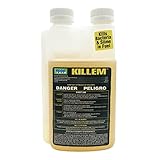
- One 16 oz bottle of Killem
- Treats 1280 Gallons
- Controls Bacteria and Fungi Growth
- Reduces Corrosion
- Reduces Slime
For years after 2022, EPA establishes volume targets after considering statutory factors. Its 2023–2025 rule summary lists costs, air quality, climate change, program implementation, energy security, infrastructure, commodity prices, water quality, and supply. EPA’s annual standards page describes notice-and-comment rulemaking and stakeholder engagement as part of the process.
Independent reader supportYour contribution helps us test, update, and keep practical guides available for everyone.What these figures mean for households and markets
RVOs are regulatory targets, not a forecast of a specific retail fuel price, household bill, or investment return. The EPA figures establish required volumes and, for 2026–2027, show the added SRE reallocation. They do not by themselves establish how those obligations will affect prices or actual market activity.
Quick Recap
Best Value
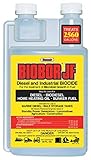
- KILLS & PREVENTS BACTERIA. Highly effective biocide to kill and prevent microbial growth in fuels and tanks (bacteria & fungi). Lubricates injectors and fuel pumps.
- DUAL PHASE CHEMISTRY. Partitions both water and fuel phases for more effective and complete protection against microbes that cause contamination and corrosion. Prevents corrosion of fuel tanks and metal components caused by the acidic by-products of microbial growth.
- EXTENDS FUEL FILTER LIFE. Excessive sludge accumulation, clogged fuel filters and expensive fuel polishing can shut down engines. Proactive use of a biocide prevents biomass accumulation in fuel tanks, extends fuel filter life and inhibits microbial influenced corrosion.
- INCREASES LUBRICITY. As an added benefit, BioborJF has been proven to increase the lubricity properties of jet fuel, providing additional protection and reduced wear to fuel delivery components.
- OEM APPROVED. Proven to restore lubricity levels, exceeding ASTM standards and protecting injectors and pumps from premature wear. (ASTM-D6079 HFRR- engine manufacturer and industry standard testing).
Rank #4

- KILLS & PREVENTS BACTERIA. Highly effective biocide to kill and prevent microbial growth in aviation fuels and aircraft (bacteria & fungi). Lubricates injectors and fuel pumps.
- DUAL PHASE CHEMISTRY. Partitions both water and fuel phases for more effective and complete protection against microbes that cause contamination and corrosion. Prevents corrosion of fuel tanks and metal components caused by the acidic by-products of microbial growth.
- EXTENDS FUEL FILTER LIFE. Excessive sludge accumulation, clogged fuel filters and expensive fuel polishing can shut down engines. Proactive use of a biocide prevents biomass accumulation in fuel tanks, extends fuel filter life and inhibits microbial influenced corrosion.
- INCREASES LUBRICITY. As an added benefit, BioborJF has been proven to increase the lubricity properties of jet fuel, providing additional protection and reduced wear to fuel delivery components.
- OEM APPROVED. Proven to restore lubricity levels, exceeding ASTM standards and protecting injectors and pumps from premature wear. (ASTM-D6079 HFRR- engine manufacturer and industry standard testing).
Product prices and availability are accurate as of the date/time indicated and are subject to change. Any price and availability information displayed on Amazon at the time of purchase will apply.




