Free tools Windows power users keep installed
One-click scans. No signup required.
On October 13, 2011, EMC announced the Data Domain DD160, an entry-level deduplication appliance designed for exclusive sale through solution providers and authorized resellers. Replacing the DD140, the DD160 brought Data Domain backup and replication into smaller business, remote-office, and managed-service deployments, with a U.S. starting list price of $10,000.
Its headline specifications included up to 1.1 TB per hour with DD Boost and 40–195 TB of logical capacity after deduplication. Those figures were launch-era vendor claims—not installed disk capacity, independent benchmarks, or current pricing.
As an Amazon Associate I earn from qualifying purchases.
Why EMC introduced the DD160
The DD160 was more than a smaller storage appliance. It was part of EMC’s effort to expand its SMB and midmarket channel business by giving partners a dedicated backup product they could sell, install, and manage without relying on a direct EMC sales motion.
Windows Errors? Fix Them Before They Spread
Repair common Windows errors and clear accumulated junk for a smoother, more stable PC - no reinstall needed.Free scan · no reinstallCrashes, No Sound, or Screen Glitches?
Random freezes, missing sound and display glitches usually trace back to one bad driver. Find and replace yours safely.Free scan · under a minuteEMC positioned the DD160 as its first Data Domain model specifically designed for sale only through indirect channels. Distribution was reported through the company’s Velocity program and distributors including Avnet, Arrow, Ingram Micro, Tech Data, and Synnex. These relationships are historical launch details, not evidence of current availability.
#1 Best Overall

- Multi-functional storage box: Perfect for organizing small household items such as data cables (USB, HDMI, power cords), fixed snack bags, or bundling headphones and wires
- Durable and reusable: It can be used repeatedly without losing elasticity or breaking, ensuring long-term reliability.
- Color coding is convenient: The three bright colors (green, yellow, and purple) help to categorize items at a glance, saving time and reducing frustration.
- Compact and portable: The ultra-thin design occupies minimal space in drawers, bags or on tables, making it ideal for use in homes, offices or on trips.
- Easy to use: Just wrap the strap around the item and secure the fastener. No tools required. It can be neatly arranged in just a few seconds!
The launch also complemented EMC’s channel-focused VNXe unified-storage strategy. A solution provider could use the DD160 as an attachment to storage projects, remote-office deployments, backup services, or replication offerings.
EMC had acquired Data Domain in 2009. By 2011, the Data Domain product line gave EMC a specialized platform for disk-based backup, deduplication, and replication while the company worked to make those technologies accessible to smaller customers.
What deduplication did
Backup sets commonly contain repeated blocks from full backups, incremental backups, virtual machines, databases, and replicated copies. A deduplication appliance identifies repeated data and stores fewer physical copies. This can reduce disk consumption and, depending on the replication design and data-change rate, reduce the amount of data sent over a WAN.
The distinction between physical, usable, and logical capacity is essential:
- Physical capacity: The disk storage installed in the appliance.
- Usable capacity: The space available after system overhead and data protection.
- Logical capacity: The amount of source data that may be represented after deduplication.
When EMC and launch coverage cited up to 195 TB of logical capacity, they were not claiming that the DD160 contained 195 TB of disk. The result depended on the workload’s redundancy, retention policy, compression, change rate, and software configuration. Encrypted, already-compressed, highly unique, or otherwise low-redundancy data could produce much smaller savings.
DD160 launch-era specifications
| Specification | Launch-era claim |
|---|---|
| Product class | Entry-level Data Domain deduplication appliance |
| Successor to | DD140 |
| Physical/internal capacity | Approximately 1.6 TB or 4.0 TB configurations |
| Usable capacity in later product material | Up to approximately 3.98 TB |
| Logical capacity | Approximately 40–195 TB, depending on deduplication |
| Maximum DD Boost throughput | Up to 1.1 TB per hour |
| Other reported throughput | Approximately 667 GB per hour |
| Launch U.S. list price | Starting at $10,000 |
| Data protection in later data-sheet material | RAID 6 |
| Storage technology in later data-sheet material | SATA-based storage |
| External expansion | No ES30 shelf support shown in later comparison material |
These specifications come from 2011–2013-era EMC and reseller materials and should be treated as historical. The $10,000 amount was a U.S. launch list price, not a current street price or total deployment cost.
Rank #2

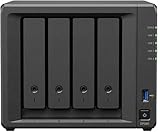
- One Place for All Your Data - Consolidate scattered files from multiple computers, phones and external drives into one accessible hub with 100% ownership
- Professional File Collaboration - Share projects with clients, sync documents across teams and maintain version control without Dropbox fees
- Automated Backup Protection - Set-and-forget backups for Macs, PCs and mobile devices to multiple destinations including cloud and external drives
- DIY Surveillance System - Transform IP cameras into a professional monitoring solution with motion alerts, recording schedules and remote viewing
- 2-Year Warranty - Reliable hardware backed by Synology's expert customer support team and ongoing software updates
What DD Boost meant for performance
DD Boost was EMC’s software integration technology for supported backup applications. It could distribute portions of the deduplication work to the backup application or media server, reducing the amount of data sent to the appliance and potentially improving performance.
EMC comparison material associated the DD160’s top figure—up to 1.1 TB per hour—with DD Boost. Other access methods were listed at approximately 667 GB per hour. These were vendor maximums, not independent benchmark results. Actual throughput would depend on the backup software, number and size of streams, network, source servers, media servers, data-change rate, and deduplication behavior.
Backup ingest speed also should not be treated as a guaranteed restore speed. Recovery performance would depend on the target workload, network path, concurrency, and recovery procedure.
Where the DD160 fit
The appliance was aimed at smaller environments that needed a dedicated backup target rather than general-purpose primary storage. Likely launch-era use cases included:
- On-premises backup for an SMB or small enterprise data center.
- Backup protection for a remote or branch office.
- Replication from a branch office to headquarters.
- Replication from a customer site to a service provider’s data center.
- Partner-managed backup and recovery services.
- A lower-cost entry point for customers that previously found deduplication appliances too expensive.
A deduplicating backup appliance did not eliminate WAN constraints. Replication still required suitable bandwidth, a compatible target, appropriate retention policies, and monitoring. Deduplication might reduce transferred data, but the benefit depended on change rates and the replication implementation.
What’s actually slowing this PC down?
Pick the symptom - the matching free tool is one click away.
DD160 versus the other announced models
EMC announced the DD160 alongside the DD620 and DD640. The comparison shows why the DD160 was primarily an entry-level and channel product rather than a universal choice.
Rank #3

- 【Keep Your Kitchen Organize】The clever design makes it easy to organize the cord of various small appliances. The product is made of high-strength and tough plastic + strong adhesive. The strong material can securely lock the thick power cord.
- 【Slender Design】Slim design does not take up space, makes it easy to wrap and organize longer power cords. And allows you to choose horizontal or vertical stickers at will depending on the location of use. Width of 0.4 in, length of 4.4 in, it can be used to wrap power cord and data cables with a diameter ≤ 0.35 in and a length ≤ 4 ft.
- 【Cable Clip Design】The clip design can easily clamp the plug after the power cord is wrapped. Avoid scattered.High quality strong adhesive for easy sticking on any smooth and flat surface. Such as: appliances, walls, desktops, tiles, wood metal. Suitable for kitchen appliances, bread machines, juicers, air fryers, power strip, etc.
- 【Tips for Using】1. Please don't stick on the arc surface, or choose vertical pasting. 2. Wipe the surface to be pasted clean, don't leave water stains. 3. Please wait 24 hours after pasting before use, to ensure that the strength of the adhesive is released and increased. 4. Don't organize cable lengths that are too long, it is recommended not to exceed 4 ft.
- 【Service】PZOZ offers 12-month quality service. Package includes: 4 x Cord Organize.
| Model | Positioning | Physical or user capacity | Reported performance | Launch price |
|---|---|---|---|---|
| DD160 | Entry-level, channel-focused | Up to about 3.98–4.0 TB | Up to 1.1 TB/hour with DD Boost | From $10,000 |
| DD620 | Larger midrange replacement for DD610 | Up to 8.3 TB | Up to 2.4 TB/hour | About $20,000 |
| DD640 | Larger model replacing DD630 | Up to 32 TB | Up to 3.5 TB/hour | From $35,000 |
The DD160’s significance was not its absolute performance. Its value was the lower entry price, compact form, simpler SMB positioning, and availability through partners that could bundle it with storage, backup software, installation, monitoring, and managed replication.
Important limitations
Capacity was limited
With roughly 3.98 TB of maximum usable capacity in later material and no indicated ES30 shelf support, the DD160 could become restrictive for long retention periods, large virtual-machine estates, rapidly growing file repositories, or multiple customers consolidated onto one appliance.
Logical capacity was workload-dependent
Buyers could not safely size the system against the best-case 195-TB figure. Capacity planning needed to account for daily backup volume, full-backup frequency, incremental change rate, retention, replication copies, metadata, system overhead, and growth reserve. Representative backups were preferable to generic deduplication-ratio assumptions.
It was a backup target, not a SAN replacement
The DD160 was primarily intended for backup, archive, and replication workflows with supported access methods and backup-software integrations. It was not a general-purpose replacement for primary storage.
Channel quality mattered
Channel-only distribution could provide local expertise and managed services, but the customer experience depended heavily on the reseller’s ability to design retention policies, configure replication, monitor capacity, and test recoveries.
Independent reader supportYour contribution helps us test, update, and keep practical guides available for everyone.Historical alternatives
The DD140 was the direct predecessor and was replaced by the DD160 as the entry model. Customers needing more capacity or throughput could consider the DD620 or DD640 within the same historical family.
Other categories offered different trade-offs:
- Conventional disk-based backup: potentially simpler at small scale, but generally requiring more raw storage and possibly more replication bandwidth.
- Tape: useful for low-cost offline or air-gapped retention, though operational recovery can be slower and more manual.
- Cloud backup: avoids customer-owned hardware but introduces recurring fees, network dependence, egress considerations, and provider-retention questions.
- Competing deduplication appliances: historically available from several storage and backup vendors, but specific models, prices, and support status require separate verification.
Why the DD160 mattered
The DD160 reflected a broader shift in enterprise infrastructure sales. EMC was not simply shrinking a product for smaller customers; it was using a channel-exclusive appliance to make deduplication easier for solution providers to sell as part of a broader offering.
Do these 3 things before closing this tab:
1Repair Windows errors before they cause bigger problems2Fix the driver behind crashes, sound loss and screen glitches3Clear out junk files and repair common Windows errorsFor partners, the appliance created opportunities around customer-site backup, branch-office protection, central replication, implementation, monitoring, and managed recovery. For EMC, it connected Data Domain technology with the company’s larger SMB channel push, including VNXe and partner recruitment.
The product’s modest physical capacity was therefore part of the positioning. It was intended to be an approachable entry point for smaller backup environments, not a high-capacity consolidation platform.
Current-status qualification
The DD160 was announced on October 13, 2011. Its specifications, compatibility references, distributor list, and pricing belong to that launch period. The historical sources used here do not establish whether the DD160 remains orderable, supported, secure, or commercially appropriate in 2026.
Anyone researching a modern equivalent should compare current appliances or managed backup services against usable capacity, backup and restore throughput, replication, immutability, ransomware recovery, support life, software compatibility, and total cost. Used DD160 hardware would be a poor fit where current support, modern security features, warranty coverage, high-capacity expansion, or cloud-native protection is required.
Sources: EMC announcement; CRN launch coverage; Data Domain and Avamar comparison material; DD160 data sheet.
Quick Recap
Product prices and availability are accurate as of the date/time indicated and are subject to change. Any price and availability information displayed on Amazon at the time of purchase will apply.




