Diodes Incorporated agreed on April 4, 2008, to buy U.K.-based semiconductor maker Zetex plc for cash, offering 85.45 pence per ordinary share. The announced value was about $176.3 million (£89.1 million at the exchange rate cited at the time). The acquisition closed on June 9, 2008, so this was a completed historical deal, not a pending takeover.
What were the terms of the Zetex acquisition?
| Deal detail | What was reported |
|---|---|
| Buyer | Diodes Incorporated, a Dallas-based supplier of discrete and analog semiconductors |
| Target | Zetex plc, a U.K.-based semiconductor designer and manufacturer |
| Offer | 85.45 pence in cash per Zetex ordinary share |
| Announced value | About $176.3 million, or approximately £89.1 million at the exchange rate cited in Diodes’ April 4, 2008 announcement |
| Announcement and completion | April 4, 2008; June 9, 2008 |
| 2007 revenue | Diodes: about $401 million; Zetex: about $127 million; combined: about $528 million, according to the announcement |
The deal value depends on what is being counted. Diodes later reported approximately $176.138 million in consideration for Zetex’s shares and total purchase costs of approximately $180.192 million after acquisition-related costs. These accounting figures are not a different per-share offer; they use a different basis from the announcement’s equity valuation. Contemporary coverage also rounded the deal to about $178 million, so that rounded figure should not be confused with the formal announced value. See Diodes’ later acquisition accounting.
Why did Diodes want Zetex?
Diodes presented the acquisition as a way to broaden its product range and geographic reach. Diodes had a strong position in high-volume discrete products and customers in North America and Asia. Zetex added high-performance analog and discrete products, including signal-processing, power-management and LED-driver technologies, as well as greater exposure to industrial and automotive customers.
The companies also expected to sell more products through one another’s customer and distribution networks. Diodes said the combination could produce revenue, operating and cost synergies and expected the transaction to be accretive to GAAP earnings per share within 12 months. Those were management projections at the time of the deal, not guaranteed outcomes. The strategic rationale and expected benefits are set out in Diodes’ acquisition announcement.
What’s actually slowing this PC down?
Pick the symptom - the matching free tool is one click away.
#1 Best Overall

- New 1N4001 Fairchild Semiconductor Diode, Standard, 1A, 50V, 5 pieces
What did Zetex bring to Diodes?
Zetex was more than a product portfolio. Its assets and footprint gave Diodes additional technology, manufacturing capability and access to European customers:
- Products: High-performance analog and discrete semiconductors, including power-management, signal-processing and LED-driver technologies.
- Markets: Greater exposure to industrial and automotive applications, alongside Zetex’s existing semiconductor markets.
- Operations: A wafer-fabrication plant in the U.K. and package-development, assembly and testing capability in Germany.
- Geographic reach: A stronger European customer base, with sales offices in Munich and New York and support from distributors and representatives.
That footprint complemented Diodes’ existing wafer-processing and packaging capabilities and its stronger North American and Asia-Pacific presence. Diodes described Zetex’s assets and European operations in its 2009 filing.
Rank #2

- ZXMN2B01FTA- N-Channel MOSFET transistor designed for switching, power management, and circuit control applications.
- Compact SOT-23 Package - Surface-mount design enables efficient PCB assembly and integration into space-constrained electronic devices.
- Efficient Power Switching - Suitable for low-voltage load switching, battery-powered devices, power regulation circuits, and embedded electronic systems.
- Reliable Semiconductor Performance - Engineered for dependable operation and consistent electrical characteristics in demanding electronic circuit designs
How much of a premium did Zetex shareholders receive?
Contemporary trade coverage reported that the 85.45-pence offer was about 96% above Zetex’s closing share price on April 3, 2008, the last business day before the offer period began. It also put the offer at about a 27% premium to Zetex’s average closing share price over the preceding 12 months. Those comparisons were reported at the time by Embedded.com; they are market-price comparisons, distinct from the overall equity value of the transaction.
How was the deal financed, and what risks did that create?
Diodes initially arranged a $165 million margin loan secured by its auction-rate securities portfolio to help fund the acquisition. In November 2008, the company replaced that financing with a “no net cost” loan or credit line. Diodes’ filing says the replacement financing was fully repaid by June 30, 2010. The financing sequence matters because the acquisition took place amid severe financial-market stress, when credit and auction-rate securities were under pressure. Diodes described the arrangement and repayment in its 2008 Form 10-K.
Rank #3

- New 1N4001 Fairchild Semiconductor Diode, Standard, 1A, 50V, 15 pieces
- 5961-01-175-8453 , 5961-01-580-1049
The combination also carried ordinary but material integration risks: coordinating operations in the U.S., U.K. and Germany, aligning manufacturing and product development, and delivering the cross-selling and cost benefits management had forecast. Diodes’ later reporting discussed integration, product-development realignment and headcount reductions at wafer fabs; these were post-acquisition execution matters, not terms of the original offer.
Independent reader supportYour contribution helps us test, update, and keep practical guides available for everyone.What happened after the acquisition closed?
The legal acquisition completed on June 9, 2008. Diodes’ financial statements included Zetex’s operating results from June 1, 2008, an accounting start date that precedes the reported closing date. For 2008, Diodes reported revenue of $432.8 million, up 8% from 2007; that figure included about seven months of Zetex revenue. Research and development spending rose from $13.5 million in 2007 to $22.5 million in 2008, primarily because of the acquisition, according to the 2008 Form 10-K.
Rank #4

- Part Number:1N5359B
- Part Type:Zener Diode
- Zener voltage (VZ):24 V
- Power Dissipation (PD):5 W
- Package:DO-27
Diodes’ later filings treat Zetex as a 2008 acquisition whose technologies expanded the company’s discrete and analog portfolio, including bipolar-transistor and LED-driver-related capabilities—not as an independent publicly traded business. See the company’s 2016 annual report.
Quick Recap
Best Value
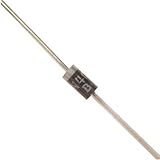
- 1N4003, Vr= 200V
- VR(RMS)=140V, 1A Diode.
Product prices and availability are accurate as of the date/time indicated and are subject to change. Any price and availability information displayed on Amazon at the time of purchase will apply.
Recommended Free Tools




