A strong copywriting portfolio makes it easy for a prospective client or employer to see what you write, who you write for, and how to contact you. Study professional examples for presentation ideas, but adapt them to the work you want—not as proof that a particular design guarantees gigs.
What to look for in a copywriter portfolio
Evaluate a portfolio by how quickly it answers a buyer’s practical questions: Is this writer suited to my project? Can I inspect relevant work? Do I understand what each sample was meant to do? Is it straightforward to get in touch?


- Positioning: Does the writer name a specialty, audience, or kind of business—or present a broader range?
- Relevant samples: Are the visible pieces similar to the work a potential client might commission?
- Navigation: Can a visitor reach the writing without hunting through menus or unrelated material?
- Context: Does the portfolio explain the writer’s role, the format, or the project background where that information is available?
- Personality: Do the visual choices and voice feel distinctive while keeping the work easy to read?
These are useful comparison lenses, not a validated ranking system. HubSpot’s roundup notes that portfolios vary in color, layout, and personality, and cautions that too many samples can overwhelm a prospective client or employer. Its guide, updated July 31, 2025, collects 25 examples—not 49: HubSpot’s copywriting portfolio examples.
Portfolio examples grouped by presentation choice
Rather than imitate a single design, compare examples by the choices they make. The cited roundups and live pages are useful starting points for studying those choices; portfolio contents can change, so inspect the pages themselves before using them as a model.
#1 Best Overall

- 30-Pocket Portfolio Display Book: Each art binder with 30 bound clear sheet protectors, letting you show 60 pages of 8.5x11" letter size or smaller. Folder measures 11 1/2" (L) x 9 11/16" (W) x 9/16" (G).
- Customizable Spine Title: You can label and identify your watercolors, sketches, scrapbook, art pieces, sheet music, certificates, and other projects by customizing the reversible spine insert.
- High Transparency & Lies Flat When Open: Our presentation book with crystal clear PP sheet protectors offers complete transparency for checking through and organizing. Bound sheet protector lies flat when open, free your hands.
- Archival Quality & Heavy Duty: Made from durable and light weight polypropylene which is archival quality, acid-free, non-stick, and non-glare, and water-proof. Thickened and sturdy cover won’t easy to crack and keeps your clear sleeves from being damaged.
- Multi-Function: Not only suitable for long-term storage but also for displaying your paintings, photos, artwork, drawing, stencils. Great gift for students, teachers, office workers, secretaries, musicians, painters, etc.
1. Portfolios that make the work easy to reach
Look at how quickly each example gets visitors from its opening page to writing samples. A selected-work page, clear sample labels, or direct links can help a reader inspect the work without guessing where it lives. Jenny Lucas Copywriting’s public work page is one example of a selected-work presentation: Jenny Lucas Copywriting’s writing samples.
When you review a portfolio, note whether the navigation serves a likely client’s task: finding a relevant piece, understanding the writer’s range, or locating contact details. The best lesson is the one that suits your own work and audience—not necessarily the most elaborate layout.
Rank #2
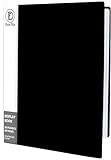
- CAPACITY: Binder having 30 strongly bound Transparent Plastic Sleeves to display upto 60 Pages of 8.5x11 inches US Letter Size or smaller with extra Insert Pocket inside to quickly access Document or CV during Interview
- CUSTOMIZABLE SPINE & IDENTIFICATION: Labeling with better Organization is very easy with reversible insert spine for music sheets, sketches, art pieces, cooking recipes and other projects
- PREMIUM QUALITY: Outer Binder is designed in elegant Black. Both Sleeves & Insert Pocket are Transparent, Nonstick & Non-Glare. Premium Plastic material is used to make it Durable & Waterproof
- EASE OF USE: Edges are slightly curved & non-pointed for comfortability. Reinforced bound transparent sleeves lie flat when open giving hands free, clear viewing convenience & light weight experience
- VERSATILITY: Display Book is suitable to store, organize & present kids art, stencils, paintings, photos, drawings & important documents protecting from dust & moisture for professionals, Job Searchers, Students, Teachers, Chefs, secretaries, musicians & painters etc
2. Portfolios that explain what the writer does
A visitor should be able to connect the writer’s offer to a possible assignment. Notice whether an example identifies a specialty, service, or type of work, and whether that description is supported by visible samples. If you serve more than one market, organize the work so a visitor can find the category that matters to them.
AWAI’s portfolio guide combines advice with professional examples, making it a useful source for comparing ways to present writing and show what a prospective client might commission: AWAI’s copywriting portfolio guide and examples.
Free tools Windows power users keep installed
One-click scans. No signup required.
Rank #3

- 11"x17" Precise Fit & Large-Capacity Artwork Storage:Tailored for 11"x17" / A3-sized creations, this portfolio folder for artwork doubles as a practical diamond art storage book and diamond painting storage book, perfectly fitting 11.18"x17.4" diamond paintings, sketches, and watercolors. Equipped with 30 top-loading non-refillable clear sheets, it’s a functional folder with plastic sleeves supporting double-sided storage for up to 60 pages, easily organizing both finished and in-progress works to solve your storage hassle.
- Archival-Grade Protection for Display Book & Presentation Book Performance:Crafted from acid-free, waterproof, non-stick, and non-glare polypropylene, this display book and presentation book features a thickened sturdy cover that resists cracking. The 5-mil high-transparency inner sleeves shield your pieces from dust, moisture, and scratches, ensuring long-term preservation of precious works in your artwork storage system without any damage.
- Tooth-Integrated Binding & User-Centric Art Portfolio Design:This robust art portfolio boasts a firm tooth-integrated binding system, paired with a non-loose-leaf structure that totally avoids page falling out even with repeated flipping. Its lay-flat design keeps your hands free whether you’re browsing finished works or working on new creations. A built-in inner pocket is engineered to facilitate keeping paper sheets securely in place when flipping pages, store blank paper, and keep small art items like stickers organized.
- All-in-One Storage & Portable Display for Art & Collectibles:Perfectly fits 11×17 inch standard-sized artworks, posters and photos as the core use; ideal for tidying up kids’ school art and handcrafts at home; also great for storing family portraits, old photos, movie/band posters, watercolor pieces and autographed collectibles; doubles as a portable display tool for craft fairs, school exhibitions, meetings and interviews, letting you flip and share works without damage while solving the trouble of limited wall space.
- Generous Size Design for 11x17 & A3 Art Storage:Features an outer shell with length 17 11/16" × width 12 13/16" and inner transparent sleeves with length 16 9/16" × width 11 13/16", perfectly fitting A3 artworks, matching-sized photos and posters for safe storage and clear, hassle-free display.
3. Portfolios that put samples in context
A headline or image alone may not tell a visitor what you contributed. Where you can share the information, add a short note that identifies the format, your role, and relevant project context. Keep the description factual: distinguish your work from other people’s contributions and avoid implying results you cannot substantiate.
Jenny Lucas’s page also states that copywriters adapt their style to client needs. That is a useful idea to demonstrate through a range of samples or a brief explanation of how you approach different assignments, rather than suggesting that one voice fits every project.
4. Portfolios with a distinct visual identity
Color, typography, imagery, and layout can give a portfolio personality, but the writing still needs to be legible and easy to find. Compare the visual choices across HubSpot’s examples, then consider which details reinforce your positioning and which might distract from the samples.
5. Portfolios published with a website builder
An online portfolio is one option, not a requirement. Wix describes customizable templates and portfolio features, while Copyfolio discusses copywriting sample types and presentation. Their guides can help you assess website-based presentation options: Wix’s guide to making a copywriting portfolio and Copyfolio’s copywriting portfolio examples and advice.
Do these 3 things before closing this tab:
1Clear out junk files and repair common Windows errors2Scan for outdated or missing drivers - takes under a minute3Repair Windows errors before they cause bigger problemsBest Value
What to include in your own portfolio
A portfolio can be a website, document, or file. Choose the format that lets your intended client or employer assess relevant work without unnecessary friction; Indeed UK’s step-by-step guide covers creating a copywriter portfolio: Indeed UK’s copywriter portfolio guide.
- A clear introduction: Say what kind of copywriting you do and who you aim to help.
- A curated selection: Choose pieces that demonstrate the work you want to be hired for. A smaller, relevant set is easier to assess than a crowded archive.
- Useful context: Identify the format and your contribution, and include project background when you can share it accurately.
- Honest sample labels: Separate paid client work from self-initiated or speculative examples. Do not present a practice piece as commissioned work.
- Contact details: Make the next step clear and easy to take.
- Current presentation: Check that links work, samples remain accessible, and the portfolio reflects the services you offer now.
If you plan to show client work, confirm you have permission to publish it before putting it in your portfolio. The cited portfolio guidance does not establish the legal or contractual rules for every project, so check the terms that apply to your work.
How to choose which examples to study
- Start with the gig you want. Decide whether you are targeting a particular industry, format, or type of client.
- Find portfolios with a comparable offer. Look for examples whose positioning or sample types help you think through your own presentation.
- Inspect the visitor’s path. Note how the portfolio introduces the writer, organizes work, and makes contact possible.
- Record adaptable choices. Borrow principles—such as clear labels or relevant sample groupings—not another writer’s identity or unsupported claims.
- Apply the choices selectively. Keep only what makes your own work easier to evaluate.
Professional examples show possible approaches; they do not establish that a layout, color scheme, or portfolio format causes a writer to win gigs. Treat each portfolio as a source of ideas, then make your presentation fit the work you want buyers to consider.
Quick Recap
Product prices and availability are accurate as of the date/time indicated and are subject to change. Any price and availability information displayed on Amazon at the time of purchase will apply.
The Tool Desk
Outbyte Driver Updater FREEFix the driver behind crashes, sound loss and screen glitchesFind Drivers →Outbyte PC Repair FREERepair Windows errors before they cause bigger problemsFix Now →



