Do these 3 things before closing this tab:
1Clear out junk files and repair common Windows errors2Scan for outdated or missing drivers - takes under a minute3Repair Windows errors before they cause bigger problemsYes, the BidenCash giveaway was real—but the headline needs qualification. On October 9, 2022, the criminal carding marketplace publicly distributed a file containing 1,221,551 payment-card records as a promotion. Researchers found that some records matched real cardholders and banks, while many others appeared recycled, expired, blocked or otherwise unusable.
This was not a new 2026 data leak, and it was not evidence that 1.2 million unique, active cards from one bank were simultaneously available for fraud. BidenCash’s original infrastructure was later seized by U.S. authorities on June 4, 2025. The broader stolen-card economy, however, continued beyond that takedown.
As an Amazon Associate I earn from qualifying purchases.
The accurate description: BidenCash gave away approximately 1.22 million payment-card records in a dark-web marketing promotion in October 2022. Some data was genuine and potentially dangerous, but the public evidence does not establish 1.2 million unique victims, active cards or successful fraud opportunities.
This is a historical cybersecurity story, not a current leak
The specific 1.2-million-card report dates to October 9, 2022. It is sometimes resurfaced without its date, making the event sound like a new breach. It is not.
#1 Best Overall

- Pocket sized security solution - no hardware installations or modifications required
- Detects deep insert and overlay skimmers hidden inside ATMs & fuel dispensers
- Works in ATMs, fuel pumps, kiosks, vending machines, smart parking meters & card readers
- Simple operation with bright LED and audible alert
- Made entirely in the USA
BidenCash was subsequently disrupted on June 4, 2025, when U.S. authorities announced the seizure of approximately 145 associated darknet and traditional-web domains and cryptocurrency funds. According to the U.S. Department of Justice, BidenCash had supported more than 117,000 customers, facilitated the trafficking of more than 15 million payment-card numbers and related personal information, and generated more than $17 million in revenue.
That seizure targeted BidenCash’s infrastructure. It did not make every previously exposed card safe, prove that every old record had been invalidated, or end the wider market for stolen payment information.
What BidenCash was
BidenCash was a criminal carding marketplace that sold stolen payment-card data and associated personal information. The market’s name and imagery appropriated the identity of Joe Biden; it was not affiliated with Biden, the U.S. government, a legitimate financial institution or any legitimate payment-card program. Recorded Future News reported on the market’s name appropriation and the later law-enforcement operation.
The Tool Desk
Outbyte Driver Updater FREEScan for outdated or missing drivers - takes under a minuteDriver Scan →Outbyte PC Repair FREEClear out junk files and repair common Windows errorsFree Scan →Public accounts differ slightly on when the operation began. BleepingComputer described the marketplace as launching in June 2022, while the Justice Department later said it commenced operations in March 2022. Those dates may reflect different definitions of launch, such as initial operations, public availability or the date investigators determined that activity began. Neither date changes the timing of the giveaway itself: the widely reported promotion occurred in October 2022.
What free meant
Free did not mean that criminals were publishing the information as a public-service warning. It meant users could obtain the promotional file without first paying BidenCash. The release was a customer-acquisition tactic designed to attract buyers and sellers to the marketplace.
Criminal markets have used free data releases as advertising. BleepingComputer reported that another carding market, All World Cards, had used a similar promotion in August 2021. That provides context for the tactic, but it does not prove that all BidenCash records came from that earlier marketplace.
What the 1.2 million records contained
The dataset was described as containing payment-card records, not necessarily complete files for 1.2 million people. Depending on the record, the information could include:
Rank #2

- USB Magnetic Card Reader Credit Card Reader,Memory Chip Card Reader Contactless NFC Chip Card Reader.Attention: it's magnetic carder read only! not encoder!
- Support to read magnetic card(no writting function) all 3 tracks, support to read SLE4442 chip card, Contactless NFC Chip Card,CPU chip card(APDU command is required for deep development).
- 2 lights on when connected, green light flashing when swiping.Work both as keyboard emulator(active mode/auto-reading mode) and support read by software(passive mode/HID mode).
- 3 Reading Modes: Two-way Swipe Magnetic Card Reader.Insertable Chip-reading Card Reader.Left side Contactless NFC Chip Card Reader( Turn on the left switch).
- The card reader is widely used for membership system, check-in checkout system, installed with KIOSK machine to read write card ect. If you have any question, feel free to contact our support team for technical support, we're always ready for you!
- Primary card number
- Expiration date
- Card verification value, or CVV
- Cardholder name
- Issuing-bank name
- Card type, status and class
- Street address, state and ZIP code
- Email address
- Phone number
- Social Security number in some records
BleepingComputer’s report said most of the records it examined contained more than 70% of the listed data types. That does not mean every one of the 1,221,551 records contained every field, or that every name, address, phone number and Social Security number was accurate.
The reporting commonly called the records credit cards, but the broader dataset included payment accounts generally. A Massachusetts bank notice connected the BidenCash promotion with potential exposure of a debit Mastercard account, illustrating why credit and debit risks should not be treated as identical.
Was the data real?
Some of it was verified as real. Italian threat-intelligence researchers at D3Lab identified the promotion on October 7, 2022. They checked portions of the material with several Italian banks, which confirmed that some entries corresponded to real cards and cardholders.
But the researchers also found evidence that the file was a mixture of newer and older material. D3Lab estimated that approximately 30% of the portion it examined appeared fresh. Among the Italian records examined, about half had already been blocked. That led the researchers to suggest that the actually usable share might have been as low as 10% in that subset.
Quick wins for a faster PC:
Scan for outdated or missing drivers - takes under a minuteDriver Scan →Repair Windows errors before they cause bigger problemsFix Now →Those figures must not be presented as a verified percentage for the entire worldwide file. They describe the portion D3Lab examined, and the terms measure different things:
- Fresh means a record appeared not to have been previously circulated or invalidated. It does not guarantee that a transaction would succeed.
- Usable depends on whether the card was active, complete, unblocked and accepted by an issuer, merchant or fraud-control system.
A record could look recent but still fail because the account had been closed, the card had been reissued, the issuer had blocked it, required additional authentication, or the data was incomplete. Records can also be duplicates or previously exhausted cards.
What the headline does not establish
| Claim | What the public evidence supports |
|---|---|
| 1.2 million victims | Approximately 1,221,551 payment-card records were included in the reported file. The number of unique people affected is unknown. |
| 1.2 million active cards | Some records were real and some may have been usable at the time, but many were recycled, blocked, expired or incomplete. |
| One major bank was breached | The collection appeared to combine material from multiple criminal sources. It was not publicly identified as one conventional breach of one company. |
| Every record included an SSN and full identity profile | Some records reportedly contained Social Security numbers and other identity data. Not every record necessarily contained every field. |
| Every listed card was compromised by BidenCash | The market distributed the records. The exact source of each record was not publicly established. |
| A specific reader’s card was included | Public reporting does not provide a reliable way for consumers to determine that from a name, address or bank match alone. |
How the information may have been collected
Researchers did not establish one source for every record. D3Lab suspected that some data came from web skimmers: malicious scripts placed on compromised online checkout pages to capture payment information as customers enter it.
Rank #3

- MSR90 is a USB emulation keyboard interface that not need any driver or software,USB simply plug and play
- Reads up to 3 tracks of information,can reads ISO7811, AAMVA, CA DMV and most other card data formats
- Threaded inserts for mounting. LED indicator, green light is on when connecting,green light blinks when cards swiped
- Bi-directional swipe reading, superior reading of high jitter, scratched, and worn magstripe cards, reliable for over 1,000,000 card swipes
- Configuration software makes configuration changes easy,works with: Windows OS and Mac OS
Visa researchers also suspected that BidenCash’s data came from other carding shops, criminal forums and malware infections. These are source assessments, not a definitive attribution for every row in the October file. Calling the event a single-company breach would go beyond the available evidence.
The broader BidenCash release timeline
The 1.2 million figure was one promotion in a larger pattern. Public sources use different dates, labels and counting windows, so the figures should not be simply added together as a deduplicated victim count.
| Date | Event | How to interpret it |
|---|---|---|
| August 2021 | All World Cards reportedly used a similar free-dump promotion. | Context for the marketing tactic, not proof that the BidenCash data came from that market. |
| March or June 2022 | Public sources give different dates for BidenCash’s start. | The DOJ later said operations began in March; BleepingComputer’s contemporaneous report described a June launch. |
| October 6, 2022 | A Massachusetts bank notice referred to BidenCash data advertised for free. | Institutional corroboration that at least one bank treated the exposure as a potential payment-account compromise. |
| October 7, 2022 | D3Lab identified the promotion. | Researchers began examining and validating portions of the file. |
| October 9, 2022 | BleepingComputer reported the 1,221,551-record giveaway. | This is the event behind the familiar 1.2-million-card headline. |
| October 2022 to February 2023 | The DOJ later counted 3.3 million individual stolen credit cards published for free. | A retrospective total for promotional releases during that period, not necessarily a count of unique victims. |
| March 2023 | Visa reported another release exceeding 2.1 million allegedly compromised payment accounts. | A separate later release, with Visa’s wording of allegedly compromised retained. |
| June 4, 2025 | Authorities seized approximately 145 BidenCash domains and associated cryptocurrency. | The original BidenCash infrastructure was disrupted and domains were redirected to law-enforcement-controlled servers. |
Because the 1.22 million, 3.3 million and 2.1 million figures describe different releases or counting periods, public reporting does not support a reliable deduplicated total. The numbers may include repeated cards, recycled records or records counted under different categories.
Why exposed card data can still be dangerous
The most immediate use is card-not-present fraud: online or telephone purchases where criminals do not need the physical card or its chip. A complete record containing a card number, expiration date and CVV is generally more useful for that purpose than an isolated card number.
EMV chips and tokenization have reduced the value of some stolen payment data, particularly for certain card-present transactions. Visa noted that these technologies do not make exposed card-not-present information harmless. Issuers and merchants may also apply extra authentication or automated fraud controls, which is one reason a genuine record may still fail.
Crashes, No Sound, or Screen Glitches?
Random freezes, missing sound and display glitches usually trace back to one bad driver. Find and replace yours safely.Free scan · under a minutePC Slower Than It Used to Be?
A free scan shows the junk files, broken settings and background clutter dragging Windows down - then fixes them in one click.Free scan · Windows 10 & 11When payment data is combined with a name, address, email address, phone number or Social Security number, the risk can extend beyond a single fraudulent purchase. Criminals may use the information for:
- Phishing and bank impersonation
- Password-reset and account-takeover attempts
- Social engineering against a bank, merchant or mobile carrier
- New-account identity theft
- Fraudulent calls or messages that use real personal details to appear credible
Recorded Future’s payment-fraud reporting similarly describes exposed card data accompanied by contact information as a broader social-engineering and account-takeover risk.
Rank #4

- Accept all major credit and debit cards and pay one low rate
- No hidden fees and no long-term contracts
- Mobile card reader that accepts payments anywhere & anytime
- Use the free SumUp App on your smartphone or tablet to start accepting transactions
- Simply pay 2.6% +10 per in-person transaction
What consumers should do
There is no public evidence that lets an individual prove a particular card was in this historical file. The sensible response is based on what information may have been exposed and on any suspicious activity—not on downloading or searching criminal-market data.
If only a credit-card number may be exposed
- Contact the issuer. Use the telephone number on the back of the card, the official bank application or a statement—not contact details in an unexpected email or text.
- Ask whether the account should be replaced. The issuer can cancel the existing number and issue a new card if needed.
- Review transactions. Check recent activity and continue watching for delayed unauthorized charges.
- Turn on alerts. Enable purchase and transaction notifications wherever the issuer offers them.
- Update recurring payments. Replace the old card details with the new number for subscriptions, utilities and other automatic payments.
The Consumer Financial Protection Bureau advises contacting the card provider immediately when unauthorized activity is suspected. If only the account number was stolen and the physical credit card was not lost, consumers generally have strong federal protections against unauthorized charges, but prompt reporting is still important.
What’s actually slowing this PC down?
Pick the symptom - the matching free tool is one click away.
If a debit-card account may be involved
Debit cards draw directly from a bank account, and reporting rules and potential liability differ from credit-card rules. Report unauthorized activity to the bank promptly.
- If the physical debit card was lost or stolen, reporting within two business days generally limits liability to no more than $50.
- Waiting longer can increase potential liability.
- If the physical card was not lost, unauthorized transactions should generally be reported within 60 days after the statement showing them becomes available.
Ask the bank whether it recommends closing and replacing the debit card, changing the account number or taking other steps to protect the account. Do not wait for a fraudulent charge before contacting the bank if the institution has notified you of a specific exposure.
If a Social Security number or broader identity information may be exposed
- Review your credit reports for accounts, inquiries or addresses you do not recognize.
- Place a credit freeze with Equifax, Experian and TransUnion. The freeze is free, does not affect an existing credit score and remains in place until you lift it.
- Consider a fraud alert. A one-year fraud alert can be placed with any one of the three credit bureaus; that bureau must notify the other two.
- Report identity theft at IdentityTheft.gov if an account has been opened or fraud has occurred in your name.
- Change reused passwords, especially for email, banking and financial accounts. Use unique passwords and multifactor authentication where available.
- Expect targeted phishing. Be cautious of messages that use your name, address, phone number or bank information to pressure you into sharing a password, one-time code or payment.
The Federal Trade Commission explains the difference between freezes and fraud alerts. A freeze helps prevent new credit accounts from being opened in your name. A fraud alert asks businesses to verify your identity before opening new credit, but it does not block access to your credit report.
What a credit freeze cannot do
A credit freeze does not replace a compromised card, stop fraudulent charges on an existing card or automatically protect a bank-account login. Card fraud must be handled with the card issuer. Bank-account and password security require separate action.
Free tools Windows power users keep installed
One-click scans. No signup required.
What consumers should not do
- Do not download or search old criminal-market files. Handling stolen data can create legal, privacy and malware risks.
- Do not enter card details into an unverified dark-web checker. A site claiming to search the dump may be another attempt to collect payment or identity information.
- Do not use contact information from an unsolicited message. Call the bank through the number on the card, its official application or a verified statement.
- Do not assume the absence of a charge means the card is safe. Fraud can occur later, and criminals may first test whether an account is active.
- Do not treat a matching name or address as proof. Common personal details can appear in many unrelated datasets and do not establish that a card was in the BidenCash file.
For legitimate help, use the issuing bank, the official bank application, your card statement, AnnualCreditReport.com and IdentityTheft.gov.
Best Value
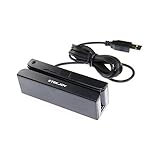
- USB interface, keyboard emulation, no need to install software to read, configuration software for changing settings available.
- Read data from all 3 tracks, high and low coercivity cards, ISO7811, AAMVA, CA DMV and most magnetic card data formats.
- Work on Windows, Mac and other USB capable systems. Work with TXT, notepad, Word, Excel, POS systems and son on.
- Compact size, with 145cm USB cord, two 3mm-diameter screw holes for fixing at the bottom, a LED indicator light
- Perfect for POS, Banking, Loyalty, Access Control, ID verification and other applications.
What the 2025 seizure changed
On June 4, 2025, U.S. authorities announced that they had seized approximately 145 domains associated with BidenCash and redirected them to law-enforcement-controlled servers. The DOJ said the marketplace had trafficked more than 15 million payment-card numbers and related personal details during its operation.
The seizure disrupted BidenCash itself, but it did not erase copies of old data that criminals may already possess. Nor did it end payment-card trafficking. Recorded Future’s 2025 reporting documented continued activity from other carding sources after major takedowns.
The seizure announcement did not announce arrests of BidenCash operators. A report from The Record said the DOJ and FBI had not provided arrest information at the time of publication. It is therefore not accurate to imply that the operators were publicly confirmed as arrested based on the seizure alone.
The bottom line on the 1.2 million-card claim
The headline was based on a genuine criminal-market promotion, but it compresses several important distinctions. The event involved 1,221,551 payment-card records, not a verified count of 1.2 million unique people or active cards. Some records were confirmed as real; others were recycled or already blocked. The data may have included both credit and debit accounts, as well as personal information that created identity-theft and phishing risks.
For consumers, the correct response is not to hunt for the old file. Contact the issuer about any potentially exposed card, monitor transactions, respond quickly to unauthorized activity, and freeze credit if Social Security or broader identity information may be involved.
Frequently Asked Questions
Was the BidenCash 1.2 million-card giveaway real?
Yes. BidenCash publicly distributed a file containing 1,221,551 payment-card records in October 2022. Researchers verified that some records matched real cardholders and banks, but the file was not shown to contain 1.2 million unique active cards.
Were all 1.2 million cards usable?
No. D3Lab found recycled and already-blocked records. About 30% appeared fresh in the portion examined, and the researchers suggested that the usable share may have been as low as 10% in the Italian subset. Those estimates cannot be generalized to the entire file.
Recommended Free Tools
Should I replace my card because of the BidenCash story?
If your issuer notified you of exposure, or you see suspicious activity, contact the issuer through its official app, statement or the number on the card and ask whether replacement is appropriate. Do not download the old file or use an unverified dark-web checker.
Is BidenCash still operating?
U.S. authorities seized approximately 145 BidenCash-related domains and cryptocurrency funds on June 4, 2025. That disrupted the original marketplace, but it did not end the broader market for stolen payment-card information.
The Bottom Line
Bottom line: BidenCash’s October 2022 giveaway was real, but the reliable description is 1.22 million payment-card records containing a mixture of fresh, recycled, blocked and potentially fraudulent data—not 1.2 million unique, simultaneously usable credit cards. Treat any issuer notification or suspicious activity seriously, but use official bank and government channels rather than trying to access criminal-market files.




