There is no evidence-backed ranking of 55 toys for 18-month-olds in the sources available here. A more useful way to choose is to match a toy to your child’s current abilities, the kind of play you want to encourage, and the package’s safety guidance. The ideas below are categories—not tested products or a claim that a particular toy will cause a developmental gain.
How to choose a toy for an 18-month-old
Children the same age can have different skills and interests, so look for a toy your child can use now with a little room to explore. The American Academy of Pediatrics (AAP) puts it this way: “The best toys are those that match children’s developmental skills and abilities and further encourage the development of new skills.” Some toys will work best with a caregiver showing how to begin or joining the play.
Use the age label as a safety guide as well as a clue about intended play. Then consider whether the toy invites interaction, can be used in more than one way, and suits your child’s abilities. A toy does not need electronic features to hold a child’s interest: talking, naming, taking turns, and pretending together can make a simple object engaging.
Toy ideas by kind of play
Blocks and other easy-to-handle manipulatives
Large blocks let toddlers stack, knock down, and place pieces in containers. The AAP notes that an 18-month-old may try to use blocks functionally, such as stacking them. CDC’s 18-month activity guidance also suggests putting blocks or other items into and out of containers.
#1 Best Overall

- Meet learning friends Turtle, Tiger and Monkey who will introduce more than 100 age-appropriate words chosen by learning experts
- Word categories include: pets, animals, food, mealtime, colors, activities, opposites, outside and more
- Touching the words on the pages plays the words, sound effects and fun facts; hear the Learning Friends theme song and My Favorite Word by pressing the light-up star button
- Words, songs and instructions can be heard in both English and Spanish for a full bilingual experience
- Intended for ages 18+ months; requires 2 AA batteries; batteries included for demo purposes only; new batteries recommended for regular use. Product Dimensions: 9.4" wide x 9.2" height x 1.9" depth
Age-labeled large toddler blocks are a practical option. LEGO says children can play with DUPLO bricks from 18 months; that is a manufacturer age example, not an independent comparison or a guarantee that every set is suitable for every child. Check the package for the specific set and inspect pieces before play.
Simple cars and other pretend-play objects
A sturdy, simple toy car can be pushed along the floor, rolled back and forth with an adult, or included in pretend play. CDC suggests pushing toy cars as an activity. Dolls, toy figures, and familiar everyday objects can also support early pretend scenarios. For example, a caregiver can offer a doll a blanket and narrate what is happening; CDC specifically suggests pretending with a doll and blanket.
Rank #2
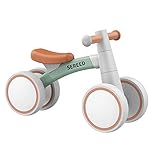
- GROW IN FUN: Recommended ages for 12-24 months. The infant balance bike is the best birthday gift for toddlers to learn walking and riding. It helps to develop babies' balance, steering, coordination, and gain confidence at an early age.
- SAFELY RIDE: No pedal and fully widened closed wheel to avoid clamping baby's feet. 135 ° turning limit and gravity steering without leaving the ground to prevent the baby from turning over.
- STURDY & COMFORTABLE DESIGN: The mini balance bike equips sturdy aluminum alloy frame, non-slip TPU handle, and a softly supportive seat.The mini balance bike wheels are non-slip, wear-resistant and non-destructive floor, and baby can ride indoors or outdoors.
- PERFECT GIFT FOR BABIES: This baby balance bike is made of high-quality material. This ensures that they are safe for any baby. Safe design can be assured as gift for 1 year old boys and girls.
- EASY TO CARRY: With only 1.6kg (3.6 pounds) of weight, both you and your children can easily carry it around to play. Increased the children’s interest, no need to worry about the children giving up because they can’t move it without your help.
Balls and safe push-or-pull toys
Rolling a ball to one another gives a toddler an easy turn-taking game. CDC suggests rolling balls and says, “Give toys that your child can push or pull safely.” Choose an age-labeled toy designed for toddler use, and supervise play. A small ball can be a choking hazard, so check its size and the package guidance rather than assuming every ball is suitable.
Books and picture talk
Books offer a shared activity: point to pictures, name familiar objects, and give your child time to respond in their own way. CDC recommends reading and talking about pictures. Choose books that are sturdy enough for toddler handling and appropriate for the child’s age.
Do these 3 things before closing this tab:
1Repair Windows errors before they cause bigger problems2Scan for outdated or missing drivers - takes under a minute3Clear out junk files and repair common Windows errorsRank #3

- 🎉 LEVELS OF FUN: With six different levels for the balls to travel, this tower is sure to be tons of fun. Each layer of the tower features a vibrant color and drops the ball in a different spot which makes it enticing for children. They're sure to have tons of fun watching the balls travel down the tower.
- ✨ EARLY CHILDHOOD DEVELOPMENT: The Kidoozie Whirl 'n Go Ball Tower helps your child learn cause and effect early as they see what happens as they drop the ball into the top level. It also develops fine motor skills, encouraging hands-on activity and sensory stimulation.
- 🎶 FUN RATTLE NOISES: This isn't your typical ball tower; these balls make sounds that your child will love. Rattling sounds will catch kids' attention as the balls descend the ramps one at a time.
- 🎊 WHERE FUN BEGINS: Kidoozie toys are engaging, educational and FUN. Our broad range of high-quality toys have won numerous awards and are safe and well designed. Innovative toys encourage movement, problemsolving and pretend play through various themes.
- 🎁 PRODUCT SPECIFICATIONS: Package contains (1) Kidoozie Whirl 'n Go Ball Tower. Includes six colorful levels and four balls. Features fun rattling sounds the encourage and excite children. Recommended for children ages 9 to 24 months.
Art materials and other open-ended play
The AAP includes art materials among useful toy categories, along with manipulatives, pretend-play objects, and books. For an 18-month-old, use only materials labeled for the child’s age and supervise closely. If a product has small components or requires more control than your child can manage, choose a simpler alternative.
Simple ways to play together
The CDC’s 18-month guidance describes activities rather than a ranked shopping list. Try one at a time and follow your child’s interest:
Rank #4

- FINE MOTOR DEVELOPMENT: Spike the Fine Motor Hedgehog helps toddlers strengthen hand muscles, improve coordination, and build the pincer grasp needed for future writing skills
- COLOR SORTING & MATCHING FUN: Practice color recognition, sorting, and matching with colorful quills that make this one of the most engaging color sorting toys for toddlers
- BUILD EARLY LEARNING SKILLS: Numbered holes encourage counting, sequencing, and problem-solving while supporting fine motor skills toys for toddlers through hands-on play
- PORTABLE STORAGE DESIGN: All 12 chunky quills store neatly inside Spike, making this toddler toy perfect for travel, restaurants, daycare, and learning on the go
- DESIGNED FOR LITTLE LEARNERS: Ideal for toddler Montessori toys, toddler sorting toys, toddler motor skill toys, and children ages 18 months+ developing essential early learning skills
- Roll a ball back and forth, pausing to let your child take a turn.
- Push a toy car across the floor and describe where it is going.
- Put blocks or other safe objects into a container, then take them out.
- Offer a suitable toy to push or pull, staying nearby as your child moves.
- Use a doll and blanket for a short pretend-care routine.
- Read together and talk about pictures your child notices.
These activities are suggestions, not promises of a particular developmental result. The AAP advises that digital toys should not replace face-to-face play; an adult’s attention and interaction are part of the activity.
Independent reader supportYour contribution helps us test, update, and keep practical guides available for everyone.Safety checks before buying or giving a toy
Follow the package’s age guidance and inspect the actual toy, not just its product description. AAP guidance warns against button batteries and high-powered magnets, and choking-prevention guidance identifies small toy parts and small balls as hazards.
Quick wins for a faster PC:
Clear out junk files and repair common Windows errorsFree Scan →Scan for outdated or missing drivers - takes under a minuteDriver Scan →Repair Windows errors before they cause bigger problemsFix Now →Best Value
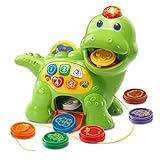
- Dinosaur toy recognizes the eight brightly colored food pieces as you feed him; provides fun responses as he eats each piece
- Baby learning toy dinosaur introduces colors, food, shapes and counting; play in either counting or meal mode
- Early learning center with 130+ songs, melodies, sounds and phrases; kids can answer Dino's questions with the correct food pieces
- 5 shape buttons teach shapes and numbers or rotate the spinning disc to play sing-along songs; pull toy interacts as it is pulled or pushed along
- Baby toy comes with volume control and auto shut-off and is for toddlers 1 to 3 years old; 2 AA batteries are included for demo, use new batteries for regular use
- Avoid toys with small or detachable pieces that could be mouthed or swallowed.
- Check battery compartments and avoid toys that expose button batteries.
- Avoid toys containing high-powered magnets.
- Look for damage, loose parts, or pieces that could detach during ordinary play.
- Stay close enough to supervise, especially when a toy has parts or motions that warrant attention.
An age label does not replace adult judgment. If your child has specific health care needs or you are unsure whether a toy is suitable, ask the child’s clinician for guidance; the AAP’s toy-buying advice encourages considering a child’s individual needs.
What this guide can—and cannot—tell you
The AAP and CDC guidance supports categories of play and concrete activities, not a product ranking. The sources do not establish that a particular toy improves milestones, produces language gains, or keeps a child independently occupied for a set period. Nor do they compare named products for quality, durability, or value. Treat category suggestions as starting points, then use the package label and your own judgment to select a specific toy.
Sources: AAP clinical report, “Selecting Appropriate Toys for Young Children in the Digital Era” (2019); AAP HealthyChildren, “Toy Buying Tips for Babies & Young Children” (November 23, 2021); CDC, “Milestones by 18 Months” (May 15, 2026); LEGO, “Developmental Milestones for Children Aged 0 to 3 Years”; AAP HealthyChildren, “Choking Prevention for Babies & Children” (updated February 27, 2026); and AAP HealthyChildren, “Your Checkup Checklist: 18 Months Old” (July 21, 2022).
Quick Recap
Product prices and availability are accurate as of the date/time indicated and are subject to change. Any price and availability information displayed on Amazon at the time of purchase will apply.




