Do these 3 things before closing this tab:
1Fix the driver behind crashes, sound loss and screen glitches2Clear out junk files and repair common Windows errors3Scan for outdated or missing drivers - takes under a minuteThere is no single best bank for every person. The right choice depends on whether you value low fees, a high savings yield, nearby branches, convenient cash deposits, travel benefits, or an integrated checking-and-savings experience.
For many U.S. consumers, the most practical answer is a two-bank setup: use a no-fee checking account with convenient ATM or branch access for everyday money, then keep emergency savings or CDs at a separate institution offering a better rate. As of August 10, 2026, SoFi, Chase, Capital One 360, Marcus, Ally, Schwab Investor Checking, Alliant Credit Union, and Chime each deserve consideration for different reasons. None is universally superior.
As an Amazon Associate I earn from qualifying purchases.
Rates, fees, network sizes, promotions, and eligibility rules can change. The APYs below are dated snapshots from the institutions’ published pages, not guarantees of the rate available when you open an account.
Best banks by use case
| Best for | Institution and account | Why it makes the shortlist | Main limitation |
|---|---|---|---|
| Digital-first banking and fee avoidance | SoFi Checking and Savings | No monthly account or minimum-balance fees, interest on checking, and a bundled checking-and-savings structure. | The strongest savings rate requires eligible direct deposit or qualifying deposits. It is primarily a digital experience. |
| Branches and broad everyday banking | Chase | Approximately 5,000 branches and more than 14,000 ATMs, plus a broad range of consumer financial products. | Basic checking can have a monthly fee, and its savings yield is usually not its main attraction. |
| Online and in-person hybrid banking | Capital One 360 | No-fee 360 Checking, no overdraft fees, more than 70,000 fee-free ATMs, selected branches and Cafés, and several cash-deposit options. | 360 Performance Savings cannot generally be accessed directly at an ATM; you transfer money to checking first. Savings APY is variable. |
| Savings and CDs | Marcus by Goldman Sachs | A focused savings and CD platform, no-fee savings, no minimum opening deposit for savings, and 24/7 support. | It does not provide a full-service checking ecosystem comparable to the leading everyday-banking options. |
| Balanced online banking | Ally Bank | No-fee, no-minimum savings; 24/7 support; and tools for organizing savings goals. | No branch network. APYs are variable and must be checked before opening. |
| International travel checking | Charles Schwab Bank Investor Checking | No monthly service fee, no overdraft fee, no foreign-transaction fee, and unlimited ATM-fee rebates worldwide for eligible cash withdrawals. | You must link the account to a Schwab One brokerage account, and brokerage assets are investments rather than FDIC-insured deposits. |
| Credit-union alternative | Alliant Credit Union | Competitive checking and savings yields, no monthly checking fee, a large fee-free ATM network, and ATM-fee rebates. | Membership eligibility and credit-union rules apply. Coverage comes from the NCUA, not the FDIC. |
| Mobile-first alternative | Chime | Mobile banking features, early direct deposit, broad cash-deposit access, and deposit insurance through partner banks. | Chime says it is a financial-technology company, not a bank. The service depends on partner banks and the Chime platform. |
These are category recommendations, not a universal ranking. Independent coverage reaches different conclusions because it weighs different features: NerdWallet’s 2026 coverage named SoFi its best bank, Chase its branch-access pick, Marcus its CD pick, and Chime its checking pick; Bankrate’s 2026 coverage named LendingClub its all-around online-bank pick, Capital One its online/in-person hybrid, and Ally its budgeting choice. Those differences reinforce the central point: the best account depends on the customer’s priorities.
#1 Best Overall
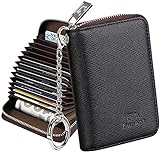
- Special Design: Multi-color optional and wear-proof classic business card holder looking.
- Plenty of Space: 16 card slots only measuring 4.1" x 3.0" x 1.1", including 13 credit card slots, 2 cash slots
- Protect Information Leakage: Prevents your vital information/cards from unnoticed scan with 2 outer layers RFID blocking materials.
- Extra Key Chain & Portable: Extra corns with key chain for your keys or lanyard. Portable use for shopping, traveling, etc.
- Great Gift: Practical compact wallet is the perfect gift. Give a thoughtful surprise to Men/Women on birthdays, holidays, celebrations, or any special occasion (e.g. Valentine's Day, Christmas, etc.).
Detailed picks
Best overall for a digital-first, fee-sensitive customer: SoFi Checking and Savings
SoFi is a strong starting point for someone who wants checking and savings under one digital-first account structure and wants to avoid routine account fees. Its product pages advertise no monthly account fees and no minimum-balance fees. The reviewed checking page listed 0.50% APY on checking, while SoFi’s rate page listed 3.10% APY on savings with eligible direct deposit or qualifying deposits and 0.80% APY without those requirements. Those rate figures were shown as current as of May 28, 2026; verify them and the qualification rules before applying at SoFi’s rate page.
The important qualification is easy to miss. The headline savings rate is not simply available to every customer without conditions. A reader whose direct deposit stops, whose qualifying deposits fall below the required amount, or whose circumstances no longer satisfy the terms may receive the lower rate. SoFi also advertises a limited-time promotion of up to 3.80% APY for qualifying new customers for up to six months, subject to the offer terms and a December 31, 2026 deadline. Treat that as temporary promotional pricing, not the account’s permanent yield. A separate paid SoFi Plus tier has its own rate structure. The product page also showed a promotion of up to $400 for qualifying direct deposits; promotional terms and tax treatment apply.
SoFi may make sense when your pay is deposited electronically, you rarely need branches, and you want a simple way to move money between spending and savings. It is a weaker fit if you deposit cash frequently, require regular in-person service, or will not meet the savings-rate requirements. SoFi also advertises up to $3 million in additional FDIC coverage through its Insured Deposit Program. That is a partner-bank arrangement, not ordinary $3 million coverage at one bank; read the program terms and confirm how your funds are allocated.
Free tools Windows power users keep installed
One-click scans. No signup required.
Best traditional bank with branches: Chase
Chase is the practical choice for readers who value physical access over the highest savings APY. Chase reports approximately 5,000 branches and more than 14,000 ATMs, along with checking, savings, lending, payment, business, and other financial products. That combination can be useful for cash deposits, cashier’s checks, in-person help, and customers who prefer one established institution.
The trade-off is cost. Chase Total Checking has a $15 monthly service fee unless a waiver condition is met. Examples include at least $500 in qualifying electronic deposits, a $1,500 beginning-of-day balance, $5,000 in combined qualifying balances, or certain linked-account relationships. The requirement that matters is the one you can meet consistently, not the one that works only during the month you open the account.
Chase Secure Banking charges $4.95 per month unless waived, but it does not charge overdraft fees. That can be useful for someone who wants a simpler spending account and accepts a monthly cost in exchange for a no-overdraft-fee structure. Chase is generally best for branch access and a broad product relationship, not for maximizing the interest earned on idle savings.
Best online and in-person hybrid: Capital One 360
Capital One 360 combines online account features with selected branches, Cafés, deposit-taking ATMs, and retail cash-deposit options. 360 Checking has no monthly fee, no minimum balance, and no overdraft fee. Capital One says customers can use more than 70,000 fee-free ATMs through Capital One, MoneyPass, and Allpoint networks.
Cash access is a meaningful advantage, but it is not identical to having a branch on every corner. Capital One accepts cash at selected ATMs and participating retailers. Its in-store service includes participating Walgreens, CVS, Kroger-family stores, 7-Eleven, and related locations, subject to location and account restrictions. The listed in-store limits are up to $999 per transaction, $1,500 per day, and $5,000 per month. Check the current cash-deposit instructions and the availability of a nearby location before relying on this feature.
360 Performance Savings has no monthly fee and no minimum balance, but its APY is variable and should be checked directly on the current product page. You generally cannot withdraw from that savings account directly at an ATM; you transfer the money to checking first. Separate service charges can apply for items such as outgoing wires or cashier’s checks even when the account itself has no monthly maintenance fee.
Capital One 360 is a strong fit for someone who wants low-cost digital banking but still needs more cash-deposit and in-person options than a purely online bank offers. It is not automatically the best home for every savings balance, so compare its current APY with the rate you can actually earn elsewhere.
Best for savings and CDs: Marcus by Goldman Sachs
Marcus is designed primarily for saving and locking in deposits through CDs rather than for full-service daily banking. Its savings account page lists no monthly fee, no minimum opening deposit, and unlimited withdrawals. The reviewed page listed a 3.40% APY savings rate as of July 29, 2026. Its featured nine-month CD listed 4.10% APY on the same date, with a $500 minimum deposit on the reviewed page. Rates can change before an account is opened or funded.
What’s actually slowing this PC down?
Pick the symptom - the matching free tool is one click away.
A CD can be useful when you know you will not need the money during the term and want a generally fixed rate. Early withdrawal penalties may apply, so do not use a CD for an emergency fund or money needed for a near-term bill. The 4.10% CD APY is an annualized figure; a nine-month CD does not pay nine full months of annualized interest on top of the principal. Compare the actual maturity value, term, penalty, and renewal instructions.
Rank #2

- 1:[Security Value set]: Ultimate premium identity theft protection sleeve set, made of aluminum foil waterproof materia, protect women,men’s credit cards,debit cards from electronic theft, fit into wallets and travel wallets. includes 12 rfid credit cards protectors in bright colors and 4 rfid passport protectors.
- 2:【Multi-Color, Lightweight Design】:Slim profile design fits easily into your wallet or purse without taking up extra space. these tiny slim RFID blocking sleeves ensures you will never be a victim of high-tech crime.Multiple colors, match your credit card with different color protectors, easy and quick to find the card you want.
- 3:【Safe and Durable】:Made from special RFID Aluminum foil material,High quality aluminum foil material can effectively shield electronic device scanning. Can effectively prevent card degaussing and theft brush, Rfid blocking sleeves envelopes for credit cards protect against scanning of digital and electronic chips by thieves to provide superior travel security.
- 4:【Suitable Size and Wide applicability】:credit card sleeves rfid blocking size : 91mm high / 3.58in, wide 63mm/ 2.48in, Passport Protector Size: 135mm high / 5.3in, wide 10.5mm/ 4.1in.Perfect fit credit cards, bank cards and passports with easy insertion.The ultra-thin design also fits perfectly into most women's and men's wallets. Bring safety and convenience to your life and travel.
- 5:【Perfect service】: Thank you very much for purchasing our products, To provide customers with satisfactory products and services is our eternal pursuit, at any time if you have any questions, please feel free to contact us, we are very happy to help you, and we will provide you with satisfactory service in 24 hours
Marcus is a good savings-side institution in a two-bank setup. It is not the right choice as your only bank if you need everyday checking, a debit card, routine cash deposits, or a complete branch-based relationship.
Best balanced online bank: Ally Bank
Ally is a well-rounded online-bank option for customers who can live without branches. Its savings account has no monthly maintenance fee and no minimum opening deposit. Ally advertises 24/7 customer support and savings-organization tools that help customers separate money into goals and manage transfers.
Ally’s APY is variable, so the precise rate should be captured from the official savings page immediately before publication or application. That is more useful than relying on an old comparison table. Ally’s lack of branches is the central limitation: cash-heavy customers, people who regularly need in-person services, and those who want a nearby teller should look at Chase, Capital One’s available locations, or a local credit union instead.
Quick wins for a faster PC:
Clear out junk files and repair common Windows errorsFree Scan →Scan for outdated or missing drivers - takes under a minuteDriver Scan →J.D. Power ranked Ally second for high-yield savings satisfaction and third for checking satisfaction in its 2026 U.S. Direct Banking Satisfaction Study. That is a useful data point about the study’s measured segment, not proof that every customer will have the same experience or that Ally has the best rate.
Best checking account for international travelers: Schwab Investor Checking
Schwab Investor Checking is particularly attractive for people who withdraw cash abroad. The account has no monthly service fee, no overdraft fee, and no foreign-transaction fee. Schwab advertises unlimited ATM-fee rebates worldwide for eligible cash withdrawals.
There are two important conditions. First, Investor Checking must be linked to a Schwab One brokerage account. Second, the brokerage account is not an FDIC-insured deposit: investments can lose value. Keeping checking at Schwab does not turn brokerage assets into insured cash.
ATM rebates also have limits in meaning. They do not necessarily eliminate a merchant’s foreign-exchange markup, a currency-conversion charge, or every fee associated with a non-cash ATM transaction. When an overseas ATM offers to convert the withdrawal into U.S. dollars, compare the exchange-rate choice carefully; dynamic currency conversion is separate from Schwab’s own foreign-transaction policy. Schwab also says not to mail cash. Its ordinary deposit methods include mobile check deposit, mailed checks, and electronic transfers, so it is not a good sole account for a cash-based business or cash-paid worker.
Outdated Drivers Are Slowing You Down
One free scan finds every outdated or missing driver and matches the right update for your exact hardware.Free scan · exact hardware matchWindows Errors? Fix Them Before They Spread
Repair common Windows errors and clear accumulated junk for a smoother, more stable PC - no reinstall needed.Free scan · no reinstallBest credit-union alternative: Alliant Credit Union
Alliant can appeal to readers who want a credit union’s membership model, competitive deposit rates, and broad ATM access. Its reviewed High-Rate Savings page listed 3.01% APY, with a $100 minimum balance required to earn the stated APY. High-Rate Checking requires qualifying activity such as recurring electronic deposits and electronic statements. Ordinary checking ATM rebates generally reach $20 per month.
Alliant also advertises a Jumbo High-Rate Checking product with up to 2.00% APY and unlimited rebates at its highest tier. Because that product’s qualification and balance rules matter, do not assume the highest displayed rate applies to every checking customer.
Alliant is insured by the National Credit Union Administration rather than the FDIC. The NCUA’s National Credit Union Share Insurance Fund generally provides comparable $250,000 protection for qualifying accounts at federally insured credit unions. Membership eligibility and the credit union’s account rules still apply.
Best mobile-first alternative, but not technically a bank: Chime
Chime may be useful to people who prioritize mobile account access, early direct deposit, fee-free routine banking, and convenient cash deposits. But it should be evaluated differently from a chartered bank. Chime states that it is a financial-technology company, not a bank. Its banking services are provided through The Bancorp Bank, N.A. or Stride Bank, N.A., depending on the product and account arrangement.
Recommended Free Tools
Deposit insurance, if applicable, comes through the partner bank. The FDIC warns that a nonbank app is not itself FDIC-insured; pass-through insurance depends on the funds actually being deposited at an insured partner bank and on records correctly identifying the customer and ownership interest. Read the account agreement to identify the actual insured institution.
Rank #3
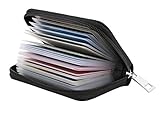
- Material: Genuine leather and PVC card slots.
- Size: 4.72"*3.15"*0.7" (12*8*1.8 CM)
- Large Capacity: The card holder has 26 cards slots. It is enough room for your ID card, credit cards, gift cards and dicounted cards. Small size is perfect to fit in your pockets or handbags.
- RFID Blocking: RFID Blocking designed lining keeps your vital information Secure. Be safe and protected from Electronic Pick pocketing.
- Great Gift Idea: Great gift for mother, daughter, grandmother and so on.
Chime is a reasonable mobile-banking alternative, but it is not a substitute for a branch bank if you need tellers, notarization, frequent cashier’s checks, or direct control over the bank charter. The FDIC also cautions that technology problems at banking apps and fintechs can cause error messages, slow responses, crashes, or temporary difficulty accessing funds.
Best bank by account type
| Account need | Shortlist | What to prioritize |
|---|---|---|
| Everyday checking | SoFi, Capital One 360, Chase, Schwab, or Alliant | Monthly fee and waiver, overdraft treatment, ATM access, direct deposit, check-writing, bill pay, and transfer speed. |
| High-yield savings | Marcus, Ally, SoFi, Capital One 360, or Alliant | Ongoing APY after promotions, balance caps, direct-deposit requirements, withdrawal access, and insurance structure. |
| CDs | Marcus is a focused candidate | Term, fixed APY, minimum deposit, early-withdrawal penalty, renewal policy, and whether the money is needed before maturity. |
| Travel checking | Schwab Investor Checking | Foreign-transaction fee, ATM rebates, exchange-rate handling, card controls, and a backup payment method. |
| Frequent cash deposits | Chase, Capital One 360, a local bank, or a credit union | Nearby locations, deposit limits, fees, posting speed, and whether the account accepts cash at all. |
| Low-overdraft-risk banking | Capital One 360, SoFi, or a carefully reviewed no-overdraft-fee option | Decline policies, returned-payment fees, transfer protection, alerts, and whether recurring ACH payments can still create charges or unpaid bills. |
| Teen, student, joint, trust, or business banking | Compare eligibility and account-specific terms directly | Age rules, co-owner authority, tax documentation, entity requirements, parental access, and product availability. A bank that is strong for an individual checking account may not offer the right specialized account. |
Do not choose a checking account solely because its linked savings account advertises a high rate. Checking is primarily a payment and access product; savings is primarily a yield and liquidity product. A money market deposit account may add check-writing or debit access, while a CD normally trades liquidity for a fixed term and rate. A cash-management or brokerage account may involve sweep programs or securities and can have different insurance rules from a bank deposit.
What the published APY really means
APY comparisons are useful only when the rate, balance, and requirements are comparable. Distinguish between an ongoing variable APY, a promotional APY, a direct-deposit APY, a rate limited to a balance tier, a new-customer offer, and a rate requiring a paid membership.
| Reviewed product | Published APY | Date shown by source | Approximate interest on a constant balance for one year |
|---|---|---|---|
| SoFi savings with eligible direct deposit or qualifying deposits | 3.10% | May 28, 2026 | $31 on $1,000; $155 on $5,000; $775 on $25,000; $3,100 on $100,000 |
| SoFi savings without those requirements | 0.80% | May 28, 2026 | $8 on $1,000; $40 on $5,000; $200 on $25,000; $800 on $100,000 |
| SoFi checking | 0.50% | Reviewed product page | $5 on $1,000; $25 on $5,000; $125 on $25,000; $500 on $100,000 |
| Marcus savings | 3.40% | July 29, 2026 | $34 on $1,000; $170 on $5,000; $850 on $25,000; $3,400 on $100,000 |
| Marcus featured nine-month CD | 4.10% | July 29, 2026 | Annualized APY only; the actual nine-month maturity value depends on the deposit and term |
The examples are illustrations, assuming the APY remains unchanged and the balance stays in the account for a full year. They do not include taxes, changes in variable rates, deposits made during the year, or fees. SoFi’s 3.80% promotion is not included because it is temporary, limited to qualifying new customers, and available for up to six months rather than a full year. Capital One and Ally rates should be retrieved from their current official pages before you compare them.
Online banks, traditional banks, credit unions, and fintechs
| Institution type | Strengths | Weaknesses |
|---|---|---|
| Traditional national bank | Branches, cash services, broad product lines, established payment infrastructure, and in-person support. | Monthly fees may require waivers, savings yields may be lower, and the best account can be buried among several product tiers. |
| Online bank | Often higher deposit yields, fewer routine fees, strong digital tools, and 24/7 support. | Limited or no branches, fewer cash-deposit options, and possible dependence on transfers or mobile check deposit. |
| Credit union | Member ownership, competitive rates, local service, and potentially lower fees. | Membership rules, smaller geographic footprints, and sometimes less extensive technology or product coverage. |
| Fintech or neobank | Fast onboarding, mobile-first design, early direct deposit, and simple fee structures. | The app may not be a bank, partner-bank insurance must be understood, and platform or customer-service problems can interrupt access. |
There is no inherent safety ranking in that table. Safety depends on the actual insured institution, the account agreement, cybersecurity practices, how you protect your credentials, and whether you can access money through a backup method when a technology or card problem occurs.
How to compare the real cost of an account
Start with your own behavior rather than a bank’s headline feature. Use this worksheet for each account:
- Monthly maintenance: What is the fee, and can you meet the waiver every month without keeping money idle?
- ATM usage: How many out-of-network withdrawals will you make? Does the bank own the ATM, belong to a network, reimburse the operator’s surcharge, or offer only a capped monthly refund?
- Cash deposits: Do you deposit cash, where can you do it, what are the per-transaction and monthly limits, and when will the funds be available?
- Yield requirements: What APY applies after a promotion ends? Does it require direct deposit, a minimum monthly deposit, a minimum balance, a paid membership, or a particular balance tier?
- Service costs: What do outgoing wires, cashier’s checks, stop payments, paper statements, money orders, foreign transactions, and account closure cost?
- Overdraft exposure: What happens when a payment arrives with insufficient funds? Is it declined, returned, covered by a transfer, or paid with a fee?
- Access and support: Can you reach a person by phone or chat, and can you solve a problem if the app or card fails?
- Insurance: Which bank or credit union actually holds the money, and are other brands or accounts using the same institution?
For a more formal comparison, score each account from 1 to 5 for total annual cost, yield quality, physical and digital access, mobile functionality, customer support, overdraft exposure, insurance clarity, and personal fit. The winner should be the account with the best combined result for your life, not the one with the highest score in a single category.
Fees that deserve special attention
An account advertised as free may still charge for individual services. Review the fee schedule for monthly maintenance, balance or direct-deposit waivers, out-of-network ATM use, ATM-owner surcharges, overdrafts, returned payments or nonsufficient funds, stop payments, wires, cashier’s checks, money orders, excess savings transfers where applicable, cash deposits, foreign transactions, paper statements, inactivity, and closure.
No overdraft fee does not mean overdrafts are harmless. Under Regulation E, a bank or credit union generally must receive affirmative opt-in before charging an overdraft fee for an ATM withdrawal or a one-time debit-card transaction. That rule does not prevent fees or consequences on checks, recurring debit transactions, or ACH transactions. A payment can still be returned, a bill can become late, or a merchant can charge a separate fee. Use low-balance alerts, maintain a buffer, and understand the account’s decline and transfer policies.
Likewise, a fee-free ATM network may not mean every ATM is free in every situation. Determine whether the bank owns the machine, whether the machine is in an affiliated network, whether the bank reimburses the surcharge, and whether rebates have a monthly limit or appear only after the statement closes.
FDIC and NCUA insurance: check the actual institution
The standard FDIC limit is $250,000 per depositor, per FDIC-insured bank, per ownership category. Checking and savings accounts in the same ownership category at the same insured bank are generally added together. Opening accounts at different branches does not create separate coverage, and different consumer-facing brand names do not automatically represent different insured banks.
The Tool Desk
Outbyte PC Repair FREERepair Windows errors before they cause bigger problemsFix Now →Outbyte Driver Updater FREEScan for outdated or missing drivers - takes under a minuteDriver Scan →For example, Capital One completed its acquisition of Discover on May 18, 2025, and Discover Bank merged into Capital One, N.A. Temporary separate FDIC treatment for certain Discover deposits lasted six months after the merger and ended on November 18, 2025. In 2026, do not assume Capital One and Discover-branded deposits are separate insured banks for coverage planning. See the acquisition announcement and deposit-insurance transition information.
Rank #4

- Four-slot card holder: The card holder has three card slots for credit, debit or business cards, and a dedicated ID card slot
- RFID Blocking: Equipped with RFID blocking technology, it prevents unauthorized scanning of contactless cards, protecting your sensitive information from digital theft
- Thin and portable: Designed to be thin and portable, it is compact and can be easily put into a pocket or bag without adding bulk
- Long-lasting and Durable: Made of PU leather on the exterior, it is both durable and luxurious in appearance. The smooth surface protects the cards from scratches
- Fashion Design: Combining functionality and style, the stylish and simple appearance is suitable for various occasions, from business meetings to casual outings
Credit unions use a different insurance system. The NCUA’s National Credit Union Share Insurance Fund generally provides $250,000 coverage for qualifying accounts at federally insured credit unions. FDIC and NCUA coverage protects qualifying deposits or shares; it does not protect stocks, mutual funds, crypto assets, brokerage investments, or uninsured balances.
Fintech accounts require another level of checking. The consumer brand may place funds at one or more partner banks. Pass-through insurance generally depends on the money actually being deposited at an insured bank and records identifying each customer and ownership interest. If those requirements are not met, funds could be aggregated as the third party’s deposits instead. Before placing a large balance with an app, use the FDIC BankFind Suite and the FDIC ownership-category guidance. For complex or high balances, use the FDIC’s Electronic Deposit Insurance Estimator rather than relying on marketing language.
Independent reader supportYour contribution helps us test, update, and keep practical guides available for everyone.When one bank is not enough
A two-bank arrangement can solve conflicts that one institution cannot. Examples include:
- Everyday plus savings: Keep checking at Capital One 360 or Chase for ATM and cash access, and place emergency savings at Marcus, Ally, SoFi, or another account whose ongoing rate and requirements fit you.
- Travel plus home banking: Use Schwab Investor Checking for overseas withdrawals while retaining a domestic account for cash deposits, payroll backup, or branch services.
- Branch plus CD ladder: Use a branch bank for transactions and a separate institution for CDs whose terms match when you expect to need the money.
- Primary plus backup: Keep a modest reserve at a second institution in case a card is frozen, an app is unavailable, an account is under review, or an external transfer is delayed.
Multiple accounts create their own obligations: monitor each balance, protect each login, track insurance aggregation, and avoid sending a direct deposit or automatic payment to an account you rarely check.
Deposits may not be available immediately
Do not treat a mobile check deposit, cash deposit, or external transfer as spendable until you have checked the funds-availability policy. Holds vary by account, deposit type, amount, and customer history. For example, Capital One states that many savings-account check deposits may be subject to a four-business-day hold, while certain checking deposits and cash deposits may be available sooner. Review the bank’s current deposit-support guidance and leave a buffer before scheduling a payment.
What to do if a bank denies your checking application
Banks and credit unions may review reports from ChexSystems, Early Warning Services, and similar checking-account reporting companies. A denial can result from unpaid overdrafts, an involuntary account closure, suspected fraud, bad checks, or the history of a joint account holder. It does not necessarily mean that your credit score is poor.
- Read the denial notice and request the report used to make the decision.
- Check for identity theft, duplicate debts, inaccurate dates, debts that were paid, and information belonging to someone else.
- Dispute inaccurate information with the reporting company and with the company that supplied the information. Keep copies and confirmation numbers.
- Ask banks and credit unions about second-chance accounts or Bank On-certified accounts. These may have restrictions, but they can provide a way to rebuild account history.
- Avoid applying repeatedly at many institutions before correcting the underlying problem. Too many applications can create confusion and make it harder to identify which report caused the denial.
The Consumer Financial Protection Bureau’s checking-account denial guidance explains the process and your rights to review and dispute reporting information.
How to switch banks without missing a payment
Do not close the old account on the day you open the new one. A safe transition usually takes at least one complete billing cycle and sometimes 30 to 60 days, depending on how many payments and deposits are moving.
- Inventory everything. List payroll, government benefits, transfers, checks, subscriptions, rent or mortgage, utilities, insurance, loan payments, credit cards, taxes, and any payment linked to the old debit card.
- Open and fund the new account. Confirm the routing and account numbers, debit-card status, online access, alerts, and minimum opening requirements.
- Move direct deposit. Submit the new information to your employer or benefits provider. Wait until the first deposit actually arrives before assuming the change is complete.
- Move automatic payments. Update merchant-authorized ACH debits and recurring card payments only after the new account is funded. Check whether payment dates or amounts vary.
- Handle bill pay correctly. A recurring merchant debit from your account is different from a recurring payment initiated through the bank’s bill-pay system. Change the instruction at the correct institution.
- Leave a cushion in the old account. Keep enough for uncleared checks, pending card transactions, annual subscriptions, and debits that have not yet posted.
- Monitor both accounts. Compare transactions and confirmations until the old account has no pending activity.
- Transfer the remaining balance and close in writing. Request written confirmation that the old account is closed and save it with your records.
Stopping an automatic debit does not cancel the bill or underlying contract. You still owe a valid payment unless you separately cancel or change the service. The CFPB’s moving-your-checking-account checklist and automatic-payment guidance provide the core sequence.
How these recommendations were evaluated
The comparison emphasizes eight practical factors: total annual cost, yield after requirements and promotions, branch and ATM access, cash deposits, digital functionality, customer support, overdraft exposure, and insurance clarity. A product can be excellent in one category and unsuitable in another.
J.D. Power’s 2026 study ranked Charles Schwab Bank highest in checking satisfaction, with a score of 750 on a 1,000-point scale. It also reported strong results for Ally and Marcus in relevant categories. These results measure satisfaction in a defined direct-banking study segment; they do not test every fee, feature, branch, or customer situation. J.D. Power redesigned the 2026 study, so its scores should not be compared directly with prior-year scores. See the study methodology and results.
This article does not claim hands-on testing of each app or guarantee a particular customer-service outcome. Read the institution’s current disclosures before opening an account.
Best Value
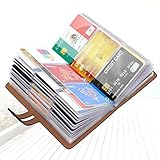
- 【Durable Materials】: Our credit card organizer is made of water-resistant and wear-resistant PU, reinforced with sealed edges and durable PVC credit card sleeves. It is scratch-resistant and water-repellent, resistant to dust and sweat, and easy to clean. The edges of the credit card holder are reinforced to provide the advantages of wrinkle resistance and crack resistance.
- 【RFID Blocking】The credit card holder has an anti-shield lining, which can effectively block the electronic scanning instrument from illegally scanning the credit card in the card holder to protect the security of your RFID chip card.
- 【Easy to Find & Read】The internal translucent anti-magnetic PVC card page makes it easy for you to find and read card information and quickly find the card you need.
- 【Large capacity / Multipurpose】A total of 32 card slots, each card can hold 3 cards. A total of 96 card slots, fully meet your needs for card storage. You can hold your important customer business cards, credit cards, debit cards, ID cards, membership cards, VIP cards, invoices, receipts, etc. to prevent loss and damage.
- This is the best choice to keep your credit card and business card organized and easy to manage. Can be used to store credit cards or business cards that are important but not commonly used.
Frequently Asked Questions
What is the best bank for most people?
There is no universal winner. SoFi is a strong choice for a digital-first customer who can meet its savings-rate requirements; Capital One 360 is useful for low-cost hybrid banking; Chase is better when branches and broad services matter. Many people get a better overall result by using one bank for checking and another for savings.
Is an online bank safe?
An online bank can be safe when the actual institution holding the deposit is FDIC-insured, or when a federally insured credit union provides NCUA coverage. Verify the charter and ownership-category coverage. Also keep a backup access method because an app outage or account review can temporarily limit access.
Is Chime a bank?
No. Chime says it is a financial-technology company, not a bank. Its banking services are provided through The Bancorp Bank, N.A. or Stride Bank, N.A. Deposit insurance depends on the applicable partner-bank arrangement and pass-through requirements.
Quick wins for a faster PC:
Scan for outdated or missing drivers - takes under a minuteDriver Scan →Clear out junk files and repair common Windows errorsFree Scan →Fix the driver behind crashes, sound loss and screen glitchesFind Drivers →Which bank has the highest savings rate?
The answer changes frequently and depends on requirements. In the reviewed 2026 rate snapshots, SoFi listed 3.10% APY with eligible direct deposit or qualifying deposits and 0.80% without those requirements, while Marcus listed 3.40% APY as of July 29, 2026. Check the official rate page immediately before opening and distinguish permanent rates from promotions.
Should checking and savings be at the same bank?
Convenience favors one bank, but separating them can improve yield or provide better cash and ATM access. A two-bank setup works well when transfers are reliable, you understand each institution’s insurance coverage, and you monitor both accounts.
What is the best bank with physical branches?
Chase is the leading shortlist candidate in this comparison because it reports approximately 5,000 branches and more than 14,000 ATMs. Capital One also offers selected branches and Cafés. Check locations near your home and work, as a national network does not guarantee a convenient branch in your area.
What is the best bank for ATM-fee refunds?
Schwab Investor Checking is a strong travel option because it advertises unlimited ATM-fee rebates worldwide for eligible cash withdrawals. You must link it to a Schwab One brokerage account. Alliant also offers ATM rebates, generally up to $20 per month for ordinary checking, with different rules for its newer products.
How much money is safe in one bank?
The standard FDIC limit is $250,000 per depositor, per FDIC-insured bank, per ownership category. Accounts in the same category at the same bank are generally aggregated. Credit-union share insurance is generally comparable through the NCUA. Use FDIC BankFind and the Electronic Deposit Insurance Estimator for balances above the standard limit.
Can I have multiple bank accounts?
Yes. Multiple accounts can separate spending, emergency savings, travel money, and backup funds. Track every fee, login, automatic payment, and insured-bank relationship. Different brand names do not necessarily provide separate FDIC coverage if the deposits ultimately use the same insured bank.
What should I do if a bank denies my checking application?
Request the checking-account report identified in the denial notice, review it for errors or identity theft, and dispute inaccurate information with the reporting company and the furnisher. Ask about second-chance or Bank On-certified accounts, and avoid submitting many new applications before resolving the problem.
How long should I keep my old account open after switching?
Keep it open until the first direct deposit arrives at the new bank, all automatic payments have moved, pending transactions have cleared, and at least one complete billing cycle has passed. Many transitions require 30 to 60 days. Then transfer the remaining balance and obtain written closure confirmation.
The Tool Desk
Outbyte PC Repair FREERepair Windows errors before they cause bigger problemsFix Now →Outbyte Driver Updater FREEFix the driver behind crashes, sound loss and screen glitchesFind Drivers →The Bottom Line
The best bank is the one that minimizes your total cost and friction after the headline promotion expires. Choose Chase or another local option when branches and cash matter, Capital One 360 when you want a low-fee hybrid, SoFi when you can meet its deposit requirements, Marcus or Ally for savings, Schwab for international ATM use, Alliant for a credit-union alternative, and Chime only after checking its partner-bank and insurance structure. Before opening, verify the current APY, every fee waiver, cash and ATM rules, funds-availability policy, and the actual insured institution. For many households, pairing a convenient checking account with a separate high-yield savings or CD account is more useful than searching for one institution that does everything.
Quick Recap
Product prices and availability are accurate as of the date/time indicated and are subject to change. Any price and availability information displayed on Amazon at the time of purchase will apply.




