College Consensus’ list, based on January 2024 NCES tuition-and-fee data, puts Pierce College District first among its cheapest online options, at $4,902 in out-of-state tuition and fees. The remaining top-five schools are Central Methodist University–College of Graduate and Extended Studies, Mississippi University for Women, Peru State College, and Minot State University. These figures are a useful shortlist—not a current quote or a guarantee that your degree will cost that amount.
Before applying, compare the program you want, your residency-based rate, and your estimated net price after grants and other aid. Confirm accreditation and current program details directly with the school and federal tools.
| # | Preview | Product | Price | |
|---|---|---|---|---|
| 1 |
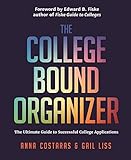
|
The College Bound Organizer: The Ultimate Guide to Successful College Applications (College... | $11.05 | Buy on Amazon |
| 2 |

|
Fiske Guide to Colleges 2025 | $14.04 | Buy on Amazon |
| 3 |

|
Fiske Guide to Colleges 2026 | $18.59 | Buy on Amazon |
| 4 |

|
Teens' Guide to College and Career Planning | $12.59 | Buy on Amazon |
What are the cheapest accredited online colleges?
College Consensus ranks the following schools by out-of-state tuition and fees, using January 2024 NCES data. Its list includes accredited schools recognized by NCES that offer at least three bachelor’s programs completable completely or primarily online. A school’s inclusion does not mean every major is fully online or that the listed rate applies to every student.
| Rank | College | Out-of-state tuition and fees |
|---|---|---|
| 1 | Pierce College District | $4,902 |
| 2 | Central Methodist University–College of Graduate and Extended Studies | $6,960 |
| 3 | Mississippi University for Women | $7,866 |
| 4 | Peru State College | $7,920 |
| 5 | Minot State University | $8,508 |
| 6 | Broward College | $8,952 |
| 7 | Santa Fe College | $9,189 |
| 8 | Jackson State University | $9,445 |
| 9 | Central State University | $9,596 |
| 10 | Georgia Highlands College | $9,696 |
All amounts are College Consensus figures drawn from January 2024 NCES data; they are out-of-state tuition and fees, not an estimate of an individual student’s total bill or net cost. Check the school’s current catalog and cost information for your program and residency status before relying on a figure.
Free tools Windows power users keep installed
One-click scans. No signup required.
#1 Best Overall
How to compare the real cost of an online degree
Tuition tables help narrow choices, but they are not the whole price. The Department of Education’s College Scorecard technical documentation defines its tuition measure as tuition and fees for full-time students as reported by institutions in IPEDS. That is different from net price, which reflects the cost after grants and other aid. A low published price can still be a poor fit if the program takes longer, requires extra fees, or does not meet your goals.
- Compare tuition and mandatory charges. Check whether the school charges per credit or by term and whether online students pay technology or other mandatory fees.
- Estimate total credits and completion time. Transfer credits and course availability can change how many credits you need to finish and how long you will pay.
- Check your residency rate. The ranking above uses out-of-state figures; your in-state rate may differ.
- Use your net price estimate. Grants and scholarships can reduce what you pay. Use the school’s net-price calculator and compare aid offers, rather than assuming the tuition figure is your final cost.
- Include non-tuition expenses. Budget for books, supplies, required equipment, and any travel or in-person requirements.
The U.S. Department of Education’s College Affordability and Transparency Center provides access to College Scorecard, College Navigator, net-price calculators, affordability lists, and financing-plan resources. It also hosts archived 2024 data. The Department says the center was designed to meet requirements in the Higher Education Opportunity Act and give students and parents better information about college costs.
Rank #2
Are affordable online colleges legitimate?
A low price alone does not establish that a school or a particular degree is a sound choice. Check institutional accreditation in the Department of Education’s federal resources, then verify whether the specific program has any additional accreditation required by your intended profession. If you plan to transfer credits or seek a professional license, confirm requirements with the receiving school or licensing authority before enrolling.
Also check that the degree you want is actually available online. A ranking may include schools with multiple online bachelor’s programs without making every major fully online. Ask whether courses are synchronous or asynchronous, whether internships or campus visits are required, and whether classes are offered often enough for your intended schedule.
Rank #3
How to verify a school before applying
- Find the exact degree. Check the current catalog for the major, degree level, online delivery format, course schedule, and any in-person or internship requirements.
- Confirm accreditation and eligibility. Verify institutional accreditation and any profession-specific program accreditation. Check licensure and transfer implications for your plans.
- Calculate your likely cost. Compare the current tuition rate for your residency and program, mandatory fees, required credits, and your estimated aid-adjusted net price.
- Review admission and location rules. Confirm prerequisites, transfer-credit policies, enrollment deadlines, and whether the school is authorized to enroll students in your state.
- Compare support and outcomes. Ask about advising, tutoring, and career services, and review graduation, earnings, and debt information where comparable data are available.
Why affordable-college rankings differ
Rankings use different definitions of “affordable” and “online.” College Consensus’ list uses out-of-state tuition and fees and a threshold of at least three bachelor’s programs that can be completed completely or primarily online. OnlineU says its affordable-online rankings require fully online degrees; for associate and bachelor’s rankings published in 2024 or later, it requires a “global” tuition rate that applies to the vast majority of programs at that level. OnlineU describes its rankings as editorial, not official government rankings.
Those methods answer different questions, so a school’s position can vary across lists. Treat rankings as a way to build a shortlist, then verify prices with federal data and the school, and check the exact program you intend to take.
Rank #4
Can you get financial aid for an online college?
Online study does not by itself answer whether you qualify for financial aid. Ask the school’s financial-aid office which grants, scholarships, and federal aid options may be available for your enrollment and program, and check any eligibility conditions. Compare your aid offer and estimated net price with the full cost—not only the published tuition rate—and ask whether payment plans are available.
Quick Recap
Product prices and availability are accurate as of the date/time indicated and are subject to change. Any price and availability information displayed on Amazon at the time of purchase will apply.
Quick wins for a faster PC:
Fix the driver behind crashes, sound loss and screen glitchesFind Drivers →Clear out junk files and repair common Windows errorsFree Scan →



