Augmodo’s $37.5 million funding round in 2025 backed a practical retail-operations product: wearable cameras that help map shelves and flag conditions such as inventory gaps. Its longer-term ambition reaches beyond retail, but the near-term business is about turning ordinary store work into usable shelf data—not giving shoppers augmented-reality headsets. A 2026 financing round and expansion plans have since widened the company’s “physical workforce” thesis.
What Augmodo built
Augmodo’s Smartbadge is a camera-equipped wearable, worn on a lanyard or clip, that captures views of a store as employees carry out normal tasks. The company says computer vision and 3D mapping turn those observations into a frequently refreshed digital representation of shelves, called a Realogram or Spatialview. Software can then surface potential out-of-stocks, misplaced products, or other conditions that need attention. Augmodo describes its product and use cases on its website; GeekWire’s 2025 funding report covers the wearable and its retail focus.
This is not a general-purpose consumer AR headset. The immediate value proposition is collecting spatial data during employee activity and making it useful to store operators, brands, and suppliers. Augmodo says the resulting information can support inventory visibility, replenishment, promotion and planogram compliance, e-commerce picking, direct-store-delivery notifications, and field-representative routing. Those are company-stated applications, not independently established results across every retailer or use case.
Why shelf-level data matters
Retail inventory systems can show that a product is somewhere in a store or supply chain without establishing that it is available to a shopper on the right shelf. Stock can be in a back room, in the wrong bay, hidden behind a display, or missing despite a system record that says otherwise. Shelf conditions also change faster than periodic audits can capture.
#1 Best Overall

- 【4K Hands-Free Camera with EIS Stabilization】Capture ultra-HD 4K videos and 32MP photos using the 8MP lens with IMX219 sensor and Electronic Image Stabilization, ensuring smooth, shake-free first-person footage for vlogging, driving, hiking, cycling, cooking, or outdoor adventures – simply use voice command ("Hey star, take a photo") or tap the shutter button while keeping your hands completely free.
- 【Smart Bluetooth Calling】Enjoy high-fidelity stereo sound with four advanced speakers embedded in the eyeglass arms. The open-ear design allows you to listen to music or podcasts while remaining completely aware of your environment—ideal for safe commuting or jogging. With seamless Bluetooth connectivity and dual-mic ENC (Environmental Noise Cancellation), background noise is effectively filtered out, giving you crystal-clear, hands-free calls no matter where you are.
- 【Dual-Lens Protection for Smart Eyewear】Adaptive visual technology for your modern lifestyle. Our sunglass lenses block harsh light outdoors, and we've also included a dedicated anti-blue light lens featuring no-blue-reflection technology, ensuring zero color distortion while you use the device. One smart frame, two pro lenses — designed for all-day wear.
- 【Built-in AI Assistant】Discover AI-powered smart glasses featuring a built-in intelligent assistant. Simply say "Hey Star" to activate it hands-free — get real-time answers, current weather, and tailored help whenever you need it. Just aim the camera at landmarks, menus, or objects for on-the-spot recognition. Your own personal AI guide, always by your side
- 【REAL-TIME AI TRANSLATOR & No Additional Fees】Supporting over 165 languages. iONCT Smart Glasses offers a comprehensive translation matrix for various scenarios: includes real-time translation mode, glasses-to-phone mode, Photo translation via the app, and seamless video call translation for remote clients. Whether during travel or international business, it instantly breaks down language barriers.
Retailers and brands have used manual audits, field representatives, handheld scans, and dedicated scanning robots to inspect stores. A wearable approach aims to gather observations as workers already move through aisles, rather than relying exclusively on separate inspection rounds. If the map is sufficiently current and accurate, operators may be able to prioritize replenishment, improve online-order substitutions, check promotion execution, and give suppliers a clearer picture of shelf conditions.
The distinction from a simple scan is that a spatial system attempts to record not only whether a product was seen, but where it appeared, what surrounded it, and how that location changed. A persistent map could connect observations to planograms, promotions, delivery activity, or employee tasks. It does not mean the system understands a store perfectly: its usefulness depends on identifying the right products and locations under real operating conditions.
Chemist Warehouse is the clearest commercial proof point
Augmodo’s most detailed public customer example is Australian pharmacy retailer Chemist Warehouse. A company-distributed announcement says a pilot began in four stores in mid-2024 and that the partnership was announced as an $18 million collaboration. The release described a planned expansion to more than 550 stores over two years—not a completed rollout—and said the first-month result was a 30% decline in inventory gaps. That result is a company and customer claim; the announcement does not provide a control group or detailed measurement method. The Chemist Warehouse and Augmodo announcement also outlines a supplier-facing data program.
Rank #2

- 【4K HD Imaging & 1080P Video Stabilization】Featuring an 8MP HD camera, these smart glasses capture smooth 30fps videos and support 32MP high-resolution photos. Upgraded with multi-frame noise reduction and an advanced video stabilization algorithm, they deliver clear and stable footage – ideal for vlogging, travel, cycling, outdoor sports, fishing, and family moments.
- 【Smart Bluetooth Calling 】Four high‑fidelity speakers embedded in the temple arms deliver rich stereo sound, while the open‑ear design keeps you aware of your surroundings – ideal for safe commuting or jogging. With Bluetooth 5.3 and dual‑mic ENC (Environmental Noise Cancellation), background noise is effectively filtered out, ensuring crystal‑clear hands‑free calls anywhere you go.
- 【Dual‑Lens Professional Protection】 One smart frame comes with two professional lenses: polarized sunglass lenses block harsh outdoor light, and the included anti‑blue light lenses feature no‑blue‑reflection technology for zero color distortion. Adaptive visual technology protects your eyes in all lighting conditions, making them comfortable for all‑day wear.
- 【Built‑in AI Smart Assistant】 Simply say "Hey Lens" to activate the intelligent AI assistant – get real‑time answers, weather updates, and tailored help instantly. Use the smart lens to landmarks, menus, or objects for on‑the‑spot recognition. Your personal AI guide is always by your side, ready to assist.
- 【Real-Time AI Translation 】 Powered by built-in ChatGPT and DeepSeek AI models, they provide real-time translation across 139 major languages, Perfect for business meetings, travel, academic exchanges, international conferences, or watching foreign-language content.
The $18 million figure is described as the value of the partnership. It should not be read automatically as Augmodo revenue, recognized contract value, or investment. The supplier program, called Spatialview, was planned to provide brands access to shelf data, initially for gap tracking and potentially for shelf, pricing, and promotion compliance. Seven suppliers were identified as early design partners, with the possibility of involving a broader supplier base. This model could make the retailer’s deployment useful beyond its own operations, but the public announcement does not establish how the program is priced or how data rights are allocated.
What’s actually slowing this PC down?
Pick the symptom - the matching free tool is one click away.
What the $37.5 million round validated—and what it did not
Augmodo raised $37.5 million in 2025 in a round led by TQ Ventures; Chemist Warehouse also participated, according to GeekWire’s July 2025 feature. The financing followed the Chemist Warehouse pilot and expansion plans, giving investors a customer-led reason to take the retail opportunity seriously. GeekWire reports earlier seed financing figures of $5.3 million in one article and $5.4 million in another, so the available reports differ slightly.
A large private round shows investor interest and provides capital to pursue deployment; it does not independently prove durable economics or product performance. Publicly available details cited in these reports do not establish Augmodo’s revenue, gross margin, customer retention, per-store economics, accuracy across product categories, reliability across store formats, or whether inventory improvements are causal and sustained.
Rank #3

- 【Lightweight & Comfortable Design】Ergonomic ultra-light frame for all-day fatigue-free wear. Splash and sweat resistant, perfect for driving, sports and daily use.
- 【Multifunctional 2.0mm PC Lenses】2.0mm ballistic-grade high-impact resistant lenses for reliable shatterproof protection. Integrated polarized technology effectively blocks harsh glare for all-day eye comfort.
- 【Long-Lasting Battery Life】Provides up to 10 hours of continuous usage on a single charge, with reliable standby performance to avoid frequent charging for commuting and outdoor activities.
- 【Clear Bluetooth Audio & Hands-Free Calling】Built-in Bluetooth for smooth music streaming and stable hands-free calls, delivering crisp, balanced sound for calls and music.
- 【AI Voice & Real-Time Translation】Powered by advanced AI voice assistant with real-time translation in 165 languages, making travel and business communication smoother and more efficient.
How a store workflow could work
- Prepare the badge. An employee charges and powers on the wearable. Augmodo says setup takes under 30 minutes on its website, while the Chemist Warehouse announcement says hardware can be installed in 20 minutes. These are differing company-reported figures, not independently measured benchmarks.
- Do ordinary store work. The employee carries out shelf checks, replenishment, picking, or other duties while the badge captures visual data as they move.
- Build shelf-condition records. Augmodo processes the captured information into spatial maps and observations about products and store conditions.
- Review exceptions. Store managers, associates, or authorized brand and supplier users can view information through the software and decide what requires action.
- Act and verify. A worker may replenish, check a display, or correct a placement, while the system can capture later conditions. The extent of automated task assignment or recommendation is not fully established by the public descriptions.
The company presents the process as passive for associates and says it can be installed without major operational changes. That is an important premise, but “passive” should not be taken to mean consequence-free: charging, badge loss or damage, worker acceptance, and integration with existing systems all affect day-to-day use.
Accuracy, integrations, and operational edge cases
Computer vision can be challenged by visually similar packaging, poor lighting, occlusion, promotional material, products placed in the wrong bay, seasonal resets, private-label substitutions, multi-level shelves, or temporary carts and pallets. A worker may walk through an aisle without facing the shelf; packaging may change after a new SKU launch; a product may appear both in its normal location and a temporary display. A badge that is shared, lost, damaged, or worn incorrectly may also complicate data attribution and coverage.
Do these 3 things before closing this tab:
1Clear out junk files and repair common Windows errors2Fix the driver behind crashes, sound loss and screen glitches3Repair Windows errors before they cause bigger problemsThe public materials do not provide a full accuracy breakdown by category, store format, or visual condition. A retailer considering deployment should ask for false-positive and false-negative rates and test the system against its own assortment, planograms, lighting, and store layouts. It should also measure time from capture to a usable alert, battery life, calibration and connectivity needs, and how the product works during renovations or store resets.
Rank #4

- 3-in-1 AI Glasses: Enjoy ① AI Voice Assistant (Powered by ChatGPT, Gemini & Deepseek), ② Stylish Photochromic Lenses Glasses, and ③ Bluetooth Open-Back Headphones, all in one
- Free Talk Translation: Automatically detects and translates over 160 languages in real-time, allowing seamless work and translation without touching your phone or glasses
- Voice, Video & Photo Translation: Supports over 98% of global languages, offering fast and accurate translations—ideal for international travel, business meetings, or cross-cultural communication
- AI Meeting Assistant: Converts recordings from smart glasses into text and generates mind maps, making it easier to capture and organize meeting insights
- Long Battery Life, Bluetooth 5.4 & Eye Protection: Up to 10 hours of music and 8 hours of talk time, with easy Type-C charging. Bluetooth 5.4 ensures stronger, stable connections, while photochromic lenses block UV rays and blue light, protecting your eyes in any environment
Data is only operationally useful when it reaches the systems and people able to act on it. Buyers should establish what integrations are available for point-of-sale, inventory, ordering, workforce management, planograms, and supplier portals, and whether the product merely reports exceptions or supports task assignment and replenishment recommendations. A pilot should define baseline and post-deployment measures such as on-shelf availability, labor hours spent auditing, substitution rates, compliance, or stockouts, along with total implementation and recurring costs.
Independent reader supportYour contribution helps us test, update, and keep practical guides available for everyone.Privacy and worker surveillance need specific answers
Augmodo says it does not track associates or customers and that privacy filtering occurs on premises, with the system intended to process shelf data rather than identify people. Those are company assurances, not a substitute for technical and contractual details. GeekWire’s 2025 report also describes a security-recording feature activated by a panic button. That feature should be considered separately from the company’s description of ordinary operating mode.
Before deploying cameras worn by employees, a retailer should establish what is filtered on-device or on premises, whether raw frames are stored or transmitted, what metadata is retained, who can access it, and how deletion and audit logs work. It should determine whether video can be retrieved after a safety incident, whether managers can infer worker movement or productivity, and what notice and consent procedures apply. The optional panic-button recording feature may create different retention and access rules from routine shelf mapping. Requirements will also vary across countries and jurisdictions, so privacy and labor terms need to match the deployment location.
Quick wins for a faster PC:
Fix the driver behind crashes, sound loss and screen glitchesFind Drivers →Repair Windows errors before they cause bigger problemsFix Now →Scan for outdated or missing drivers - takes under a minuteDriver Scan →Best Value
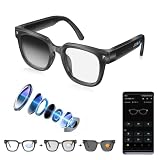
- 【4K Camera with EIS for Hands-Free Video & Photo Capture】Capture stunning 4K videos and high-resolution photos from your point of view with these AI Smart Glasses. Built-in Electronic Image Stabilization (EIS) helps reduce everyday camera shake for smoother recordings. Ideal for travel, hiking, cycling, outdoor adventures, daily commutes, and hands-free content creation without constantly reaching for your phone.
- 【AI Real-Time Translation, ChatGPT & Object Recognition】Communicate confidently anywhere with real-time translation supporting over 100 languages through the companion app. Powered by an intelligent AI chip, these smart glasses also support AI object recognition and integrate with a ChatGPT voice assistant to help answer questions, learn new information, and assist with travel, business meetings, and everyday communication.
- 【Easy App Connection & Smart File Management】Download the companion app by scanning the QR code in the user manual for quick setup and seamless device pairing. Easily preview, organize, transfer, save, and share photos or videos on your iPhone or Android device. The built-in memory card slot also allows convenient backup of your favorite moments directly to your computer.
- 【Bluetooth Open-Ear Audio & Crystal-Clear Hands-Free Calls】Enjoy immersive open-ear audio while staying aware of your surroundings. Bluetooth connectivity allows hands-free phone calls, music playback, and voice interaction, while touch controls provide quick access to essential functions. Perfect for commuting, walking, cycling, traveling, and everyday wear.
- 【Photochromic Lenses & All-Day Comfortable Wear】Designed for everyday comfort, these AI Smart Glasses feature adaptive photochromic lenses that automatically adjust to changing light conditions, becoming darker in sunlight and clearer indoors. The blue light filtering design helps reduce eye strain during screen use while providing comfortable vision in different environments. The lightweight frame and ergonomic design ensure a comfortable fit for extended wear throughout the day.
The 2026 update: a broader physical-workforce platform
In July 2026, Augmodo announced another $21 million round led by TQ Ventures at a reported $350 million valuation. GeekWire described the company’s expansion beyond retail into warehouses, factories, automotive environments, hospitals, facility maintenance, delivery operations, and employee training. The valuation is a reported private-round figure, not an audited market capitalization, and expansion plans do not establish equivalent performance in each setting. GeekWire’s July 2026 update reported the financing and strategy.
In that report, Augmodo said it mapped more than 186 million square feet monthly and targeted 1 billion square feet monthly by year-end; it also reported adding 50 to 100 store locations per month and having more than 50 employees, five times the prior-year level. These are company-reported scale figures and a target, rather than independently audited operating metrics. The badge was also reported to be gaining walkie-talkie, opt-in panic-button, and digital-ID-display functions.
The broader thesis is that AI tools have concentrated on knowledge work while leaving many physical jobs with limited digital assistance. Retail is a plausible starting point because stores have repeated workflows, recurring inventory and compliance tasks, and measurable costs from stockouts and manual audits. Mapping and perception infrastructure might be reusable elsewhere, but a hospital, delivery route, factory, warehouse, and retail aisle differ in objects, lighting, safety rules, privacy expectations, and the actions workers need to take. Each requires its own proof of accuracy and workflow fit.
Customer-facing spatial computing remains a future option
In 2025, CEO Ross Finman described a longer-term possibility in which shoppers use smart glasses or another wearable to navigate stores and find products, framing the opportunity as a search engine for private physical spaces. That is distinct from the current operational product. Customer-facing assistance would depend on accurate, current maps and integrations with retailer inventory and shopping systems; it would also need to compete with familiar options such as mobile apps, kiosks, or employee assistance. The public material describes this as a vision, not a deployed consumer product. GeekWire’s 2025 interview covers that longer-term idea.
What a retailer should verify before buying
- Request accuracy and error rates by product category, store format, lighting, occlusion, and seasonal conditions.
- Run a paid pilot with a defined baseline, success measures, scope, and method for distinguishing system impact from other operational changes.
- Confirm integrations, alert latency, network and edge-computing requirements, calibration, battery workflow, durability, and replacement costs.
- Get complete pricing for hardware, installation, software, connectivity, support, and minimum deployment size; Augmodo does not publish a self-serve price list in the cited materials.
- Review data retention, deletion, access control, incident retrieval, worker notice, and local labor and privacy requirements in writing.
- Ask for references from comparable stores and clarify how suppliers may access or use shelf data.
Augmodo’s claim that its hardware is “100x cheaper” than competing solutions is a marketing comparison; the cited materials do not disclose the comparison set or total-cost calculation. It is not enough to establish that a deployment is cheaper than manual audits, robots, or other systems. Buyers need comparable costs and outcome measures for their own operating model.
Quick Recap
Product prices and availability are accurate as of the date/time indicated and are subject to change. Any price and availability information displayed on Amazon at the time of purchase will apply.




