Small businesses are increasingly trying AI, but adoption figures do not show that most have deeply integrated it—or that every business needs to. The practical divide is between firms that can identify a useful, manageable task and those still facing barriers such as limited time, skills, trust, and integration support.
What AI adoption figures say—and what they don’t
There is no single adoption rate that captures all U.S. small businesses. Surveys cover different populations and count different behaviors, so their estimates should be read separately rather than averaged.
| Source and population | Reported finding | How to interpret it |
|---|---|---|
| Goldman Sachs 10,000 Small Businesses Voices, 2026; 1,256 program participants surveyed Jan. 27–Feb. 4, 2026, across the U.S., Washington, D.C., and Puerto Rico | 76% said their businesses currently use AI; 14% said it was fully embedded in core operations. | This is a survey of program participants, not a census of all small businesses. The gap between use and full integration shows that trying AI is not the same as building it into core operations. |
| U.S. Chamber of Commerce, 2026; the Chamber’s small-business survey | 66% reported using AI, compared with 58% in 2025 and 23% in 2023. | These are figures from the Chamber’s survey. They should not be treated as directly comparable with another organization’s survey unless its population and definition also match. |
| Federal Reserve Bank of San Francisco, 2026 brief; respondents to the 2024 Small Business Credit Survey | Nearly 40% reported using or planning to use AI. | The figure combines current use with planned use, so it is not a current-use-only estimate. |
| JPMorganChase Institute, 2026; payment-based series | The series shows increasing adoption of AI services through 2025. | It identifies use through payments for AI-related services, a different measure from self-reported survey use. |
The samples differ in membership, geography, timing, and what counts as adoption. A business may use a general-purpose tool for occasional drafting, pay for a specialized service, plan to adopt AI, or embed it in a core workflow; those are not equivalent measures.
What small businesses are doing with AI
“Using AI” can describe a modest assist or a substantial operational change. The San Francisco Fed’s brief discusses uses such as writing and summarizing, marketing, customer service, and analytics. The OECD’s 2026 report, based on a non-representative survey of more than 2,000 SMEs across 12 OECD countries, finds increasing use of off-the-shelf tools but uneven progress toward targeted, secure integration.
#1 Best Overall
![Arduino® UNO™ Q 4GB [ABX00173]- Hybrid Board, Qualcomm Dragonwing QRB2210 microprocessor (MPU) & STM32U585 Microcontroller(MCU), AI Vision, Voice, IoT, Robotics, Linux Debian OS, Wi-Fi 5, USB-C](https://m.media-amazon.com/images/I/51cl4xygwGL._SL160_.jpg)
- Dual-Brain Hybrid Power: Combines the Qualcomm Dragonwing QRB2210 MPU (Quad-core Arm Cortex-A53 @ 2.0 GHz CPU, Adreno GPU, AI acceleration) and the real-time, low-power STM32U585 MCU for advanced applications like object recognition, voice commands, and motion detection.
- AI & Linux Capabilities: Unlocks AI-powered vision and sound solutions; runs Linux Debian OS for coding in Python and supports the Arduino ecosystem with libraries and Sketches; quick start with Arduino App Lab.
- Advanced Features: Equipped with 4 GB LPDDR4 RAM, 32 GB eMMC built-in storage, ideal for single-board computer (SBC) mode, running multiple simultaneous high-level processes, more complex AI or ML models, extensive logs. Dual-band Wi-Fi 5 (2.4/5 GHz), Bluetooth 5.1, and high-speed headers for vision, audio, and display peripherals.
- Seamless Expansion & Connectivity: Features the classic UNO form factor for shields compatibility, an 8x13 LED matrix, and a Qwiic connector for easy expansion with Modulino nodes; power and connect via the USB-C connector.
- Intended Use & Development: The perfect platform for prototyping robotics or IoT projects, empowering innovators with a unified development experience to mix Arduino Sketches, Python scripts, and containerized AI models in a single interface.
That difference matters. A worker using a chatbot to draft a first version of a routine email is not evidence that a business has redesigned its customer-service operation around AI. The OECD findings also caution against assuming broad access to ready-made tools automatically produces strategic or secure deployment.
Reported benefits are promising, not guaranteed returns
In the 2026 Goldman Sachs survey, 93% of AI-using respondents said AI had a positive business impact, and 84% cited increased efficiency or productivity as the primary benefit. Those are respondents’ reported experiences, not proof that AI causes a particular firm’s revenue growth or will produce the same result elsewhere.
Rank #2
- Dual-Brain Hybrid Power: Combines the Qualcomm Dragonwing QRB2210 MPU (Quad-core Arm Cortex-A53 @ 2.0 GHz CPU, Adreno GPU, AI acceleration) and the real-time, low-power STM32U585 MCU for advanced applications like object recognition, voice commands, and motion detection.
- AI & Linux Capabilities: Unlocks AI-powered vision and sound solutions; runs Linux Debian OS for coding in Python and supports the Arduino ecosystem with libraries and Sketches; quick start with Arduino App Lab.
- Advanced Features: Equipped with 2 GB LPDDR4 RAM, 16 GB eMMC built-in storage, ideal to develop in PC-connected mode, running the OS, Python scripts, and basic network services (SSH) without a demanding GUI or heavy multitasking; great for lightweight AI and memory-optimized TinyML applications, needing local storage for basic OS and core libraries. Dual-band Wi-Fi 5 (2.4/5 GHz), Bluetooth 5.1, and high-speed headers for vision, audio, and display peripherals.
- Seamless Expansion & Connectivity: Features the classic UNO form factor for shields compatibility, an 8x13 LED matrix, and a Qwiic connector for easy expansion with Modulino nodes; power and connect via the USB-C connector.
- Intended Use & Development: The perfect platform for prototyping robotics or IoT projects, empowering innovators with a unified development experience to mix Arduino Sketches, Python scripts, and containerized AI models in a single interface.
The same survey found that 73% of participants said additional access to training and implementation resources would help them put AI to work. The U.S. Chamber of Commerce reported that 95% of small businesses using AI were working to upskill employees. Together, these findings point to a practical issue: access to a tool alone may not be enough; workers need time and support to use it appropriately.
Why some firms hesitate
Barriers are not limited to the purchase price of software. In a 2026 U.S. Chamber Foundation and Ipsos survey of 1,070 employed adults at U.S. small businesses with 2–499 employees, conducted May 8–11, 47% cited privacy or security concerns, 41% said AI’s business relevance was unclear, and 41% pointed to a skills gap. Roughly one in ten said they had been offered formal AI training.
Rank #3
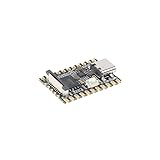
- Single core ARM Cortex-A7 32-bit core, integrated with NEON and FPU
- Built in Micro's self-developed 4th generation NPU, with high computational accuracy and support for mixed quantization of int4, int8, and int16. Among them, int8 has a computing power of 0.5 TOPS and int4 has a computing power of up to 1.0 TOPS
- Built in self-developed 3rd generation ISP3.2, supports 4 million pixels, and supports various image enhancement and correction algorithms such as HDR, WDR, and multi-level denoisin
- It has powerful encoding performance, supports intelligent encoding, adapts to save bit rates according to the scene, and saves more than 50% of the bit rate compared to conventional CBR mode, making the captured images high-definition, smaller in size, and doubling the storage space
- The design with built-in RISC-V MCU supports low-power fast startup, 250ms fast capture, and simultaneous loading of AI model library, enabling facial recognition to be completed within 1 second
The SMB Group’s 2025 report also describes barriers among non-users. In practice, a firm may struggle to choose a use case, find time to test a tool, check accuracy, protect sensitive information, or connect a new service to its existing systems. Some businesses may see no relevant application, while others consider personal human interaction central to their service. Those are legitimate reasons to wait, not evidence by themselves that a business is falling behind.
Independent reader supportYour contribution helps us test, update, and keep practical guides available for everyone.How to decide whether a task is worth testing
Rather than begin with a general goal to “adopt AI,” choose one recurring task and judge whether a small experiment is worthwhile. The following questions are practical decision axes drawn from the barriers and recommendations in the sources; they are not a validated scoring system.
Rank #4

- 【POWERFUL ESP32‑S3 CONTROLLER】Built‑in Xtensa 32‑bit LX7 dual‑core processor, 512KB SRAM, 8MB PSRAM, 16MB Flash for stable AI voice computing and multitask processing.
- 【Preloaded Dual AI Platforms】Comespre-installed with complete Deepseek and OpenAI voice dialogue projects.Experience intelligent voice interaction instantly. (Note: OpenAI functionality requires your own API key.)
- 【STABLE WIRELESS & CLEAR AUDIO】Integrated 2.4GHz Wi‑Fi + Bluetooth 5 (LE); dedicated audio decoding module for natural, responsive voice interaction.
- 【USER‑FRIENDLY VISUAL & PLUG‑AND‑PLAY】2” TFT‑SPI color screen shows real‑time chat; modular design, no extra wiring, ready to use after setup.
- 【FULL LEARNING SUPPORT】45 programmable GPIOs, rich interfaces, online web tutorials, free technical support for beginners & developers.
- Relevance: Does the task recur often, and is there a clear problem to solve?
- Risk and data sensitivity: Would the task involve customer, employee, financial, or other sensitive information? If so, do not put it into a public AI tool without confirming the tool’s data handling is appropriate.
- Reviewability: Can a person check the result against reliable information before it is sent, published, or used to make a decision?
- Time saved: Can you compare the time spent using and reviewing the tool with the time the task normally takes?
- Integration effort and ongoing cost: Can the task be tested with a simple tool or an AI feature already in business software, without creating more work or expense than the task justifies?
A cautious first experiment
SMB Group recommends practical use cases, keeping sensitive data out of public AI tools, and reviewing drafts or suggestions before use. A straightforward trial can apply those safeguards without assuming a particular product will deliver savings.
- Pick one repeated task. Choose a bounded activity, such as preparing a first draft or summarizing non-sensitive material, rather than delegating an entire customer or financial workflow.
- Set a human-checkable goal. Decide what a useful result would look like—for example, a draft that needs less editing—before you begin.
- Use non-sensitive material. Start with information that is safe to share. Check the service’s data terms before considering any more sensitive use.
- Inspect every output. Verify facts, tone, and completeness before using a draft or suggestion. Do not treat a plausible-sounding answer as verified.
- Compare effort with value. Account for prompting, checking, corrections, and any setup or ongoing cost. Continue only if the result is good enough and the total effort makes sense for the business.
Training and support are part of adoption
Training needs are visible in both employer and worker surveys: Goldman Sachs found that 73% of its program participants wanted more training or implementation resources, while the Chamber Foundation and Ipsos found that only roughly one in ten respondents had been offered formal AI training. The Chamber also reported that 95% of small businesses using AI were working to upskill employees. These measures come from different populations, but all suggest that effective use involves more than making a tool available.
The Tool Desk
Outbyte PC Repair FREERepair Windows errors before they cause bigger problemsFix Now →Outbyte Driver Updater FREEFix the driver behind crashes, sound loss and screen glitchesFind Drivers →For a small business, a useful next step may be a short internal rule on what information employees may enter, who reviews AI-generated work, and which tasks are out of bounds. Where staff need help, training or implementation support can address a more immediate need than adding another tool.
Quick Recap
Product prices and availability are accurate as of the date/time indicated and are subject to change. Any price and availability information displayed on Amazon at the time of purchase will apply.




