Windows Errors? Fix Them Before They Spread
Repair common Windows errors and clear accumulated junk for a smoother, more stable PC - no reinstall needed.Free scan · no reinstallCrashes, No Sound, or Screen Glitches?
Random freezes, missing sound and display glitches usually trace back to one bad driver. Find and replace yours safely.Free scan · under a minuteApple did not announce an official Vision Pro sales cut. The April 23, 2024 report came from analyst Ming-Chi Kuo, whose supply-chain survey estimated that Apple’s expected 2024 shipments had fallen from roughly 700,000–800,000 units to 400,000–450,000. That implies an estimated reduction of about 43%–44%—but shipments are not the same as consumer sales, active users, or Apple-confirmed guidance.
The report mattered because the revision reportedly occurred before Vision Pro had expanded beyond the United States. It suggested that demand for Apple’s $3,499 first-generation spatial computer may have been weaker than earlier market expectations, raising questions for investors about pricing power, software adoption, component suppliers, and the long-term economics of Apple’s spatial-computing strategy.
What was reportedly cut?
According to Kuo’s supply-chain survey, the earlier 2024 expectation was approximately 700,000–800,000 Vision Pro units. The revised estimate was approximately 400,000–450,000 units. MacRumors reported Kuo’s estimate on April 23, 2024.
Comparing the ranges produces an estimated decline of roughly 43% to 44%:
#1 Best Overall

- CARDBOARD MONKENAUT — Get our best Gorilla Tag bundle yet with this Amazon exclusive deal. Purchase Meta Quest 3 to get exclusive items, including the Gorilla Space Program Suit and Helmet, plus 2,000 SHINY ROCKS.
- NEARLY 30% LEAP IN RESOLUTION — Experience every thrill in breathtaking detail with sharp graphics and stunning 4K+ Infinite Display.
- NO WIRES, MORE FUN — Break free from cords. Game, play and explore in immersive worlds — untethered and without limits.
- 2X GRAPHICAL PROCESSING POWER — Enjoy lightning-fast load times and next-gen graphics for smooth gaming powered by the Snapdragon XR2 Gen 2 processor.
- EXPERIENCE VIRTUAL REALITY — Blend virtual objects with your physical space and experience two worlds at once in your VR headset.
- 700,000 versus 400,000 units: approximately 43% lower.
- 800,000 versus 450,000 units: approximately 44% lower.
This is not a precise measurement of a production cut. It is a comparison between two estimates. Apple did not publicly confirm the figures in the cited report, and the available information does not provide audited Vision Pro sell-through data.
Shipments are not sales
“Shipments” can refer to units moving through Apple’s supply chain, into distribution, or toward retail channels. They are different from:
- Units purchased by consumers.
- Units activated or regularly used.
- Units returned after purchase.
- The total installed base.
A lower shipment estimate could reflect weaker demand, inventory management, production constraints, component availability, or a combination of factors. Kuo interpreted the revision as evidence that U.S. demand had fallen “sharply beyond expectations,” but that interpretation should remain attributed to him rather than presented as independently verified fact.
Whose expectations were missed?
The phrase “beyond expectations” does not necessarily refer to a formal Apple sales forecast. Apple’s internal targets were not disclosed in the cited material. The 700,000–800,000-unit figure was an earlier analyst or market expectation, while the 400,000–450,000 figure was Kuo’s revised supply-chain estimate.
The evidence hierarchy is therefore important:
- Apple confirmed the U.S. launch date, product positioning, and starting price.
- Kuo reported a lower supply-chain expectation.
- The report did not establish an official Apple unit-sales number.
- It did not prove exactly how many units consumers bought or returned.
The significance was timing. A demand revision before broader international availability suggested that the early-adopter market might be narrower than expected, rather than merely delayed by regional launch schedules.
Why may Vision Pro demand have weakened?
A $3,499 price limits the audience
Apple launched Vision Pro in the United States on February 2, 2024, with a starting price of $3,499 for the 256GB model. Apple’s launch announcement positioned it as a premium “spatial computer,” not a conventional low-cost VR headset.
Rank #2

- Your purchase of this item includes a new Meta Quest Pro 256 GB VR headset and a 12-month subscription to Optima Academy Online (OAO) field trips.
- Optima Academy Online (OAO) harnesses the power of virtual reality to make previously impossible learning opportunities just a few clicks away. Our VR Field Trips provide powerful ways of engaging users on a whole new level while providing learning experiences. With our VR Field Trips, we deliver users directly into an immersive educational experience that engages them like never before. We offer a one-month subscription to our VR Field Trips. During your subscription, you can spend as much time in our uniquely created Metaverse environments as you like. Each environment has its own theme, learning experiences, and adventures.
- High resolution mixed reality passthrough uses full-color sensors to let you see and engage with the physical world around you, even as you connect, work and play in virtual spaces.
- Share your true emotions and reactions with real time natural avatar expressions. Meta Avatars translate your natural facial expressions into VR so you can bring your true personality to meetings and gatherings with friends.
- Meta Quest Touch Pro Controllers translate instinctive hand gestures and detailed finger actions directly into VR with self-tracking cameras and precision controls. Multi-point, advanced haptics make virtual interactions feel entirely real
The relevant question is not simply whether Vision Pro was expensive. It is whether the benefits were distinctive and frequent enough to justify a price comparable to a high-end computer, large television, gaming setup, or several other consumer devices.
The real ownership cost can also exceed the advertised starting price. A buyer may need ZEISS Optical Inserts, accessories, protection coverage, and compatible Apple hardware. Apple’s buying flow has listed ZEISS Optical Inserts separately at $99, although prices and availability should be checked directly before purchase. Prescription fulfillment and support can also depend on location.
That creates a difficult market position: Vision Pro is far more expensive than mainstream consumer headsets, while its productivity advantages may not be sufficient for most professionals to treat it as an essential work device.
Comfort affects repeat use
Kuo identified comfort as one of the issues Apple needed to address. Comfort is not identical for every wearer: head shape, light-seal fit, strap choice, prescription needs, and session length all matter.
Still, the practical obstacles are clear. Vision Pro places substantial hardware on the user’s face, connects to an external battery by cable, and may require people who wear glasses to use optical inserts. A short demonstration can be impressive while a multi-hour work session is tiring or inconvenient.
For investors, this distinction matters. A device can have excellent displays and convincing tracking yet generate weak repeat demand if owners do not want to wear it for ordinary daily tasks.
The Tool Desk
Outbyte Driver Updater FREEScan for outdated or missing drivers - takes under a minuteDriver Scan →Outbyte PC Repair FREEClear out junk files and repair common Windows errorsFree Scan →Rank #3
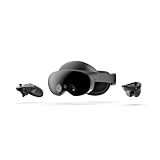
- Meta Quest Pro unlocks new perspectives in work, creativity, and collaboration.
- Multitask with ease with multiple resizable screens so you can organize tasks, work on new ideas or message with your friends.
- World class counter balanced ergonomics and our sleekest design let you wear the headset for longer in premium comfort.
- High resolution mixed reality passthrough uses full-color sensors to let you see and engage with the physical world around you, even as you connect, work and play in virtual spaces.
- Share your true emotions and reactions with real time natural avatar expressions. Meta Avatars translate your natural facial expressions into VR so you can bring your true personality to meetings and gatherings with friends.
Impressive technology is not the same as a daily habit
Apple says Vision Pro combines eye, hand, and voice input with two micro-OLED displays totaling 23 million pixels and a dual-chip design using M2 and R1. Apple’s product announcement describes the technology and its spatial-computing positioning.
Those capabilities can make demonstrations memorable. They do not automatically establish a durable use case. Early interest may center on immersive video, spatial photos, virtual screens, and novelty. The harder commercial question is whether enough users find a reason to put the headset on repeatedly after the demonstration period ends.
Software faces a chicken-and-egg problem
Kuo also cited a lack of key applications. The defensible version of that criticism is not that Vision Pro has no software. Rather, it may lack enough compelling, distinctive applications to justify the price for a broad audience.
Developers face an unattractive early calculation. A small, expensive installed base means fewer potential customers and more difficulty recovering development costs. Consumers, meanwhile, have less reason to buy if the applications they want are not available. That creates a feedback loop:
What’s actually slowing this PC down?
Pick the symptom - the matching free tool is one click away.
- Weak hardware demand limits the potential market for developers.
- Limited developer economics reduce investment in specialized applications.
- A thinner software catalog makes the hardware less valuable to consumers.
- Lower consumer value puts additional pressure on demand.
Apple’s existing developer ecosystem and financial resources could help break that cycle, but the report suggested that the platform had not yet done so at the expected pace.
Prescription and regional friction
Apple’s buying information says customers who need vision correction may require ZEISS Optical Inserts rather than wearing ordinary glasses with Vision Pro. Prescription fulfillment, App Store access, media availability, and support can also vary by region. Apple’s buying page should be treated as the authority for a buyer’s location and prescription requirements.
Rank #4

- CARDBOARD MONKENAUT — Get our best Gorilla Tag bundle yet with this Amazon exclusive deal. Purchase Meta Quest 3S to get exclusive items, including the Gorilla Space Program Suit and Helmet, plus 2,000 SHINY ROCKS.
- NO WIRES, MORE FUN — Break free from cords. Game, play and explore immersive worlds — untethered and without limits.
- 2X GRAPHICAL PROCESSING POWER — Enjoy lightning-fast load times and next-gen graphics for smooth gaming powered by the Snapdragon XR2 Gen 2 processor.
- EXPERIENCE VIRTUAL REALITY — Take gaming to a new level and blend virtual objects with your physical space to experience two worlds at once in your VR headset.
- 2+ HOURS OF BATTERY LIFE — Charge less, play longer and stay in the action with an improved battery that keeps up. *Based on the graphic performance of the Qualcomm Snapdragon XR2 Gen 2 platform vs the Meta Quest 2 platform.
These details are not necessarily fatal flaws, but each adds friction to a product that already requires a large financial commitment.
Why would Apple launch it if demand was uncertain?
Vision Pro was not an ordinary iPhone-style mass-market launch. Apple could be using a premium first-generation product to establish a platform and learn where spatial computing creates real value.
Possible strategic objectives include:
- Establishing Apple’s presence in spatial computing.
- Giving developers time to build visionOS applications.
- Creating a reference design for future devices.
- Developing expertise in micro-OLED displays, pancake optics, tracking, and spatial interfaces.
- Testing consumer, enterprise, education, design, medical, and media-production use cases.
- Building a foundation for a cheaper, lighter, or more specialized successor.
These are strategic interpretations, not a complete public explanation from Apple. They do, however, explain why relatively low first-generation volume would not automatically mean that Apple had abandoned the category.
Independent reader supportYour contribution helps us test, update, and keep practical guides available for everyone.What the report implied for Apple’s roadmap
Kuo’s report said Apple was reviewing and adjusting its headset roadmap. It reportedly indicated that a major new Vision Pro model was not expected in 2025, while a more significant revision could come later, with 2027 mentioned as a possible timing. Those were analyst forecasts, not confirmed Apple launch commitments.
The report also suggested that Apple was working on production efficiency and supply-chain management, while immediate major changes to specifications or the user experience were not expected. Kuo’s diagnosis was that Apple needed to improve applications, price, and comfort without undermining the product’s experience.
For investors, the key issue is capital allocation. A lower-volume first-generation product may be strategically rational if it helps Apple develop a future platform. It becomes more concerning if Apple cannot reduce cost, improve ergonomics, and create repeat-use software without sacrificing the features that differentiate Vision Pro.
Quick wins for a faster PC:
Repair Windows errors before they cause bigger problemsFix Now →Fix the driver behind crashes, sound loss and screen glitchesFind Drivers →Clear out junk files and repair common Windows errorsFree Scan →Best Value

- Ultimate Comfort: Experience superior comfort with the new ANNAPRO A2 comfort head strap. Enjoy pressure-free wear for extended periods, with stable, no-wobble support, and experience unparalleled comfort and an immersive experience like never before
- Pressure-Free Facial Comfort: The ANNAPRO A2 head strap, designed specifically for Apple Vision Pro, features a new design that fits the head more comfortably, effectively reducing 60%-90% of the pressure on the cheekbones and around the eyes
- Customizable Fit: Offers 4 different thicknesses of comfortable cushion (5/12/18/25mm) to perfectly fit various head shapes. The upgraded breathable ice silk cushion are soft and skin-friendly, greatly enhancing wearing comfort. Tip: If you encounter issues with eye tracking being too far or too close, select the most suitable cushion and then recalibrate the eye tracking to ensure accuracy
- Damage-Free Quick Installation: Easily install A2 head strap without harming Vision Pro’s original accessories. Simply align and push the strap into place after removing the official head strap
- Enhanced Versatility: Combining Vision Pro with our head strap allows for the removal of the light seal or light seal cushion, bringing the lenses closer to your eyes for a wider field of view and improved comfort and breathability
What it could mean for suppliers and the XR industry
Kuo warned that weaker Vision Pro sales could affect growth expectations for pancake lenses, micro-OLED displays, and related mixed-reality components. The mechanism is straightforward:
- Lower headset demand reduces component orders.
- Lower volumes can slow supplier capacity expansion.
- Slower scale can keep specialized components expensive.
- High component costs make cheaper headsets harder to build.
- That can delay the broader mixed-reality adoption cycle.
This is an industry risk, not proof that every supplier was harmed or that the technologies themselves failed. It also creates a tension for Apple: the company needs better, cheaper components for future products, but suppliers need enough volume to achieve the economies of scale that make those components affordable.
Consumer demand and enterprise value are different questions
Weak mass-market demand would not mean Vision Pro has no commercial value. A $3,499 headset may still be useful for industrial design, architecture and engineering, medical visualization, training and simulation, enterprise presentations, specialized media production, and developer research.
Those markets can tolerate higher prices if the device saves time, improves visualization, or supports a valuable specialized workflow. But enterprise experimentation should not be confused with broad consumer adoption. Enterprise deployments may be smaller, customized, and measured by return on investment rather than unit volume.
Recommended Free Tools
What prospective buyers should understand
A reported shipment reduction is not, by itself, a reason every buyer should avoid Vision Pro. It is a reason to evaluate the purchase against a specific use case rather than buying on the strength of a demonstration or Apple branding.
- Try it first: Apple offers in-store demonstrations and setup assistance through its buying flow. A demo is especially important because fit and comfort vary substantially.
- Test realistic sessions: Consider whether the headset remains comfortable for the amount of time you expect to use it.
- Budget the full cost: Include optical inserts, accessories, protection, taxes, and compatible equipment where applicable.
- Identify the main job: Separate entertainment, development, productivity, enterprise visualization, and experimentation. The best reason to buy differs for each.
- Compare categories carefully: Meta Quest products target more affordable consumer VR and mixed reality, while XREAL display glasses emphasize lighter wearable screens. Neither comparison implies feature parity with Vision Pro.
Meta describes Quest 3S as its most affordable mixed-reality headset in its official announcement. Meta’s product context is useful for understanding the positioning gap, although current prices should be checked on Meta’s buying page. XREAL’s official store provides a separate comparison point for lightweight display glasses; promotional or refurbished prices should not be treated as standard new-product pricing.
What the report did—and did not—prove
The report indicated that Apple’s supply outlook had become more conservative. It did not provide audited unit sales, establish the exact return rate, prove that comfort caused returns, or show that Apple was abandoning spatial computing.
It also did not confirm a 2025 or 2027 product schedule. The most accurate conclusion is narrower: Kuo’s estimate suggested that early Vision Pro demand was weaker than earlier market expectations, and that Apple faced a difficult product-design and ecosystem problem before spatial computing could become a larger business.
For technology investors, the financial signal is therefore not “Apple’s strategy has failed.” It is that Vision Pro’s first-generation economics may require patience and further investment. Apple must turn an impressive but expensive showcase into a lighter, more comfortable, better-supported product with enough everyday value to sustain demand.
Quick Recap
Product prices and availability are accurate as of the date/time indicated and are subject to change. Any price and availability information displayed on Amazon at the time of purchase will apply.




