Antimony is a little-known ingredient in products ranging from lead storage batteries to flame-retardant formulations. Its importance is less about appearing in a finished product than about helping materials perform a specific industrial job. The U.S. Geological Survey (USGS) includes antimony on the final 2025 U.S. List of Critical Minerals, and a USGS report published in 2026 highlights U.S. exposure to China-origin supply.
What antimony is—and where it comes from
Antimony is a silvery-white, brittle chemical element. Its predominant ore mineral is stibnite (Sb2S3), although the USGS notes that more than 100 antimony minerals occur in nature. The USGS estimates antimony’s abundance in Earth’s crust at 0.2 to 0.5 parts per million. That estimate describes crustal abundance; it does not tell you how much can be economically mined or readily supplied.

An older USGS geology chapter describes antimony resources as unevenly distributed and discusses deposits in several countries and U.S. states. Those locations are geological background, not current reserve estimates or a measure of today’s production.
What antimony is used for
Lead storage batteries and alloys
Antimony metal is used to harden lead in storage batteries. It is also used in solders and other alloys. These are material-level functions: antimony is an ingredient in some formulations, not a guarantee that every battery, solder, or alloy contains it.
Recommended Free Tools
#1 Best Overall

- HIGH PURITY ANTIMONY METAL: Made from Sb ≥99.9% high purity antimony, providing consistent material quality and reliable performance for laboratory research, material studies, and educational applications.
- AVAILABLE IN BLOCK & GRANULE FORMS: Offered in antimony block and antimony granule forms, allowing flexible selection for sample handling, weighing, observation, and experimental preparation.
- 100G MATERIAL SAMPLE PACK: Each package contains 100g (3.53 oz) of solid antimony metal material, suitable for laboratory sample collection, research projects, and educational demonstrations.
- Wide R&D Application Ideal for material science, metallurgy experiments, alloy development, university and industrial labs.
- LABORATORY RESEARCH APPLICATIONS: Suitable for material science studies, academic experiments, metal sample analysis, and research projects requiring high purity antimony material.
Flame-retardant formulations
The USGS identifies antimony trioxide as the most important antimony compound in its commodity overview and says it is used primarily in flame-retardant formulations. The page names children’s clothing, toys, and aircraft and automobile seat covers as markets for those formulations. This describes industrial use in materials; it is not a recommendation for consumers to add antimony to products.
Why the U.S. calls antimony a critical mineral
Antimony appears on the final 2025 U.S. List of Critical Minerals, which contains 60 minerals. Under the statutory framework described by the USGS, critical minerals are important to U.S. economic or national security, vulnerable to supply disruption, and essential to manufacturing such that their absence would have significant consequences. USGS explains the 2025 list and its criteria.
Rank #2

- 99.99 Antimony Metal
- 5 grams
- shiny sample pieces
- in labeled glass vial
“Critical” is a policy and supply-risk designation, not a claim that antimony is rare everywhere in the ground or that every use has no substitute. The label signals concern about the consequences of disruption, not that all products depend on antimony.
What the China supply figure means
A USGS report posted June 12, 2026, says China-origin imports of antimony metal and oxide represented 53 percent of U.S. apparent consumption in the report’s analysis. That is a specific import-origin and consumption measure: it is not China’s share of global mine production, does not cover every antimony form, and should not be read as a current-year consumption figure. The report’s analysis of China’s production describes 2023. Read the USGS report on China’s mineral industries.
Quick wins for a faster PC:
Fix the driver behind crashes, sound loss and screen glitchesFind Drivers →Clear out junk files and repair common Windows errorsFree Scan →The distinction matters because a supply chain can involve mining, processing, refining, and trade. A figure about the origin of U.S. imports is not interchangeable with a figure about where ore was mined or where material was refined.
How export restrictions enter the supply-risk analysis
In its methodology for the 2025 critical-minerals list, the USGS modeled a China export-restriction scenario for minerals explicitly identified by China as restricted or banned for export to the United States, including antimony. For that defined scenario, the model assigned a 100 percent probability. This is a dated modeling assumption used in the list methodology—not a statement that every antimony export, license, or transaction is currently prohibited. See the USGS methodology and technical input report.
Rank #4
- HIGH PURITY ANTIMONY METAL: Made from Sb ≥99.9% high purity antimony, providing consistent material quality and reliable performance for laboratory research, material studies, and educational applications.
- AVAILABLE IN BLOCK & GRANULE FORMS: Offered in antimony block and antimony granule forms, allowing flexible selection for sample handling, weighing, observation, and experimental preparation.
- 100G MATERIAL SAMPLE PACK: Each package contains 100g (3.53 oz) of solid antimony metal material, suitable for laboratory sample collection, research projects, and educational demonstrations.
- Wide R&D Application Ideal for material science, metallurgy experiments, alloy development, university and industrial labs.
- LABORATORY RESEARCH APPLICATIONS: Suitable for material science studies, academic experiments, metal sample analysis, and research projects requiring high purity antimony material.
Environmental occurrence is not a health assessment
The USGS geology chapter says antimony in surface water and groundwater results primarily from rock weathering, soil runoff, and human activity. That describes how antimony can occur in the environment; it does not establish health effects, exposure thresholds, or the risk from a particular consumer product.
Quick Recap
Best Value
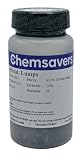
- Packaged in a natural HDPE bottle
Product prices and availability are accurate as of the date/time indicated and are subject to change. Any price and availability information displayed on Amazon at the time of purchase will apply.
The Tool Desk
Outbyte Driver Updater FREEScan for outdated or missing drivers - takes under a minuteDriver Scan →Outbyte PC Repair FREERepair Windows errors before they cause bigger problemsFix Now →



