AMD’s plan to acquire ZT Systems is no longer pending. AMD announced the cash-and-stock transaction on August 19, 2024, completed it on March 31, 2025, and later sold ZT’s U.S.-based manufacturing operation to Sanmina. AMD retained the parts it considered most important to its AI strategy: rack-scale system design and customer enablement.
The deal was less about buying a conventional server manufacturer than about helping AMD turn its CPUs, GPUs, networking products and ROCm software into complete, deployable AI infrastructure.

The short version
- AMD announced the ZT Systems acquisition at an estimated value of $4.9 billion, including up to $400 million in contingent consideration.
- The acquisition closed on March 31, 2025.
- AMD retained ZT’s rack-scale AI design, integration, validation and customer-enablement operations.
- AMD sold ZT’s U.S.-based manufacturing business to Sanmina on October 27, 2025.
- The strategic goal was to compete more effectively at the complete AI-system level, rather than selling individual chips alone.
For investors, the central question is not simply whether AMD bought a company for $4.9 billion. It is whether ZT’s expertise helps AMD shorten the path from an accelerator product to a qualified, production-ready AI cluster.
What ZT Systems brought to AMD
ZT Systems was an AI and general-purpose compute infrastructure provider serving hyperscale customers. Its value to AMD extended well beyond the label “server maker.”
#1 Best Overall

- Delivering a Gigantic 32 GB of High-Performance ECC Memory
- Hardware Raytracing
- Optimizations for 6 Ultra-HD HDR Displays
- Accelerated Software Multi-Tasking
- PCIe 4.0 for Advanced Data Transfer Speeds
AI deployment at data-center scale requires much more than a GPU. A workable cluster must coordinate compute, networking, power delivery, cooling, firmware, software configuration, validation, serviceability and customer-specific operating requirements. ZT brought experience in:
- Rack-scale system architecture.
- Cluster-level integration and optimization.
- Customer-specific infrastructure engineering.
- Hardware validation and deployment enablement.
- Hyperscaler procurement and qualification processes.
- Moving designs toward production deployment.
That distinction matters. AMD already had important components, including Instinct accelerators, EPYC server processors, networking products and ROCm software. ZT added expertise in assembling and qualifying those pieces as part of a broader system.
Why AMD wanted the deal
The acquisition reflected a shift in AI competition from individual chips to complete platforms. Customers buying large AI capacity increasingly care about the entire deployment: performance, software compatibility, networking, cooling, power consumption, supply, support and time to operation.
AMD said the combination would help it deliver optimized AI infrastructure more quickly and create a more complete offering across CPUs, GPUs, networking, software and rack-scale design. Its original announcement said AMD expected the transaction to become non-GAAP accretive by the end of 2025. That was a management expectation at announcement, not an independently verified result that should be treated as guaranteed.
Free tools Windows power users keep installed
One-click scans. No signup required.
ZT’s hyperscale experience could also improve AMD’s feedback loop with major cloud customers. Systems teams encounter practical constraints—such as thermal limits, rack density, network topology and serviceability issues—that may not be visible when a company sells a standalone accelerator.
Transaction timeline
| Date | Event |
|---|---|
| August 19, 2024 | AMD announces an agreement to acquire ZT Systems for an estimated $4.9 billion, including up to $400 million in contingent consideration. |
| March 31, 2025 | AMD completes the acquisition. |
| May 19, 2025 | AMD announces an agreement to sell ZT’s U.S.-based manufacturing business to Sanmina for up to $3 billion in cash and stock, including up to $450 million in contingent consideration. |
| October 27, 2025 | AMD completes the manufacturing divestiture. |
| December 27, 2025 | AMD’s annual-report accounting reflects the acquisition and the subsequent manufacturing-business transactions. |
Sources include AMD’s acquisition closing announcement, its Sanmina divestiture announcement and AMD’s 2025 annual report.
Rank #2

- 70 CU Compute Units, 2 AI Accelator per CU and 45 TFLOPS FP32 - to accelerate demanding workloads.
- 32GB GDDR6 MEMORY - allowing users to enjoy extreme levels of speed and responsiveness
- Support for 4K, 8K, 12K and AV1 displays: single 8K display at 60Hz (12-bit HDR uncompressed) or up to four 4K displays at 120Hz. With the DSC, a display of 12K at 60Hz or 8K at 120Hz is possible. AV1 encoding and decoding is available.
- EXHAUSTIVE API SUPPORT including OpenCL, DirectX, OpenGL and Vulkan and flagship applications such as: 3ds Max/Maya, Aftter Effects / Premiere Pro, Avid Media Composer, DaVinci Resolve, Maxon Cinema 4D, SideFX Houdini, Unity, Unreal Engine
- Support for flagship applications: 3ds Max/Maya, Aftter Effects / Premiere Pro, Avid Media Composer, DaVinci Resolve, Maxon Cinema 4D, SideFX Houdini, Unity, Unreal Engine
What did the acquisition actually cost?
The $4.9 billion figure was the announced transaction value, not a simple cash price. It included cash, AMD stock and up to $400 million in contingent consideration.
AMD’s 2025 annual report records approximately $4.409 billion in total purchase consideration at the acquisition date. The reported components were:
What’s actually slowing this PC down?
Pick the symptom - the matching free tool is one click away.
| Component | Reported amount |
|---|---|
| Cash | $3.188 billion |
| AMD stock | $860 million |
| Estimated contingent consideration at acquisition | $361 million |
| Total purchase consideration | Approximately $4.409 billion |
These figures should not be presented as evidence that AMD simply “cut” the purchase price. Announcement values, fair-value estimates, stock valuations, purchase-price adjustments and accounting treatment can produce different totals. AMD also reported that the acquisition-related contingent consideration liability was settled in October 2025 at $482 million after a fair-value change.
Why AMD sold ZT’s manufacturing operation
AMD said when it announced the acquisition that it intended to seek a strategic partner for ZT’s manufacturing business. The logic was to retain the design and customer-facing capabilities most directly connected to AMD’s AI-platform strategy while using an established manufacturing partner to provide production scale.
In May 2025, AMD announced that Sanmina would acquire the U.S.-based manufacturing operation for up to $3 billion in cash and stock, including up to $450 million in contingent consideration. The transaction closed on October 27, 2025.
AMD’s annual report records the completed sale as generating $2.4 billion in cash, subject to adjustments, plus 1,151,052 Sanmina shares. AMD was also eligible for up to $450 million in additional cash consideration through 2028 if specified conditions were met. AMD recorded an initial Sanmina earn-out receivable of $332 million.
Crashes, No Sound, or Screen Glitches?
Random freezes, missing sound and display glitches usually trace back to one bad driver. Find and replace yours safely.Free scan · under a minuteWindows Errors? Fix Them Before They Spread
Repair common Windows errors and clear accumulated junk for a smoother, more stable PC - no reinstall needed.Free scan · no reinstallRank #3

- Memory Speed:19.5 Gbps.Digital Max Resolution:7680x4320
- Chipset: NVIDIA GeForce RTX 3090
- TRI FROZR 2 Thermal Design
- Video Memory: 24GB GDDR6X.Avoid using unofficial software
- Memory Interface: 384-bit
That does not mean AMD “got $3 billion back.” The announced sale value included contingent consideration and stock, while the accounting record includes different components and adjustments. AMD also entered into a five-year manufacturing-services agreement with Sanmina, making Sanmina a preferred new-product-introduction manufacturing partner for AMD cloud rack- and cluster-scale AI systems.
What AMD kept
AMD retained ZT’s rack-scale AI-solution design expertise, customer-enablement teams, certain intellectual property and the employees associated with the design operation. Those teams joined AMD’s Data Center Solutions business.
AMD’s annual report refers to the retained operation as the ZT Design Business and places it in AMD’s Data Center segment. The report also says the ZT Manufacturing Business represented the majority of ZT’s operations and was classified as held for sale upon acquisition.
That qualification is important: AMD did not retain all of ZT’s former operations, revenue base or workforce. It retained the portion most closely tied to systems architecture and customer deployment, while separating manufacturing into a partner relationship.
At the acquisition closing, former ZT President Doug Huang became senior vice president of Data Center Platform Engineering and led the design and customer-enablement teams. Former ZT CEO Frank Zhang joined AMD as senior vice president of ZT Manufacturing to help lead the divestiture.
Potential benefits for AMD
Faster deployment
A systems-design capability could shorten the time between an AMD product becoming available and a customer operating a qualified AI cluster. For hyperscalers, deployment delays can affect revenue and available computing capacity.
Rank #4
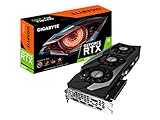
- Digital Max Resolution:7680x4320.Form Factor:ATX.Power requirement : 750W, Cuda Cores : 10496.Recommended PSU : 750W. Memory Bandwidth (GB/sec) : 936 GB/s..Video output interface : DisplayPort, HDMI.
- NVIDIA Ampere Streaming Multiprocessors
- 2nd Generation RT Cores
- 3rd Generation Tensor Cores
- Powered by GeForce RTX 3090
A more integrated offering
AMD can now position its AI infrastructure around a broader combination of CPU, GPU, networking, software, rack design and customer enablement. That may be easier for some customers to evaluate than sourcing and integrating each layer independently.
Better customer feedback
Direct involvement in system design can expose recurring bottlenecks involving power, cooling, network topology, rack density, workload requirements, validation and serviceability. That information can influence future products and reference architectures.
Recommended Free Tools
More credibility with hyperscalers
ZT’s experience with hyperscale infrastructure may help AMD navigate qualification and procurement processes that differ substantially from selling a standalone accelerator or processor.
Independent reader supportYour contribution helps us test, update, and keep practical guides available for everyone.Risks and limits
Integration risk
AMD warned that the businesses might not integrate successfully and that expected synergies, growth or accretion could take longer than expected. Acquiring expertise does not automatically transfer every customer relationship, process or operational advantage.
Customer neutrality
ZT had served hyperscale customers across infrastructure ecosystems. Some customers could question whether a design organization owned by AMD remains sufficiently vendor-neutral, particularly when customers use competing components.
Less direct manufacturing control
Selling the manufacturing business reduces AMD’s direct control over production, quality and supply-chain execution. The offset is a manufacturing relationship with Sanmina and the possibility that AMD can focus its resources on design and platform enablement.
No automatic Nvidia parity
The deal does not by itself establish parity with Nvidia. AMD still competes across accelerator performance, software maturity, networking, developer adoption, supply availability, customer support, total cost of ownership and large-scale cluster reliability.
Nvidia’s DGX platform illustrates why the comparison is broader than GPU specifications: validated hardware, software and system support are part of the competitive proposition. AMD’s strategy emphasizes an open ecosystem built around AMD products and OEM or manufacturing partners, but that does not eliminate the execution challenge.
What this means for investors
The transaction should be evaluated as a systems-integration and go-to-market investment, not merely as a capacity purchase. The relevant indicators include:
- Whether AMD wins more complete AI-system engagements.
- Whether customers can deploy AMD-based clusters faster.
- Whether ROCm and related software become easier to qualify in production.
- Whether AMD improves its position with hyperscalers and large enterprises.
- Whether the retained design business generates durable strategic value after manufacturing moves to Sanmina.
- Whether integration costs and partner dependence offset the expected benefits.
Investors should also avoid combining the $4.9 billion acquisition headline, the approximately $4.409 billion accounting purchase consideration and the Sanmina sale proceeds into a simplistic return calculation. They represent different transaction measures and include stock, contingent payments, fair-value changes and adjustments.
The Tool Desk
Outbyte Driver Updater FREEScan for outdated or missing drivers - takes under a minuteDriver Scan →Outbyte PC Repair FREEClear out junk files and repair common Windows errorsFree Scan →How to evaluate an AMD-based AI infrastructure deployment
For an enterprise considering AMD-based infrastructure, the ZT transaction is most relevant as a signal that system architecture and deployment support matter alongside chip selection. A procurement review should cover:
- Whether the workload is training, inference or mixed use.
- Required accelerator memory and system memory.
- Interconnect and networking requirements.
- Available power and cooling capacity.
- Rack density and data-center constraints.
- Compatibility with ROCm, frameworks and existing applications.
- OEM support, warranty and lifecycle services.
- Cloud versus owned infrastructure economics.
- Deployment timeline and qualification requirements.
- Three-year total cost of ownership.
Complete systems are generally quote-based. Pricing depends on accelerators, CPUs, memory, networking, storage, power, cooling, installation, software support, utilization and financing. Buyers can compare AMD-based systems from infrastructure vendors such as Dell, HPE and Supermicro, or use cloud GPU capacity from AWS, Microsoft Azure or Google Cloud.
The bottom line
AMD’s ZT Systems acquisition was a bet on the layer between semiconductor products and operational AI infrastructure. The deal closed in March 2025, and AMD subsequently sold the manufacturing arm to Sanmina while retaining ZT’s design and customer-enablement organization.
Its success should be judged by whether AMD can deploy complete AI systems more quickly, win more large-scale customer programs and make its broader CPU-GPU-networking-ROCm platform easier to adopt—not by whether AMD continues to own a server manufacturer.
Quick wins for a faster PC:
Fix the driver behind crashes, sound loss and screen glitchesFind Drivers →Repair Windows errors before they cause bigger problemsFix Now →Scan for outdated or missing drivers - takes under a minuteDriver Scan →Quick Recap
Product prices and availability are accurate as of the date/time indicated and are subject to change. Any price and availability information displayed on Amazon at the time of purchase will apply.




