Amazon Best Sellers can help you spot products that are popular, but a high ranking does not prove an item will be profitable or right for your business. Use bestseller lists to generate ideas, then check demand, competition, seasonality, customer feedback, sourcing feasibility, and costs before committing money to inventory.
What are the best products to sell on Amazon?
There is no universally best product for every seller. A promising item depends on the marketplace you plan to sell in, your goals, your available capital, and whether you can source and fulfill it at a workable cost.


Amazon recommends using its Best Sellers list to discover products customers are purchasing. Treat the list as an idea generator, not a profitability ranking. A popular product can still be a poor choice if competition is intense, demand is seasonal, the item is costly to ship or store, or customers have concerns you cannot address.
Turn a popular product into a research question
For each idea, consider its price and reviews, seasonality, size and weight, and fit with the customers you want to serve. Then ask whether the product has durable demand, whether you can differentiate it or compete effectively, and whether expected revenue can cover sourcing and selling costs. Amazon’s selling guidance recommends considering these product and customer factors; it does not establish that any one item will succeed.
Recommended Free Tools
#1 Best Overall

- Income And Expense Log Book: This Income and Expense Record Book(8.5" x 10.5") is a necessary item for any small business owner or entrepreneur. It is an essential part of any business - helping you understand your overall earnings to determine if you are profitable.
- Daily Tracking and Weekly Overview: let our log tell you if you are profitable today! There are two pages per week to help you you track your income and expenses. At the end of each day or week, you can note whether you made a profit or a loss for the day.
- Clear P&L Statement For Your Business: This income and expense book makes it easy to see your expenses and how they fluctuate from time to time. This makes it easy for you to decide where you can cut back on expenses and assess your total annual net profit.
- Main Features: Expense Review + Income Review + Weekly Pages + Summary of The Year + Twin-Wire Binding + Waterproof Cover + Rounded corner design + Thicker paper
- Effective Organization: This budget book has a twin-wire binding and you can easily lay it flat at 180°. This effective design can help you work better and bring you great convenience in the process of using.
How do I check whether a product is worth selling?
Use Amazon’s Product Opportunity Explorer to investigate a niche by keyword or product. Amazon says the tool analyzes search, browse, and purchase behavior and can surface trends in competition, search terms, customer reviews, pricing, returns, and unmet demand. Those signals can help you understand what shoppers are looking for and where existing offers may fall short.
- Start with a niche or product idea. Search by keyword or product to identify the relevant market and customer needs.
- Study demand and competition. Review available trend, search, and competitive signals rather than relying on one product’s rank.
- Read customer feedback and return signals. Look for recurring complaints, unmet needs, and possible reasons products are returned.
- Check seasonality and product economics. Consider price, expected sourcing and fulfillment costs, size and weight, and whether demand may fluctuate.
- Validate sourcing before investing. Confirm that a supplier can provide the product and documentation you need at terms your business can support.
Amazon reports that sellers in the US, EU, and Japan who launched products from niches they viewed in Product Opportunity Explorer within the previous 12 months had 2.5x higher sales potential in their first three months, based on Amazon’s internal 2025 study. This is a qualified finding about that studied group, not a forecast for an individual product or a guarantee of sales. Amazon cautions that the tool is guidance, not a substitute for your judgment about demand or where to invest.
Which Amazon selling model should I choose?
Amazon describes several ways to sell online. They differ in inventory exposure, upfront commitment, brand control, and dependence on suppliers. Compare them against your capital, capabilities, and ability to validate demand before choosing.
| Model | Inventory and upfront commitment | Control and fulfillment considerations |
|---|---|---|
| Wholesale | Buy established products in bulk; minimum orders and storage needs can tie up capital. | You sell existing products and depend on legitimate suppliers for availability, authorization, and supporting records. |
| Private label or own brand | Typically requires more upfront investment than low-inventory approaches. | You develop or source products under your brand, giving you more responsibility for differentiation and product decisions. |
| Dropshipping | A supplier stores and ships products, so you do not hold the inventory yourself. | You rely heavily on supplier reliability and still need to meet applicable marketplace requirements. |
| Print-on-demand | Products are printed and shipped after a customer orders, reducing the need to hold finished goods. | Useful for content or book products; Amazon gives books through Kindle Direct Publishing as an example. |
These descriptions are broad model differences, not a recommendation that one approach is best for all sellers. The Amazon overview of online business models describes wholesale, private label, dropshipping, and print-on-demand.
Quick wins for a faster PC:
Clear out junk files and repair common Windows errorsFree Scan →Scan for outdated or missing drivers - takes under a minuteDriver Scan →Repair Windows errors before they cause bigger problemsFix Now →How do I find and vet a supplier for Amazon products?
Amazon describes a wholesaler as a supply company that buys products in bulk and resells them to business owners at a markup. A supplier’s quoted unit price is only one part of the decision. Evaluate the full terms and whether the supplier can support a legitimate, compliant listing.
- Define the product and quantity you need. Establish the niche, expected inventory needs, and any product requirements before contacting suppliers.
- Compare minimum order quantities and price breaks. A lower per-unit price may require a larger order, increasing the amount of cash tied up in stock.
- Request samples where appropriate. Assess quality before committing to a substantial order, and account for the sample’s cost.
- Confirm authorization and compliance. Ask what proof of purchase, brand authorization, approvals, or other documents may apply to the product or category.
- Review the complete supplier terms. Compare product quality, landed cost, delivery, return terms, and the supplier’s ability to provide consistent inventory.
- Decide whether the inventory is manageable. Consider how quickly you can reasonably sell the order and the financial impact if demand is lower than expected.
Amazon’s wholesaler guidance recommends checking supplier minimums and price breaks, requesting samples, and confirming authorization and legal compliance. Some products and categories may require approval or supporting documents. Keep relevant proof of purchase or brand authorization; verify the requirements that apply to your specific product and marketplace.
Quick Recap
Best Value
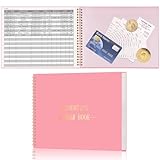
- Easy To Track Your Finances: HAUTOCO accounting ledger book keeps you on top of your expenses and income! Help you keep your money organized, spend well, and set and achieve financial goals
- Premium Material: The accounting ledger book has a total of 120 pages and 3,000 lines of entries. It is made of 100gsm thick paper to reduce ink leakage; it is equipped with a waterproof and sturdy PP cover to protect the inner pages
- Practicality: The expense tracker notebook measures 10.1 x 7.8'', and the large size gives you enough space to record each of your transactions; there are 2 PE large pockets at the back of the account book to store important tickets and loose items
- Manage Your Finances Effectively: Undated accounting books with number, date, description, account, payment or deposit amount, and total balance. You will be able to easily analyze your financial activities and quickly prepare accurate financial statements
- Ideal For Small Business or Personal Use: An accounting log journal can track your business or personal financial status. With a clear record of transactions, you can find unnecessary expenses or fraudulent charges
Why a bestseller is not automatically a good business opportunity
- Popularity is not profit. A bestseller rank does not show your sourcing, delivery, or other business costs.
- Demand can change. Seasonality and market trends affect whether today’s interest will continue.
- Customer problems matter. Reviews and return activity can reveal unmet needs, but also show product issues that may be difficult to solve.
- Supplier terms affect viability. Minimum orders, sample quality, authorization, and documentation can determine whether you can responsibly source and sell an item.
- Your circumstances shape the answer. A product or selling model that suits one seller’s capital and capabilities may not suit another’s.
Product prices and availability are accurate as of the date/time indicated and are subject to change. Any price and availability information displayed on Amazon at the time of purchase will apply.




