Do these 3 things before closing this tab:
1Repair Windows errors before they cause bigger problems2Fix the driver behind crashes, sound loss and screen glitches3Clear out junk files and repair common Windows errorsAethir and its partners announced Tactical Compute (TACOM) as a way to finance decentralized GPU infrastructure for AI, gaming, and blockchain workloads. But the headline figure needs a qualification: Aethir’s later official description said TACOM aimed to raise up to $40 million. Public materials do not establish that the full amount was raised, spent, or converted into operating GPUs.
What the $40 million announcement means
GamesBeat reported the initiative on December 6, 2024, describing Aethir and partners as putting $40 million toward decentralized infrastructure. Aethir’s subsequent announcement, dated March 4, 2025, described TACOM as an initiative seeking to raise “up to $40 million.” The distinction matters: a target or maximum is not the same as committed capital, cash raised, capital deployed, or GPUs already delivering service. GamesBeat’s report and Aethir’s announcement do not establish that the entire amount was funded or spent.

TACOM was presented not simply as a conventional venture fund or a GPU rental marketplace, but as a compute-focused, instrument-agnostic vehicle. Its proposed activities include financing hardware, arranging compute-denominated opportunities, supporting network launches, and pursuing yield structures around compute or node capacity. The current Tactical Compute website describes a $40 million crypto-AI vehicle operating from Abu Dhabi Global Markets; that current description is not proof of the amount actually deployed.
Who was involved—and how the public description changed
| Participant | Role described publicly | Qualification |
|---|---|---|
| Aethir | Decentralized GPU-cloud infrastructure provider and TACOM partner; GamesBeat described it as a partner and investor. | Aethir’s role is tied to supplying or allocating compute through its network, not evidence that it alone supplied the $40 million. |
| Beam Foundation / Beam Investments | Ecosystem, investment, and strategic support. | Beam’s current website describes the initiative with Aethir and MetaStreet-related entities. |
| MetaStreet / Permian Labs | MetaStreet was described as contributing DeFi financing primitives for nodes and GPUs; Permian Labs, its development company, was named in the venture’s creation. | This describes the announced structure, not proof of a specific amount contributed. |
| Sophon Foundation | GamesBeat identified Sophon as a strategic partner and an ecosystem where Aethir infrastructure would be deployed. | The available descriptions do not establish Sophon as a co-investor. |
| USDai | The current TACOM website identifies USDai as part of the joint venture alongside Aethir and Beam. | This is a later public description; it should not be silently treated as the identical partner lineup announced in 2024–25. |
The different descriptions may reflect an evolving structure or simply different ways of describing technology, ecosystem, and joint-venture roles. Public materials do not provide enough detail to resolve every legal or financial relationship among these entities.
#1 Best Overall

- [ Maximum AI Compute Power ] Dominate complex workloads with the ASUS ESC8000A-E13. This 4U rack server is a powerhouse engineered for mass-scale AI, machine learning, and deep training. Featuring support for dual AMD EPYC 9005/9004 processors and up to eight dual-slot GPUs, it delivers the raw computational muscle required to train LLMs and run complex simulations effortlessly. Accelerate your data science pipeline and transform raw data into actionable intelligence faster than ever.
- [ Advanced Thermal Efficiency ] High performance demands elite cooling. The ESC8000A-E13 features a cutting-edge aerodynamic design with independent CPU and GPU airflow tunnels. Equipped with redundant hot-swap fans and optimized for liquid cooling integrations, this 4U server ensures maximum uptime under heavy, sustained workloads. Keep your data center running cool, quiet, and highly efficient while preventing thermal throttling during mission-critical enterprise operations.
- [ Scale with Flexible Storage ] Future-proof your infrastructure with unmatched storage and expansion flexibility. This offers comprehensive front-panel drive bays supporting Gen5 NVMe, SAS, or SATA drives alongside multiple PCIe 5.0 slots. Designed as a high-density 4U server capable of housing eight dual-slot GPUs: NVD H200, RTX PRO 6000 Blackwell, RTX PRO 4500 Blackwell or AMD Instinct MI350P PCIe Card, each supporting up to 600 watts.
- [ Enterprise-Grade Reliability ] Minimize downtime and secure your ecosystem with server-grade redundancy. The ESC8000A-E13 is built for 24/7 continuous operation, boasting 2+2 redundant (3200W total) 80 PLUS Titanium power supplies and integrated ASUS ASMB11-iKVM for comprehensive out-of-band management. Ideal for cloud service providers, rendering farms, and large enterprise infrastructure, it combines robust physical hardware with smart remote monitoring to safeguard your digital assets.
- [Reliability Guaranteed] Shop with total peace of mind knowing that every new computer component we sell is backed by our EPC 3-year warranty. Whether you are investing in high-speed DDR5 RAM or a powerhouse GPU, we protect your build against defects and performance failures. We stand firmly behind the quality of our hardware, ensuring that your setup remains fast, stable, and secure for years to come.
How TACOM’s proposed financing model works
The intended logic is to connect hardware and compute demand with financing. A GPU owner may need upfront capital or liquidity; a new network may need capacity before it has enough customers; and an AI or blockchain project may need access to GPUs without building a data center itself. TACOM’s proposed role is to finance or structure some of those links, while Aethir supplies a way to aggregate and expose compute.
- Finance or unlock capacity. Funding could support GPU purchases, infrastructure expansion, or liquidity for hardware owners.
- Make capacity usable by projects. Compute credits or compute-denominated financing could give an early project access to resources before conventional customer revenue is established.
- Support networks and utilization. Bootstrapping and potential yield arrangements could help early networks attract capacity and demand.
- Match workloads to supply. AI, gaming, and blockchain customers would consume compute, with payments or other returns flowing through the relevant commercial arrangement.
Aethir compared the idea with transactions denominated in cloud credits. That is an analogy, not evidence that TACOM works like Azure or another cloud provider. The public announcements do not provide a complete deal-by-deal allocation, repayment schedule, fee structure, or audited results. Nor do they establish that any particular arrangement uses ATH tokens; token-linked structures are a possibility to examine, not a confirmed universal mechanism.
Why decentralized GPU infrastructure is being pursued
Model training, inference, fine-tuning, graphics rendering, and some blockchain workloads compete for accelerated computing. Startups can face limited access to high-end GPUs through established cloud channels, while distributed networks aim to aggregate capacity that is geographically fragmented or underused. Financing may help bring that supply online, but adding GPUs only solves part of the problem: customers also need reliable scheduling, suitable networking, storage, security, and predictable service.
Rank #2

- 【AI Max+ 395 AI Workstation】16 cores, 32 threads, up to 5.1 GHz boost and 80 MB cache. Integrated Radeon 8060S graphics with 40 CUs, RDNA 3.5, delivers performance close to RTX 4060/4070 laptop GPUs. Triple-engine design(CPU+GPU+XDNA 2 NPU) with up to 126 TOPS total, including 50+ TOPS dedicated NPU for local AI inference and machine learning acceleration. Ideal for AI development, content creation, virtualization, data analysis, and demanding multitasking. Compact, high-performance workstation.
- 【256-bit LPDDR5X MAX 128GB】The LPDDR5X onboard memory reaches 8400 MT/s - 1.5x faster than DDR5 SODIMM. Unlock the full potential of your graphics with massive 128GB memory pooling. This system allows you to manually assign up to 128GB of the onboard RAM to serve as video memory (VRAM) directly within the BIOS setup, delivering unparalleled performance for 4K video editing, and AI model training without the need for a discrete graphics card.
- 【Lastest GPU 8060S & XDNA 2 NPU】Built on the RDNA 3.5 architecture, the AMD Radeon 8060S Graphics iGPU features 40 compute units (2,560 stream processors). It delivers performance on par with NVIDIA's mobile RTX 4070, efficient encoding/decoding for AVC, HEVC, VP9, and AV1 video codecs. And It can connect 4 screens via HDMI & DisplayPort & Full Featured USB4 x2 to efficiently handle your tasks and meet your specific needs. Supports 8K/4K resolution displays.
- 【Dual LAN (2.5GbE+10GbE)& WiFi 7】The computer has double LAN, one is 2.5GbE (I226), the other is 10GbE(AQC113). provides more applications, such as firewall, soft routing, multichannel aggregation. Built-in WiFi module, support WiFi 7 and Bluetooth5.4. Known as 802.11be, Wi-Fi 7 promises up to 46Gbps theoretical throughput, making it 4.8x faster than Wi-Fi 6. and computer has 4 built-in NVMe SSD slots, 1 SD card slot, allowing you to expand its storage capacity.
- 【Engineered to Endure】The computer measures 7.13 x 7.24 x 2.99 inches. AI mini pc is encased in a premium all-aluminium chassis. Dual turbo CPU fans deliver silent, ultra-efficient cooling, To enable the computer to maintain stable operation for a long time. We offer up to 2 years warranty and lifetime professional customer service. Please feel free to contact us if any issues happened. thanks
Aethir said in its 2025 announcement that its network included more than 3,000 NVIDIA H100 GPUs and more than 43,000 additional high-end GPUs. Those are company-provided figures, not an independent audit or a clear count of capacity that was simultaneously available, under contract, or actively serving workloads. GamesBeat reported an executive estimate that TACOM could facilitate another 3,000–4,000 H100s; that was a projection, not a confirmed delivery milestone.
What’s actually slowing this PC down?
Pick the symptom - the matching free tool is one click away.
Aethir’s enterprise site markets GPU access for AI training, fine-tuning, and inference, and claims bare-metal access without virtualization overhead. It lists H100, H200, B200, and L40S offerings, but actual configurations and availability may vary by location and contract. The same page displays a demonstration H100 rate of $1.25 per GPU-hour and says buyers should request detailed pricing and availability. It is not a complete, binding price comparison: region, networking, storage, support, minimums, and service terms need confirmation.
What would show whether the initiative succeeded?
A headline funding target and a network-wide GPU count do not by themselves show commercial progress. Useful evidence would distinguish:
- How much capital was targeted, committed, raised, and actually deployed.
- How many GPUs were financed, delivered, available, and actively serving customers, by model and location.
- Capacity utilization, uptime, workload completion times, and customer retention.
- Revenue from paying customers versus activity supported by token incentives or subsidies.
- Customer concentration and the share of capacity covered by recurring contracts.
- All-in workload costs—including networking, storage, idle capacity, and support—compared with relevant cloud alternatives.
- Whether payments are made in fiat, stablecoins, ATH, credits, or another form, and what obligations or volatility that creates.
Without those operating and financial details, a count of GPUs “onboarded” could mean registered hardware, contracted capacity, or machines actually available for a customer workload—very different things.
Independent reader supportYour contribution helps us test, update, and keep practical guides available for everyone.What buyers, GPU owners, and investors should check
For an AI or gaming customer
- Confirm the exact GPU model, memory, interconnect, drivers, and whether the capacity is on-demand, reserved, or subject to marketplace availability.
- Request service-level terms covering uptime, maintenance, replacement times, and remedies for failures.
- Ask where workloads run, who controls the host, and what isolation or data-protection controls apply.
- Test networking, storage, latency, and orchestration for the actual workload; a low GPU-hour quote alone is not a total-cost comparison.
- Check billing currency, minimum commitments, support, and how easily containers, models, and data can be moved elsewhere.
Distributed capacity may suit inference, rendering, batch processing, or fine-tuning when the hardware and service terms match the job. It may be a poor fit for sensitive data without acceptable controls, latency-sensitive applications without nearby nodes, or tightly synchronized multi-node training without proven interconnect performance. A GPU can be online yet unusable for a workload because of insufficient VRAM, incompatible drivers, weak networking, or poor coordination.
For a GPU owner
- Model utilization and revenue after power, cooling, bandwidth, maintenance, and hardware replacement costs.
- Read contract duration, payment currency, performance deductions, penalties, and responsibility for warranty or repairs.
- Understand customer-data exposure and whether earnings depend on actual customer demand or token emissions.
- Stress-test revenue assumptions against token-price changes and periods of low utilization.
For an investor or prospective limited partner
- Determine whether the $40 million is a target, a commitment, or paid-in capital; ask for evidence of deployment.
- Review the legal entity, jurisdiction, eligibility rules, fees, carry, lockups, redemption terms, and valuation methodology.
- Understand exposure to ATH or other tokens, collateral quality, hardware liquidation mechanics, and audited financial reporting.
- Separate recurring customer revenue from token-incentivized activity, and examine customer contracts and concentration.
TACOM’s website directs prospective limited partners, projects, and hardware owners to contact the vehicle; it is not presented as a standard self-serve hourly GPU checkout. Its suitability and regulatory treatment depend on the participant, jurisdiction, and specific offering.
Rank #4
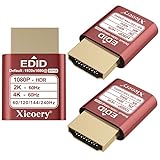
- 🚚080P HDR-Ready EDID for Accurate Color and Tone Mapping Features a refined EDID profile centered around 1920×1080@60Hz with HDR metadata support, enabling richer color depth, improved contrast handling and enhanced dynamic range—critical for modern GPUs, rendering tasks and video workflows
- 🚚True HDR Metadata Emulation (10-bit/12-bit Color Depth Signals) Transmits HDR-related EDID information including extended color depth, BT.2020 color space flags and EOTF curves. Ensures the system outputs accurate HDR tone mapping even without a real monitor. A major upgrade compared to non-HDR dummy plugs.
- 🚚Headless Ghost Mode for Stable GPU Behavior Acts as a virtual HDR display, preventing GPU downclocking, black screens, resolution limits and incorrect color profiles during remote access. Essential for servers, cloud PCs, virtual machines and rack-mounted GPU nodes.
- 🚚Supports High Refresh Rates up to 240Hz Enhanced EDID library covers multiple refresh rates—60Hz, 75Hz, 119Hz, 120Hz, 144Hz and 240Hz—suitable for game streaming, KVM switching, industrial visualization and multi-display emulation.
- 🚚Extensive HDR-Compatible Resolution Set Includes resolutions from 4096×2160 down to 800×600. Ensures compatibility with modern graphics cards, older display controllers and professional computing environments.
How decentralized compute compares with cloud alternatives
The practical question is not whether a network is decentralized in name, but whether it meets a buyer’s requirements better than alternatives. Hyperscalers typically bundle compute with mature storage, networking, identity, compliance programs, support, and enterprise procurement. Specialist GPU clouds may provide GPU-focused workflows or self-serve access. Distributed networks may offer another source of supply or crypto-native financing, but buyers should compare concrete terms rather than assume a lower price or equivalent service.
| Dimension | Questions to compare |
|---|---|
| Price | What is the all-in cost after storage, bandwidth, setup, support, reservations, idle capacity, and migration? |
| Availability | Is the required GPU model available in the needed quantity and region, with a reservation or contractual guarantee? |
| Reliability | What uptime commitment, replacement process, and remedy apply when capacity fails? |
| Latency and networking | Are nodes close enough, and does interconnect performance support the workload? |
| Security and compliance | Can the provider document isolation, data handling, and any required compliance regime? |
| Portability | Can workloads move without being locked into a proprietary billing, token, or orchestration arrangement? |
For context, the principal cloud providers include AWS, Microsoft Azure, and Google Cloud; specialist GPU providers include CoreWeave, Lambda, and RunPod. Their current prices and capacity should be checked directly and normalized for the same workload, region, and service level.
The risks behind the financing thesis
- Execution: financing hardware does not ensure it is installed, schedulable, and useful to customers.
- Reliability and latency: distributed locations and operators can make uptime, networking, and response times less consistent, especially for interactive workloads.
- Security: customers may be reluctant to place sensitive data or models on third-party hardware without adequate isolation and controls.
- Token economics: incentives may stimulate supply or activity temporarily without proving sustainable paid demand.
- Liquidity and hardware value: financing depends on utilization, realistic resale values, and the ability to recover capital if demand falls.
- Concentration and disclosure: a few large customers can make growth fragile, while promotional GPU or revenue figures may not disclose active capacity or audited results.
- Regulation: token-linked yield, investment structures, and cross-border offerings can raise securities, commodities, tax, and financial-regulation questions.
- Competition: established clouds and GPU specialists can bundle support, storage, networking, and contractual service levels; decentralized providers must prove comparable outcomes for each workload.
Decentralization also has degrees: hardware ownership may be distributed while scheduling, customer support, governance, settlement, or treasury management remains concentrated. Buyers and investors should evaluate those control points rather than relying on the label alone.
Quick Recap
Product prices and availability are accurate as of the date/time indicated and are subject to change. Any price and availability information displayed on Amazon at the time of purchase will apply.




