Quick wins for a faster PC:
Clear out junk files and repair common Windows errorsFree Scan →Fix the driver behind crashes, sound loss and screen glitchesFind Drivers →King’s 2014 IPO filing captured two facts that can look contradictory: the company had reached enormous scale, but its top three games generated 95% of gross bookings in the fourth quarter of 2013. The filing shows how a portfolio, social and mobile distribution, and free-to-play purchases powered rapid growth—and why that success still depended on a small set of hits and a minority of paying players.
King had a games business before Candy Crush
King’s prospectus traces its online-games operation to 2003. The company’s breakout did not begin with a single mobile launch: it built and distributed a succession of casual games, first establishing an audience on social platforms and then extending its reach to mobile.
Bubble Witch Saga was King’s first major Facebook launch, in September 2011. Candy Crush Saga followed on Facebook in April 2012. Pet Rescue Saga arrived in November 2012, followed by Farm Heroes Saga in April 2013 and Papa Pear Saga in May 2013. The sequence matters: King entered its breakout period with an operating history and a portfolio, even though a few titles would soon account for most of its bookings. King’s 2014 IPO prospectus lays out that history.
How free-to-play turned a large audience into sales
Players could access King’s games without paying. The company generated revenue when some players bought virtual goods to enhance their experience. In its prospectus, King described a strategy of earning a modest share of customers’ entertainment spending, with player loyalty and long-term retention as priorities.
#1 Best Overall
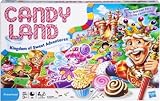
- CLASSIC BEGINNER GAME: Do you remember playing Candy Land when you were a kid. Introduce new generations to this sweet kids' board game
- RACE TO THE CASTLE: Players encounter all kinds of "delicious" surprises as they move their cute gingerbread man pawn around the path in a race to the castle
- NO READING REQUIRED TO PLAY: For kids ages 3 and up, Candy Land can be a great game for kids who haven't learned how to read yet
- GREAT GAME FOR LITTLE ONES: The Candy Land board game features colored cards, sweet destinations, and fun illustrations that kids love
CEO and co-founder Riccardo Zacconi stated the ambition plainly in his prospectus shareholder letter: “We have put the long-term retention of our players at the heart of our business model.” That is a statement of strategy, not independent proof of retention or of the model’s durability.
The company’s December 2013 audience figures show the distinction between reach and payment. King reported approximately 12 million average monthly unique payers, around 4% of monthly unique users, at December 31, 2013. This monthly measure should not be conflated with its daily active-user figures. Advertising was becoming a small part of the business: it accounted for 12% of revenue in 2011, 10% in 2012, and 1% in 2013, according to the prospectus.
Growth reached mobile scale
The prospectus reported revenue of $64 million in 2011, $164 million in 2012, and $1.88 billion in 2013. King also reported $567.6 million in profit before tax in 2013. These are company-reported figures in its 2014 filing, not independent estimates.
Rank #2
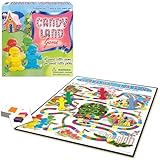
- THE CLASSIC: Everyone knows the game of Candy Land. This classic edition features the original, charming artwork from the games' early days
- RACE TO HOME SWEET HOME: Kids encounter all kinds of delicious fun as they move their cute gingerbread pawn through Gum Drop Mountains, Lollypop Woods, the Molasses Swamp and more
- NO READING REQUIRED: Since it's for kids ages 3 and up, Candy Land is suitable for those who haven't learned how to read yet
- A FAMILY FAVORITE: Cherish your child's early years by making memories with Candy Land. It's called a Rite of Passage game because it has been enjoyed generation after generation
- SKILLS: All in the name of fun. Children will learn counting, turn taking, color recognition, and color matching
King reported an average of 128 million daily active users in December 2013, playing its games more than 1.2 billion times per day. Its prospectus reported 144 million average DAUs in February 2014. The periods differ from the year-end monthly payer statistic, so these figures describe distinct measures rather than one directly comparable audience series.
Mobile had become the dominant channel for bookings: 73% of King’s gross bookings in Q4 2013 came from its mobile audience. Gross bookings are not the same as revenue or profit, and the filing’s percentage does not establish a corresponding share for either. It does show how central mobile distribution had become to the company’s business. The prospectus contains the company’s reported financial and audience measures.
The filing exposed the cost of depending on hits
King’s scale came with substantial title concentration. Its top three games—Candy Crush Saga, Pet Rescue Saga, and Farm Heroes Saga—accounted for 95% of total gross bookings in Q4 2013. Candy Crush alone had 93 million DAUs in December 2013 and 97 million in February 2014; Pet Rescue had 15 million in both periods, according to the prospectus.
Rank #3

- 【Fun Family Bonding Game】: One player designs a colorful, tangled challenge while the other races to solve it! This brain-teasing board game strengthens relationships and creates lasting memories for kids and adults. Protected by U.S. Appearance Patent: D1101871.
- 【How to Play】: "Insert both ends of 10 vibrant ropes (plastic-tipped) into the board’s 22 holes, twisting into knots or crosses. Adjust difficulty with 3-10 ropes! Players move rope tips OVER others—never under—to empty holes. Remove untangled ropes and clear all to win—For detailed instructions, watch the video: How to Play – Rope Untangling Challenge."
- 【Multi-Level Difficulty for All Ages】: "From simple board games for kids (3-4 ropes) to complex puzzles for adults (10-rope mazes), this game grows with you! More knots = tougher challenges, perfect for fans of strategy-based board games!"
- 【A Fun Way to Keep Kids Off Screens】: "This hands-on logic puzzle game beats screen time! Kids build spatial awareness, sharpen focus, and learn problem-solving—like a tactile upgrade to traditional board games or video games!"
- 【The Perfect Gift for All Ages】: "Packed in a travel-ready case, this interactive family board game sparks friendly competition, boosts critical thinking, and unites everyone—ideal for playdates, holidays, or group games for kids and adults seeking screen-free fun!"
This is the central tension in the filing: King had a broad audience and multiple games, but most bookings still came from a very small number of titles. A portfolio can reduce reliance on any one release only if its other games attract players and generate meaningful spending; the mere existence of more games does not establish diversification.
Diversification improved, but the risk did not disappear
King’s 2015 Form 20-F provides evidence of a broader contribution the following year. Non-Candy Crush games rose from 22% of gross bookings in Q4 2013 to 55% in Q4 2014. That comparison supports a conclusion that bookings were less dependent on Candy Crush by the later quarter. It does not show that concentration risk was permanently resolved, and it is not directly comparable to the 95% figure, which measures the share from the top three titles.
PC Slower Than It Used to Be?
A free scan shows the junk files, broken settings and background clutter dragging Windows down - then fixes them in one click.Free scan · Windows 10 & 11Crashes, No Sound, or Screen Glitches?
Random freezes, missing sound and display glitches usually trace back to one bad driver. Find and replace yours safely.Free scan · under a minuteA later Activision Blizzard Form 10-K, filed in 2018, continued to identify risks associated with free-to-play games: dependence on a relatively small number of consumers for a significant share of revenue and profit, the ability to keep developing and monetizing games, and whether players would continue buying virtual currency and items. Those are risks disclosed in that filing, not measurements of King’s performance in 2026. Activision Blizzard’s 2018 Form 10-K describes them.
Rank #4

- Well-made Magnetic Board Game Great for Family Game Night. This magnetic game chess is a family bonding games to promote parent-child relationship through interation and create a relaxing and enjoyable family atmosphere, yet great for grandparents and kids to play together. Trust me, you will hear your family member laugh a lot when play this magnet game.
- Simple Instructions, Easy for Everyone. Each player holds the same number of stones and place them on the board, one at a time, taking turns with each player until get rid of the stones first as a winner. But beware, when stones jump together during one player’s turn, he or she collects them! Easy to learn and play both for kids and older people.
- Fun Board Game to Keep Kids Off Screens Also a Fun Puzzle Strategy Games That Fosters Exercises Your Child's Logical Thinking. If you are looking for a board games for kids 6-12 to keep them entertained at restaurants or on rainy days, this Hcusus magnet chess game is a good choice, also a great game for teen hangouts.
- Simple, Quick, But Challenging Game for 2-4 Player. There’s a lot of uncertainty in this magnet chess game, the most interesting thing is you think it is going to lose, but there’s still a chance to turn the table.
- Portable Board Game Ideal Gift for Family and Friends. Containd a chess game board with 40 stones and a storage bag. Easy to storage and take whether you're go. Great board game for family game night and party for adult and Kids entertained for hours.
What King’s IPO tells investors about hit-driven businesses
King priced its IPO at $22.50 per share in March 2014. Contemporary coverage reported that the shares fell on their first day of trading. That initial move describes market reception at the offering; one trading session cannot establish the business’s intrinsic value or long-term prospects. Contemporary reporting on the first-day decline provides that context.
For investors assessing a hit-driven games company, the filing offers a useful set of questions rather than a simple success story:
- Growth versus concentration: How much of bookings comes from the leading titles, and can other games meaningfully contribute?
- Reach versus monetization: How large is the active audience, and what share pays? DAUs, monthly unique users, and monthly payers are different measures.
- Mobile scale versus distribution exposure: What share of bookings comes through mobile, and how much does the business depend on access to that channel?
- Retention strategy versus demonstrated durability: A stated focus on loyalty is not itself evidence of lasting engagement or repeat purchases.
- Portfolio breadth versus continued execution: Diversification depends on successfully developing and monetizing additional games, not simply launching them.
King’s 2014 filing documented extraordinary growth, reach, and profitability alongside a concentrated source of bookings and a small paying share of a very large audience. Its subsequent filings show that non-Candy Crush games became a larger part of bookings, while the risks inherent in free-to-play monetization remained relevant in later disclosures. The record is a case study in how a powerful operating system can scale a hit—and why the next hit still matters.
Recommended Free Tools
Quick Recap
Product prices and availability are accurate as of the date/time indicated and are subject to change. Any price and availability information displayed on Amazon at the time of purchase will apply.




