The Tool Desk
Outbyte PC Repair FREEClear out junk files and repair common Windows errorsFree Scan →Outbyte Driver Updater FREEFix the driver behind crashes, sound loss and screen glitchesFind Drivers →Pineapple is a low-growing perennial, not a tree. On Maui Gold’s farm, the first fruit takes about 18 months after planting, and planting, harvesting, seed gathering, and packing are done by hand, according to general manager Rudy Balala. The broader growing cycle also involves preparing fields, managing water and nutrients, coordinating flowering, and deciding whether healthy plants can produce later crops.
How are pineapples grown in Hawaii?
The crop starts with planting material in a prepared field, then grows through a long first cycle before fruit is harvested. University of Hawaiʻi CTAHR’s cultivation guide describes a commercial sequence that includes clearing the previous crop, tilling, applying preplant nutrients, laying plastic strips, and planting crowns from pineapple tops. Slips or suckers can also be used when planting material is scarce. The guide describes planting as a hand operation, at densities that can exceed 24,000–30,000 propagules per acre; it associates higher density with fresh-fruit production. These are extension-guide details, not verified specifications for every current Hawaii farm. University of Hawaiʻi CTAHR’s pineapple cultivation guide
Managing the growing field
Planting is only the beginning. CTAHR describes water and nutrient management, as well as weed, insect, and disease control, as ongoing parts of production. In drier areas of Maui and Oʻahu, its guide says drip irrigation is used to help maintain growth and deliver water and nutrients to the root zone. It also notes that excessive wetness can encourage root rot. The guide discusses applications of nitrogen, iron, and zinc, but it is not a current farm-by-farm prescription for fertilizer or crop-protection products.
Coordinating flowering and fruit development
CTAHR says growers can use ethylene or ethephon to induce more uniform flowering, and that ripening can be managed to coordinate harvest. The guide reports flowering above 95% after growth-regulator application, but its publication date is not established, so that figure should be understood as a guide-reported result rather than a current guarantee for a particular farm.
Quick wins for a faster PC:
Scan for outdated or missing drivers - takes under a minuteDriver Scan →Repair Windows errors before they cause bigger problemsFix Now →Fix the driver behind crashes, sound loss and screen glitchesFind Drivers →#1 Best Overall

- Includes Four (4) Pineapple Plants "'White Jade" . These are 2 inch rooted plants shipped in 2 inch tray pots and are 1-5 inches tall.
- White Jade Pineapple is a highly sought after Hawaiian Variety. The white fleshed fruit of 'White Jade' is ultra-sweet with very low acidity.
- Planting and Care Most all edible plants grow well in Full Sun, a little shade won’t hurt. For smaller starter plants I recommend growing in a pot to establish root system then to re-pot or plant. I recommend growing is paritial sunny area when daily temperatures above 90 degrees. Once plants are more established then they can be grown in full sun. Pineapple Plants can be planted in most healthy soils with normal pH range 6.5-8.
- I recommend growing in 4 inch pot for starter plants then re-pot or plant. Use good Organic Potting Soil like Fox Farm Happy Frog with the fertilizer and beneficials already mixed in.
How long does it take for a pineapple to grow?
At Maui Gold, Balala says the first pineapple takes about 18 months from planting. “It takes 18 months from the time you plant it to the time you get your first pineapple,” he told Agriculture.com. He says a healthy planting can then produce a second and third crop, with about 15–16 months between those later crops.
Those timings are not identical across sources. CTAHR’s guide gives 18–20 months for the initial plant crop and about 12 months for a ratoon crop, which grows from suckers left after the first harvest. Dole Plantation’s consumer guide gives about 18 months to first fruit and another 13–14 months to a second fruit. These are different source estimates, not one universal schedule: farm conditions and the source’s context matter.
Rank #2
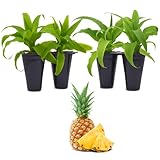
- The Pineapple plant boasts striking leaves that resemble mini pineapples, adding a whimsical and exotic touch to any indoor garden or decor.
- With its compact size, this succulent is perfect for small spaces like windowsills, desks, or shelves. It brings a touch of elegance and charm without taking up much room.
- The Pineapple plant is a low-maintenance succulent, making it an excellent choice for beginners or busy plant enthusiasts. It thrives with minimal watering and is drought-tolerant, making it a resilient and hassle-free addition to your plant collection.
- This succulent grows in a captivating rosette shape, featuring densely packed, fleshy leaves that form a visually appealing display. It adds a unique and stylish element to your succulent arrangement.
- Whether used as a standalone piece or in combination with other succulents, the Pineapple White Jade plant brings a touch of elegance and playfulness to any indoor setting. It can be a stunning centerpiece, an accent piece, or a thoughtful gift for plant lovers.
Are pineapples harvested by hand?
Balala says Maui Gold’s planting, seed gathering, harvesting, and packing are done by hand. His account emphasizes that a commercial pineapple operation can involve substantial manual work even though field production also uses machinery. CTAHR likewise describes planting and harvesting as hand operations, while many other field tasks can be mechanized. The exact division of labor varies by operation; Balala’s description is specific to his farm.
Why does Maui Gold say its growing conditions suit pineapple?
Balala credits Maui Gold’s volcanic soil, rainfall, and elevation—about 1,000–1,200 feet—with supporting the crop. He also points to warm days and cool nights as helpful for fruit sugar development. This is his explanation of conditions on the farm, not a demonstrated rule for every pineapple-growing area in Hawaii. His reported farm figures in the Agriculture.com interview include 757 leased acres, about 300 acres planted, and 23 field employees; those interview figures may change and should not be treated as a current census.
Recommended Free Tools
Rank #3

- Product Quantity: 180+ premium bonsai fruit seeds across 5 varieties; Individual packs contain 40+ apple, 40+ lemon, 40+ orange, 20+ blueberry, and 40+ cherry seeds; Perfect for starting a diverse miniature orchard
- Organic Quality: All seeds are certified organic and non-GMO; Heirloom varieties preserve natural genetic diversity; Safe for organic gardening practices and edible harvests
- Dwarf Genetics: Specially selected dwarf varieties for bonsai cultivation; Natural compact growth habits require minimal pruning; Perfect for container gardening and small spaces
- Growth Potential: Trees develop proportional miniature fruits; Maintains authentic fruit flavor in compact form; Educational project revealing complete fruit development
- Versatile Growing: Suitable for indoor and outdoor cultivation; Adaptable to various climate zones; Thrives in containers on patios, balconies, and windowsills
How do farmers know when to harvest pineapple?
Harvest timing matters because pineapple ripens on the plant and does not become sweeter after picking, according to Maui Gold’s pineapple guide. Growers therefore manage fruit development and harvest timing in the field rather than relying on sweetness to increase after harvest. CTAHR’s guide describes ripening management as one way to coordinate harvest, but it does not establish one visual test or schedule for every farm.
Independent reader supportYour contribution helps us test, update, and keep practical guides available for everyone.Can you grow a pineapple from its crown at home?
Yes. Dole Plantation’s home-growing guidance describes starting with the crown from a ripe pineapple. That is a small-scale propagation project, not a miniature version of commercial farming: commercial fields require prepared ground, many plants, crop management, and a long wait for fruit.
Quick Recap
Best Value

- The Pineapple plant boasts striking leaves that resemble mini pineapples, adding a whimsical and exotic touch to any indoor garden or decor.
- With its compact size, this succulent is perfect for small spaces like windowsills, desks, or shelves. It brings a touch of elegance and charm without taking up much room.
- The Pineapple plant is a low-maintenance succulent, making it an excellent choice for beginners or busy plant enthusiasts. It thrives with minimal watering and is drought-tolerant, making it a resilient and hassle-free addition to your plant collection.
- This succulent grows in a captivating rosette shape, featuring densely packed, fleshy leaves that form a visually appealing display. It adds a unique and stylish element to your succulent arrangement.
- Whether used as a standalone piece or in combination with other succulents, the Pineapple White Jade plant brings a touch of elegance and playfulness to any indoor setting. It can be a stunning centerpiece, an accent piece, or a thoughtful gift for plant lovers.
Rank #4

- Heirloom Physalis Variety: Ground cherries seeds for planting produce sweet golden berries in papery husks. These heirloom seeds yield hundreds of ground cherries per season in sunny gardens.
- High Germination Success: Tomatillo seeds for planting sprout in 7–14 days. Sow garden seeds 1/4 inch deep indoors 6–8 weeks before frost for strong tomatillo plants live development. Suitable plant seeds for outdoor gardening.
- Heavy Fruit Production: Ground cherry seeds for planting mature in about 70 days after transplant. Ripe golden berry fruits drop naturally for easy harvest through late summer.
- Ideal Garden Spacing: Plant heirloom seeds for planting 18–36 inches apart in rows 3–4 feet wide. This sprawling ground cherry plant thrives in raised beds with well-draining soil.
- Culinary Sweet-Tart Flavor: Also known as tomatillo seeds, husk cherries, and cape gooseberry seeds. These goldenberry fresh fruit is perfect for pies, preserves, and fresh snacking. Rare fruit seeds for planting.
Product prices and availability are accurate as of the date/time indicated and are subject to change. Any price and availability information displayed on Amazon at the time of purchase will apply.




