Do these 3 things before closing this tab:
1Repair Windows errors before they cause bigger problems2Fix the driver behind crashes, sound loss and screen glitches3Clear out junk files and repair common Windows errorsThere is no single best crypto bridge aggregator. The right choice depends on the exact asset, source chain, destination chain, transfer size, desired speed, and the trust assumptions you are willing to accept.
For most users, start by comparing Jumper, which uses the LI.FI routing stack, with Rango and Relay. Choose Superbridge when a canonical rollup route matters, Squid for Cosmos-heavy transfers, Rubic for long-tail assets, and Eco for stablecoin payment or treasury infrastructure.
Compare the final amount received, not just the advertised bridge fee. A quote can include source-chain gas, bridge or solver fees, DEX fees, platform fees, slippage, and a different representation of the asset on the destination chain.
Quick recommendations
This comparison reflects the provider landscape described in the research snapshot dated August 9, 2026. Chain counts, integrations, fees, and route availability change frequently, so treat the table as a shortlist rather than a permanent ranking.
Free tools Windows power users keep installed
One-click scans. No signup required.
#1 Best Overall

- Proven security at scale: Over 9 years and millions of cards issued with no known remote hacks, while military‑grade EAL6+ security keeps your private keys locked inside the chip. Your cryptocurrencies stay strongly protected from online attackers.
- Tap once to manage your entire crypto wallet across 90 blockchains - no USB cables or Bluetooth, no batteries, no setup. Access 14,100+ coins & tokens, DeFi, NFTs, and staking instantly from your phone
- Smart backup: Use your second Tangem Wallet as your Backup keys with end‑to‑end encryption; no more papers, pictures. If one card is lost, the remaining can still restore full access, with an optional seed phrase available for advanced users.
- Engineered to last up to 25 years: Waterproof (IP69K), shockproof and tested for extreme temperatures from −25°C to 50°C. A durable cold wallet with long‑term protection and independently audited security.
- Trusted by 6 million users worldwide - buy, sell, swap, stake, and spend cryptocurrency directly. The secure offline storage wallet designed for how people actually use crypto wallets
| Aggregator or routing layer | Best fit | Consumer app | API or SDK | Important qualification |
|---|---|---|---|---|
| LI.FI | Broad general-purpose routing and developer integrations | Primarily through Jumper and partner integrations | Yes | Aggregates bridges, DEXs, and solver liquidity; the underlying route still determines much of the risk. |
| Jumper | Simple consumer interface | Yes | Not the main reason to use it | Jumper is closely tied to LI.FI infrastructure, so it is not a completely independent alternative to LI.FI. |
| Relay | Fast settlement, chain abstraction, and gasless or sponsored experiences | Yes | Yes | Closer to a solver-based execution network with DEX meta-aggregation than a neutral comparison site for every bridge. |
| Rango | Bitcoin, Solana, Cosmos, UTXO networks, TON, and other non-EVM routes | Yes | Yes | Coverage is broad, but the exact asset pair, amount, limits, and route must be checked live. |
| Superbridge | Canonical and native rollup routes | Yes | Yes | More focused on native and canonical L2 transfers than on arbitrary-token routing. |
| Bungee / Socket | Embedded chain-abstracted experiences for wallets and dApps | Yes | Yes | The product and documentation surfaces have evolved; check current route and integration documentation before building. |
| Squid Router | Cosmos and IBC-connected flows | Widget and app integrations | Yes | Current documentation describes Bitcoin and Solana support as not yet generally available through its current product; verify before relying on it. |
| Rubic | Unusual assets, emerging chains, privacy-oriented routes, and a second opinion | Yes | Yes | Some routes use third-party or partially centralized providers with different custody, KYC, and counterparty assumptions. |
| Eco | Stablecoin payments, programmable deposits, and treasury infrastructure | Limited retail orientation | Yes | It is a stablecoin orchestration and intent layer, not a general aggregator for arbitrary tokens. |
Best starting point for a normal retail transfer: enter the exact transaction into Jumper, Rango, and Relay, then compare the live routes. For a large or unfamiliar transfer, also compare at least one direct or canonical route.
What is a bridge aggregator?
A direct bridge is one service that moves an asset or message from one blockchain to another. A bridge aggregator is a routing layer that queries multiple bridges, liquidity networks, DEXs, and sometimes solver or intent protocols, then selects or presents a route.
The route may contain several actions:
- A DEX swap on the source chain.
- A bridge or cross-chain messaging step.
- A solver or relayer filling the destination side from its own inventory.
- A stablecoin settlement mechanism such as Circle’s CCTP, where supported.
- A canonical bridge associated with a rollup.
- A destination-chain swap or contract call.
That means a cross-chain swap is not necessarily a simple transfer of the same token. For example, a route could swap ETH on Ethereum into USDC, move the USDC to Base through a solver or bridge, and deliver USDC to the recipient. The interface may look like one transaction flow even though several protocols are involved.
Ethereum’s bridge documentation separates important bridge characteristics such as validation model, liquidity model, messaging capability, connectivity, convenience, and cost. These are different dimensions. A route that is fastest is not automatically the safest, and a route with the lowest displayed fee is not necessarily the cheapest after all costs.
The Tool Desk
Outbyte Driver Updater FREEScan for outdated or missing drivers - takes under a minuteDriver Scan →Outbyte PC Repair FREERepair Windows errors before they cause bigger problemsFix Now →Key terms
- Direct bridge
- A single bridge provider handles the cross-chain transfer.
- Bridge aggregator
- A service compares or routes through multiple bridge, exchange, liquidity, and execution providers.
- Cross-chain swap
- A transaction that may change the token as well as the blockchain on which the recipient receives it.
- Intent-based route
- The user specifies an outcome, such as receiving a certain token on another chain, while solvers or relayers compete to fulfill it.
- Canonical bridge
- The native or officially associated bridge for a rollup or ecosystem. It often has a narrower trust model but may be slower or less flexible.
- Liquidity network
- A system that uses liquidity already positioned on destination chains, often allowing faster fulfillment.
- Messaging protocol
- A protocol that passes authenticated information between chains, sometimes enabling minting, burning, or destination-chain execution.
How the main options differ
LI.FI: the broad all-rounder
LI.FI describes its product stack as an aggregation and orchestration layer connecting DEXs, bridges, and solver liquidity. It offers routing APIs, SDKs, widgets, consumer distribution, and Composer for more complex multi-step workflows.
Its main advantage is breadth. A wallet or application can query several types of route through one integration instead of separately integrating each bridge and exchange. Its route request tools also provide allow, deny, and prefer controls, which are useful when a developer does not want every available bridge enabled by default.
LI.FI’s current FAQ says it charges a 0.25% service fee per transaction. That is only one possible cost. The underlying bridge, DEX, solver, source-chain gas, destination execution, integrator fee, and slippage can all affect the quote. LI.FI says the fee breakdown is returned in the quote’s feeCosts data; users and developers should inspect that breakdown rather than relying on a single headline percentage. See the LI.FI fee documentation.
Best for: broad route discovery, wallets, dApps, and developers who want one integration.
Main limitation: LI.FI’s contracts and routing layer do not make every underlying bridge, DEX, solver, token, or destination contract equally safe.
Jumper: the easiest LI.FI-powered starting point
Jumper is primarily a consumer-facing interface. It is useful when you want to compare and execute routes without working with an API or manually visiting several bridge sites.
It can present cross-chain swaps rather than forcing the user to bridge first and swap later. LI.FI’s May 2026 update also describes LI.FI Intents routes being live on Jumper.
Jumper and LI.FI should not be counted as two entirely independent routing universes. Jumper is a major user-facing distribution surface for LI.FI, so a quote appearing in both products may rely on overlapping infrastructure. That does not make Jumper unhelpful; it simply changes how you should compare it with other providers.
Best for: ordinary users who want a straightforward interface.
Main limitation: it should not be treated as a fully independent alternative to LI.FI when comparing route sources.
Rank #2

- Proven security at scale: Over 9 years and millions of cards issued with no known remote hacks, while military‑grade EAL6+ security keeps your private keys locked inside the chip. Your cryptocurrencies stay strongly protected from online attackers.
- Tap once to manage your entire crypto wallet across 90 blockchains - no USB cables or Bluetooth, no batteries, no setup. Access 14,100+ coins & tokens, DeFi, NFTs, and staking instantly from your phone
- Smart backup: Use your second Tangem Wallet as your Backup keys with end‑to‑end encryption; no more papers, pictures. If one card is lost, the remaining can still restore full access, with an optional seed phrase available for advanced users.
- Engineered to last up to 25 years: Waterproof (IP69K), shockproof and tested for extreme temperatures from −25°C to 50°C. A durable cold wallet with long‑term protection and independently audited security.
- Trusted by 6 million users worldwide (4.9 App Store, 4.8 Google Play) - buy, sell, swap, stake, and spend cryptocurrency directly. The secure offline storage wallet designed for how people actually use crypto wallets
Relay: fast, solver-based execution
Relay positions itself around chain abstraction, solver-based execution, DEX meta-aggregation, multiple virtual machines, and destination-side calls. Its website currently states that it supports more than 85 chains, a provider claim that should be checked against its live endpoint.
Relay says its cross-chain swap flow generally has a user deposit on the source chain while a relayer or solver fills the destination side. Its documentation reports a 2.7-second median bridge time. This is a provider-reported median, not a guarantee for every asset, amount, chain, or network condition.
Relay can be particularly attractive when speed and user experience matter. It supports destination calls and can offer fee sponsorship or gasless experiences for eligible integrations. Its fee-sponsorship documentation and app-fee documentation explain the developer-side mechanics.
However, Relay is not simply a neutral screen that lists every independent bridge. You are relying on its solver and settlement architecture for the selected route. Solver inventory, liquidity, route limits, and settlement conditions matter. Users generally still need native gas to submit the origin transaction unless a supported sponsored or gasless flow applies, as described in Relay’s call-execution guide.
Best for: fast supported transfers, chain abstraction, destination calls, and embedded wallet or dApp experiences.
Main limitation: speed comes with route-specific solver and settlement assumptions, and Relay is not a universal bridge comparison site.
Rango: strongest shortlist candidate for non-EVM routes
Rango is a broad bridge and DEX aggregator designed for heterogeneous ecosystems. Its current API page states that it covers more than 80 chains, 140 DEXs, and 30 bridges, including Bitcoin, EVM chains, Solana, Cosmos, UTXO networks, TON, and ZK-rollups. These are provider-stated figures and can change.
Rango is especially useful when the transaction leaves the EVM ecosystem. Its documentation describes routes that can combine DEXs, bridges, aggregators, IBC, messaging protocols, and cross-chain liquidity systems. It provides a consumer interface as well as API, SDK, and widget options, and its metadata API exposes current chain, token, bridge, and DEX information.
The trade-off is complexity. A multi-step route may create more points where a transfer can be delayed, rejected, or affected by slippage. Rango’s FAQ discusses route limits and reasons a path may not be available, including provider minimums, maximums, liquidity limits, and temporary restrictions.
Best for: Bitcoin, Solana, Cosmos, TON, UTXO assets, and unusual chain combinations.
What’s actually slowing this PC down?
Pick the symptom - the matching free tool is one click away.
Main limitation: broad coverage does not mean every token, direction, amount, wallet, or destination representation is currently available.
Superbridge: native and canonical L2 routes
Superbridge says it aggregates native bridges, third-party protocols, and solver networks while prioritizing canonical routes and vetted tokens. It is a strong fit for rollup-to-rollup or rollup-to-Ethereum transfers where the native asset representation and narrower route choice matter more than maximum speed.
Canonical routes can be slower or less convenient than solver-based routes, but they may avoid receiving an unfamiliar wrapped representation. Superbridge’s API documentation focuses on chains, tokens, routes, activity, and transaction-building steps. Its supported-protocol documentation identifies native bridges, CCTP, Across, Relay, Mayan, Wormhole, and other route types.
Best for: canonical or native L2 transfers.
Main limitation: it is not as broad a long-tail, arbitrary-token swap engine as LI.FI, Rango, or Rubic.
Quick wins for a faster PC:
Fix the driver behind crashes, sound loss and screen glitchesFind Drivers →Clear out junk files and repair common Windows errorsFree Scan →Bungee and Socket: embedded chain abstraction
Bungee is the product layer associated with Socket. It is aimed particularly at chain-abstracted swaps and embedded experiences for wallets and applications. Socket’s website claims more than 20 million transactions and $20 billion in total volume; those are first-party claims, not independent rankings.
Rank #3
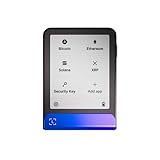
- Simply & securely take control of your digital assets and identity with the all-in-one Ledger Wallet crypto app and Ledger Flex touchscreen signer.
- Digital asset control at your fingertips: manage 15,000+ crypto across multiple chains. Earn rewards. Top up & share with ease. Explore DeFi with confidence. Collect and showcase NFTs. Make informed choices with clarity.
- Connect effortlessly with Ledger Wallet: pair your secure Ledger signer with the all in one Ledger Wallet crypto app to manage thousands of digital assets across multiple devices and accounts with Ledger Sync from a single, secure dashboard.
- Cutting-edge design: monitor the market, compare rates, and Clear Sign transactions on the secure, high resolution, 2.8'' E Ink touchscreen.
- This is what security feels like: Ledger touchscreen signers all come with a private, offline, PIN-protected backup, Ledger Recovery Key, to never lose access to your assets.
Bungee’s documentation covers widgets, APIs, route execution, and chain-specific integrations. Its current Solana documentation includes special requirements for Solana identifiers, recipient handling, token support, and unsupported multi-transaction flows. Developers should not copy assumptions from older Socket API documentation into a current integration without checking the current Bungee surface.
The Bungee model can aggregate DEXs, DEX aggregators, and bridges through modular implementations. For consumers, the important question is which provider and asset representation the selected route actually uses.
Best for: developers already building with Socket/Bungee and applications that need an embedded cross-chain interface.
Recommended Free Tools
Main limitation: current and legacy documentation surfaces can differ, and Solana or other non-EVM routes have special limitations.
Squid Router: a strong Cosmos and IBC option
Squid Router has strong relevance to Cosmos and IBC-connected flows while also supporting broader cross-chain swaps, widgets, and APIs. Its documentation says it supports more than 100 chains and charges no protocol fee. No protocol fee does not mean no cost: source gas, destination execution, bridge or messaging costs, DEX fees, and price impact can remain.
Squid’s current documentation describes intent-style RFQ execution and solver competition. Its FAQ also says Bitcoin and Solana support is coming soon through the current product, so do not select Squid solely from a general chain-count claim for those routes. Check the current supported-chain and token data.
Squid documents automatic source-chain refunds for certain failed intent flows, but failure behavior is route-specific. Read the exact route status and refund terms before sending a large amount.
Best for: Cosmos, IBC, and applications already using Squid’s API, SDK, or widget.
Main limitation: current support and fee mechanics vary by ecosystem, and zero protocol fee is not zero total cost.
Rubic: useful for long-tail assets, with extra provider scrutiny
Rubic describes itself as an aggregator covering bridges, DEXs, intent protocols, privacy solutions, and other providers. Its website and documentation currently claim more than 70 chains and 340 DEXs, bridges, intent protocols, and privacy solutions.
That breadth can make Rubic useful when mainstream aggregators return no route. It can also introduce more varied counterparty assumptions. Rubic’s own documentation distinguishes decentralized routing from deposit-based providers that may be partially centralized, and notes that a provider may request KYC if it flags a transaction.
Crashes, No Sound, or Screen Glitches?
Random freezes, missing sound and display glitches usually trace back to one bad driver. Find and replace yours safely.Free scan · under a minuteWindows Errors? Fix Them Before They Spread
Repair common Windows errors and clear accumulated junk for a smoother, more stable PC - no reinstall needed.Free scan · no reinstallRubic advertises zero protocol fees for some conditional categories, such as certain swaps under $100 and some stablecoin or Solana routes. Those conditions do not remove network fees, provider costs, or price impact. Also, do not use conflicting or incomplete homepage volume displays as a ranking criterion without independently checking the linked statistics.
Best for: emerging chains, unusual tokens, privacy-oriented routes, and a second or third quote source.
Main limitation: inspect the actual provider, custody model, KYC conditions, and refund process behind the quote.
Rank #4

- Superior Security - Elevate the cold storage safety of your digital assets with Arculus's innovative 3-factor authentication system: biometric lock, 6-digit PIN, and the Arculus metal card with private key encryption for multiple layers of security.
- Effortless Transactions - Simplify your crypto management with the Arculus Cold Storage Wallet and Arculus App, to seamlessly send, swap, or receive assets with a simple tap to your mobile device.
- CC EAL6+ Secure Element Technology – Safeguard your keys on the Arculus Card through robust, certified encryption, protecting against unauthorized access.
- Supports 95% of the Cryptocurrency Market Cap, including Bitcoin (BTC), Ethereum (ETH), Tether (USDT), XRP (XRP), and Cardano (ADA), Litecoin (LTC), Polkadot (DOT), and other popular coins.
- Hassle-Free - The Arculus Cold Storage Wallet communicates with your phone using secure tap-to-transact NFC technology. No cords, no connections and no internet required for next-gen levels of security.
Eco: stablecoin orchestration rather than a general bridge aggregator
Eco is better understood as a stablecoin orchestration and programmable intent-settlement layer. Its documentation describes native stablecoin issuance on more than 16 chains and more than 240 directional pairs; these are provider-stated, dynamic figures.
Eco’s own explanation of aggregators versus direct bridges makes the distinction clear: Eco is purpose-built for stablecoin flows, programmable deposits, payments, and treasury infrastructure rather than arbitrary-token retail routing.
Best for: stablecoin payments, treasury operations, and developers who want route selection abstracted away.
Main limitation: it is not the default choice for moving arbitrary tokens such as a long-tail altcoin from one chain to another.
How to choose the best route for your situation
| Your transfer | Where to start | What to prioritize |
|---|---|---|
| Ethereum to Base or Arbitrum | Jumper/LI.FI, Relay, and Superbridge | Compare a fast solver route with a canonical or native route; check whether the destination asset is native or wrapped. |
| Ethereum to Solana, or Solana to EVM | Rango, Relay, and current LI.FI or Bungee routes | Verify wallet and recipient handling, token representation, route limits, and whether the transfer is a swap rather than a same-token bridge. |
| Bitcoin to an EVM chain | Rango first, then compare current Relay, LI.FI, or other route providers | Confirm whether the result is BTC, wrapped BTC, or another asset; check UTXO handling and minimums. |
| Cosmos or IBC to another ecosystem | Squid and Rango | Check IBC or messaging costs, destination gas, memo or tag requirements, and whether the asset is native or wrapped. |
| Rollup to rollup where native assets matter | Superbridge and the rollup’s official canonical bridge | Security model and representation may matter more than a few minutes of speed. |
| Stablecoin treasury or payment flow | Eco, direct issuer-native routes where available, and LI.FI or Rango for comparison | Settlement guarantees, stablecoin issuer and chain risk, limits, destination amount, and operational recovery. |
| Large-value transfer | At least two aggregators plus one direct or canonical route | Liquidity depth, price impact, transaction limits, provider risk, support, and a small test transfer. |
| Unusual token or emerging chain | Rubic and Rango, then a direct route if available | Exact token contract, provider identity, KYC or custody conditions, and whether the route has enough liquidity. |
How to compare quotes correctly
Do not choose the route with the smallest line labeled bridge fee. Compare the amount and value that will actually arrive at the destination.
Recommended Free Tools
A useful simplified calculation is:
net received value = destination amount - destination swap loss - source gas - bridge or solver fees - DEX fees - platform or integrator fees
For volatile assets, compare the destination asset’s approximate value at the same moment rather than comparing token quantities alone. One route may deliver fewer units but a more valuable asset, or may convert into a token with deeper destination liquidity.
Use this quote checklist
- Confirm the exact input: source chain, token contract, amount, and sender wallet.
- Confirm the exact output: destination chain, token contract, amount, and recipient address.
- Read every cost: platform fee, bridge or solver fee, DEX fee, source gas, destination execution cost, and price impact.
- Check the timing estimate: separate source confirmation, solver fill, bridge finality, destination execution, and wallet display time.
- Open route details: identify the actual bridge, solver, DEX, intermediate token, and any destination call.
- Check whether the quote is firm: note expiry, slippage tolerance, and whether the displayed amount is indicative.
- Check operational conditions: minimums, maximums, daily limits, recipient restrictions, required destination gas, and the refund process.
- Reject unexplained anomalies: an output substantially better than every other quote may reflect a different token representation, stale price, or a riskier provider.
Are bridge aggregators safer than individual bridges?
Not automatically. An aggregator can reduce dependence on one provider, route around an outage, expose route details, and let an application prefer canonical or approved bridges. But it also adds another interface, contract, API, and support layer, and it may expose the user to a wider set of underlying bridges, DEXs, solvers, and tokens.
The relevant question is not whether the aggregator has an audit badge. It is:
The Tool Desk
Outbyte PC Repair FREEClear out junk files and repair common Windows errorsFree Scan →Outbyte Driver Updater FREEScan for outdated or missing drivers - takes under a minuteDriver Scan →- Which bridge or solver will execute this exact route?
- How is the route validated?
- Who can pause, upgrade, or redirect contracts?
- What are the validator, guardian, oracle, relayer, or solver assumptions?
- Does the destination asset come from a native issuer, a canonical bridge, or a third-party wrapper?
- What happens if the source transaction succeeds but the destination step fails?
- Can the application whitelist or exclude providers?
Ethereum.org warns that bridges using external validators can introduce additional trust assumptions compared with systems secured locally by the underlying chains. The L2BEAT interoperability summary and its bridge risk framework are useful for examining validation, governance, upgradeability, and liveness considerations.
An audit of an aggregator’s router contract does not audit every underlying bridge, DEX, solver, token, or destination contract. Likewise, the word non-custodial does not mean that the route is free of smart-contract, liquidity, token, governance, or execution risk.
Independent reader supportYour contribution helps us test, update, and keep practical guides available for everyone.Important token and gas traps
Native, canonical, wrapped, and synthetic assets
Tickers are not enough. USDC, ETH, BTC, and USDT can each refer to multiple representations across chains. Before approving a transaction, verify:
- The destination token contract address.
- The issuer or bridge origin.
- Whether the asset is native, canonical, wrapped, or synthetic.
- Whether the destination wallet and application accept that exact representation.
A route that says it delivers BTC may instead deliver a wrapped or synthetic BTC representation. The same issue can arise with stablecoins and ETH. Receiving the expected ticker is not proof that you received the representation you intended.
Quick wins for a faster PC:
Clear out junk files and repair common Windows errorsFree Scan →Fix the driver behind crashes, sound loss and screen glitchesFind Drivers →Repair Windows errors before they cause bigger problemsFix Now →Destination gas
Some routes deliver destination-chain gas automatically, deduct it from the output, or sponsor it for eligible users. Other routes require you to already hold the destination chain’s native gas token. Never assume that a generic claim such as gasless applies to every route. Check the selected provider, chain, asset, wallet, and integration.
Best Value

- Unparalleled Security: Protect your assets NDA-free EAL 6+ Secure Element, offering robust defense and complete transparency
- Simple & Secure Interface: Manage your digital assets easily with a clear OLED screen for secure on-device confirmations
- Supports 1000s of Coins & Tokens: Securely handle thousands of assets, including Bitcoin, Ethereum, and more, all in one wallet
- Effortless Asset Management: Monitor and transact seamlessly with Trezor Suite, our intuitive desktop and mobile app
- Enhanced Backup Solution: Rest assured with Multi-share Backup, eliminating single points of failure for secure cold wallet recovery
A safer step-by-step transfer process
- Start from the official domain. Use a bookmark, a verified wallet integration, or the provider’s official site. Do not follow unsolicited support links or direct messages.
- Enter the exact asset and chains. Select the source token contract, amount, destination token, destination chain, and recipient. For non-EVM networks, confirm address format, memo or tag requirements, and wallet compatibility.
- Compare at least two live quotes. Check Jumper/LI.FI, Rango, Relay, or a route-specific service according to the chain pair. For a large transfer, include a direct canonical or issuer-native quote where available.
- Inspect the route. Identify intermediate tokens, swaps, bridges, solvers, destination calls, and whether the output is native or wrapped.
- Check limits and expiry. Review minimum and maximum amounts, daily liquidity limits, quote expiry, slippage, and refund conditions.
- Send a small test. This is especially important for a new chain, unfamiliar provider, unusual token, or large transfer. Confirm the destination asset and contract before scaling up.
- Approve narrowly when possible. For ERC-20 tokens, approve only the amount needed. Check the spender address in your wallet and compare it with the official route documentation.
- Save the records. Keep the source transaction hash, request or route ID, provider name, timestamp, quote, and destination transaction hash. These records are also useful for accounting and tax reporting where applicable.
- Wait for status before retrying. Do not submit a second transfer merely because the destination asset has not arrived yet.
What to do when a transfer is pending or fails
A route can appear stuck for several different reasons: the source chain may not have finalized, a bridge message may be waiting for relayers, a solver may not have filled, the destination transaction may be pending, the wallet may not have indexed the token, or the route may require a claim.
- Open the provider’s official status page or transaction tracker.
- Check the source transaction in the relevant block explorer and determine whether it succeeded, failed, or is still pending.
- Check whether the route is marked pending, filled, refunded, failed, or ready to claim.
- Check the destination explorer for a transaction hash, even if the wallet interface does not yet show the token.
- Follow only the provider’s official refund or claim instructions.
- Contact official support with transaction hashes and route IDs, never with a seed phrase or private key.
- Ignore recovery scammers who ask you to connect to an unfamiliar website, reveal credentials, or pay an upfront fee.
Failure behavior varies. For example, Squid documents automatic source-chain refunds for certain failed intent flows. Other systems may require a claim or manual support process. Never assume that one provider’s recovery behavior applies to another provider’s route.
What developers should check before integrating
A consumer quote and a production integration have different requirements. Developers should treat supported-chain lists as dynamic metadata, not as a hard-coded permanent specification.
Do these 3 things before closing this tab:
1Fix the driver behind crashes, sound loss and screen glitches2Clear out junk files and repair common Windows errors3Scan for outdated or missing drivers - takes under a minuteUseful current endpoints and documentation
- LI.FI:
https://li.quest/v1/chainslists supported chains, whilehttps://li.quest/v1/toolslists available bridges and exchanges. Its advanced routes endpoint can return multiple candidate routes and supports bridge filtering. See the chains, tools, and routes documentation. - Rango: use its metadata documentation and metadata API for current chain, token, DEX, and bridge information.
- Relay:
https://api.relay.link/chainsexposes current chain and token support, fees, contract addresses, status, and solver currencies. See the Relay endpoint documentation. - Superbridge: its API base is
https://api.superbridge.app, with documented endpoints for chains, tokens, routes, activity, transaction steps, gasless submission, indexing, and health. Current documentation says API requests require an API key. - Squid: its API, SDK, and widget documentation covers supported chains and tokens.
- Bungee: verify the current widget package and API documentation. The Bungee package documentation makes clear that the widget is not a complete wallet or connection solution.
Production controls that matter
- Use provider allowlists, denylists, or preferences rather than automatically enabling every route.
- Refresh chain and token metadata instead of hard-coding support counts.
- Set explicit slippage and maximum price-impact limits.
- Show the underlying bridge, solver, DEX, fees, destination token, and estimated time to the user.
- Handle quote expiry and route changes safely.
- Support recipient and wallet differences across EVM, Solana, Bitcoin, Cosmos, and other address systems.
- Monitor source and destination transaction hashes, route IDs, status webhooks or polling responses, and provider outages.
- Build a fallback route, but do not automatically resubmit a transfer while the first route may still settle.
- Document whether gas sponsorship, destination gas, refunds, and claims apply to each route.
When a direct bridge or exchange may be better
An aggregator is not always the best tool. Consider a direct canonical bridge when moving between a rollup and its settlement chain and when native representation or a narrower trust model matters more than speed. Superbridge’s native-bridge explanation is a useful introduction to that distinction.
For supported USDC transfers, compare a direct issuer-native route such as CCTP or Gateway with aggregator quotes. A direct issuer-native route can avoid some wrapped-token concerns, although it does not eliminate chain, issuer, smart-contract, or operational risk.
A direct protocol such as Across, Relay, deBridge, or Mayan may beat an aggregator on a particular pair if it has deeper liquidity or lower overhead. In that case, the aggregator may simply be adding a routing layer around the same underlying provider.
A reputable centralized exchange can sometimes be simpler for a very large transfer, an unsupported chain pair, or a transaction where fiat conversion and support are more important than self-custody. The trade-offs include custody, account controls, withdrawal delays, KYC, and exchange counterparty risk.
What’s actually slowing this PC down?
Pick the symptom - the matching free tool is one click away.
Bottom line: use aggregators to compare routes, not to outsource judgment
For broad general routing, start with LI.FI through Jumper. Use Relay when fast solver-based execution and chain abstraction are the priority. Use Rango for Bitcoin, Solana, Cosmos, TON, UTXO networks, and unusual combinations. Choose Superbridge for canonical or native L2 routes, Squid for Cosmos and IBC flows, Rubic for long-tail routes, Eco for stablecoin infrastructure, and Bungee for embedded Socket-powered experiences.
The final decision should be route-specific: verify the exact token contracts, compare the net destination amount, identify the underlying provider, understand the security and refund model, and test with a small amount before transferring anything significant.
Frequently Asked Questions
What is the best bridge aggregator for most users?
There is no permanent winner. Jumper is a convenient starting interface built on LI.FI routing, while Rango and Relay provide useful independent comparisons for many routes. The best choice is the one that delivers the intended destination asset for the highest net value under acceptable speed, limits, and trust assumptions.
Are bridge aggregators safer than bridges?
Not automatically. An aggregator can compare providers and avoid an outage, but it may also route through a bridge, DEX, solver, or token with risks you have not inspected. Review the underlying provider and route rather than treating the aggregator itself as a safety guarantee.
Windows Errors? Fix Them Before They Spread
Repair common Windows errors and clear accumulated junk for a smoother, more stable PC - no reinstall needed.Free scan · no reinstallCrashes, No Sound, or Screen Glitches?
Random freezes, missing sound and display glitches usually trace back to one bad driver. Find and replace yours safely.Free scan · under a minuteWhy is the amount I receive lower than the advertised bridge fee suggests?
The final output can be reduced by source gas, destination execution, DEX fees, bridge or solver fees, platform fees, price impact, slippage, and the cost of converting to another destination token. Compare the final destination amount and all fee components.
What should I do if my bridge transfer is stuck?
Do not immediately send another transaction. Check the source and destination explorers, the official aggregator status page, and the route or request ID. Determine whether the transaction is pending, filled, refunded, failed, or waiting for a claim, then follow only the provider’s official recovery process.
Can a bridge aggregator move Bitcoin or Solana assets?
Some can, but support is route-specific. Rango is a strong candidate for Bitcoin, Solana, Cosmos, UTXO, and TON routes. Relay and current LI.FI or Bungee routes may also support particular combinations. Confirm the exact token, wallet, recipient format, and destination representation before approving.
The Bottom Line
Practical rule: compare Jumper/LI.FI, Rango, and Relay for a normal transfer; add Superbridge for canonical L2 routes, Squid for Cosmos, Rubic for long-tail assets, and Eco for stablecoin infrastructure. Choose based on the exact live route and net amount received—not on chain-count marketing, a zero-fee label, or a fixed online ranking.
Quick Recap
Product prices and availability are accurate as of the date/time indicated and are subject to change. Any price and availability information displayed on Amazon at the time of purchase will apply.




