Recommended Free Tools
Google’s Gemini 3 did not prove that it had permanently beaten ChatGPT. It did show why OpenAI could no longer take its lead for granted. After Gemini 3 launched on November 18, 2025, reports in early December said Sam Altman had directed OpenAI employees to focus urgently on improving ChatGPT, with some other work pushed back. OpenAI announced GPT-5.2 on December 11. The episode was a competitive alarm—not proof that OpenAI was failing or that Google had won.
What OpenAI’s reported “code red” meant
In reporting published on December 2, 2025, the Associated Press described an internal directive from CEO Sam Altman for OpenAI to enter a “code red” effort focused on ChatGPT. Coverage said the priority was to improve the chatbot’s quality, speed, reliability, and everyday experience amid pressure from Google’s Gemini 3 and other competitors. The account was based on reporting about an internal memo; OpenAI did not present the episode as a public product announcement. Associated Press coverage

Axios also reported that advertising initiatives, experimental agents, and other work were delayed or deprioritized to concentrate attention on ChatGPT. Those details should be understood as reported internal priorities, not a complete or independently confirmed inventory of OpenAI’s plans. Axios’s December 2025 report
The timeline matters: Google announced Gemini 3 on November 18; the “code red” story became public on December 2; OpenAI announced GPT-5.2 on December 11. The release followed the reported directive, but that sequence alone does not establish that the entire GPT-5.2 model was created in response to it.
The Tool Desk
Outbyte Driver Updater FREEFix the driver behind crashes, sound loss and screen glitchesFind Drivers →Outbyte PC Repair FREERepair Windows errors before they cause bigger problemsFix Now →#1 Best Overall

- Attention-grabbing design meets the latest evolution of the Google Pixel Camera on the new Google Pixel 11 Pro XL; Gemini Intelligence helps manage details so you can live in the moment[1]; and the phone is available in two sizes
- Unlocked Android phone gives you the flexibility to change carriers and choose your own data plan: Works with Google Fi, Verizon, T-Mobile, AT&T, and other major carriers[2]
- Stay informed without looking at your screen: When your phone is face down, Pixel HiLight gently alerts you with subtle glowing lights when your favorite contacts are calling or you’re talking with Gemini; exclusive to Google Pixel 11 Pro phones
- Magic Capture catches the moment as you live it: With just one tap, Pixel 11 Pro captures video and photos, and automatically edits, crops, and unblurs a curated collection, ready to share – and you get the memory of how it felt to be in the moment
- Two new cameras for more brilliant photos: A larger telephoto sensor captures 30% more light for clear, beautiful photos and videos, even in the dark[3]; Pixel’s longest zoom ever helps you capture details from impressive distances[4]
Why Gemini 3 made the threat feel bigger
It challenged more than chatbot answers
Google presented Gemini 3 as a step forward in reasoning, multimodal understanding, coding, and tool use. Its announcement described agents planning and carrying out complex software tasks, including browser-based computer use. These were Google’s product claims, not an independent finding that Gemini was best at every task. Google’s Gemini 3 announcement
Google later introduced Gemini 3 Deep Think and publicized results on Humanity’s Last Exam and ARC-AGI-2. Those are vendor-reported scores on particular evaluations. They can indicate strength on the tested tasks, but they do not establish overall superiority in reliability, speed, writing, or usefulness to a particular user. Google’s Deep Think announcement
Google could put the model in products people already use
Gemini’s strategic advantage was also distribution. Google connected Gemini 3 to Search’s AI Mode, where it said the model could power generative interfaces such as interactive tools and simulations. Gemini also sits within a wider Google ecosystem that includes the Gemini app, Workspace, Cloud, and developer products. Google’s Search AI Mode announcement
That creates a different route to adoption from a chatbot-led product. Someone who already works in Google services may find AI more useful when it is integrated into familiar tools; Google can also bring its model to Search and developer workflows. This is a distribution advantage, not proof that every integration is better or that users will switch.
Rank #2

- Google Pixel 10a is a durable, everyday phone with more[1]; snap brilliant photography on a simple, powerful camera, get 30+ hours out of a full charge[2], and do more with helpful AI like Gemini[3]
- Unlocked Android phone gives you the flexibility to change carriers and choose your own data plan; it works with Google Fi, Verizon, T-Mobile, AT&T, and other major carriers
- Pixel 10a is sleek and durable, with a super smooth finish, scratch-resistant Corning Gorilla Glass 7i display, and IP68 water and dust protection[4]
- The Actua display with 3,000-nit peak brightness shows up clear as day, even in direct sunlight[5]
- Plan, create, and get more done with help from Gemini, your built-in AI assistant[3]; have it screen spam calls while you focus[6]; chat with Gemini to brainstorm your meal plan[7], or bring your ideas to life with Nano Banana[8]
It raised the stakes for coding and agents
Google promoted Gemini 3 alongside Antigravity, a developer workflow built around agents that can plan, code, execute, and validate work. OpenAI was also investing in coding agents through Codex. Google on Gemini 3 and Antigravity OpenAI’s Codex announcement
Agentic coding can save time on multi-step tasks, but it also raises the cost of mistakes: an agent may misunderstand a requirement, change the wrong files, or introduce security flaws. For consequential work, use a sandbox, version control, tests, and human review rather than treating a successful demonstration as permission to deploy unchecked code.
Did Gemini 3 actually surpass OpenAI?
There is no single useful answer unless “surpass” is tied to a task and a measurement. Gemini 3 was reported to outperform OpenAI models on selected benchmarks, while Google highlighted strong results of its own. The Atlantic’s contemporary analysis described Gemini 3 as appearing to outperform OpenAI’s leading model across a suite of evaluations, but also noted that Anthropic remained a serious coding competitor. The Atlantic’s analysis
A benchmark measures performance under a defined setup. Scores can vary with prompts, model settings, tool access, and evaluation design; vendor-published results also need independent replication. A model can lead on a reasoning test and still be slower, less dependable, or less convenient for a real workflow.
Rank #3

- Google Pixel 10 Pro is the ultimate Pixel experience, featuring advanced AI with Gemini, unbelievable camera quality, impeccable design in two sizes, and the next-gen Google Tensor G5 chip[1]
- Unlocked Android phone gives you the flexibility to change carriers and choose your own data plan[2]; it works - Google Fi, Verizon, T-Mobile, AT&T, and other major carriers
- Get a head start on syncing your data before it even arrives: After you purchase your new Pixel, look for an email that explains how to transfer your photos, videos, passwords, and more in just a few quick steps[11]
- Pixel’s pro camera system makes everything look amazing, even in low light; capture more of the scene with advanced Google AI models, and bring out incredible details with 100x Pro Res Zoom, stunning 50 MP images, and super steady videos in 8K[10]
- Pixel 10 Pro is built with durable aluminum and Corning Gorilla Glass Victus 2 for scratch and drop resistance; the 6.3-inch Super Actua display with 3,300-nit peak brightness is easy on the eyes, even in direct sunlight[3,13,18]
| Question | What a fair comparison needs |
|---|---|
| Model quality | Independent evaluations on the tasks that matter, not only vendor-selected scores. |
| Coding | Repository-level tasks, debugging, tests, maintainability, and safe review—not just a coding benchmark. |
| Multimodality | The specific image, audio, video, or document task, with the same inputs and tools. |
| Search and research | Freshness, source quality, citation accuracy, and whether web grounding is enabled. |
| Everyday use | Answer quality alongside latency, reliability, context handling, and interface usability. |
| Value | Comparable plan limits, regional availability, model access, and any additional tool or usage charges. |
Even adoption signals need careful interpretation. Axios reported Gemini app downloads catching up to ChatGPT’s around the December 2025 contest. Downloads are a time-specific signal; they do not by themselves prove sustained active use, paid subscriptions, retention, or business leadership. Axios’s report on the competitive pressure
The defensible conclusion is narrower and more important: Gemini 3 made the assumption that OpenAI was clearly ahead untenable. Google did not need to win every evaluation to become a worthy competitor; it needed credible capability across major tasks and a path to put that capability in front of users.
How OpenAI responded—and what the release does not prove
On December 11, 2025, OpenAI announced GPT-5.2 and described improvements in coding, mathematics, science, vision, long-context reasoning, and tool use. Axios and TechCrunch framed the release in the context of the “code red” period. OpenAI’s capability descriptions are its own claims; the timing and competitive interpretation come from outside coverage. Axios on GPT-5.2 TechCrunch on the release and code-red context
That response illustrates why the contest is not just about a leaderboard. The reported effort put ChatGPT’s day-to-day quality and reliability at the center, while GPT-5.2 offered a public model update. Neither the internal memo nor one release establishes a lasting winner. OpenAI’s release notes document ongoing changes to models and feature availability, so a model name or feature set from this episode should not be treated as a permanent product comparison. OpenAI’s ChatGPT release notes
What’s actually slowing this PC down?
Pick the symptom - the matching free tool is one click away.
What the competition means for users and buyers
Consumers: choose by workflow, not brand momentum
If your work already runs through Gmail, Docs, Drive, Android, or Search, Gemini integration may be especially useful. If your established workflow depends on ChatGPT history, custom workflows, projects, or Codex, staying with OpenAI may be more convenient. Compare the actual model access, limits, privacy settings, and features available to your account and region rather than assuming a plan name guarantees identical access everywhere.
Current plan details should be checked directly before paying: OpenAI’s ChatGPT plans and Google AI plans. Their prices, included storage, limits, and model access can change, and the comparison depends on what each plan includes for your location.
Developers: compare total cost and operating terms
For API work, headline token prices are only part of the decision. Compare the model and context you need, rate limits, tool charges, batch options, data-use terms, stability, and the cost of retries or human review. Google’s Gemini API pricing page distinguishes free and paid access, lists separate conditions or charges for tools such as Search grounding and Maps, and describes batch pricing. It also distinguishes data-use terms between free and paid tiers. Check the live documentation for the model and region you intend to use. Google’s Gemini API pricing documentation
OpenAI’s Codex pricing also requires attention to usage: its rate card says billing moved from per-message to token-based pricing in 2026. OpenAI says flexible credits can be used with Codex for Plus and Pro users, subject to availability and plan conditions. A monthly subscription price alone may therefore not describe the cost of heavy agent use. OpenAI’s Codex rate card OpenAI’s guidance on credits
Best Value
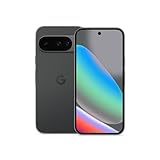
- Google Pixel 10 is the everyday phone unlike anything else; it has Google Tensor G5, Pixel’s most powerful chip, an incredible camera, and advanced AI - Gemini built in[1]
- Unlocked Android phone gives you the flexibility to change carriers and choose your own data plan[2]; it works with Google Fi, Verizon, T-Mobile, AT&T, and other major carriers
- Unlocked Android phone gives you the flexibility to change carriers and choose your own data plan[2]; it works - Google Fi, Verizon, T-Mobile, AT&T, and other major carriers
- The upgraded triple rear camera system has a new 5x telephoto lens - up to 20x Super Res Zoom for stunning detail from far away; Night Sight takes crisp, clear photos in low-light settings; and Camera Coach helps you snap your best pics[3]
- Pixel 10 is designed - scratch-resistant Corning Gorilla Glass Victus 2 and has an IP68 rating for water and dust protection[21]; plus, the Actua display - 3,000-nit peak brightness is easy on the eyes, even in direct sunlight[4]
Businesses: weigh ecosystem fit against governance needs
For an organization, compare existing Workspace, Cloud, and OpenAI arrangements alongside admin controls, identity management, compliance, data processing, auditability, support, and service terms. Test whether teams can export their prompts and workflows if they change vendors. The model that fits an existing software stack may reduce friction, but governance and safe access to company data still need explicit review.
What changed after the December 2025 alarm
“Code red” describes a reported internal episode in December 2025, not a current declaration. The contest continued after GPT-5.2: model availability, product features, and commercial terms kept changing. Google’s API pricing documentation was updated in July 2026, while OpenAI’s Codex rate card records a 2026 shift to token-based pricing. Those changes are reasons to verify current terms, not evidence that either company won the rivalry.
Updated August 18, 2026: This article describes the Gemini 3 launch, the December 2025 code-red reporting, and the GPT-5.2 announcement. Current model names, availability, pricing, and feature limits may differ from those in that episode.
Quick Recap
Product prices and availability are accurate as of the date/time indicated and are subject to change. Any price and availability information displayed on Amazon at the time of purchase will apply.




