PC Slower Than It Used to Be?
A free scan shows the junk files, broken settings and background clutter dragging Windows down - then fixes them in one click.Free scan · Windows 10 & 11Outdated Drivers Are Slowing You Down
One free scan finds every outdated or missing driver and matches the right update for your exact hardware.Free scan · exact hardware matchCadence completed its acquisition of Arm’s Artisan foundation-IP business on August 26, 2025, four months after announcing the deal. Artisan adds advanced-node standard-cell libraries, memory compilers and general-purpose I/O libraries to Cadence’s portfolio—building blocks for SoCs and chiplet dies, not a turnkey chiplet or 3D-IC platform. The purchase price was not disclosed. Cadence announced the completion on August 27, 2025.
What Cadence acquired from Arm
The April 16, 2025 agreement covered Arm’s Artisan foundation-IP business. Cadence described the assets as standard-cell libraries, memory compilers and general-purpose I/O (GPIO) libraries optimized for advanced process nodes at leading foundries. The transaction was structured as an asset purchase, with a concurrent technology-license agreement to be signed at closing, subject to existing rights. It also included associated engineering expertise and personnel and relationships tied to advanced foundry processes. Cadence’s announcement did not disclose the purchase price.
This was not a purchase of Arm’s CPU architecture, CPU cores or entire IP portfolio. Arm retained those businesses. It sold the Artisan foundation-IP operation and said the transaction would keep physical IP needed to deploy Arm technology available to the ecosystem through Cadence. Arm’s filing records the sale’s completion on August 26, 2025.
What foundation IP does
Foundation IP supplies the process-specific physical elements used to implement a chip. It is distinct from both higher-level functional IP and the software used to design a chip.
#1 Best Overall

- SUPERCHARGED BY M4 — The 14-inch MacBook Pro with M4 chip gives you spectacular performance in a powerhouse laptop built for Apple Intelligence.* With all-day battery life and a breathtaking Liquid Retina XDR display with up to 1600 nits peak brightness, it’s pro in every way.*
- CHAMPION CHIP — The M4 chip brings spectacular speed and capability to blaze through everyday activities and multitask across multiple productivity and pro apps.
- BUILT FOR APPLE INTELLIGENCE—Apple Intelligence is the personal intelligence system that helps you write, express yourself, and get things done effortlessly. With groundbreaking privacy protections, it gives you peace of mind that no one else can access your data—not even Apple.*
- ALL-DAY BATTERY LIFE — MacBook Pro delivers the same exceptional performance whether it’s running on battery or plugged in.
- APPS FLY WITH APPLE SILICON — All your favorites, including Microsoft 365 and Adobe Creative Cloud, run lightning fast in macOS.*
- Standard-cell libraries provide characterized logic and physical building blocks used to implement a design and meet power, performance and area targets.
- Memory compilers generate embedded-memory macros suited to a given process and design specification.
- GPIO libraries provide general-purpose input/output cells at the die boundary; requirements can differ by voltage domain, signaling standard and application.
- Interface and application IP includes functional blocks such as PCIe, SerDes, HBM, DDR, Ethernet and security. These are not interchangeable with foundation libraries.
- EDA software helps teams design, verify, analyze and implement the chip; it is not itself silicon IP.
Foundation IP must be characterized and validated for particular foundry processes and nodes. A library made for one process cannot simply be assumed to transfer to another. Memory design also has to account for factors such as timing, power, density, repair and yield.
Why foundation IP matters to chiplets—and what it does not do
A chiplet product still consists of silicon dies. Each die needs logic cells, memory structures, I/O, clocking, power design and physical-design collateral. Multi-die systems may combine dies made on different process nodes, increasing the importance of process-qualified IP for each one. Reusable, foundry-aligned libraries can help reduce design risk and support the path to tapeout.
Rank #2

- RELIABLE 3-HOLE PUNCHING: This compact hole puncher creates clean 9/32-inch holes through up to 8 sheets of 20 lb. paper, helping keep documents organized for filing, binders, and presentations.
- ACCURATE PAPER ALIGNMENT: Built-in paper guide helps position sheets correctly for consistent hole placement, supporting neat and professional-looking document preparation.
- COMPACT EVERYDAY DESIGN: Slim 1.8" x 1.75" x 10.25" size fits easily in desks, drawers, and workstations, making it suitable for home, school, and office environments.
- MESS-FREE MAINTENANCE: Removable chip tray collects paper waste for quick disposal and easier cleanup. A practical addition to everyday office supplies used for routine paperwork and filing tasks.
- TRUSTED OFFICEMATE QUALITY: Officemate, part of Victor Technology Brands, delivers office solutions that keep workspaces organized, efficient and productive. From desktop essentials to storage and organization, Officemate products support everyday work at school, home and the office.
Cadence tied the acquisition to its chiplet offerings and a strategy combining IP, libraries, tools and design services. That is the company’s stated rationale, not proof that buying Artisan automatically accelerates every chiplet project. Foundation IP supports the silicon on a die; it does not provide a complete die-to-die interconnect, package, or 3D-IC solution.
Design teams still have to address die-to-die PHYs and protocols, package design, power and signal integrity, thermal and mechanical behavior, verification, test, assembly and manufacturing. A chiplet’s physical IP must work within the constraints of its interface and package. Qualified libraries cannot guarantee a design will meet yield, thermal, cost or reliability targets.
Rank #3

- Featuring a padded handle for added comfort, this versatile office essential delivers perfectly placed hole punches whenever you need them. It's designed for long-lasting use, and comes complete with a built-in removable chip tray to catch punched-out chips for quick disposal.
- Durable metal construction withstands daily use.
- 3-hole punch makes adding sheets to binders easy.
- Punches holes in up to 10 sheets of paper at a time.
- Rubber base pad provides stability.
How the deal fits Cadence’s portfolio
Artisan fills a different layer from Cadence’s interface, memory-interface, SerDes and embedded-security IP. Cadence also sells digital, custom and analog, verification and implementation EDA tools, 3D-IC and package-design capabilities, and design services. The strategic proposition is a broader set of components that can be brought together across IP, libraries, tools and services—not necessarily one bundled product. Availability, licensing and foundry support vary by product and process.
That breadth may reduce handoffs for teams already working in Cadence flows, but buyers should assess process qualification, tool compatibility, licensing, support ownership and vendor concentration. Mixed-vendor IP can add verification and timing-closure work and complicate accountability; a single-vendor relationship may simplify coordination while increasing dependence on that supplier.
Rank #4
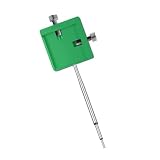
- Setup Mechanism: Features an innovative fast setup design that enables secure fixing and removal in seconds without extra tools, excelling in urgent repair scenarios for streamlined local operations
- Controlled Temperature Function: Adjustable temperature setting from 150 to 200 degrees Celsius for stable chip heating and adhesive removal, ensuring effective and managed thermal processing for professional results
- Accurate CPU Handling and Positioning: This steel positioning and removal station provides a stable and firm platform for exact CPU handling, designed to solve common electronic repair challenges for technicians needing frequent chip changes or tasks
- Broad Compatibility Design: Supports multiple CPU models without requiring extra adapters, allowing direct use to reduce switching difficulties between devices, ideal for repair engineers working with various equipment to increase efficiency
- Adjustable Size Capability: Allows space via screws to accommodate different chip sizes, providing versatile compatibility for professional repairers and hobbyists in CPU positioning, removal, and adhesive tasks
What has happened since the announcement
- April 16, 2025: Cadence announced the definitive agreement to acquire the Artisan business.
- August 26, 2025: The transaction closed, according to Arm’s filing. Cadence published its completion announcement the following day.
- October 27, 2025: Cadence said the acquired Artisan foundation IP had augmented its design-IP portfolio in its third-quarter results. Cadence’s results release also said the acquisition was expected to be immaterial to 2025 revenue and earnings.
- April 22, 2026: Cadence said its Artisan advanced-node foundation-IP portfolio was in production designs using TSMC N3 technologies as part of a collaboration with TSMC. The announcement does not name customers, report volumes or isolate revenue from Artisan IP.
Cadence reported 22% year-over-year growth in its IP business in first-quarter 2026, citing demand from AI infrastructure, high-performance computing and automotive and continued adoption of its portfolio, including foundation IP. That company-wide IP figure does not identify Artisan’s separate revenue or contribution. Cadence’s first-quarter results provide the broader context.
Independent reader supportYour contribution helps us test, update, and keep practical guides available for everyone.What the acquisition means for Arm, foundries and designers
For Arm
Arm continues to develop its CPU architecture and core businesses while Artisan’s foundation-IP operation sits within Cadence. Arm reported a $131 million pretax gain on the divestiture for its fiscal year ended March 31, 2026. That is an accounting gain, not a disclosed purchase price. Arm’s financial filing reports the figure.
Do these 3 things before closing this tab:
1Scan for outdated or missing drivers - takes under a minute2Repair Windows errors before they cause bigger problems3Fix the driver behind crashes, sound loss and screen glitchesBest Value
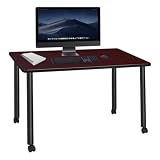
- The desk rolls easily around any room, which makes it work as well in a classroom or breakroom as it does in a collaborative area or a home office where the furniture has to move out of the way at the end of the day. Moving it is simple.
- All four casters lock with the flip of a foot switch, so the desk holds dead still while you type or write and rolls freely the moment you need the room rearranged, without anyone lifting a corner off the floor. No lifting needed.
- A 1-inch thick thermal fused melamine laminate gives the tabletop real weight and rigidity, and the black T edge banding wraps the rim so the edges resist the chips and peeling that ruin cheaper tables within a year.
- Legs are made from durable tubular steel and ride on hard plastic casters, a combination that carries real weight day after day without the frame flexing or the wheels flattening the way soft castors eventually do. Build quality shows.
- Backed by a 10-year limited manufacturer's warranty, this is a desk you buy once for an office or classroom instead of replacing every couple of years, which makes the cost per year of service remarkably low. That is real value.
For foundries and SoC designers
The acquisition puts Artisan’s process-specific IP under a supplier that also provides design tools and services. That could give customers another way to access foundry-qualified physical IP and may reduce coordination between IP and implementation teams. The benefit depends on the foundry, node, license and project; the deal does not remove the need to work with foundries, OSATs, package suppliers or other IP vendors.
For buyers, the practical questions are whether the required libraries are qualified for the chosen process, whether existing Arm or foundry rights affect access, how the IP fits the design flow, and who supports integration and updates. Foundation-IP availability alone does not resolve package yield, thermal limits, security, test coverage or system-level verification.
What is still undisclosed
Cadence and Arm did not disclose the transaction price in the cited materials. Arm’s reported $131 million pretax gain should not be treated as the deal value. Cadence also has not provided a customer-by-customer revenue breakdown or an isolated return-on-investment figure for Artisan. The TSMC N3 production-design statement is evidence of use in production designs, but not of their volume or commercial contribution.
Quick Recap
Product prices and availability are accurate as of the date/time indicated and are subject to change. Any price and availability information displayed on Amazon at the time of purchase will apply.




