Recommended Free Tools
A platform can look full almost overnight by copying articles, images, videos, listings or data created by someone else. That can ease the cold-start problem, but a large catalog is not the same as a durable business: without permission, reliable provenance or a way to handle disputes, the apparent abundance can turn into legal costs, removals and lost trust.
Why stolen content looks like a shortcut to growth
A new platform faces a two-sided problem: users want enough useful material to make the service worth visiting, while creators want an audience before they invest time contributing. Copying seems to break that loop. An imported catalog can make search results look rich, attract visitors, create advertising inventory and give investors an impressive volume metric before the platform has earned a creator community.
The cost has not disappeared; it has been shifted. Other publishers, photographers, developers or sellers paid to create and maintain the material, while the platform captures some combination of traffic, data, advertising or transactions. What it has not necessarily acquired is a license, a creator relationship, accurate provenance or the ability to keep using the catalog after a complaint. Copies may also be obsolete, misleading, malicious or difficult to remove everywhere they have propagated.
That is the uncomfortable business truth: copying is efficient at solving the supply problem and inefficient at building a lasting company. Catalog size can flatter growth figures while concealing whether the platform owns, licenses or can reliably retain what it displays.
#1 Best Overall

- PORTABLE SCANNER FOR USE ON-THE-GO — The fastest and lightest mobile single-sheet-fed compact document scanner in its class¹
- QUICK DOCUMENT SCANNING ― This Epson ultra-fast scanner scans a single page as quickly as 5.5 seconds²; Windows and Mac compatible
- VERSATILE PAPER HANDLING ― Portable scanner scans documents up to 8.5 x 72 in; Also easily digitizes receipts and ID cards to make accounting, bookkeeping, and organizing simpler
- INTUITIVE, HIGH-SPEED SOFTWARE — Epson ScanSmart Software³ is a smart tool allowing you to easily scan, review, and save; Stay organized easily with the help of this Epson scanner
- EASY SETUP — USB-powered connect to your computer for quick and simple scanning; No batteries or external power supply required to operate portable document scanner; Standard Connectivity: USB 2.0
What “stealing content” can mean
The phrase covers practices with different facts and risks. Scraping describes a method of collecting information; it does not by itself settle whether the use is lawful. Copyright, contract, privacy, database, trademark, trade-secret, publicity and moral-rights rules may all matter, depending on the material and jurisdiction. The OECD describes the legal landscape around AI trained on scraped data as unsettled and jurisdiction-dependent (OECD, Intellectual property issues in AI trained on scraped data).
| Practice | What happens | Key qualification |
|---|---|---|
| Full republication | A platform hosts an article, image, video, listing or software package copied from its source. | Usually a much riskier use than linking, especially when the copy substitutes for the original. |
| Partial copying | Headlines, excerpts, thumbnails, tables or substantial passages appear alongside a source link. | A link and attribution do not automatically authorize the excerpt; amount and context matter. |
| Scraping | Automated software extracts text, images, metadata or structured facts at scale. | The method alone does not decide legality; the material, terms, purpose, scale and jurisdiction matter. |
| Content laundering | Copied work is lightly rewritten, stripped of attribution or presented as original. | Changing wording does not necessarily remove protected expression or resolve rights in the source. |
| Unauthorized syndication | Material is republished without the license required by its owner. | Permission may be limited by territory, duration, format, commercial use or derivative rights. |
| User-uploaded infringement | A user uploads material they do not have the right to share. | This differs from a company deliberately building its own catalog, though a platform still needs effective notice and repeat-infringer procedures. |
| AI-mediated reuse | Systems scrape works for training or retrieval, generate summaries, or produce outputs that track source expression. | Whether training or a particular output is lawful is fact-specific; U.S. law is not settled across all such uses. |
Linking, indexing and copying are not the same
How a service presents material matters. Linking users to the original is generally a different use from downloading and hosting a replacement copy, although surrounding conduct, inducement, metadata and local law can change the analysis. Search indexing may display limited previews; that does not create a universal exemption for copying whole works. Embeds depend partly on how the media is served and on provider terms, and can raise issues beyond copyright.
Facts and expressive works also need to be distinguished. Individual facts, ideas and short phrases may not be protected by copyright, but expressive descriptions and a database’s selection or arrangement may be. Public accessibility is not a public-domain license, and a public-domain work in one jurisdiction or edition may not have that status everywhere.
Rank #2

- FAST SPEEDS - Scans color and black and white documents a blazing speed up to 16ppm (1). Color scanning won’t slow you down as the color scan speed is the same as the black and white scan speed.
- ULTRA COMPACT – At less than 1 foot in length and only about 1. 5lbs in weight you can fit this device virtually anywhere (a bag, a purse, even a pocket).
- READY WHENEVER YOU ARE – The DS-640 mobile scanner is powered via an included micro USB 3. 0 cable allowing you to use it even where there is no outlet available. Plug it into you PC or laptop and you are ready to scan.
- WORKS YOUR WAY – Use the Brother free iPrint&Scan desktop app for scanning to multiple “Scan-to” destinations like PC, Network, cloud services, Email and OCR. (2) Supports Windows, Mac and Linux and TWAIN/WIA for PC/ICA for Mac/SANE drivers. (3)
- OPTIMIZE IMAGES AND TEXT – Automatic color detection/adjustment, image rotation (PC only), bleed through prevention/background removal, text enhancement, color drop to enhance scans. Software suite includes document management and OCR software. (4)
A short quotation for criticism, commentary, search or research may be treated differently from wholesale republication. But calling a use “transformative” or “fair use” is not a magic label: an assessment can depend on purpose, the nature of the work, how much was used and the effect on the source’s market. A short excerpt may still compete with the original; a link may send readers to it.
The Tool Desk
Outbyte Driver Updater FREEFix the driver behind crashes, sound loss and screen glitchesFind Drivers →Outbyte PC Repair FREEClear out junk files and repair common Windows errorsFree Scan →Credit is not permission
Attribution tells readers who made a work; it does not ordinarily grant the right to copy it. Credit can be ethically important and may be required by a license, but it does not replace that license or a copyright exception. A platform that republishes a photographer’s image with a name and link may still need permission. Conversely, a license may permit reuse only if the platform follows conditions such as attribution, share-alike, noncommercial use or no derivatives.
What U.S. DMCA protections do—and do not—cover
The U.S. Digital Millennium Copyright Act, enacted in 1998, created conditional limitations on liability for certain online service providers and a notice-and-takedown framework. Section 512 is not blanket immunity and does not make a company’s deliberate copying lawful. The Copyright Office outlines the framework at its DMCA overview and Section 512 resources.
Rank #3
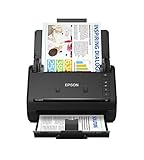
- FAST DOCUMENT SCANNING — Document scanner with feeder allows you to speed through stacks with a 50-sheet Auto Document Feeder (ADF); Efficient office scanner to help you scan more productively
- INTUITIVE, HIGH-SPEED SOFTWARE — Quickly scan with this desktop document scanner; Epson ScanSmart Software lets you easily preview scans, email files, upload to the cloud, and more; Plus, automatic file naming saves even more time
- SEAMLESS INTEGRATION — Easily incorporate your data into most document management software with the included TWAIN driver; Office document scanner integrates seamlessly with business workflows
- EASY SHARING — Duplex scanner allows you to scan straight to email or popular cloud storage2 services like Dropbox, Evernote, Google Drive, and OneDrive for simple storage and sharing
- SIMPLE FILE MANAGEMENT — Scanner allows the creation of searchable PDFs with Optical Character Recognition (OCR) and convert scans to editable Word or Excel files effortlessly; Designed for home and office document scanning
For relevant hosting and search/linking safe harbors, operators must satisfy statutory conditions that include registering and publishing a DMCA agent, responding expeditiously to valid notices, reasonably implementing a repeat-infringer policy and accommodating standard technical measures where applicable. Knowledge of infringement can matter: the framework addresses actual knowledge and circumstances that make infringement apparent, as well as financial benefit from infringing activity when the provider has the right and ability to control it. Details vary by safe harbor and conduct; a takedown form alone is not compliance.
- User upload: A user supplies an unauthorized copy. The platform’s role and its handling of notices and repeat infringement are relevant.
- Platform-directed copying: The company scrapes, imports, commissions or knowingly maintains the catalog itself. It should not assume a user-upload safe harbor shields its own conduct.
- Ignored notice: A credible, properly submitted notice may require prompt action under applicable procedures. A notice is an allegation, not a court ruling, so platforms also need a process for mistaken or defective claims.
- Repeat infringement: A policy that exists only on paper may not satisfy the requirement to implement it reasonably.
These points describe U.S. law, not a universal rule for every country or every kind of service. A platform’s exposure may also involve contracts, privacy, databases, trademarks or other legal theories.
How AI expands the copying model
AI tools make it cheaper to crawl large numbers of pages, extract content and metadata, rewrite descriptions, summarize articles or populate a catalog. They can help produce the appearance of originality while obscuring where information came from. The OECD’s February 9, 2025 report discusses scraped data and the range of intellectual-property issues it can raise (OECD report).
Rank #4

- Scanner type: Document
- Connectivity technology: USB
- With Auto Scan Mode, the scanner automatically detects what you're scanning
- Digitize documents and images
Scale adds operational risks as well as legal uncertainty. A business may struggle to identify which works entered a training or retrieval pipeline, honor rights reservations, correct errors or show that generated text is genuinely distinct from a source. Outputs can reproduce protected expression, and a system’s claim that it wrote a passage does not establish ownership or permission for its inputs.
The U.S. Copyright Office’s AI initiative covers digital replicas, copyrightability of AI-generated outputs and the developing questions around training on copyrighted works; it published Part 2 on January 29, 2025. Its materials do not establish one settled answer for every training use (Copyright Office AI initiative). Operators should avoid treating AI rewriting as a cure for unauthorized acquisition.
What the European Union requires from some AI providers
The European Commission says providers of general-purpose AI models must maintain a copyright-compliance policy and publish a sufficiently detailed summary of training content. The Commission states that full enforcement of the relevant obligations begins August 2, 2026 (European Commission guidance).
What’s actually slowing this PC down?
Pick the symptom - the matching free tool is one click away.
Best Value

- OUR MOST ADVANCED SCANSNAP. Large touchscreen, fast 45ppm double-sided scanning, 100-sheet document feeder, Wi-Fi and USB connectivity, automatic optimizations, and support for cloud services. Upgraded replacement for the discontinued iX1600
- CUSTOMIZABLE. SHARABLE. Select personalized profiles from the touchscreen. Send to PC, Mac, mobile devices, and clouds. QUICK MENU lets you quickly scan-drag-drop to your favorite computer apps
- STABLE WIRELESS OR USB CONNECTION. Built-in Wi-Fi 6 for the fastest and most secure scanning. Connect to smart devices or cloud services without a computer. USB-C connection also available
- PHOTO AND DOCUMENT ORGANIZATION MADE EFFORTLESS. Easily manage, edit, and use scanned data from documents, receipts, photos, and business cards. Automatically optimize, name, and sort files
- AVOIDS PAPER JAMS AND DAMAGE. Features a brake roller system to feed paper smoothly, a multi-feed sensor that detects pages stuck together, and skew detection to prevent paper damage and data loss
These obligations concern general-purpose AI providers, not every content platform or AI feature, and they do not determine U.S. copyright outcomes. A training-content summary is not a license for every work in a dataset. EUIPO materials explain that text-and-data mining is used to prepare training material and that rights holders may reserve rights against certain uses or pursue licensing (EUIPO, Copyright and generative AI). “Publicly accessible” should not be read as “free for every commercial reuse.”
Independent reader supportYour contribution helps us test, update, and keep practical guides available for everyone.How creators can respond to copied work
- Preserve evidence. Save the copied and original URLs, screenshots, publication dates, source files and timestamps. Record relevant traffic or sales impact without altering the original evidence.
- Identify who controls each step. The uploader, site operator, host, CDN, search engine, advertising network, payment processor and domain registrar may be separate parties. A notice to one may not remove copies held by another.
- Confirm ownership and authority. Check whether an employer, publisher, commissioning party or earlier license owns or controls relevant rights. The person who posted a work may not hold every right in it.
- Use a targeted notice process. For a U.S. DMCA notice, identify the protected work and the allegedly infringing material, give required contact information and statements, and sign the notice. Use the platform’s copyright process or registered agent where applicable. Do not overstate the facts or submit a knowingly false notice.
- Track removals and remaining copies. Ask for removal or preservation where appropriate, note what was taken down and search for mirrors, cached versions, translations, summaries and image-only copies.
- Use counter-notices carefully. A counter-notice may trigger a restoration process and can require consent to jurisdiction. File one only when justified and consider advice before doing so.
- Escalate material disputes. For significant commercial harm or a complex ownership dispute, consider counsel. In the United States, the Copyright Claims Board is a voluntary alternative forum for eligible disputes; it is not a universal remedy (Copyright Claims Board).
- Improve provenance for future work. Clear licensing terms, embedded metadata, access controls, monitoring and registration where appropriate can make ownership and permitted use easier to establish. The Copyright Office provides a registration pathway.
This is general information, not legal advice. Applicable procedures and remedies depend on the work, parties and jurisdiction.
How a platform can build a catalog it can keep
For an operator, the central question is not whether software can copy a page. It is whether the company can show it had the right to use that material, track the scope and expiry of that right, and remove or correct the content when permission changes.
- License directly. Negotiate with creators, publishers, agencies, archives or data vendors. Specify territory, duration, formats, attribution, commercial use, derivatives, AI-training rights, exclusivity and termination. Keep chain-of-title records.
- Share revenue. Pay creators through subscriptions, advertising, transactions or usage, with clear reporting and audit rights. Avoid taking broad rights unrelated to the service.
- Use explicit open licenses. Check the exact conditions, including attribution, share-alike, noncommercial and no-derivatives terms, and preserve notices and metadata.
- Build creator supply into the product. Give contributors useful discovery, analytics, payments, moderation and audience access. Creator acquisition is part of the product, not merely a hurdle to bypass.
- Verify public-domain and government material. Check status in the relevant jurisdiction and edition; a scan, compilation, database or trademark presentation may involve separate rights.
- Use official APIs and feeds within their terms. Verify rate limits, attribution, caching, redistribution, resale, geography and commercial permissions. API access alone does not authorize mirroring or resale.
- Add genuinely useful transformation. Analysis, commentary, comparison, research or tools can create new value, but the label “transformative” does not itself grant permission. A service that substitutes for the source has a different risk profile from one that helps users find it.
A launch checklist for content-heavy platforms
- Keep a source-and-provenance record for each item: creator, source, date, license, permitted uses and expiration.
- Set written rules for uploads and third-party imports, with a process for permission checks and disputed rights.
- If relying on U.S. Section 512 procedures, register and publish the DMCA agent and implement notice, counter-notice, restoration and repeat-infringer workflows.
- Maintain audit logs showing who uploaded, imported, edited, approved or removed content; use fingerprinting for known media where appropriate.
- Assign human review to high-value or ambiguous material, and make a plan for honoring opt-outs, rights reservations and license expiry across feeds, caches and backups.
- Set rules for AI-assisted material and record which sources and permissions support its use.
- Make the product’s basic choice explicit: will it link, excerpt, host, transform or license the material?
License fees and creator payments cost more than copying at the start. They can also buy permission, continuity and trust—assets that a copied catalog cannot guarantee. Borrowed abundance is not product-market fit if the product stops working when its sources ask for their work back.
Do these 3 things before closing this tab:
1Repair Windows errors before they cause bigger problems2Fix the driver behind crashes, sound loss and screen glitches3Clear out junk files and repair common Windows errorsQuick Recap
Product prices and availability are accurate as of the date/time indicated and are subject to change. Any price and availability information displayed on Amazon at the time of purchase will apply.




