The tracked global average cart-abandonment rate is 70.19%, according to a Baymard Institute page updated February 2, 2025. It is a benchmark, not a prediction for your store: rates depend on what counts as abandonment, which shoppers are included, and how the rate is calculated. Some people leave because they are browsing; others encounter checkout friction a merchant can address.
What is the average shopping cart abandonment rate?
Baymard Institute reports a tracked global average of 70.19%. Its page displays an update date of February 2, 2025, but also uses the heading “2026 data” and labels a section with that year. Because of that date inconsistency, treat 70.19% as Baymard’s reported global benchmark—not as a definitive rate uniformly measured across ecommerce in 2025. Baymard’s benchmark and methodology
The figure is most useful as context. A store’s result can differ depending on whether it counts shoppers who add an item to a cart, begin checkout, or provide contact details before leaving. The time window, device mix, sales channels, and denominator also matter. Check your own funnel first, then compare only with figures measured on a like-for-like basis.
Why do people abandon carts in the first place?
Abandonment is not one behavior with one remedy. Some shoppers are not yet trying to buy; others are ready to purchase but encounter obstacles. Baymard reports that 42% of US online shoppers said they had abandoned a cart in the previous three months because they were browsing or not ready to buy. This is a survey response about shoppers’ reported behavior, not the share of all cart events or a segment merchants can necessarily recover.
Free tools Windows power users keep installed
One-click scans. No signup required.
#1 Best Overall

- END GROCERY TRIP CHAOS: Tired of juggling messy grocery totes and digging through plastic bags or bulky boxes? These 3 XL reusable bags with handles keep everything upright and organized by category; they feature an insulated bag and wine and egg pockets to protect fragile items and speed up checkout
- FITS XL CARTS & CLUB STORES, NOT YOUR FRUSTRATION: No more guessing or wasting money on reusable shopping bags foldable that don’t align; each grocery tote bag of the Club Cart set fits Costco, Sam’s Club, ALDI, Food4Less, and H-E-B carts; perfect for XL carts and bulk shopping trips
- BUILT FOR BUSY DAYS: From warehouse runs to big hauls, these shopping bags for groceries adapt fast; use them together or detach with Velcro; remove the rods to turn them into foldable grocery bags for errands, markets, or large-cart shopping
- NO MORE MELTED ICE CREAM: The XL turquoise insulated food bag is thermal-lined to protect frozen and chilled foods; no more stressing over softening frozen goods or lukewarm dairy by the time you’re home; these kitchen reusable grocery bags heavy duty help maintain freshness until you're ready to unload
- HEAVY-DUTY, MACHINE-WASHABLE: Each reusable shopping bag HOLDS OVER 60 LBS with reinforced seams and durable fabric; the wide openings of our reusable grocery totes make bulk shopping easy, and they’re machine washable for hassle-free cleaning
In the same study referenced on Baymard’s page headed “2026 data,” 17% of US online shoppers said they had abandoned an order in the previous quarter because checkout was too long or complicated. The 42% and 17% figures describe different reported reasons and should not be treated as mutually exclusive. Baymard’s page has the same displayed update date of February 2, 2025, alongside its “2026 data” labeling, so those dates should be read with that caveat. Baymard’s survey and benchmark page
Browsing and delayed purchase
A shopper may use a cart to save products, compare prices, consider a gift, or return later. That activity is not necessarily a failed sale. A reminder may be useful for some shoppers, but the aggregate benchmark does not show how many such visits will convert if contacted.
Rank #2

- Universal Cart Clip Attachment: Engineered for compatibility with most supermarket carts, this secure clip system locks onto metal or plastic frames for a stable, elevated setup. Keep your groceries organized, visible, and within easy reach from aisle to checkout.
- Easy, Organized Shopping: Designed to attach directly to your grocery cart, these reusable bags keep items upright, visible, and neatly separated throughout your trip. Load as you shop, streamline checkout, and lift each bag straight into your trunk for a faster, more efficient grocery run.
- Interior Zipper Pouch for Secure Storage: Keep small essentials neatly contained with the built-in inner zipper pocket. Perfect for keys, coupons, receipts, phone, or loose items, this secure compartment prevents shifting and keeps valuables protected while you shop.
- Eco-Friendly & Reusable: A sustainable alternative to single-use plastic bags, designed to reduce waste and support environmentally conscious shopping. Built for long-term use, this reusable system helps you minimize your environmental footprint with every grocery trip.
- Heavy-Duty & Extra Spacious: Made from premium 210D polyester with reinforced double-stitched seams and handles for superior strength and long-lasting durability. Each bag is built to support up to 40 lbs, making it ideal for heavy grocery hauls, bulk shopping trips, and warehouse store runs.
Checkout friction
Other shoppers leave when checkout makes the purchase feel uncertain or unnecessarily difficult. Baymard’s findings point to issues merchants can investigate, including unexpected costs, a weakly presented guest-checkout option, lengthy forms, confusing errors, and payment trouble. Removing friction is actionable, but the evidence here does not establish a guaranteed conversion lift from any single change.
What checkout benchmarks say about fixable friction
In its 2025 benchmark of leading ecommerce sites in the US and Europe, Baymard rated checkout UX as mediocre or worse on 64% of benchmarked desktop sites, 63% of mobile sites, and 46% of apps. These are shares of sites in that benchmark—not estimates for all online stores worldwide. Baymard’s 2025 checkout UX benchmark
Rank #3

- Universal Cart Clip Attachment: Engineered for compatibility with most supermarket carts, this secure clip system locks onto metal or plastic frames for a stable, elevated setup. Keep your groceries organized, visible, and within easy reach from aisle to checkout.
- Easy, Organized Shopping: Designed to attach directly to your grocery cart, these reusable bags keep items upright, visible, and neatly separated throughout your trip. Load as you shop, streamline checkout, and lift each bag straight into your trunk for a faster, more efficient grocery run.
- Interior Zipper Pouch for Secure Storage: Keep small essentials neatly contained with the built-in inner zipper pocket. Perfect for keys, coupons, receipts, phone, or loose items, this secure compartment prevents shifting and keeps valuables protected while you shop.
- Eco-Friendly & Reusable: A sustainable alternative to single-use plastic bags, designed to reduce waste and support environmentally conscious shopping. Built for long-term use, this reusable system helps you minimize your environmental footprint with every grocery trip.
- Heavy-Duty & Extra Spacious: Made from premium 210D polyester with reinforced double-stitched seams and handles for superior strength and long-lasting durability. Each bag is built to support up to 40 lbs, making it ideal for heavy grocery hauls, bulk shopping trips, and warehouse store runs.
Guest checkout is a practical place to look. Baymard found that 62% of benchmarked sites did not make guest checkout the most prominent option. Separately, in a survey of 1,026 US adults who had shopped online in the previous three months, 18% said they had abandoned an order because they did not want to create an account. One figure describes site design in the benchmark; the other describes survey respondents’ reported reasons.
Forms can also add effort. Baymard’s US benchmark found an average of 23.48 checkout form elements displayed by default. Its usability research illustrates that an ideal flow could be reduced to 12 total elements. That comparison is an illustration of potential complexity, not a universal maximum or proof that cutting fields alone produces a specific conversion gain. Baymard’s benchmark page
Rank #4
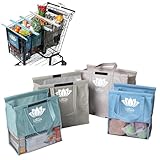
- END GROCERY TRIP CHAOS: Tired of juggling messy grocery totes and digging through plastic bags? These 4 reusable bags with handles keep everything upright and organized by category; they feature an insulated bag and wine and egg pockets to protect fragile items and speed up checkout
- FITS YOUR CART, NOT YOUR FRUSTRATION: No more guessing or wasting money on reusable shopping bags foldable that don’t align; each grocery tote bag of the Original set fits Target, Kroger, and standard U.S. carts (NOT SUITABLE FOR WAREHOUSE CLUB STORES); check out our Club Cart version for warehouse stores
- BUILT FOR BUSY DAYS: From Target runs to big hauls, these shopping bags for groceries adapt fast; use them together or detach with Velcro; remove the rods to turn them into foldable grocery bags for errands, markets, or weekly Instacart orders
- NO MORE MELTED ICE CREAM: The insulated food bag is thermal-lined to protect frozen and chilled foods; no more stressing over softening frozen goods or lukewarm dairy by the time you’re home; these kitchen reusable grocery bags heavy duty help maintain freshness until you're ready to unload
- TOUGH, CLEAN, AND MOLD-FREE: Each reusable shopping bag holds over 60 lbs with 120 GSM fabric and reinforced seams; machine wash the mesh-bottom bags to eliminate spills and smells; no more soggy reusable grocery totes or hidden messes
What merchants can change first
- Show the full cost early. Make shipping, taxes, fees, and any relevant delivery conditions clear before the final checkout step, so shoppers can judge the total before they are committed to completing a form.
- Make guest checkout easy to find. Present it as a clear route rather than hiding it behind account creation. Account registration can remain available for shoppers who want it.
- Reduce unnecessary form work. Review which fields are required, use concise labels, and avoid asking shoppers to repeat information already supplied.
- Make errors useful. Explain what needs correcting near the relevant field, preserve valid entries, and give a clear next action rather than a vague failure message.
- Investigate payment problems. Review payment events and failure patterns instead of treating every incomplete checkout as a shopper who simply changed their mind.
These are diagnostic priorities, not a promise that every abandoned checkout is recoverable. Baymard’s 2025 benchmark supports attention to checkout usability and guest-checkout visibility, but it does not assign a universal result to implementing any one recommendation. Baymard’s checkout UX findings
Independent reader supportYour contribution helps us test, update, and keep practical guides available for everyone.How Shopify defines and reports abandoned checkouts
For Shopify merchants, the platform provides one concrete example of why definitions matter. Shopify says: “An abandoned checkout refers to a checkout process that remains incomplete, even though the customer has provided their email information.” In Shopify’s documentation, a checkout is considered abandoned when it remains incomplete for more than ten minutes after the customer has supplied an email. That platform-specific definition is not a universal ecommerce standard.
What’s actually slowing this PC down?
Pick the symptom - the matching free tool is one click away.
Best Value

- Universal Cart Clip Attachment: Engineered for compatibility with most supermarket carts, this secure clip system locks onto metal or plastic frames for a stable, elevated setup. Keep your groceries organized, visible, and within easy reach from aisle to checkout.
- Easy, Organized Shopping: Designed to attach directly to your grocery cart, these reusable bags keep items upright, visible, and neatly separated throughout your trip. Load as you shop, streamline checkout, and lift each bag straight into your trunk for a faster, more efficient grocery run.
- Interior Zipper Pouch for Secure Storage: Keep small essentials neatly contained with the built-in inner zipper pocket. Perfect for keys, coupons, receipts, phone, or loose items, this secure compartment prevents shifting and keeps valuables protected while you shop.
- Eco-Friendly & Reusable: A sustainable alternative to single-use plastic bags, designed to reduce waste and support environmentally conscious shopping. Built for long-term use, this reusable system helps you minimize your environmental footprint with every grocery trip.
- Heavy-Duty & Extra Spacious: Made from premium 210D polyester with reinforced double-stitched seams and handles for superior strength and long-lasting durability. Each bag is built to support up to 40 lbs, making it ideal for heavy grocery hauls, bulk shopping trips, and warehouse store runs.
Shopify’s recovery email feature is available for Online Store and Buy Button channels; its documentation excludes POS and third-party sales channels from recovery email. Merchants can configure the email delay and intended visitor category, and the email can link back to the checkout. Shopify’s abandoned-checkout documentation
When Shopify does not send a recovery email
Shopify documents several cases where a recovery email is not sent, including when the shopper has already purchased, a payment-processing error occurred, shipping to the supplied address is unsupported, the shopper provided only a phone number, products are unavailable, or Shopify Payments blocks the attempt as high risk. These cases show why an incomplete checkout does not always mean the shopper simply needs a reminder.
Shopify also notes that automated activity may appear in its abandoned-checkout list, while some suspected bot or card-testing activity is filtered. Check the underlying events before interpreting a list total as a count of genuine, recoverable customer decisions.
How to compare abandonment rates fairly
- Use the same event definition. Distinguish an add-to-cart from an initiated checkout and from a checkout where the shopper has provided contact information.
- Match the denominator and period. State which population the rate uses and the time period measured; a percentage without those details can mislead.
- Segment results. Compare device types and sales channels separately where possible, rather than letting a change in traffic mix masquerade as a checkout improvement.
- Separate different causes. Customer hesitation, failed payments, fraud blocks, unavailable inventory, unsupported shipping, and bot activity are not interchangeable reasons for abandonment.
Shopify’s definition and exclusions illustrate why an “abandoned checkout” count can vary by platform and event handling. Its report can show sessions and completed orders associated with reminder emails, but those attributed results do not prove every purchase was incremental or caused solely by the email. Assess recovery using your own delivered-message, return-session, and completed-order data, and treat platform-attributed results as attribution unless you have a more rigorous measurement design. Shopify’s reporting and recovery details
Crashes, No Sound, or Screen Glitches?
Random freezes, missing sound and display glitches usually trace back to one bad driver. Find and replace yours safely.Free scan · under a minutePC Slower Than It Used to Be?
A free scan shows the junk files, broken settings and background clutter dragging Windows down - then fixes them in one click.Free scan · Windows 10 & 11Quick Recap
Product prices and availability are accurate as of the date/time indicated and are subject to change. Any price and availability information displayed on Amazon at the time of purchase will apply.




