For questions about the 56th GST Council meeting, start with its official FAQ—but check the relevant government notification and statutory provision before applying a decision to a particular transaction. The Ministry of Finance FAQ, published on 3 September 2025, said most listed rate changes took effect on 22 September 2025. It also identified tobacco products as an exception and said the goods registration threshold had not changed. Those answers concern that meeting; they are not a complete statement of GST law as of October 2026.
When did the 56th GST Council meeting’s rate changes take effect?
The Ministry of Finance’s FAQ on the 56th Council meeting said that most listed changes to GST rates on goods and services came into force on 22 September 2025. The FAQ is available as an official PDF, and the Council’s FAQ listing identifies the meeting it covers.


Tobacco products were an exception
The FAQ said the existing GST rates and compensation cess for cigarettes, chewing tobacco products such as zarda, unmanufactured tobacco, and beedi would continue until a later date was notified. Do not assume that the general effective date applied to these products.
Examples in the meeting’s recommendations
The Council’s recommendations included reducing GST on renewable-energy devices and parts for their manufacture from 12% to 5%; reducing tax on qualifying hotel accommodation valued at or below ₹7,500 per unit per day; and lowering tax on specified beauty and physical-wellbeing services. The recommendations also said GST on specified tobacco products would be levied on retail sale price rather than transaction value. These are examples from the meeting, not a complete current rate table. The applicable notification and the supply’s classification determine the treatment to use.
Recommended Free Tools
#1 Best Overall

- QUALITY INVOICES: Adams Order books provide a professional invoice or customer receipt; a great way to create and maintain a professional image for small businesses and service providers
- 50 TWO-PART CARBONLESS FORMS: Customers get the perforated white top copy; retain the canary and pink copies for your records
- WRAP-AROUND COVER: Fold the back cover between sets to keep invoices neat and legible
- ROOM FOR CUSTOMIZATION: A blank space at top leaves room for your company stamp; a big savings over custom-printed forms
- CONSECUTIVELY NUMBERED: Large 6-digit numbers in the upper right hand corner help you thumb through orders quickly
The recommendations release also described a proposed clarification to “specified premises” for restaurant services. In the arrangement described, a stand-alone restaurant could not declare itself a specified premise to choose an 18% rate with input tax credit. Because this is a summary of a recommendation, check its implementing instrument and current legal text before relying on it. Read the Council’s recommendations release.
Did the meeting change the GST registration threshold for goods?
No. The Ministry of Finance FAQ answered: “No, there is no change in threshold of the registration required for goods under CGST Act, 2017.” This answer is specifically about the registration threshold for goods. It should not be read as an answer to every registration question, exception, or obligation.
Rank #2
What if goods were supplied before a rate change but invoiced afterward?
Do not decide the tax treatment from the invoice date alone. The 56th-meeting FAQ addresses a supply made before a rate change but invoiced afterward and points to Section 14(a)(i) of the CGST Act for time-of-supply treatment. Apply the statutory rule to the transaction’s relevant dates and facts; the FAQ does not replace that analysis.
For a specific supply, establish:
- What the goods or service are and how they are classified.
- The relevant supply, invoice, and payment dates.
- Whether the FAQ describes a recommendation or whether a notification has implemented it.
- The relevant state and tax component, where applicable.
- Whether a later notification or amendment has changed the position described in the dated FAQ.
How do Council decisions, FAQs, and notifications differ?
They serve different purposes. Council recommendations record what the Council proposed; FAQs explain decisions and address common questions; government notifications provide the formal instruments that amend existing rate measures. To determine the treatment of a particular supply, identify the applicable notification and statutory provision rather than treating a recommendation or FAQ as a complete current rate schedule. The Council maintains a Central Tax (Rate) notification index.
Rank #3
The Council’s September newsletter says three separate FAQ releases addressed the 56th-meeting decisions, including clarifications on pharmaceuticals, unmanned aircraft systems, insurance, hospitality, job-work services, and notification changes. Use the FAQ relevant to the sector or issue rather than assuming one document covers every question. See the Council newsletter.
Independent reader supportYour contribution helps us test, update, and keep practical guides available for everyone.How should taxpayers check a decision before acting on it?
- Identify the supply. Record the exact goods or service and determine its classification and any eligibility conditions.
- Fix the relevant dates. Collect the supply, invoice, and payment dates; time-of-supply rules may matter when a rate changes.
- Find the formal instrument. Check whether a notification implements the recommendation and whether a later notification or amendment applies.
- Check the tax context. Confirm the relevant state and tax component, where applicable, and any input-tax-credit condition.
- Apply the rule to the transaction. If classification, timing, or eligibility is uncertain, get advice based on the actual documents and facts.
A GST Acts with Rules reference can help locate statutory material, but its amendment cutoff may precede later law. For example, the ICAI GST Act(s) & Rule(s) Bare Law says it was updated through 31 October 2025. Check current notifications and the applicable FAQ when using any dated reference.
Quick Recap
Best Value
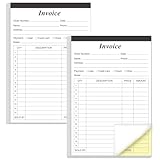
- PACKAGE INCLUDES - Our invoice book per pack has 50 sets sheets, total in 2 pack, Total of 200 sheets. red code printed on each page with consecutive numbers
- Material - Receipt book is excellent quality carbonless paper is used in their production, tears off easily along the perforation.
- A5 Size - Sales invoice book size of 5.5" x 8.5", and forms are 2 part carbonless white/yellow sets on a sturdy chipboard backing
- WIDE APPLICATION - Sales reciepts/invoice book for small business is ideal for restaurants, food trucks, vendors, service provider, photographers, caterers, florists, bakeries, cafes, boutiques and salons
Rank #4

- MADE FOR SERVICE BUSINESSES - Space for company stamp or logo, and notes; great for contractors and field service professionals, including construction, HVAC, plumbing, electrical, landscaping, maintenance, mechanic and repair
- 2-PART NCR FORMS - Create clean duplicate copies instantly with white and yellow sheets; ideal for job invoices, work orders, contractor estimates, repair orders, and service calls without messy carbon copy paper
- LARGE 8-1/2" X 11-7/16" FORMAT – Full-page layout with ample room for customer information, materials, labor, subtotal, tax, and total; clear printed lines keep handwriting fast, neat, and legible on every job
- EASY TO FILE AFTER USE - Top micro-perforation removes each invoice smoothly while keeping remaining forms secure, helping you provide professional customer copies and maintain accurate records
- BUILT FOR FIELD WORK - Fold-out cardboard divider prevents write-through and doubles as a sturdy writing surface for work on construction sites and customer locations
Product prices and availability are accurate as of the date/time indicated and are subject to change. Any price and availability information displayed on Amazon at the time of purchase will apply.




