Recommended Free Tools
An Overweight rating generally means an analyst expects a stock to outperform a stated benchmark or peer group over a specified period. It does not guarantee that the share price will rise, and there is no universal definition specific to construction stocks: the issuing firm’s rating scale, benchmark and time horizon control.
What “Overweight” means
Analyst ratings are usually relative judgments. An Overweight call indicates expected outperformance against a comparison point—such as a market index or the analyst’s coverage universe—not necessarily a positive absolute return. A construction stock could fall while still outperforming its benchmark, or rise while underperforming it.


The term is not standardized across all research firms. The U.S. Securities and Exchange Commission advises investors to check the rating definitions used by the firm issuing the recommendation: SEC guidance on analyst recommendations.
Is Overweight the same as Buy?
Not necessarily. Some firms use relative labels such as Overweight, Equal-weight and Underweight rather than direct Buy, Hold and Sell recommendations. Morgan Stanley says its Fundamental Equity Research categories are not equivalent to Buy, Hold or Sell, although it maps the labels to those headings for regulatory disclosure. That is Morgan Stanley’s approach, not a universal rule.
#1 Best Overall
A current example of one firm’s definition
Morgan Stanley’s General Research Disclosures, accessed October 7, 2026, define Overweight for its Fundamental Equity Research as a forecast that a stock’s total return will exceed the total return of either the relevant country MSCI Index or the average total return of the analyst’s industry or industry-team coverage universe, on a risk-adjusted basis, over the next 12–18 months. The firm says its scale also includes Equal-weight, Not-Rated and Underweight. See its General Research Disclosures.
This example illustrates why the benchmark and period matter. A different analyst or firm may use another comparison point, time frame or rating vocabulary; use the definition in the report about the specific construction company rather than applying Morgan Stanley’s terms automatically.
How to assess the rating on a construction stock
Read the full report and identify what supports the analyst’s relative-performance view. Do not assume that every contractor, building-materials supplier or engineering company faces the same prospects simply because it is connected to construction.
- Check the rating scale: Find the issuing firm’s definitions and confirm whether Overweight is a relative rating or a direct recommendation.
- Identify the benchmark and horizon: Determine what the stock is expected to outperform and over what period.
- Read the analyst’s reasoning: Look at the company-specific assumptions and risks discussed in the report instead of inferring an outlook from the label alone.
- Review disclosures and filings: The SEC advises readers to consider potential conflicts and to do independent research, including reviewing a company’s quarterly and annual reports.
The SEC also cautions that analyst recommendations generally are not individually tailored financial advice; they do not take an investor’s personal circumstances into account. Recommendations can influence share prices, and analysts or their firms may have conflicts. Read the complete report and its disclosures before treating a rating as useful context.
What’s actually slowing this PC down?
Pick the symptom - the matching free tool is one click away.
What Morgan Stanley’s rating mix does—and does not—show
Morgan Stanley’s distribution disclosure dated September 30, 2026, covers 3,734 common stocks and ADRs: 43% were classified Overweight/Buy, 42% Equal-weight/Hold and 15% Underweight/Sell. Morgan Stanley notes that percentages may not total exactly 100% because of rounding. These are the firm’s disclosed figures across covered securities, not a construction-stock statistic or evidence that its ratings were accurate.
Quick Recap
Rank #4
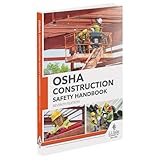
- 2024 OSHA Construction Safety Book is the seventh edition with the new OSHA HazCom final rule on 5/20/24. While the rule takes effect 7/19/24, the compliance dates don’t begin until 1/19/26 per 29 CFR 1910.1200(j).
- Construction Site Book offers quick access to essential OSHA regulations, jobsite hazards, and practical safety tips. It also helps employees identify hazards and prevent injuries and illnesses.
- Features easy-to-read format, full-color images, chapter quizzes with answer key, and comes in a compact size making it a convenient reference for employees.
- Critical topics include Confined Space Entry; Cranes & Derricks; Electrical Safety; Emergency Response; Ergonomics & Back Safety; Excavations; Fall Protection; First Aid & Bloodborne Pathogens; HazCom; Health & Wellness; Jobsite Exposures; Lockout/Tagout; Ladders & Stairways; Materials Handling/Storage; Motor Vehicles; PPE; Scaffolds; Site Safety & Security; Slips, Trips & Falls; Tool Safety; Welding, Cutting & Brazing; and Work Zone Safety.
- Specifications: 5 1/4” x 7 1/4", English, Soft bound. 7th Edition. Copyright 2024.
Product prices and availability are accurate as of the date/time indicated and are subject to change. Any price and availability information displayed on Amazon at the time of purchase will apply.




