Use analyst ratings as a starting point, not a buy signal. Before acting on a construction-stock recommendation, check what the rating means at that firm, examine the report’s assumptions and disclosures, and test its thesis against the company’s filings—especially its business mix, backlog quality, margins, cash flow, and exposure to construction costs and public spending.
What an analyst rating can—and cannot—tell you
“Buy,” “hold,” “neutral,” and “outperform” are not universal categories. Firms may define the same label differently, and recommendations may use different benchmarks or time horizons. Read the issuing firm’s rating definitions and the report’s stated horizon rather than relying on an aggregator’s label alone. The SEC’s guidance on analyst recommendations advises investors to check these definitions and the firm’s rating distribution.

A price target is an estimate based on assumptions, not a promise that a stock will reach a particular price. Check the target’s time horizon, the report date, the assumptions behind it, and what developments could change the estimate. A consensus can conceal analysts working from different assumptions or reports written at different times.
How to review a rating before relying on it
1. Read the report’s reasoning
Look beyond the headline recommendation. Identify the analyst’s thesis, the evidence supporting it, the key assumptions, expected catalysts, and risks. Ask what facts would disprove the thesis and whether the report addresses them. If you have seen only a rating quoted in a news story or on an investing site, you may not have the underlying assumptions or disclosures; seek the full report or its available disclosures before treating the opinion as decision-grade evidence.
#1 Best Overall
2. Check conflicts and rating patterns
Review whether the analyst or firm discloses a financial interest in the stock, an investment-banking relationship with the issuer, or another relevant conflict. Where available, look at the firm’s proportion of ratings in buy, hold or neutral, and sell categories, as well as the share of covered companies in each category that are investment-banking clients. The SEC says a conflict should be considered, but it does not automatically make a recommendation flawed. A disclosure is context for weighing the analysis—not proof that it is wrong.
Also check the report date and any history of rating or target changes. No cross-company accuracy rate for analyst ratings on construction stocks is established by the cited materials. Where an analyst’s dated record is disclosed, review it; do not assume a label or a consensus has a known hit rate.
Rank #2

- Keep track of everything from attendance to test scores
- Spiral bound
- Measures 8-1/2" x 11"
3. Verify the thesis against company disclosures
Use the issuer’s latest annual and quarterly filings to check reported results, risk factors, customer and market exposure, contract economics, cash generation, debt, and management’s explanation of changes. Compare the report’s estimates with what the company has actually disclosed, and note where the analyst’s assumptions depend on events that have not yet occurred. SEC investor guidance recommends consulting company reports and other independent information rather than relying on one recommendation.
Construction-specific checks that can change the thesis
Start with the business model
“Construction stock” covers different businesses, including contractors, engineering and construction managers, materials producers, homebuilders, and diversified operators. Identify what the company actually does, then compare it with businesses of a similar type. In filings, examine its mix of public and private work, project types, customers, and geographic markets. A sector-wide assumption may not fit a company with a different mix of work or locations.
What’s actually slowing this PC down?
Pick the symptom - the matching free tool is one click away.
Read backlog as a pipeline, not a guarantee
For a contractor, examine backlog trends, composition, award status, expected timing, and customer or project concentration. Compare backlog with reported revenue and margins, and consider whether the work is likely to convert into profitable projects. Companies may define backlog differently, so check the issuer’s definition before comparing figures.
Tutor Perini reported backlog of $20.6 billion at December 31, 2025, and estimated that approximately $6 billion, or 29%, would be recognized as revenue in 2026, according to its 2025 Form 10-K. Those are figures for one company and one reporting date, not a construction-sector benchmark. The filing describes backlog as awarded work but warns that it can be cancelled or reduced, may not be realized, and may not be profitable. A large backlog figure alone therefore does not establish future revenue or earnings.
Rank #4
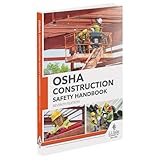
- 2024 OSHA Construction Safety Book is the seventh edition with the new OSHA HazCom final rule on 5/20/24. While the rule takes effect 7/19/24, the compliance dates don’t begin until 1/19/26 per 29 CFR 1910.1200(j).
- Construction Site Book offers quick access to essential OSHA regulations, jobsite hazards, and practical safety tips. It also helps employees identify hazards and prevent injuries and illnesses.
- Features easy-to-read format, full-color images, chapter quizzes with answer key, and comes in a compact size making it a convenient reference for employees.
- Critical topics include Confined Space Entry; Cranes & Derricks; Electrical Safety; Emergency Response; Ergonomics & Back Safety; Excavations; Fall Protection; First Aid & Bloodborne Pathogens; HazCom; Health & Wellness; Jobsite Exposures; Lockout/Tagout; Ladders & Stairways; Materials Handling/Storage; Motor Vehicles; PPE; Scaffolds; Site Safety & Security; Slips, Trips & Falls; Tool Safety; Welding, Cutting & Brazing; and Work Zone Safety.
- Specifications: 5 1/4” x 7 1/4", English, Soft bound. 7th Edition. Copyright 2024.
Match risks to the company’s actual exposure
Test whether the analyst has accounted for the factors that matter to this issuer. Construction Partners’ 2025 annual report identifies public spending, general economic conditions, tariffs, prevailing interest rates, inflation in materials, labor and insurance, seasonality, and economic cyclicality among industry drivers or risks. These are useful prompts, not a claim that every construction company has equal exposure. Consider how the company’s customer mix, contracts, locations, and costs might affect demand, execution, and margins.
Independent reader supportYour contribution helps us test, update, and keep practical guides available for everyone.Compare two construction stocks on the same questions
If you are weighing more than one company, use the same framework for each rather than comparing rating labels alone:
| What to compare | Questions to ask |
|---|---|
| Rating framework | What does the firm’s rating mean? What is its time horizon, target assumption, and report date? |
| Research quality | What evidence and assumptions support the thesis? What risks or contrary evidence could undermine it? How have the rating and target changed? |
| Conflicts | What financial interests or issuer relationships are disclosed? What does the firm’s rating distribution show? |
| Business mix | Is the company a contractor, services provider, materials producer, homebuilder, or diversified operator? What are its customer, market, and geographic exposures? |
| Backlog quality | How is backlog defined and composed? How certain are awards, when is work expected, how concentrated is it, and what cancellation, scope, or profitability risks apply? |
| Financial resilience | What do margins, cash flow, debt, and working capital show? How could rates, inflation, public budgets, or economic cycles affect the company? |
Make the decision using your own time horizon and risk tolerance
Analysts generally are not acting as your personal financial advisers or tailoring recommendations to your circumstances. The SEC’s investor alert cautions investors not to rely solely on analyst recommendations. Compare the thesis with company disclosures, then decide whether the risks and time horizon fit your goals and tolerance for loss. This is general research guidance, not a recommendation to buy any particular security.
Quick Recap
Product prices and availability are accurate as of the date/time indicated and are subject to change. Any price and availability information displayed on Amazon at the time of purchase will apply.




