Without a digital euro, Europe could face more fragmented retail payments and tokenised finance, ECB Executive Board member Piero Cipollone warned on 6 October 2026. That is the ECB’s policy argument—not a settled forecast. The proposed digital euro is still subject to EU legislation and a later decision by the ECB’s Governing Council.
What fragmentation risk is the ECB warning about?
In a speech at an MNI Connect webcast in Frankfurt am Main, Cipollone argued that payment habits and financial assets are moving into digital settings, but the money used to settle transactions must adapt too. His concern is that tokenised finance could develop on closed, incompatible platforms without a safe settlement asset. That, he said, could increase fragmentation and weaken the “singleness of money”—the principle that one euro has the same value throughout the euro area. The ECB speech sets out that argument.


“If tokenised finance develops on closed, incompatible platforms without a safe settlement asset, fragmentation could increase and the singleness of money could be weakened,” Cipollone said. In everyday payments, he also warned that Europe could lack a pan-European digital option for all common use cases and remain dependent on infrastructure, technologies or providers controlled elsewhere.
How does the ECB propose to respond?
Cipollone’s proposed direction is to make central-bank money usable in digital settings while retaining the existing two-tier monetary system, where public money and private money coexist. The initiatives he described address different parts of that transition:
#1 Best Overall
| Initiative | Role described by the ECB | Area |
|---|---|---|
| Digital euro | A proposed common euro-area acceptance layer, distributed by banks and other regulated payment service providers | Retail payments |
| Pontes | A Eurosystem solution intended to support settlement in central-bank money | Wholesale tokenised transactions |
| Appia | Work with market participants on the wider digital-finance ecosystem | Broader digital finance |
The digital euro would not make the ECB a customer-facing payment provider. Banks and other regulated payment service providers would distribute it and maintain customer relationships. The ECB says a common acceptance layer and standards could help private European payment services reach more users; co-badging could also let a domestic payment scheme work more widely. These are intended benefits, not demonstrated outcomes. The speech’s related discussion describes the ECB’s case.
What is the digital euro’s legal status?
As of 6 October 2026, the EU legislative process was still under way: the Council agreed its position in December 2025, the European Parliament adopted its position in July 2026, and trilogue negotiations were under way. The ECB says its Governing Council will decide whether to issue a digital euro only after legislation is adopted. The ECB’s aim for a possible first issuance in 2029 depends on the legislative process concluding by the end of 2026. The digital euro is therefore not approved for issuance, and 2029 is not a guaranteed launch date. Cipollone’s speech states these conditions.
What do the ECB’s figures say about payment markets and banks?
The 6 October speech includes figures on cross-border transactions and a modeled assessment of possible effects on bank deposits. They are ECB statements and estimates, not observed results:
| Figure | What it refers to | How to interpret it |
|---|---|---|
| 5% | The share of the market attributed to cross-border transactions in the speech’s discussion of an interoperability platform and its limitations | Do not read this as the share of all European payments; the speech’s context does not establish that broader definition. |
| €127 billion by 2034 | Potential deposit inflow from continuing digitalisation in the ECB analysis | Equivalent in that analysis to 0.4% of banking-sector assets or 1.5% of retail sight deposits; an estimate, not a forecasted observed inflow. |
| 2,025 banks; hypothetical holding limits of €500 to €3,000 | Scope and range for the analysis requested by the European Parliament | The ECB calls the results illustrative; they do not determine the eventual digital euro holding limit. |
For the €127 billion comparison, the ECB says the modeled inflow from digitalisation would exceed estimated digital-euro-related outflows in its business-as-usual scenario for hypothetical holding limits up to and including €3,000. That comparison depends on the scenario and assumptions used; the speech also discusses an extreme flight-to-safety scenario. It should not be treated as proof that the digital euro would have no effect on banks. The ECB’s analysis and its qualifications provide the context for the figures.
Rank #3
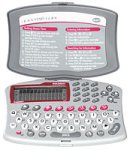
- 12K Memory, 3 Lines x 12 Character Display
- Stores Up to 600 Items, Calculator Function
- Euro Converter
What remains uncertain?
The warning identifies risks the ECB believes it should address; it does not establish that fragmentation will occur or that a digital euro alone would prevent it. The policy case depends on legislation, design choices and implementation. Whether a common acceptance layer would help European providers scale, whether it would work smoothly across borders, and how the arrangements would interact with private payment services remain matters for development and evaluation.
Earlier ECB statements describe design intentions rather than final terms. A June 2026 ECB fireside-chat transcript discussed regulated providers as distributors, interoperability and co-badging, and non-remuneration and individual holding limits as safeguards. Those statements do not establish an enacted specification. The June transcript reflects the project’s position at that time.
Rank #4

- [EYE FRIENDLY DISPLAY] Enjoy a comfortable reading experience on the 6 inch screen designed to reduce and visual fatigue during long sessions. The clear display shows more text on each page and supports adjustable font sizes so fiction comics documents and study materials stay easy to read.
- [EASY CONTROL DESIGN] Large page control buttons make navigation smooth simple and comfortable whether you are reading at home or on the go. The responsive layout helps you turn pages browse files and manage your library with less effort while the memory card slot gives you convenient storage expansion.
- [WIDE FORMAT SUPPORT] Open more of the content you love without wasting time on file conversion. This reader supports popular formats such as PDF TXT DOC FB2 EPUB RTF PRC and MOBI so you can access books notes reference files and other documents with greater freedom and flexibility.
- [MORE THAN READING] This compact device adds practical functions that make every session more engaging. Highlight important passages add annotations search definitions and enjoy audiobook playback through the built in speaker turning everyday reading into a richer and more interactive experience.
- [PORTABLE EVERYDAY LIBRARY] Carry thousands of titles in one lightweight reader instead of packing bulky books. Ideal for commuting travel extracurricular learning and relaxing at home this slim black device keeps your favorite reading materials close at hand whenever inspiration strikes.
In March 2026, Cipollone also discussed accessibility and inclusion as design goals and possible payment features and a pilot, while noting that issuance would depend on legislation. That speech cited estimates of around 30 million blind or partially sighted Europeans and research indicating that more than one in five Europeans did not feel comfortable using digital financial services. Those figures came from research cited in the March speech; they are not new findings by Cipollone. The March speech provides that context.
Quick Recap
Best Value
Product prices and availability are accurate as of the date/time indicated and are subject to change. Any price and availability information displayed on Amazon at the time of purchase will apply.
Recommended Free Tools




