The Tool Desk
Outbyte Driver Updater FREEFix the driver behind crashes, sound loss and screen glitchesFind Drivers →Outbyte PC Repair FREERepair Windows errors before they cause bigger problemsFix Now →AI in healthcare made real operational progress in 2025, but clinical transformation remained uneven. The strongest evidence came from tools embedded in existing workflows—especially ambient documentation, imaging assistance, and selected prediction systems. By contrast, impressive benchmark results for general-purpose medical reasoning did not consistently translate into better patient outcomes.
The practical lesson for healthcare leaders, investors, policymakers, and patients is simple: distinguish what an AI system can do in a test from what it reliably does in a hospital, clinic, or patient’s hands. Capability, deployment, impact, and evidence are different things.

What counts as AI in healthcare?
“AI in healthcare” covers several technologies with very different maturity levels, risks, and regulatory pathways:
- Machine-learning systems for medical imaging and pathology
- Generative-AI scribes and clinical documentation tools
- Clinical decision-support and predictive analytics
- Patient-facing chatbots and health-information tools
- Administrative automation for coding, scheduling, referrals, and prior authorization
- Drug discovery, protein modeling, biomarker analysis, and trial recruitment
- Wearables, remote monitoring, robotics, and image-guided intervention
A radiology algorithm, an ambient scribe, a patient chatbot, and a drug-discovery model are not interchangeable. They have different intended uses, evidence standards, failure modes, and purchasing decisions.
Windows Errors? Fix Them Before They Spread
Repair common Windows errors and clear accumulated junk for a smoother, more stable PC - no reinstall needed.Free scan · no reinstallOutdated Drivers Are Slowing You Down
One free scan finds every outdated or missing driver and matches the right update for your exact hardware.Free scan · exact hardware match#1 Best Overall
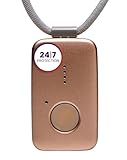
- Small Device, Big Backup: MGMini is a discreet medical alert necklace that supports your independence at home and on the go. Wear the device your way with the included lanyards or belt clip, for steady protection that fits your lifestyle. Hourly location updates and step counting features are available to view on our online portal or app.
- Press. Speak. Get Help: Press the emergency button to connect with Medical Guardian’s 24/7 monitoring team through the device’s two-way speaker. One of our trained, U.S. based operators will contact EMS, family, or friends to get you the exact type of help you need.
- Activate Before First Use: 24/7 emergency monitoring services must be activated online or by phone prior to device use. For a limited time, get 1 free month of 24/7 monitoring. After trial, service is $43.95/month. Cancel anytime. During activation, consider extra protection with our optional fall detection add-on for an additional $10/month.
- A Trusted Name in Care: Founded on one man's mission to protect his grandmother and trusted by over 630,000 members, Medical Guardian supports older adults and their care partners with connected safety solutions designed for independence and peace of mind.
- Industry-Leading Battery Life: Enjoy 3 days of protection on a single charge, plus a fast 4-hour recharge. Battery life may vary based on network connection and cellular signal strength. Note: only one device can be active per member at a time.
The 2025 healthcare-AI scorecard
| Area | 2025 status | Evidence strength | Main constraint |
|---|---|---|---|
| Ambient documentation | Rapid adoption | Moderate | Accuracy, privacy, and clinician verification |
| Medical imaging | Most mature regulated category | Variable | Generalizability and workflow impact |
| Predictive analytics | Active deployment | Mixed | Alert fatigue and uncertain causal benefit |
| General clinical reasoning | Strong benchmark results | Weak to moderate in real care | Simulation gap |
| Drug discovery | Fast research progress | Early for clinical outcomes | Experimental validation |
| Patient-facing AI | Broad public exposure | Uneven | Safety and accountability |
| Administrative AI | Practical use cases | Moderate | Integration and return on investment |
Where AI delivered measurable value
Ambient documentation and AI scribes
Ambient documentation became one of the clearest adoption categories in 2025. These systems listen to a clinical encounter, generate a draft note, and place it into an electronic health record for clinician review and sign-off.
The cited Stanford analysis reported reductions in documentation and total EHR time, along with lower physician-reported burden and burnout in the evaluated setting. It also reported average physician uptake of approximately 55% in that study. See the Stanford AI Index clinical-care analysis.
The appeal is straightforward: documentation is a defined administrative burden, and the benefit can be measured through time, after-hours EHR use, note completion, and clinician surveys. But a scribe is a workflow-assistance system, not an autonomous clinician.
- Every generated note still requires review.
- Errors involving medications, doses, negations, diagnoses, and follow-up instructions can be clinically important.
- Performance may vary with specialty, accent, language, background noise, overlapping speech, and visit complexity.
- Less typing does not automatically mean better outcomes or lower total cost.
- Verification work can replace some documentation work.
- Recording, retention, patient consent, and secondary data use require explicit governance.
For buyers, the key question is not merely whether a product generates a note. It is whether it reduces total work without increasing review burden or clinical risk.
Free tools Windows power users keep installed
One-click scans. No signup required.
Medical imaging
Imaging remains the largest concentration of regulated healthcare AI because digital images are relatively structured, many intended uses are narrow, and performance can often be compared with radiologists or reference standards.
Applications include abnormality detection, triage, image reconstruction, segmentation, quantification, screening support, and assistance with conditions such as stroke, fractures, and pulmonary embolism. The FDA’s AI-enabled medical-device list contains many imaging-related entries, although the agency says the list is not comprehensive.
Use “FDA-authorized” or name the actual pathway—such as 510(k) clearance, De Novo classification, or premarket approval—instead of treating every product as “FDA-approved.” Authorization applies to a defined intended use. It does not prove that a tool improves outcomes in every hospital or population.
Rank #2

- NOMO SMART CARE ESSENTIAL KIT – A complete elderly monitoring security system featuring a Smart Hub, two Satellite range extenders, and wearable Tags for fall detection and emergency alerts; provides 24/7 protection over secure WiFi with no landline required.
- FAST SETUP, NO HASSLE – Quick plug-and-play installation; simply connect the Hub and Satellites to wall outlets and place Tags on key items or wear them for personal protection; no special wiring, technician visits, or hidden fees.
- TWO-WAY VOICE COMMUNICATION – Clear, reliable two-way talk through the Hub ensures instant communication during emergencies; a powerful alternative to traditional life alert systems for seniors aging in place; range extenders for thorough coverage, wearable tags with panic button.
- 24/7 MONITORING WITH EMERGENCY RESPONSE – Includes a 30-day trial of 24/7 monitoring with RapidSOS emergency services through the Nomo app; after the trial, a monthly subscription applies; cancel anytime. Our elderly assistance products track movement and provide comprehensive monitoring.
- FALL DETECTION AND CAREGIVER NOTIFICATIONS – Tags detect unusual movement patterns and fall events, sending instant alerts to your trusted Care Circle; ideal for seniors, caregivers, and families seeking a modern, easy-to-use medical alert system for seniors.
Imaging systems can identify an abnormality without making a final diagnosis. False positives may increase workload and unnecessary testing, while false negatives can create false reassurance. Performance can also change across scanners, hospitals, patient populations, disease prevalence, and clinical protocols. Automation bias may cause clinicians to over-trust a confident-looking output.
Predictive analytics
Hospitals continued to use models for sepsis, deterioration, readmission risk, patient flow, and other operational decisions. These systems can be valuable, but statistical accuracy is only an intermediate result.
A useful evaluation asks:
- Was the model tested prospectively in the intended setting?
- Did clinicians receive and act on the alerts?
- Did patient outcomes improve compared with usual care?
- Was alert fatigue measured?
- Did the intervention increase testing or treatment without improving outcomes?
- Did performance remain consistent across demographic and clinical subgroups?
A model may fail in practice because alerts arrive too late, no effective intervention exists, clinicians cannot interpret the score, or the alert volume is excessive. It may also learn documentation and care-process patterns rather than underlying physiology. When deployment changes clinician behavior, it changes the data-generating process too.
Drug discovery and molecular biology
AI made important progress in protein-structure prediction, molecular generation, virtual screening, biomarker discovery, drug repurposing, trial recruitment, synthetic biology, and prediction of cellular responses.
These advances belong primarily to research and development rather than established clinical care. A computationally promising molecule is not the same as a preclinical candidate, a drug entering human trials, a clinically effective treatment, or a commercially available therapy. Experimental validation remains essential. Stanford’s 2026 medicine chapter describes continued progress in specialized protein and molecular models while emphasizing that distinction.
Recommended Free Tools
Patient-facing AI
Patients increasingly encounter AI-generated health information before speaking with a clinician. Stanford reported that AI-generated summaries appeared prominently in a substantial share of health-related searches during 2025, though the exact result depends on the search engine, query sample, geography, and measurement period.
Patient-facing systems create risks that differ from those of hospital software. A plausible answer may omit red flags, ignore a patient’s medications, recommend an inappropriate level of care, or cause someone to delay urgent treatment. The system may also handle sensitive information under a consumer privacy model rather than the safeguards expected inside a clinical organization.
Rank #3

- Monitoring Subscription Required and 24/7 Live Monitoring: Activation after purchase, an active monitoring subscription and cellular coverage are required. Once activated, press and hold SOS for approximately 3–5 seconds to connect with a live monitoring professional.
- SOS, Two-Way Voice and Emergency Contacts: Speak directly with a monitoring professional through the necklace’s built-in speaker and microphone without a nearby smartphone. If the wearer cannot respond, established procedures may include attempting the customer’s phone, contacting designated emergency contacts in their selected order and requesting local emergency services when appropriate.
- Automatic Fall Detection and GPS Location: If a possible fall is detected and not canceled, an alert and device location are sent to the monitoring center even without an SOS button press. Fall detection is available with a qualifying monitoring plan and may not detect every fall. Location availability and accuracy vary by coverage, signal, surroundings and indoor use.
- Optional Med Alert Pro App: View device location, battery percentage and GPS accuracy; receive SOS and fall alarm notifications; and use Find Me and Refresh Location. The app is not required for monitoring. Each device registers to one app account, authorized users share the same login and one account can monitor up to three compatible devices.
- Rechargeable Everyday-Wear Design: Features an adjustable woven lanyard, magnetic charging, built-in cellular connectivity, water-resistant construction and spoken time from the green microphone button. Water resistant, not waterproof; do not submerge. Includes the necklace, magnetic charging cable, USB adapter, user manual and activation card.
A responsible patient-facing service should explain its role and limitations, identify emergencies, state whether a clinician reviews responses, describe storage and secondary use of data, identify the source and currency of clinical guidance, and provide a clear route to professional care.
Why benchmark performance did not equal better care
AI systems increasingly performed well on structured clinical evaluations. But structured tests often omit incomplete records, interruptions, conflicting information, time pressure, local protocols, patient preferences, and accountability for the final decision.
What’s actually slowing this PC down?
Pick the symptom - the matching free tool is one click away.
Stanford’s 2026 review reported that nearly half of clinical AI studies still relied on simulated scenarios rather than real patient data. The report also described a widening gap between model capability and clinical implementation. A model can outperform physicians on exam-style questions yet fail to improve diagnosis or treatment when embedded in a real workflow.
The relevant evidence sequence is:
- Capability: Can the system perform a task under test conditions?
- Deployment: Does it function inside the intended clinical workflow?
- Impact: Does it improve outcomes, safety, efficiency, equity, or cost?
- Evidence: Were those effects demonstrated with a credible design and appropriate data?
In 2025, deployment generally expanded faster than high-quality impact evidence.
Real-world data versus real-world evidence
Real-world data (RWD) is routinely collected information about patient health or healthcare delivery. Sources include electronic health records, claims, registries, medical devices, patient-generated data, wearables, public-health surveillance, biobanks, and digital-health platforms.
Real-world evidence (RWE) is clinical evidence about a product’s use, benefits, or risks derived from analyzing RWD. The FDA’s RWE program explains these concepts and their potential regulatory uses.
RWD is useful only when its limitations are understood. A strong dataset should be assessed for:
Rank #4

- PORTABLE CAREGIVER PAGER: This wireless pager system comes with 2 wireless call buttons and 2 portable pagers. It allows caregiver or care taker the freedom to attend other tasks while still able to receive alert from residents seniors elderly and loved ones.
- EASY AND SIMPLE TO USE: Makes caring for your loved one easier. With a simple touch of the SOS call button to seek help and assistance from caregiver. This is the simplest elderly monitoring device and it is affordable for any user environment.
- FLEXIBLE AND VERSATILE: Care giver pager system comes with a belt clip that can be clipped on the belt or be placed on a flat surface. Each call button comes with a bracket that can be fixed to a wall. Nurse call buttons can also be worn around neck as call pendant or alert button with lanyard provided or mounted on headboard bedside or bathroom wall.
- SMART ADJUSTABLE VOLUME CONTROL: We understand volume control is important for different environments. Switch to DINGDONG for a loud chime/doorbell alert in 3 Adjustable Volume Levels. Switch to ALARM for a continuous alarm siren when receiving signal from call button. Unlike other competitors, this pager save you time and energy from cycling thru dozens of tones to choose your alert tones.
- COMES WITH EVERYTHING YOU NEED: The call bell system works from small family care to medium carehome. Wireless signal range between the pager and beepers or panic button is up to 500 feet in open area. Effective and compact adult monitors for elderly and the seniors. All the needed accessories and batteries are included in the package and simply unbox with effortless setup and ready to use.
- Representativeness: Does it reflect the target population?
- Completeness: Are important variables missing?
- Accuracy: Are diagnoses and outcomes recorded correctly?
- Timeliness: Is the information current?
- Traceability: Can records be linked to patients, devices, and events?
- Provenance: Is it clear how each field was produced?
- Outcome quality: Are meaningful clinical outcomes measured?
- Drift: Has practice changed since the data were collected?
Depending on its quality and design, RWD can support post-market surveillance, safety-signal detection, external controls, subgroup analysis, health-economic evaluation, clinical-trial design, and assessment of device performance in routine practice.
It does not automatically prove causality, clinical superiority, cost-effectiveness, absence of bias, or generalizability to another hospital. Analysts must account for confounding, selection bias, missing data, label leakage, immortal-time bias, and changes in clinical practice. In December 2025, the FDA updated its recommendations for assessing whether RWD are sufficiently relevant and reliable for medical-device regulatory decisions. The agency also reported 73 public examples of device marketing authorizations using RWE during fiscal years 2020–2025.
Independent reader supportYour contribution helps us test, update, and keep practical guides available for everyone.How to measure impact
| Dimension | Questions to measure |
|---|---|
| Patient outcomes | Did mortality, complications, diagnostic accuracy, treatment time, readmissions, length of stay, medication safety, or patient-reported outcomes improve? |
| Clinicians | Did documentation time, after-hours EHR use, cognitive workload, burnout, or direct-care time change? |
| Operations | Did throughput, scheduling, staffing, no-shows, coding, referrals, or imaging turnaround improve? |
| Economics | What were the licensing, integration, security, training, monitoring, verification, and false-positive costs? |
| Equity | Did performance differ by race, sex, age, language, disability, geography, insurance, or care setting? |
| Safety and governance | Are incidents reported, outputs auditable, updates controlled, and human responsibilities clear? |
The workflow is often the intervention. The same model can produce different results depending on where it appears in the EHR, who receives an alert, whether a response protocol exists, and how uncertainty and errors are escalated.
Do these 3 things before closing this tab:
1Repair Windows errors before they cause bigger problems2Fix the driver behind crashes, sound loss and screen glitches3Clear out junk files and repair common Windows errorsThe principal risks
Hallucinations and documentation errors
Generative systems can insert facts that were never stated, misattribute comments, or turn uncertainty into a definite claim. Medication names, doses, allergies, negations, and “rule out” statements deserve special review.
Automation bias and alert fatigue
Clinicians may over-trust a score or recommendation, especially when uncertainty is hidden. Conversely, too many low-value alerts can cause users to ignore important ones.
Distribution shift
A system trained in one hospital may behave differently elsewhere because of different equipment, patient demographics, disease prevalence, coding practices, documentation habits, or clinical protocols.
Privacy and secondary use
Ambient systems and patient tools may process sensitive clinical text and recordings. Buyers should distinguish HIPAA-covered entities, business associates, and consumer applications, and clarify whether data are used for care, product improvement, model training, marketing, or other purposes.
Equity
Average performance can conceal poor results for minority groups, children, older adults, pregnant patients, people with disabilities, non-English speakers, rural populations, and people with rare diseases. Subgroup testing should be part of deployment—not an optional later exercise.
Cybersecurity
Healthcare AI expands attack surfaces through prompt injection, data poisoning, model theft, unauthorized access, adversarial inputs, compromised integrations, and exposure of sensitive clinical text. FDA digital-health guidance in 2025 included final cybersecurity recommendations, lifecycle-management recommendations for AI-enabled device software, and recommendations concerning predetermined change-control plans. See the FDA digital-health guidance directory.
How a health system should evaluate an AI product
- Define the intended use narrowly. Specify the user, setting, population, decision, and acceptable level of automation.
- Demand real-world evidence. Look for prospective evaluation, comparison with current practice, clinically meaningful endpoints, subgroup results, and post-deployment monitoring.
- Test the workflow. Measure where the output appears, who acts on it, review time, alert volume, override rates, and downtime procedures.
- Verify integration. Check EHR and health-information-exchange compatibility, relevant FHIR interfaces, identity matching, latency, uptime, audit logs, and version control.
- Clarify accountability. Establish who reviews outputs, reports incidents, communicates with patients, and makes the final clinical decision.
- Review security and privacy. Confirm encryption, role-based access, data residency, retention, subcontractors, breach obligations, and secondary-use terms.
- Calculate total cost. Include licensing, implementation, data engineering, security review, training, governance, monitoring, clinician verification, and false-positive costs.
- Protect the exit. Negotiate data export, termination rights, model-update notices, portability, renewal terms, liability allocation, and procedures if the vendor changes or withdraws the product.
Regulatory status is one input, not the entire evaluation. FDA authorization addresses a product’s defined intended use; it does not establish universal effectiveness, affordability, or return on investment.
Future trends: what is likely and what is not
High confidence
- Expansion of ambient documentation
- More AI-enabled medical devices and lifecycle-management requirements
- Greater use of post-deployment monitoring and real-world evidence
- Specialized models for imaging, biology, and clinical tasks
- More scrutiny of data provenance, security, and model updates
Medium confidence
- Multimodal clinical assistants
- AI-supported clinical-trial operations and eligibility matching
- Broader remote patient monitoring
- Agentic administrative workflows
- AI-assisted coding and prior authorization
Speculative
- Fully autonomous diagnosis
- Autonomous treatment planning without supervision
- General-purpose medical agents acting independently
- Digital twins replacing clinical trials
- Near-term replacement of physicians
What this means for healthcare spending and investment
For health systems, the most credible near-term financial opportunity is often not autonomous diagnosis. It is reducing repetitive administrative work, improving throughput, supporting clinicians, and making existing data more usable.
Quick wins for a faster PC:
Fix the driver behind crashes, sound loss and screen glitchesFind Drivers →Clear out junk files and repair common Windows errorsFree Scan →But gross labor savings are not the same as net savings. A realistic business case includes software fees, integration, cybersecurity, training, governance, monitoring, verification, downtime, contract lock-in, and the cost of errors. A product that reduces typing but adds review time may not reduce total expense.
Investors and executives should therefore ask for measured productivity and outcome data rather than relying on adoption statistics, benchmark scores, or broad claims that AI “transforms” care. The strongest opportunities are likely to be products with a narrow use case, clear workflow ownership, measurable outcomes, and a credible path to safe scale.
Quick Recap
Product prices and availability are accurate as of the date/time indicated and are subject to change. Any price and availability information displayed on Amazon at the time of purchase will apply.




