Track a balanced set of fleet metrics—not a single efficiency score—to connect vehicle use, energy, operating cost, maintenance, safety, and mission results to management decisions. The nine measures below are a practical scorecard, not a universal standard or a list prescribed by the U.S. Department of Energy (DOE). Compare vehicles doing similar work over the same reporting period, and define what action each metric should inform.
The nine fleet metrics to track
Separate activity from outcomes when building a scorecard. Miles, trips, engine hours, and days in use describe activity; fuel economy, cost, downtime, and incidents describe operating results. Rates are only meaningful when their denominator is clear—for example, fuel per mile, cost per service hour, or incidents per distance traveled.
| Metric | What to measure | Decision it informs |
|---|---|---|
| Fuel economy and energy use | Fuel consumed relative to miles or mission output; for EVs, electricity consumed or added. | Investigate energy use, operating practices, vehicle suitability, or differences between comparable assignments. |
| Vehicle utilization | Days used, trips, mileage, engine hours, or time in service, as appropriate to the mission. | Identify excess capacity or allocation mismatches without removing vehicles needed for critical work. |
| Vehicle miles traveled and route performance | Total vehicle miles traveled (VMT), route deviations, and miles per completed job, delivery, or service route where the output is recorded. | Review routing, scheduling, trip consolidation, and assignment patterns. |
| Idling | Idle events, idle duration, or idle time as a share of engine-on time. | Find avoidable idle patterns while distinguishing them from idling required by work or temperature conditions. |
| Driver behavior | Relevant events such as speeding, harsh braking, rapid acceleration, and seatbelt use. | Target coaching and safety interventions; do not treat one score as a complete safety assessment. |
| Maintenance cost and condition | Repair and preventive-maintenance spending, diagnostic alerts, and service frequency by vehicle. | Prioritize maintenance, investigate recurring faults, and inform replacement reviews. |
| Downtime and availability | Time out of service and availability against scheduled operational need. | Assess whether maintenance or replacement timing is affecting the fleet’s ability to meet demand. |
| Safety and incidents | Collision events and relevant leading indicators, interpreted in light of trip exposure and mission. | Identify safety trends and focus prevention efforts. |
| Lifecycle cost and fleet right-sizing | Acquisition, operating, and maintenance costs alongside utilization, mission suitability, and replacement timing. | Choose the right number and type of vehicles for service needs—not simply the smallest fleet. |
1. Fuel economy and energy use
For internal-combustion vehicles, track fuel consumed against distance or a recorded unit of mission output. For electric vehicles, track electricity consumed or added and use a consistent measure that fits your charging and reporting data. DOE identifies fuel and energy consumption as a telematics measure for monitoring efficiency. DOE’s telematics guide describes the kinds of data fleets can use.
Compare like vehicles doing similar work. A vehicle carrying heavier loads, operating in different terrain, or making frequent stops may not be fairly judged against one with a different duty cycle. A change in energy use is a signal to investigate, not proof by itself of a driver or vehicle problem.
#1 Best Overall
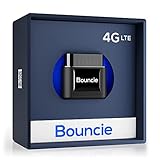
- Real-Time GPS Tracker Device for Vehicles — Ideal for personal use or fleet management, this car GPS tracker provides up-to-the-minute location updates. Our car tracking device also provides unlimited trip history, including a detailed route history
- Driving Insights — Our OBD tracker for cars monitors speed, acceleration, hard braking, idle time, and more. This versatile family and fleet GPS tracker for cars also helps improve road safety by sending alerts in response to unsafe driving practices
- Vehicle Health — Unlike other vehicle tracking devices, our car tracker device continuously monitors diagnostic engine data, alerting you to potential maintenance issues, so you can avoid downtime and keep fleet and family vehicles in peak condition
- Geo-Fencing & Accident Detection — Set up geo-fences to receive notifications when your vehicle enters or exits designated areas; Equipped with advanced sensors and software, this vehicle tracker device instantly detects impacts and sends SMS alerts
- Easy To Install & Low Monthly Subscription — Our OBD GPS tracker for vehicles plugs directly into OBD2 ports and works on most vehicles 1996 and newer; $9.65 monthly subscription required - no hidden activation or return fees - cancel anytime
2. Vehicle utilization
Use several activity measures where they fit: days used, trips, mileage, engine hours, and hours in service. Mileage is useful when the vehicle’s main purpose is transporting people or cargo. For stationary or equipment-intensive assignments, engine hours or time in service may describe its work better than distance traveled.
Set minimum-use expectations by mission before flagging a vehicle as underused. A low-mileage vehicle may still be needed for a critical or intermittent assignment. Use utilization to test whether the fleet is allocated appropriately, not as an automatic reason to dispose of a vehicle. DOE’s sustainable fleet principles emphasize mission fit in fleet decisions.
3. Vehicle miles traveled and route performance
Track total VMT and, when job or delivery outputs are recorded, miles per completed job, delivery, or service route. Route deviations can prompt a review of scheduling, trip consolidation, or routing, but context matters: an exception may reflect a changed assignment rather than inefficiency.
DOE recommends minimizing VMT and using telematics or GPS to improve scheduling and routing. See the DOE fleet management framework for its broader guidance on fleet goals and strategies.
Free tools Windows power users keep installed
One-click scans. No signup required.
Rank #2
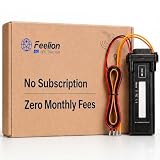
- [No Monthly Fees or Subscription Required] — Built-in 4G SIM included with no monthly fees, no activation fees, and no contracts. Enjoy full network coverage across the United States and Canada—simply install and start tracking right awa
- Real-Time GPS Tracking & Live Location Sharing — Get accurate real-time location updates as fast as every 20 seconds while the vehicle is in motion. Easily share live tracking access with family or friends through a secure link and set custom sharing durations anytime.
- Smart Security Alerts Built-in 3.7V 150mAh Li-ion backup battery (0.555Wh) supports power disconnection alerts if external power is removed.
- 180-Day Route History Playback — Review driving history, parking records, and travel routes directly in the app for up to 180 days.
- Easy Hardwired Installation — Connect the red wire to positive and the black wire to negative for normal operation. The orange ACC wire is optional and can be left unconnected if ignition monitoring is not needed. Compatible with 9V–90V powered vehicles and devices.
4. Idling
Measure idle events, idle duration, or idle time as a share of engine-on time. Choose one or more measures that your data system captures consistently, then investigate recurring patterns that appear avoidable. Account for legitimate work needs and temperature conditions rather than treating every idle event as waste.
DOE links excessive idling with fuel waste, emissions, and engine wear. The Alternative Fuels Data Center (AFDC) describes telematics data that can expose idle time and advises fleets to begin with priorities such as idle reduction or efficient routing. AFDC’s vehicle equipment guidance explains the role of data-collection devices.
5. Driver behavior
Monitor events relevant to your safety and efficiency goals, including speeding, harsh braking, rapid acceleration, and seatbelt use. Look for patterns by route, assignment, or time period so coaching can address a specific behavior or operating condition. A driver score is one input to review, not a complete assessment of safety or performance.
6. Maintenance cost and condition
Record repair and preventive-maintenance spending, diagnostic alerts, and service frequency at the vehicle level. Review costs in context: vehicle age, mission, and capital value can change what a given repair pattern means. Telematics can flag faults and maintenance needs, but an alert should lead to an appropriate service workflow rather than be treated as a diagnosis on its own.
Do these 3 things before closing this tab:
1Scan for outdated or missing drivers - takes under a minute2Clear out junk files and repair common Windows errors3Fix the driver behind crashes, sound loss and screen glitchesRank #3

- Peace of Mind in a Plug: This OBD GPS tracker for car is the simplest way to know your vehicle's location. Just plug it in and get instant, real-time tracking on your phone, covering you in over 100 countries. It’s the ultimate hidden gps tracker for car, giving you a silent guardian for your fleet, teen driver, or family car
- Your Invisible Co-Pilot: This undetectable gps tracker for car is a discreet, black device that hides in plain sight. No wires, no magnets, just plug-and-play secrecy. It’s the perfect car tracker device hidden from view, providing continuous, reliable monitoring for your most valuable assets without anyone knowing
- Smart Alerts That Keep You in Control: Go beyond simple location. Set custom geofences and receive instant alerts for arrivals, departures, and speeding. This gps tracker for vehicles transforms data into actionable insights, letting you manage your fleet or protect your teen driver with proactive, intelligent oversight
- Powerful Simplicity for Everyone: Manage multiple vehicles effortlessly from one intuitive app. Whether you're a fleet owner, a concerned parent, or managing the family cars, this vehicle tracker offers multi-account access. It’s the versatile gos tracker for vehicles that makes advanced tracking accessible to all
- 12 Months Subscription Free: No subscription fee, no activation fee. Enjoy full access to GPS tracking, trip history, GeoFence alerts, and vehicle monitoring for 12 months. Then choose $6.99/month or $69.99/year
7. Downtime and availability
Record time out of service and compare availability with scheduled operational need. Pair downtime with utilization and maintenance cost: a vehicle with low use may still be essential for a critical mission, while a frequently unavailable vehicle may be affecting service delivery. DOE includes downtime in annual vehicle reviews and replacement considerations.
8. Safety and incidents
Track collision events alongside relevant leading indicators such as speeding, seatbelt use, and harsh braking. Interpret trends against trip exposure and mission context; raw incident counts can mislead when vehicles have different amounts or types of work. Telematics may provide driver scorecards and collision notifications, as described in DOE’s federal fleets telematics guide.
9. Lifecycle cost and fleet right-sizing
Bring acquisition and operating costs together with maintenance spending, utilization, mission suitability, and replacement timing. The purpose is to maintain the number and types of vehicles needed to deliver service—not to minimize fleet size without regard to operational requirements.
DOE describes the U.S. Forest Service’s RScore method as one agency example for replacement evaluation. In the DOE account published January 14, 2026, an RScore of 15 or higher signals that a vehicle warrants evaluation for early replacement; the method combines maintenance-cost, age, and meter points. This is not an industrywide threshold. Read the DOE account of the Forest Service method before applying its approach to a different fleet.
What’s actually slowing this PC down?
Pick the symptom - the matching free tool is one click away.
Rank #4

- [No Subscriptions] – Avoid adding another subscription you might forget about. We are the only company that offers a car GPS tracker with with no subscriptions, activation or hidden fees ever.
- [1-Month Battery] – Real-time location tracking with instant alerts, customizable geofencing, and incredibly long battery life. For vehicles, personal items, and loved ones.
- [Effortless Setup] – Start tracking fast with our user-friendly mobile app. Designed for convenience, track a fleet of multiple GPS devices using a single screen – with just a few easy steps.
- [Unparalleled Support] – Our commitment to excellence extends to our customer service. Enjoy access to our dedicated support team, ensuring your questions and needs are addressed promptly.
- [Unbounded Tracking] - Works in 170+ countries including US, Canada and Mexico.
How to make fleet KPIs useful and fair
Set the goal and baseline first
Choose a fleet goal—such as reducing avoidable idle time or improving route efficiency—then select measures that can show progress toward it. Establish a baseline by vehicle and use consistent reporting periods. Compare vehicles in similar classes and missions; terrain, climate, vehicle condition, and cargo or passenger needs all affect interpretation. DOE recommends quantifiable targets and location-specific strategies in its fleet management framework.
Define rates and assign an action owner
For every rate, state its denominator and keep the definition consistent over time. Pair each KPI with a trend to review and a person or team responsible for acting on it. Depending on the measure, that action might be a maintenance review, route change, driver coaching, acquisition decision, or vehicle reallocation. A data point with no decision attached is not useful simply because it is available.
Check data quality and governance
Confirm that vehicle, fuel, maintenance, and telematics records are complete enough to support the comparison being made, and check how systems exchange data. DOE notes that telematics can automate mileage and fuel reporting; its federal guide also draws attention to cybersecurity and sensitive location and driver data. Before expanding data collection, establish who can access records and how those records will be used.
Independent reader supportYour contribution helps us test, update, and keep practical guides available for everyone.What telematics can measure—and how to choose a system
Depending on the vehicle, sensors, and system, telematics can collect or report fuel and energy use, mileage, utilization, idle time, driver events, diagnostic alerts, and collision notifications. Collection varies, so verify that a proposed system supports the vehicles and measures your fleet actually needs.
Best Value

- Premium GPS Tracker — The LandAirSea 54 GPS tracker provides accurate global location, real-time alerts, and geofencing. Easily attaches to vehicles, ATVs, golf carts, or other critical assets.
- Track Movements in Real-Time — Track and map (with Google Maps) in real-time on web-based software or our SilverCloud App. Location updates as fast as every 3 seconds with historical playback for up to 1 year.
- Powerful & Discreet — The motion-activated GPS tracker will sleep when not in motion for extended periods, preserving the battery life. The ultra-compact design and internal magnet create the ultimate discreet tracker.
- Lifetime Warranty — This GPS tracker is built to last. LandAirSea, a USA-based company and pioneer in GPS tracking offers a unconditional lifetime warranty that covers any manufacturing defects in the device encountered during normal use.
- Subscription Required — Affordable subscription plans are required for each device. Fees start as low as $9.95 a month for annual plans and $19.95 for monthly plans. No contracts, cancel anytime for a hassle-free experience.
AFDC advises fleets to identify priorities before selecting telematics KPIs: “To determine what telematics systems data to focus on, a fleet should identify its top priorities, such as idle reduction or efficient routing.” AFDC’s vehicle parts and equipment guidance also describes installed data-collection devices for tracking fuel economy, maintenance schedules, fleet performance, and utilization.
When comparing systems or practices, check:
- Which of your chosen metrics the system captures, and whether it captures them consistently.
- Compatibility with your vehicle types and sensors.
- Whether reporting is real-time or periodic, and whether that timing suits the decision.
- Integration with existing fleet software and the ability to export data.
- Privacy and cybersecurity controls for driver and location information.
- Implementation and ongoing costs, weighed against a defined measurement or workflow need.
- Whether the data feeds an actionable process, such as a maintenance ticket or coaching review.
DOE identifies Geotab, Samsara, and Verizon Connect as examples of platforms that can integrate with federal fleet management systems; that reference is not an endorsement or confirmation of current program availability. If considering an installed OBD-II fleet GPS tracker, verify vehicle compatibility, coverage, subscription requirements, and data export before buying.
How to interpret published fuel-saving figures
Published figures can help explain why a practice may be worth evaluating, but they are not forecasts for an individual fleet. AFDC summarizes a 2018 UC Davis Institute of Transportation Studies finding of a 6.6% average fuel-economy improvement from instantaneous or in-vehicle feedback; AFDC notes results can be greater when feedback is combined with other approaches. That is not a guaranteed fleet outcome.
AFDC also gives general guidance that properly inflated tires improve fuel economy by an average of 0.6% and by up to 3%, and that using the manufacturer-recommended motor-oil grade can improve fuel economy by 1%–2%. These are general guidance figures, not fleet-specific forecasts; the publication date for that guidance page is not stated. Consult AFDC’s efficient driving guidance for the feedback figures and related fuel-conservation information.
The Tool Desk
Outbyte PC Repair FREERepair Windows errors before they cause bigger problemsFix Now →Outbyte Driver Updater FREEFix the driver behind crashes, sound loss and screen glitchesFind Drivers →There is no universally applicable benchmark established for all nine metrics. Set targets from your fleet’s own baseline and compare vehicles doing similar work over consistent periods.
Quick Recap
Product prices and availability are accurate as of the date/time indicated and are subject to change. Any price and availability information displayed on Amazon at the time of purchase will apply.




