Free tools Windows power users keep installed
One-click scans. No signup required.
Gamification—using game-like mechanics in a non-game customer experience—can give people a reason to participate, explore products, or return. For an online business, the useful question is not whether a feature feels fun; it is whether it encourages a specific customer action that matters. Engagement alone does not prove higher revenue, retention, or customer value, and results depend on the design and audience.
How to choose a gamification idea
Start with the behavior you want to encourage, then select a mechanic that makes that action clearer or more rewarding. Examples of useful goals include finishing onboarding, discovering a relevant product, making a repeat purchase, or referring a customer. Set a baseline and track both participation and the business outcome; a rise in game activity is not enough if valuable activity does not follow.
A 2020 review analyzed 257 papers and identified 36 relevant studies; 29 of those 36 reported empirical evidence of significant influence on consumer engagement and online consumer decisions. That is a count within the authors’ selected studies, not a success rate that predicts what any particular store will achieve. A 2025 review likewise catalogued mechanics including rewards, challenges, points, badges, leaderboards, progress indicators, levels, and quizzes. Its counts show how often those mechanics appeared in the selected studies, not which works best.
| Mechanic | Selected-study appearances in the 2025 review |
|---|---|
| Rewards and incentives | 41 |
| Challenges | 29 |
| Points | 27 |
| Badges | 25 |
| Leaderboards | 23 |
| Progress indicators | 16 |
| Levels | 14 |
| Quizzes | 11 |
These figures are coded appearances in a research corpus, not efficacy rankings or estimates of adoption across businesses. Compare ideas by the customer effort and reward cost they require, how directly they connect to a useful action, and whether they depend on social participation.
Recommended Free Tools
#1 Best Overall

- A CHILDHOOD FAVORITE: The classic game of naval combat! Fun for the whole family, this Battleship board game is an exciting strategy game for kids, teens, and adults
- HUNT, HIT, SINK, WIN: Enjoy head-to-head naval battles! This easy to learn 2 player game is the ultimate search-and-destroy mission: call a shot and fire. Sink all of an opponent's ships to win
- 2 PORTABLE BATTLE CASES WITH STORAGE: Convenient and easy to take on the go, this edition makes a great travel game for kids. All the ships and pegs store neatly in the cases
- OPTION FOR ADVANCED PLAY: This fun family game for kids comes with a Salvo feature that lets advanced players launch multiple attacks
- FAMILY GAMES FOR KIDS AND ADULTS: Looking for fun family board games or travel games for kids and adults? The Battleship game is a great choice for Family Game Night, rainy days, and vacations
Eight gamification marketing ideas
1. Create a points-and-rewards loop
Award points for meaningful actions—such as completing a profile, purchasing, writing a review, or referring someone—and let customers redeem them for a defined benefit. Make the earning rules, point value, and redemption conditions easy to understand. Points and tangible rewards are common loyalty mechanics, but the right qualifying actions and economics depend on the business; avoid rewarding activity that brings no customer or business value.
2. Recognize milestones with badges
Use badges to recognize progress customers may care about: a first purchase, repeat purchase, product education, or a helpful community contribution. A badge should signal achievement or expertise, not merely decorate an account page.
In a randomized field experiment at one of Asia’s largest shopping malls, badging was associated with a 21.5% sales increase during the treatment period; leaderboarding produced a 22.5% increase and couponing a 31.7% increase. These are study-specific results from that mall, not forecasts for an online shop. The authors also found gamification effects remained significant relative to baseline in the post-treatment period while the coupon impact faded.
Rank #2
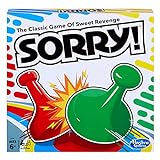
- GAME OF SWEET REVENGE: Enjoy classic Sorry! gameplay with this Sorry! board game for kids. It's an edge-of-your-seat race to home, so hurry up and get there first
- FIRST ONE HOME WINS: Who will be the first player to get all 3 of their pawns to the home space? But watch out! Players can get "sweet revenge" by sending each other's pawns back to the starting point
- SO MANY POSSIBILITIES: Slide, collide, and score to win the Sorry! game. This family game for kids and adults features so many possibilities depending on the card picked up and strategy chosen
- CLASSIC SORRY! GAMEPLAY: Remember playing the original Sorry! game as a kid? Bring back memories of playing the Sorry! game with family members and introduce it to a new generation
- FAMILY GAME NIGHT FAVORITE: A go-to game for family time or anytime indoor fun, the Sorry! game for kids is one of the best family games for game night
3. Show progress toward a goal
Use a progress bar or level to make a multi-step process visible, such as completing onboarding or reaching a loyalty tier. Show the next achievable step so customers know what to do. Progress indicators and levels are documented marketing mechanics, but the reviewed evidence does not establish a universal conversion lift from progress bars.
Quick wins for a faster PC:
Clear out junk files and repair common Windows errorsFree Scan →Scan for outdated or missing drivers - takes under a minuteDriver Scan →4. Run short, achievable challenges
Offer a time-bounded task tied to a useful action: explore a relevant product collection, complete a learning sequence, or return for a weekly activity. Keep the task feasible and explain what completion earns. Challenges and tasks are established mechanics; their value still depends on whether the requested activity serves the customer and your goal.
5. Use leaderboards selectively
Rankings can suit customers who already have a reason to compare progress, but public competition can also discourage people who start near the bottom or do not want to be ranked. Consider opt-in participation, small groups, teams, or friend-based rankings. A shopping-mall field experiment reported heterogeneous effects and described leaderboard participation as potentially self-reinforcing or self-banishing: some people may engage more, while others withdraw.
Rank #3
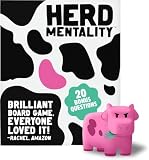
- Udderly hilarious board game for family and friends game nights. Fun for big groups of 4-20+ players
- Easy to learn, quick to play and endlessly repayable board game. This version comes with 20 extra questions
- Think the same to win the game. Flip over a question and guess what your family and friends are thinking
- If your answer is in the majority, you win cows. If you’re the odd one out, you’re stuck with the pink cow of doom
- One of the best board games for families, adults, teens and kids aged 10+. Perfect icebreaker game. Easy and fun for everyone! Perfect as a Thanksgiving or Christmas game
6. Use quizzes to guide product discovery
A short quiz can help customers narrow a category, configuration, or learning path. Ask only relevant questions and explain how the answers shape the recommendation. This can make discovery more useful, but the reviewed sources do not establish that quizzes improve sales in every product category.
7. Publish recurring trivia or mini-games
A weekly trivia prompt, product-knowledge game, or collection challenge can give customers a reason to return. Mastercard describes recurring game experiences, including trivia competitions and collect-and-win mechanics. Match the frequency to customer interest, and keep play connected to a useful experience rather than using it to distract from one.
Do these 3 things before closing this tab:
1Scan for outdated or missing drivers - takes under a minute2Clear out junk files and repair common Windows errors3Fix the driver behind crashes, sound loss and screen glitches8. Test a chance-based promotion carefully
A spin-to-win or scratch-card interaction can pair play with a discount or prize. State the rules clearly and present the prize and odds transparently. Industry examples and business analysis discuss these mechanics, but they do not establish that a particular promotion complies with the rules in your jurisdiction. Get jurisdiction-specific review before launching a chance-based offer.
Rank #4

- Timeless Gameplay: Experience the iconic Othello strategy game loved for generations, where every move can flip the board in your favor.
- Easy to Learn, Hard to Master: Simple rules make it accessible to beginners, while deep strategy keeps even experienced players challenged.
- Head-to-Head Competition: Designed specifically for two players, Othello offers quick, competitive matches that are never the same twice.
- Portable and Practical: Designed with a compact board and convenient slide‑out storage drawers on each player’s side, making setup, cleanup, and on‑the‑go play fast and effortless. Perfect for travel, family game nights, and organized storage.
- Family-Friendly Fun: Ideal for ages 8 and up, Othello encourages critical thinking, planning ahead, and friendly competition at home or on the go.
Measure whether the mechanic creates value
Track participation alongside the outcome the business actually values. Depending on the campaign, that could mean completed onboarding, qualified product discovery, repeat purchase, or referrals. Compare results with a suitable baseline or control where feasible, and look beyond clicks, time spent, or game completion.
A 2025 study summarized by the American Marketing Association used daily individual-level usage data from 18,952 users of a gamified market-research app. Its authors found that game rewards increased engagement beyond value rewards, but that very high game flow weakened the relationship between game engagement and value-added activity. In practical terms, a highly absorbing game can keep people playing without making them more likely to take the action that matters.
Protect trust and make participation clear
- Explain how points are earned, what rewards are available, and any relevant limits or expiry conditions.
- Make social competition optional where public rankings could exclude or discourage customers.
- If a campaign collects personal information, explain what is collected and how it will be used; provide appropriate user control and respect consent and applicable privacy requirements.
- For chance-based offers, publish clear terms and obtain a review for the relevant jurisdiction. The cited sources do not settle the legal requirements for sweepstakes, gambling, or promotional offers.
Mastercard’s industry guidance recommends defining objectives, making experiences recurring, and connecting game activity to conversion or feedback. Those are planning principles, not proof that any single mechanic will work for every audience.
Quick Recap
Sources and evidence
- Ho, Liu, and Wang, “Fun Shopping: A Randomized Field Experiment on Gamification,” Information Systems Research (2022 online; 2023 issue).
- “Gamification and online consumer decisions: Is the game over?”, Decision Support Systems (2020).
- “Gamification in marketing: a review of fifteen years of research and a future research agenda,” Internet Research (2026).
- American Marketing Association, “Driving Mobile App Engagement Through Gamification”, summarizing Paschmann, Bruno, van Heerde, Völckner, and Klein, “Driving Mobile App User Engagement Through Gamification,” Journal of Marketing Research 62(2), 249–273.
- Mastercard, “The Impact of Gamification on Loyalty Strategies” (published 2023; page updated 2026).
- Jacobides, Ma, Trantopoulos, and Vassalos, “The Business Value of Gamification,” California Management Review (2024).
Product prices and availability are accurate as of the date/time indicated and are subject to change. Any price and availability information displayed on Amazon at the time of purchase will apply.




