Recommended Free Tools
There is no headline formula that guarantees a blog post will go viral. But useful title patterns can make a post’s topic, audience, and payoff easier to understand—and give you stronger options to test. Below are 77 adaptable examples for personal-finance blogs, with the structure behind each and a note about what the article must deliver to earn the promise.
Treat “viral” as an aspiration, not a forecast. A title is only one part of performance: the usefulness of the article, its distribution, the audience, and the channel all matter.


How to use these blog-title formulas
Replace the bracketed idea in a pattern with the real subject and benefit of your article. Keep the promise specific enough to help a reader choose, but no stronger than the content can support. A headline about paying down debt, for example, should explain which approach it covers and avoid implying that one tactic works for every household.
- Match the reader: name the intended audience when it changes what the advice means.
- Make the payoff concrete: say what the reader will learn, compare, or be able to do.
- Deliver the promise: the post should answer the question or substantiate the claim in its title.
- Fit the channel: a clear search-oriented question and a curiosity-led social post can serve different purposes.
These are adaptable constructions, not independently proven click-generating formulas. BuzzSumo’s guide puts it plainly: “There is no magic formula to writing better headlines.” Its useful recommendation is to study the headline formats and phrases that resonate with your own readers (BuzzSumo, March 9, 2023).
#1 Best Overall

- 📗【Toddler Writing Practice】:This magic practice copybook set includes 1 addition and subtraction, 1 number, 1 fun picture, 1 letter, 1 pen, 1 handle and 10 refills. The kindergarten workbook is compact and lightweight, perfect for children to practice handwriting anytime, anywhere—at school, while traveling, or during play.(5.1inches x 7.4 inches)
- 📝【Rich Content】:Our magic writing book for kids contains 26 English letters, daily words, 0-100 numbers, simple addition and subtraction. bright colors and cute shapes, which can improve children's cognition of letters, numbers. — Perfect for preschool workbooks age 3-4.
- ✍【Handwriting Practice for Kids 5-7】: It is an essential learning activity for pre-school, kindergarten, home schooling. Crafted from thick, tear-resistant cardboard with safe rounded edges and top-spiral binding, kids grooved learning books are easy to flip and lay flat. Great for both left- and right-handed children. The unique grooved design guides young learners to trace letters, numbers, and lines correctly, helping them build writing memory and easily master proper stroke order and pencil control.
- 📚【Kindergarten Classroom Must Haves】:The disappearing ink vanishes in about 5 minutes after writing, allowing kids to practice repeatedly without wasting paper. Since the ink reacts chemically with oxygen, the fading time may vary from 5 minutes to several hours depending on temperature, humidity, and air circulation. Childrens books ages 3-5 ensure lots of fun practice!
- 💝【Perfect Gift for Early Education】:Reusable grooved handwriting workbooks will be the perfect gift for your children ages 3-8 years old on birthday, christmas, children's day, new year or back-to-school , etc. Inspire a love for learning while building essential writing skills — approved by parents and loved by kids! Order Now.
Numbered list titles: promise a useful set
A number signals a bounded collection. Use it when the article genuinely contains that many distinct, useful items; do not inflate a short list to make the headline look bigger.
- Formula: [Number] [practical ideas] to [credible outcome]. Example: “9 Ways to Lower Your Grocery Bill Without Skipping Nutritious Food.” The number sets scope and the benefit is specific; the post should include nine distinct ideas and explain any trade-offs.
- Formula: [Number] steps to [complete a task]. Example: “6 Steps to Build a First Emergency Fund.” It implies a sequence, so the article should order the steps and clarify that a useful target depends on circumstances.
- Formula: [Number] mistakes that can [cause a problem]. Example: “8 Credit-Card Mistakes That Can Make a Balance Harder to Pay Off.” The risk is clear without promising that every mistake has the same effect; explain the conditions behind each one.
- Formula: [Number] questions to ask before [decision]. Example: “7 Questions to Ask Before Choosing a Student Loan.” It offers a decision aid; cover the questions a borrower can actually use and distinguish loan types where needed.
- Formula: [Number] ways to compare [options]. Example: “5 Ways to Compare High-Yield Savings Accounts.” It frames the article as a comparison guide; explain relevant differences and keep rates and terms date-qualified if they appear.
- Formula: [Number] signs [situation] may need attention. Example: “6 Signs Your Monthly Budget Needs a Reset.” “May” avoids treating a sign as a diagnosis; offer practical next steps rather than judgment.
- Formula: [Number] expenses to review when [life change]. Example: “10 Expenses to Review After Moving to a New City.” It links a familiar event to a concrete task; include expenses that can realistically change after a move.
- Formula: [Number] money habits to try for [time period]. Example: “4 Weekly Money Habits to Try for a Month.” The trial period makes the idea actionable; present it as an experiment, not a guaranteed route to savings.
- Formula: [Number] myths about [topic], explained. Example: “7 Retirement-Saving Myths, Explained.” The title promises correction, so distinguish a genuine misconception from a reasonable difference in strategy.
- Formula: [Number] examples of [document or plan]. Example: “12 Sample Budget Categories for Different Household Needs.” It promises examples rather than one universal template; show how readers can adapt them.
How-to titles: promise a task and a path
How-to headlines work best when the task is narrow enough to answer. BuzzSumo recommends instructive headlines that prompt readers to take action; the article still needs a credible, complete path.
- Formula: How to [task] without [common obstacle]. Example: “How to Start Saving When Your Paycheck Is Already Spoken For.” The obstacle makes the problem recognizable; offer realistic first moves and acknowledge when expenses leave little flexibility.
- Formula: How to [task] in [defined situation]. Example: “How to Make a Budget With Irregular Income.” The situation differentiates the guide; explain how to plan around variability instead of implying income can be made predictable.
- Formula: How to [task] step by step. Example: “How to Read a Credit-Card Statement Step by Step.” “Step by step” signals instruction; walk through the statement’s actual parts and avoid assuming every issuer uses the same layout.
- Formula: How to choose [option] for [need]. Example: “How to Choose a Savings Account for Your Emergency Fund.” It connects selection criteria to a purpose; discuss access, terms, and other relevant considerations without naming a universal best account.
- Formula: How to prepare for [financial event]. Example: “How to Prepare Your Finances for Parental Leave.” The event defines the task; cover planning questions and qualify advice by employer benefits and local rules.
- Formula: How to organize [financial information] before [event]. Example: “How to Organize Your Documents Before Meeting a Tax Preparer.” It promises preparation rather than tax outcomes; make clear which records may be relevant and that needs vary.
- Formula: How to [task] when [constraint]. Example: “How to Save for a Car While Paying Off Other Debt.” It speaks to competing goals; describe trade-offs and avoid prescribing a single order for every reader.
- Formula: How to check whether [financial choice] fits. Example: “How to Check Whether a Subscription Still Fits Your Budget.” The verb suggests a review process; provide a way to weigh cost and use, not a blanket instruction to cancel.
- Formula: How to make [process] easier with [tool or routine]. Example: “How to Make Bill Payments Easier With a Monthly Calendar.” It offers a practical mechanism; explain setup and note that reminders do not replace checking balances and due dates.
- Formula: How to recover or respond after [setback]. Example: “How to Get Back on Track After an Unexpected Expense.” It offers a next step without blame; include options for different levels of financial strain.
Question titles: answer what a reader actually asks
A question headline can match a reader’s wording, but the post must answer it directly. If the truthful answer is “it depends,” explain which factors matter rather than hiding the answer behind a generic introduction.
Rank #2
- Formula: Is [option] right for [situation]? Example: “Is a High-Yield Savings Account Right for Your Emergency Fund?” The question invites evaluation; define the features and circumstances that affect the choice.
- Formula: How much [resource] do I need for [goal]? Example: “How Much Should You Keep in an Emergency Fund?” It mirrors a common planning question; explain why a target varies instead of presenting one figure as universal.
- Formula: What happens if [financial event]? Example: “What Happens If You Miss a Credit-Card Payment?” It names a concrete concern; distinguish possible consequences and avoid implying every issuer or account responds identically.
- Formula: When should I [take action]? Example: “When Should You Revisit Your Monthly Budget?” It promises timing guidance; give useful triggers and distinguish routine review from urgent changes.
- Formula: Can I [goal] while [constraint]? Example: “Can You Save for Retirement While Paying Off Student Loans?” It surfaces a trade-off; discuss factors that affect priorities without declaring one answer for all borrowers.
- Formula: What is the difference between [A] and [B]? Example: “What’s the Difference Between a Debit Card and a Credit Card?” The comparison is explicit; explain how each works and where protections or costs can differ.
- Formula: Why did [financial result] happen? Example: “Why Did My Take-Home Pay Change This Month?” It meets a diagnostic need; cover plausible causes and tell readers where to verify their own payroll details.
- Formula: Should I [decision] before [other decision]? Example: “Should You Build Savings Before Making Extra Debt Payments?” It frames sequencing; explain the considerations that change the answer and avoid universal financial directives.
- Formula: What should I do about [problem]? Example: “What Should You Do If a Bill Is Due Before Payday?” It is direct and urgent; prioritize realistic options and identify any risks or fees that readers should check.
- Formula: Does [action] affect [outcome]? Example: “Does Closing a Credit Card Affect Your Credit?” It promises a focused explanation; describe relevant factors and avoid reducing a complex assessment to a guaranteed score change.
Benefit-led titles: put the reader’s outcome first
A benefit makes a title useful at a glance. Keep it credible: “help you understand” or “ways to compare” can be more accurate than claiming an article will fix someone’s finances.
Free tools Windows power users keep installed
One-click scans. No signup required.
- Formula: [Action] to help [audience] [benefit]. Example: “A Simple Bill Calendar to Help Busy Parents Avoid Late-Payment Surprises.” The audience and use are visible; show how to set up the calendar and avoid promising that it prevents every missed payment.
- Formula: [Resource] that makes [task] easier. Example: “A One-Page Checklist for Reviewing Your Monthly Spending.” It offers a usable artifact; include the checklist and explain how to adapt it.
- Formula: Understand [topic] before [decision]. Example: “Understand Your Mortgage Estimate Before Comparing Lenders.” It positions the post as preparation; explain terms accurately and make clear that a guide is not a personalized loan offer.
- Formula: [Number] ways to make [task] more manageable. Example: “5 Ways to Make a Big Annual Bill Easier to Plan For.” “Manageable” is a modest benefit; offer methods and note that not every method suits every cash flow.
- Formula: A guide to [benefit] through [topic]. Example: “A Guide to Understanding the Costs of Owning a Pet.” It connects information to planning; account for ongoing and less predictable expenses without suggesting one fixed total.
- Formula: [Action] for a clearer view of [financial situation]. Example: “Track These Three Numbers for a Clearer View of Your Cash Flow.” It promises visibility, not a specific financial outcome; define the numbers and how to use them.
- Formula: [Topic] explained in plain language. Example: “Compound Interest Explained With Everyday Savings Examples.” It promises accessibility; explain the concept correctly and label examples as illustrations, not forecasts.
- Formula: Get ready for [event] with [planning action]. Example: “Get Ready for Tax Season With a Year-Round Records Routine.” The benefit is preparedness; explain the routine and qualify document guidance by circumstances.
- Formula: A practical way to [goal] when [constraint]. Example: “A Practical Way to Plan Savings When Your Income Changes Month to Month.” It names the constraint and offers a method; explain its limits and avoid implying it creates income stability.
Audience-specific titles: name who the advice serves
Audience labels are useful when the reader’s circumstances change the advice. Avoid using a group name as decoration: make the content meaningfully relevant to that group.
- Formula: [Financial task] for [life stage]. Example: “A First-Budget Guide for Recent Graduates.” The life stage clarifies context; cover likely starting questions without assuming all graduates have the same income or obligations.
- Formula: [Benefit] for [occupation or work pattern]. Example: “A Cash-Flow Routine for Freelancers With Uneven Invoices.” It speaks to irregular payments; provide a routine that addresses timing rather than assuming predictable monthly income.
- Formula: [Decision guide] for [household type]. Example: “Choosing a Shared Budgeting System for Couples.” The audience signals joint decision-making; discuss communication and options without prescribing how every couple should combine money.
- Formula: [Task] for [specific reader situation]. Example: “How Caregivers Can Keep Track of Shared Household Costs.” The reader’s role shapes the problem; distinguish practical tracking from legal or tax advice if those issues arise.
- Formula: [Topic] for [reader at a starting point]. Example: “Investing Terms to Know Before You Open Your First Account.” It promises an entry point; define terms carefully and avoid implying that opening an account is right for everyone.
- Formula: [Plan] for [audience with a constraint]. Example: “A Debt-Tracking Plan for People Juggling Several Due Dates.” It identifies a concrete need; the plan should show a tracking method and avoid claiming it changes repayment terms.
- Formula: [Questions or checks] for [audience] before [event]. Example: “Questions to Ask About Benefits Before Accepting a Job Offer.” It offers a decision aid; explain that benefits vary by employer and jurisdiction.
- Formula: [Financial topic] for [household circumstance]. Example: “Saving for Home Repairs as a First-Time Homeowner.” It puts the reader’s situation up front; distinguish planning guidance from a prediction of repair costs.
- Formula: [Resource] for [audience’s recurring task]. Example: “A Quarterly Money Check-In for Couples With Shared Expenses.” The cadence and audience are explicit; provide a practical agenda and let readers adapt it.
Comparison titles: help readers choose between options
Comparison headlines attract readers who are already deciding. Name the options and compare them on criteria that actually matter; do not declare a winner unless the article defines the reader and conditions for that verdict.
Rank #3
- Formula: [Option A] vs. [Option B]: [decision criterion]. Example: “Snowball vs. Avalanche Debt Repayment: How the Approaches Differ.” It sets up a real comparison; explain each method and the trade-offs without promising a universal best choice.
- Formula: [Option A] or [Option B] for [goal]? Example: “Pay Down Debt or Build Savings First?” It captures a sequencing decision; discuss the factors that can shift priorities.
- Formula: [Product A] vs. [Product B] for [use]. Example: “Checking vs. Savings Accounts for Everyday Money.” It narrows the comparison to a purpose; explain access and account functions rather than treating the products as interchangeable.
- Formula: Compare [options] by [criteria]. Example: “Compare Budgeting Methods by Setup Time, Flexibility, and Detail.” It previews a decision framework; use those criteria consistently and explain what they do not capture.
- Formula: [Option] compared with [alternative]: what changes? Example: “Renting vs. Buying: Which Costs Belong in the Comparison?” It focuses on the calculation rather than a simplistic verdict; account for relevant costs and assumptions.
- Formula: Which [option] fits [reader or use]? Example: “Which Savings Goal Should You Fund First?” It promises a prioritization framework; explain how urgency, resources, and personal goals affect the answer.
- Formula: [Two plans or choices] compared on [specific issue]. Example: “Two Ways to Split Household Bills, Compared.” The title is precise about scope; describe both approaches fairly and name their trade-offs.
- Formula: [Common choice] vs. [less obvious alternative]: when each makes sense. Example: “Automatic Transfers vs. Manual Savings: When Each Can Work.” It avoids a forced winner; explain the circumstances that make each approach practical.
- Formula: [Option A] and [Option B]: costs, features, and fit. Example: “Fixed-Rate and Variable-Rate Loans: Costs, Features, and Fit.” It previews distinct comparison dimensions; define terms and qualify any examples by loan terms and date.
Data- and date-led titles: show the evidence’s scope
Numbers and dates can make a title concrete, but only when they describe the article’s actual evidence. State the year of the data or findings—not a year chosen merely to make an evergreen post look current.
- Formula: [Number] findings about [topic] from [year]. Example: “5 Findings About Household Saving From a 2025 Survey.” The date frames the evidence; identify the survey, sample, and what it can and cannot establish.
- Formula: What [named dataset] says about [topic]. Example: “What a Household-Spending Survey Says About Rising Grocery Costs.” It puts the source ahead of the conclusion; describe the dataset’s scope and avoid generalizing beyond it.
- Formula: [Topic] by the numbers: [defined measure]. Example: “Credit-Card Balances by the Numbers: What the Measure Does—and Doesn’t—Show.” It signals data interpretation; define the measure, period, and population.
- Formula: [Year] guide to [topic with changing details]. Example: “2026 Guide to Checking Your Workplace Benefits.” A year can signal a time-specific guide; verify that the details reflect that year and explain what may vary by employer or location.
- Formula: [Number] takeaways from [named report or survey]. Example: “4 Takeaways From a New Survey on Emergency Savings.” It promises a concise interpretation; link or identify the source and distinguish its findings from broader facts.
- Formula: How [measure] changed between [dates]. Example: “How Average Rent Changed Between 2020 and 2025.” The time range gives a testable scope; specify the geography, measure, and data source in the article.
- Formula: [Topic] in [year]: what has changed? Example: “Student-Aid Forms in 2026: What Applicants Should Check.” It promises an update; confirm the information for the named year and point readers to authoritative current guidance where appropriate.
- Formula: [Number] lessons from [specific data source]. Example: “3 Lessons From a City’s Annual Cost-of-Living Report.” The limited number implies synthesis; identify the city and avoid presenting local findings as national patterns.
Case-study titles: make the example’s limits visible
A case study is most useful when readers can see what happened, to whom, and under what conditions. Do not imply that one person’s result predicts what another reader will achieve.
- Formula: How [person or household] approached [challenge]. Example: “How One Household Organized Bills After a Move.” It promises a real-world process; use a genuine, accurately represented example and protect privacy as needed.
- Formula: [Starting point] to [outcome]: one case study. Example: “From Scattered Receipts to a Monthly System: One Freelancer’s Case Study.” The before-and-after makes the story legible; describe the actual process and avoid suggesting the result is typical.
- Formula: What [case] can teach about [topic]. Example: “What One Family’s Emergency-Fund Plan Can Teach About Flexibility.” It offers lessons rather than a universal rule; separate transferable ideas from details unique to that family.
- Formula: [Person or household] tried [approach] for [period]: what happened. Example: “A Couple Tried a Weekly Money Check-In for Three Months: What They Learned.” The defined period and outcome invite scrutiny; report what was observed and do not overstate causation.
- Formula: Inside [specific budgeting or planning method]. Example: “Inside a Monthly Budget Built Around Variable Paychecks.” The title promises a worked example; show the assumptions and clarify that readers will need to adapt the method.
Curiosity and direct-action titles: invite a click without hiding the point
Curiosity can make a subject feel timely or surprising, but withholding essential information can frustrate readers. A good hook names enough of the subject for the right reader to judge whether the post is relevant.
- Formula: [Specific subject] and what it means for [reader]. Example: “A Change to Your Benefits Statement—and What to Check Next.” It creates interest while disclosing the subject; the article must identify the change and explain a useful next step.
- Formula: The overlooked [detail] in [financial task]. Example: “The Often-Overlooked Cost in a Monthly Car Budget.” The hook signals a detail readers may miss; identify it promptly and support the claim rather than manufacturing surprise.
- Formula: Try [specific action] to [specific result]. Example: “Try a Payday Checklist to Keep Upcoming Bills in View.” The imperative makes the next move clear; describe the checklist and present the result as a practical aim, not a guarantee.
- Formula: Use [tool or habit] to [task]. Example: “Use a Spending Log to Spot Patterns in Your Monthly Costs.” The action is concrete; explain what to record and how to interpret patterns without treating correlation as cause.
- Formula: Choose [option] based on [reader priority]. Example: “Choose a Budgeting Method Based on How Much Detail You Want.” It turns a broad choice into a criterion; explain the options and their trade-offs.
- Formula: Before you [action], check [specific factor]. Example: “Before You Co-Sign a Loan, Check What You Could Be Responsible For.” The warning is specific and consequential; explain obligations accurately and direct readers to the relevant loan documents and qualified advice where needed.
- Formula: One thing to know about [topic] before [decision]. Example: “One Thing to Know About Introductory Rates Before Choosing a Card.” The narrow promise can be compelling; make the key detail genuinely important and cover other material terms in the article.
How to choose between two title drafts
When two headlines both seem plausible, compare them against the article and its intended reader rather than choosing the more dramatic phrasing.
- Audience: Does the title help the intended reader recognize that the post is for them?
- Clarity: Can someone tell what the article covers and what they will get from it?
- Accuracy: Can the post deliver every implied number, result, comparison, or answer?
- Search intent: Does the wording resemble the question or task the article actually addresses?
- Channel: Is the title suitable for the context where readers will encounter it?
- Evidence: Are time-sensitive claims, data, and results clearly tied to their source and scope?
Draft several distinct versions, then test them with the actual audience and channel when you have a meaningful way to do so. Do not treat social sharing as a substitute measure for search visits, pageviews, leads, or revenue.
What headline research can—and cannot—tell you
Headline research is useful as a source of patterns, not as a promise of future performance. BuzzSumo’s 2017 analysis covered 100 million headlines published from March 1 through May 10, 2017, and examined engagement on Facebook and Twitter. Its report notes that the sample was dominated by major publishers and consumer content, so it is historical, platform-specific context—not a current universal study of blog-title effectiveness (BuzzSumo, June 26, 2017).
Best Value
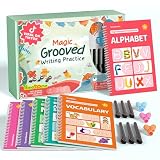
- Designed for Ages 4–8 The magic groove writing books help preschoolers build a strong early writing foundation. The set includes 6 copybooks (Numbers, Addition/Subtraction, Letters, Phrases, and 2 Drawing Books), 3 pen grips, and 6 pens —everything kids need to start learning. The content fits ages 3–8, guiding children from basic strokes to letters, numbers, and simple math step-by-step
- 3D Groove Design & Premium Quality Our handwriting books feature an upgraded 3D deep groove design that helps children trace letters and numbers more accurately—no more “slipping off the line” like many other shallow-groove books. The pages are thick, durable, and not easy to smudge, and the silicone pen holder is 100% child-safe and comfortable. Clear, high-quality printing ensures long-term use and a smooth learning experience
- Disappearing Ink for Repeated Practice The reusable handwriting workbook includes magic disappearing-ink refills that fade automatically within 20–30 minutes, allowing endless practice without buying new workbooks. The soft fiber pen tip is gentle on the page—won’t scratch or tear the paper, even for younger children
- Essential for Early Learning These grooved writing books help children master letters, numbers, and basic math, the core foundations of preschool education. The included drawing books keep kids engaged and stimulate creativity, making handwriting practice more fun and less repetitive. Perfect for improving pencil control, writing posture, and hand-eye coordination
- The Perfect Gift for Kids The TIME X magic grooved writing practice set is an ideal gift for children ages 4–8. It not only improves handwriting but also teaches the correct pencil grip with the included silicone aids. Great for Christmas, birthdays, New Year, or back-to-school gifts. If you have any questions, feel free to contact us—we reply within 24 hours
CoSchedule’s 2025 update describes 1,000 popular headlines it had seen and warns that content quality, author influence, promotion, network, and audience all affect outcomes. It specifically says the data do not indicate pageviews or profitable customer action. CoSchedule also notes, “Every blog’s audience is different, and some audiences may be more likely to share than others” (CoSchedule, updated February 4, 2025). These findings can help generate options, but they do not establish that a formula causes a post to go viral.
For additional formula ideas, see CoSchedule’s headline formulas and its examples for different content types. HubSpot’s current headline guide reports findings about word choices and bracketed clarifications, but without enough study-method detail to treat those figures as universal rules; consider them HubSpot-reported findings, not a guarantee (HubSpot, updated July 14, 2026).
Quick Recap
Product prices and availability are accurate as of the date/time indicated and are subject to change. Any price and availability information displayed on Amazon at the time of purchase will apply.




