The Tool Desk
Outbyte Driver Updater FREEFix the driver behind crashes, sound loss and screen glitchesFind Drivers →Outbyte PC Repair FREERepair Windows errors before they cause bigger problemsFix Now →The perception that YouTube compresses live streams more harshly than uploaded videos comes from real differences in how the platforms handle each format, but the truth is more nuanced than a simple yes or no. Understanding the difference prevents you from making the wrong choice based on a misunderstanding.
YouTube’s compression system starts with the same codec for both: H.264 video. The software that encodes your video, the bitrates available, and the adaptive quality levels YouTube serves to different viewers all follow the same technical foundation. Where live and uploaded diverge is in the pipeline and the guarantees YouTube can make about playback.
For uploaded videos, you send the file once, and YouTube processes it. The platform re-encodes the upload into multiple bitrate variants. A 1080p upload at 8 Mbps might be transcoded into versions at 5 Mbps, 3 Mbps, 1 Mbps, and 500 kbps. YouTube generates these variants before the video is published. The playback delivery is optimized: YouTube picks the right variant based on the viewer’s connection speed and device. This happens off-line, meaning YouTube can spend whatever time and processing power it needs to do the best job.
Live streams are different in a critical way: there’s no time to re-encode. The stream goes from your encoder directly through YouTube’s ingest servers to viewers. YouTube can’t wait for processing to finish. What comes in must go out, in real time. This constraint shapes everything. YouTube does apply some real-time optimization, but the starting point is what your encoder sends. If you send 4 Mbps, YouTube works with that 4 Mbps bitstream. If you send 6 Mbps, viewers get a stream derived from 6 Mbps. There’s no offline re-encoding step to improve quality.
Quick wins for a faster PC:
Scan for outdated or missing drivers - takes under a minuteDriver Scan →Clear out junk files and repair common Windows errorsFree Scan →#1 Best Overall

- 【1080P 60FPS Video Capture Card】 This HDMI game capture card is based on USB3.0 high speed transmission port, input resolution up to 4K@30HZ, output resolution up to 2K@30Hz or 1920×1080@60Hz. Type c and USB interface can meet most of the devices in daily life. Easily meet the online capture, real-time recording, online meetings, live gaming and other functions, so you have a better visual enjoyment. Note: For capture use only; requires capture software to function and is not intended for direct screen casting to a monitor or TV
- 【Ultra Low Latency Screen Sharing】 HDMI capture card is made of good quality aluminum alloy with strong heat dissipation, allowing you to enjoy ultra low latency while live gaming or video recording or live streaming, avoiding blue screens and lag. This HDMI to USBC capture card supports easy recording of good quality audio or HD video and transferring it to your computer or streaming platform, allowing you to record 60 fps HD video directly on your hard drive and real-time preview
- 【Plug and Play, Easy to Carry】 This HDMI 1080P video capture card does not require any additional drivers or external power supply, just plug and play for fast capture. The capture card is small and lightweight, so you can put it in your bag for emergencies, making it very portable for outdoor live streaming. It's also a great way to share content in game recording, video conference, video recorder and online teaching
- 【Wide Compatibility USB Capture Card】 Easily streams to Facebook, Youtube or Twitch. With the connection, this HDMI to USB C/3.0 video capture devices can be working on several Operating Systems and various software: Windows 7/ 8/ 10, Mac OS or above, Linux, Android, Laptop, Xbox One, PS3/PS4/PS5, Camera, DVDs, Set Top Box, Webcame, DSLR, Switch/Switch 2, TV BOX, HDTV, Potplayer/VLC, ZOOM, OBS Studio etc.
- 【Package Content & Note】 1x HD Audio Capture Card , 1x USB 3.0 to USB C Adapter (A-side 3.0, B-side 2.0), 1x user manual. Please note that you need to restart the OBS Studio software after the audio setup is complete, otherwise it will result in no sound output. When using an adapter, if the device is recognized as USB 2.0, try using the other side with the USB-C port. Simply flip the capture card and reconnect it to be recognized as USB 3.0
This is the real source of the perception. If you upload a video at 8 Mbps and YouTube re-encodes it with unlimited time and CPU, it can produce cleaner results than a live stream where the bitrate goes straight through. But this isn’t YouTube compressing the live stream more. It’s YouTube having fewer tools available because it doesn’t have time to process.
The practical implication is straightforward: send a higher bitrate for live streams than you might for uploads, because your encoder’s output is closer to what viewers see. For 1080p30 (1080 pixels at 30 frames per second), a typical upload might be 4 Mbps. A live stream of the same content should probably be 5 to 6 Mbps to account for the lack of offline re-encoding. For 1080p60 (60 frames per second), that scales to 6 to 8 Mbps for a live stream.
These numbers aren’t maximums. YouTube doesn’t have a bitrate cap for live streams. You can send 10 Mbps, 15 Mbps, or higher. What limits you is your upload bandwidth, your encoder’s settings, and your bitrate allocation strategy. Many broadcasters use adaptive bitrate, where the encoder detects network congestion and reduces the bitrate temporarily, then increases it when the connection is stable. This prevents the stream from dropping entirely if your connection gets slower.
Rank #2
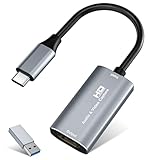
- 【4K HDMI Input, 2K@30Hz Recording】Powered by a true USB 3.0 high-speed interface, the capture card supports up to 4K@30Hz HDMI input and records at 2K@30Hz or 1080P@60Hz. Perfect for gamers, streamers, and professionals who need crisp, smooth video for live streaming, gameplay recording, or online meetings.
- 【Ultra Low Latency Screen Sharing】Built with a premium aluminum alloy shell and advanced chipset for stable heat dissipation, ensuring ultra-low latency transmission. Capture high-quality video and dual-channel audio in real time—no lag, no frame drop—ideal for Twitch, YouTube, or OBS streaming.
- 【Easy Plug and Play, Compact & Portable】No driver or external power required—just plug and play via USB 3.0 or Type-C connection to your Windows or macOS computer. Lightweight and compact design makes it easy to carry for outdoor streaming, live shows, or mobile recording setups.
- 【Wide Compatibility & Multi-Device Support】Compatible with Windows 7 8 10 11, macOS, Linux,Android and supports most popular software such as OBS, Zoom, VLC, Twitch Studio, and more. Works seamlessly with PS4, PS5, Xbox, Switch, DSLR cameras, TV boxes, and other HDMI-output devices for streaming to YouTube, Twitch, etc.
- 【What You Get】Includes: HDMI Capture Card, USB 3.0 to USB-C Adapter, User Manual. Tips: Make sure your tablet’s OTG function is enabled before connecting. Test your HDMI device with a monitor first to confirm video and audio output, then connect to the Video Capture Card for recording.
The codec handling is where YouTube applies some uniformity. Both uploaded videos and live streams are delivered using H.264 at the ingest level. YouTube transcodes both into variants for playback. The difference is timing: uploads are transcoded off-line, live streams are optimized in real-time. But the viewer experience can be similar if both are sent at appropriate bitrates.
One nuance specific to live streams is the latency trade-off. YouTube live streams have a delay between what the broadcaster sends and what viewers see. This delay is typically 10 to 30 seconds, depending on the broadcast settings and network conditions. Uploaded videos have no such delay because the entire file is available before playback starts. This isn’t a compression issue, but it affects the perceived quality. A live stream with 20 seconds of latency might appear slightly softer than the same bitstream without latency, purely because there’s more time for compression artifacts to show during real-time transmission.
Stream quality also depends on your encoding settings upstream. If you’re using software like OBS or FFmpeg, your encoder settings determine the quality of what goes into YouTube. YouTube can’t improve what it receives. A poorly encoded 8 Mbps stream looks worse than a well-encoded 4 Mbps stream. The bitrate alone doesn’t tell the story. The preset you use (veryfast, fast, medium, slow), the profile (baseline, main, high), and the look-ahead buffer all affect quality per bitrate.
Rank #3

- 【1080P HD High Quality】Capture resolution up to 1080p for video source and it is ideal for all HDMI devices such as PS4, PS3, Xbox One, Xbox 360, Wii U, DVDs, DSLR, Camera, Security Camera and set top box. Note: Video input supports 4K30/60Hz and 1080p120/144Hz. Does not support 4K120Hz/144Hz. Output supports up to 2K30Hz.
- 【Plug and Play】No driver or external power supply required, true PnP. Once plugged in, the device is identified automatically as a webcam. Detect input and adjust output automatically. Won't occupy CPU, optional audio capture. No freeze with correct setting.
- 【Compatible with Multiple Systems】suitable for Windows and Mac OS. High speed USB 3.0 technology and superior low latency technology makes it easier for you to transmit live streaming to Twitch, Youtube, Facebook, Twitter, OBS, Potplayer and VLC.
- 【HDMI LOOP-OUT】Based on the high-speed USB 3.0 technology, it can capture one single channel HD HDMI video signal. There is no delay when you are playing game live.
- 【Support Mic-in for Commentary】Rybozen capture card has microphone input and you can use it to add external commentary when playing a game. Please note: it only accepts 3.5mm TRS standard microphone headset.
For looping streams specifically, you have the advantage of knowing your content in advance. A video that loops the same content repeatedly is a live stream in terms of the YouTube protocol, but the content is static. This means you can optimize your encoder settings for that specific content. You’re not balancing encoder settings for varied live content. You can test different bitrates and presets to find the sweet spot for quality versus bandwidth. Then that setting runs the same way continuously.
Keep a Prerecorded YouTube Stream Live Without Your PC
StreamNeo lets you upload a prerecorded video and paste your YouTube stream key, so it can run as an always-on YouTube Live broadcast from the cloud while your PC stays off.
Do these 3 things before closing this tab:
1Fix the driver behind crashes, sound loss and screen glitches2Repair Windows errors before they cause bigger problems3Scan for outdated or missing drivers - takes under a minuteStream health is checked every 30 seconds, and dropped streams restart automatically. That makes StreamNeo a practical fit for a looping channel that needs to remain live without leaving a local computer or encoder running.
Rank #4

- [Enhanced 4K-1080P Video Capture Experience] Capture the Magic: Elevate your video recordings to new heights with our upgraded anti-static 1080P Video Capture Card. Immerse yourself in stunning visuals, supporting HDMI input at 4K 60FPS and USB output for capturing in 1080P, complete with rich stereo sound. Enjoy crystal-clear video recordings, dynamic gaming live streams, and professional conference broadcasts. Note: HDMI resolution: Max input can be 3840×2160@30Hz / Video output resolution: Max output can be 1920×1080@30Hz
- [Seamless Real-Time Preview] Stay in the Moment: Our advanced ultra-low latency technology ensures seamless real-time transmission of video streams. Experience instant, lag-free previews, allowing you to capture every detail precisely. Effortlessly record video directly to your hard disk, all without compromising on quality or introducing any delays.
- [Versatility and Broad Compatibility] Your Creative Hub: Connect your DSLR, camcorder, or action camera to a wide range of operating systems, including Windows, MacOS, and Linux. Unlock a world of possibilities with real-time streaming to popular platforms like Twitch, Youtube, OBS, Zoom, Potplayer, and VLC, giving you the tools to share your content effortlessly.
- [Effortless Plug and Play] Simplicity Redefined: Say goodbye to complex installations. Our plug-and-play design eliminates the need for drivers or external power supplies. Seamlessly integrate high-definition acquisition into various scenarios, whether it's educational recordings, immersive gaming, precise medical imaging, captivating live streams, or professional broadcasting.
- [Seize Every Detail with Precision] Unleash your creativity and attention to detail with our video capture card. Capture every nuance, every color, and every moment with precision, thanks to the enhanced capabilities of our technology. Whether you're a content creator, a gamer, or a professional, our capture card empowers you to seize the finest elements and bring them to life in your recordings and live streams.
You can test the workflow with a free 24-hour 720p/30fps trial, and no card is required at signup.
The infrastructure handling the stream also matters. YouTube’s ingest servers are global. The region you send your stream to can affect the processing load and the quality of the adaptive bitrate variants. Using an ingest server close to your physical location or your network exit point typically results in lower latency and fewer transmission errors. These errors can cascade into compression artifacts if packets are retransmitted or if the encoder adjusts bitrate in response to congestion.
Resolution is another consideration. YouTube’s compression behavior differs slightly at different resolutions. A 720p stream uses less bandwidth than 1080p, which uses less than 4K. But the perceptual quality isn’t linear. A well-bitrated 720p stream can look sharper than a low-bitrate 1080p stream. For many content types, 1080p30 at 5 to 6 Mbps is the practical sweet spot. It’s high enough resolution to look good on modern displays but doesn’t require the bandwidth or encoding power that 4K demands.
Best Value

- 【1080P 60FPS & 2K 30FPS】Supports HDMI input up to 4K 30FPS for ultra‑clear source signals, and captures/streams smooth footage at max 1080P 60FPS or 2K 60FPS to eliminate motion blur and stuttering, delivering fluid visuals for gaming, live streaming and video recording via high‑speed USB 3.0 transmission.
- 【USB 3.0 High-Speed Interface】USB 3.0 interface with up to 5Gbps bandwidth for lag-free HD capture and streaming with consoles, cameras, desktops, and laptops. Aluminum casing dissipates heat effectively, ensuring stable performance under prolonged high-bandwidth loads. Note: For best results, use a USB 3.0 port.
- 【Easy Plug-and-Play design】with no additional driver software required. The 2-in-1 USB-A & Type-C interface design ensures wide compatibility with laptops, desktops, gaming consoles and mobile devices. Its compact and lightweight construction enhances portability, allowing you to carry and use it effortlessly anytime and anywhere.
- 【Wide Universal Compatibility】Works with diverse devices: laptops, tablets, PS4/PS5, Nintendo Switch, cameras, TV boxes, and Oculus Quest 2/3. It supports major operating systems: Windows 7/8/8.1/10, Mac OS, Linux, Android, and iPadOS 17+. Fully compatible with popular software and streaming platforms like OBS Studio, QuickTime Player, TikTok, Twitch, and YouTube—all without requiring drivers.
- 【Worry-Free After-Sales Support】Whether you're a newcomer or a seasoned user, feel free to reach out anytime with any questions—your satisfaction is our top priority. NOTE: This capture card supports one-way transmission only (HDMI to USB), and ensure your device is equipped with a USB 3.0 port to achieve optimal performance.
The frame rate of the stream also affects what bitrate you need. 30 fps (frames per second) requires less bitrate than 60 fps for the same resolution. For most content, 30 fps is sufficient. Content with a lot of motion—fast games, sports, or action footage—benefits from 60 fps, but the bitrate cost is significant. A 1080p60 stream at 8 Mbps looks better than 1080p30 at 8 Mbps for motion-heavy content, but you’re using the same bandwidth.
A key misunderstanding is whether YouTube “compresses live streams more” in a quality-per-bitrate sense. The answer is that it doesn’t have the luxury to compress as much offline. It takes what you send and adapts it for delivery. This means your encoder’s quality matters more for live streams than it does for uploads. Spending time to tune your encoder settings for live streams pays off. For uploads, YouTube’s offline processing can partly compensate for a less-than-perfect encode.
For creators deciding between uploading a video or streaming it live, this distinction usually doesn’t matter in practice. Most viewers watch YouTube on mobile or on a smaller screen, where the compression differences are imperceptible. The content, the audience interaction, and the discoverability matter far more than whether the video was uploaded or streamed. The technical question only becomes critical if you’re running a high-quality specialized channel where visual fidelity is the selling point.
For creators who choose to run a looping stream instead of managing live encoding themselves, the compression question becomes less critical. A pre-recorded video looped on a cloud platform is encoded once with whatever bitrate and settings you choose. That quality stays consistent every time the loop plays. You avoid the complexity of tuning a live encoder and the electricity costs of keeping a machine running continuously. StreamNeo handles the looping from the cloud, so your computer stays off. The video bitrate is optimized once during export, and the stream delivers that same quality continuously. There is a free 24-hour trial and no card required, giving you time to test the quality with your specific video content before committing to anything.
The perception that live streams are compressed harder than uploads is partially true, but not in the way most people think. YouTube treats live differently not because it wants to compress harder, but because it doesn’t have time for offline optimization. Sending a higher bitrate to YouTube for live content compensates for this. The outcome is that a properly encoded live stream can have comparable quality to an uploaded video when both are viewed on the same device.
Quick Recap
Product prices and availability are accurate as of the date/time indicated and are subject to change. Any price and availability information displayed on Amazon at the time of purchase will apply.




