Trading 212 is the better fit for most UK beginners and small, regular investors. Its low foreign-exchange fee, fractional shares, Pies and AutoInvest make it especially practical for building a portfolio from modest monthly contributions.
XTB is the stronger alternative for investors who want a more established trading platform, investment plans and a wider range of market tools. It can also suit people who trade larger amounts, but its pricing is more complicated and its inactivity and currency-conversion rules deserve closer attention.



This comparison covers UK investment accounts, not a like-for-like comparison of CFDs. Both brokers offer leveraged products separately, and those products carry substantially higher risks than buying shares or ETFs.
At a glance
| Feature | XTB | Trading 212 |
|---|---|---|
| Best for | Investors wanting a broader trading platform and investment plans | Low-cost, app-based investing and regular contributions |
| Stocks and ETFs | Available through the investment account, subject to instrument availability | Available through Invest and ISA accounts |
| Fractional investing | Available for eligible instruments through fractional rights | Available for eligible instruments |
| Portfolio automation | Investment Plans | Pies and AutoInvest |
| Foreign-exchange cost | Typically higher than Trading 212’s published investment-account rate; check the current tariff | 0.15% on conversions in Invest and ISA accounts |
| Platform or custody fee | Conditions and thresholds apply; inactivity charges may apply | No custody fee on Invest, ISA and SIPP accounts under its published fee structure |
| Interface | More trading-focused, with greater market information | Simpler app and web experience |
| CFDs | Available through a separate leveraged-products service | Available through a separate leveraged-products service |
Fees, available accounts and eligible instruments can change. Check the broker’s current UK tariff before opening an account or transferring a portfolio.
Recommended Free Tools
#1 Best Overall
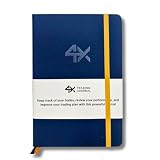
- BUILT FOR YOUR MARKET, FUTURES, STOCKS, FOREX, OPTIONS & CRYPTO: 4X is a mindset and process journal, not a strategy tool tied to one instrument. The plan, the trade log, the deep dive and the weekly review work the same whether you trade ES, EURUSD, SPY or BTC. Traders use it across all five markets every day.
- THE 2026 EDITION, REBUILT FROM TRADER FEEDBACK: Same trusted system, better in every way. An extra daily page for more room to log the session. Weekly reviews now grouped with each week's trades, so no more flipping back and forth. Crisp, darker print that's easy on the eyes after hours on a screen. A Quick-Start QR that scans straight to step-by-step instructions.
- NOT A NOTEBOOK, A COMPLETE 12-WEEK SYSTEM: Start with a one-time 9-part Trading Plan (your market, setups, risk rules and discipline checklist). Then twelve identical weeks: five Daily Logs, five Deep Dive trade pages, and a two-page Weekly Review. 189 guided pages, roughly 80 trades. Guided prompts walk you through every step. You never stare at a blank page.
- RATE YOUR EXECUTION, NOT YOUR RESULT: Your platform tracks the P&L. Nothing tracks the why. Log energy, sleep and mindset before the open; grade every trade A to F on whether you followed your plan, not on whether it won; then face the pattern every weekend with START / STOP / IMPROVE / CONTINUE. That review habit is the edge. You're 42% more likely to hit a goal you've written down.
- BUILT TO LAST, ARRIVES GIFT-READY: Vegan-leather hardcover, 100gsm bleed-resistant paper, two ribbon markers and an elastic closure band. Bound to lay flat so you're not fighting the spine while you write. 189 pages, 5.75" x 8.5", carries in a bag. Ships in a premium gift box: the gift every trader in your life actually wants.
Trading 212 is usually cheaper for everyday investing
For a typical UK investor, the most important recurring cost is often not a dealing commission. It is the cost of converting pounds into dollars or euros when buying overseas shares or ETFs.
Trading 212 publishes a 0.15% FX fee for its Invest and ISA services when currency conversion is required. Its published investment-account structure also shows no dealing commission and no custody fee, although taxes, exchange charges and other product-specific costs can still apply.
XTB has historically used a higher currency-conversion charge for trades placed in a currency different from the account’s base currency. The exact rate and any account-specific conditions should be checked in XTB’s current UK fee schedule. This difference matters more than a nominal “free trading” label if you regularly buy US-listed shares from a sterling account.
A simple FX example
Suppose you convert the equivalent of £10,000 to buy US shares:
What’s actually slowing this PC down?
Pick the symptom - the matching free tool is one click away.
- At 0.15%, the conversion cost is approximately £15.
- At 0.5%, the conversion cost is approximately £50.
The calculation applies separately whenever a conversion is made. Selling the shares and converting the proceeds back into pounds can create another charge. The actual cost depends on how each broker handles currency, spreads and settlement.
Trading 212’s Invest account has also been built around holding multiple currencies, which can reduce unnecessary conversions where the relevant currency is already available. Do not assume the same functionality applies identically to every Trading 212 account type, particularly an ISA.
Where XTB can be the better choice
XTB is not simply a more expensive version of Trading 212. Its appeal is the wider trading environment around the investment account.
Investment Plans
XTB’s Investment Plans allow investors to assemble portfolios of ETFs and allocate contributions across them. This is broadly comparable with Trading 212’s Pies, but the implementation and eligible instruments differ. Investors should check:
Quick wins for a faster PC:
Clear out junk files and repair common Windows errorsFree Scan →Fix the driver behind crashes, sound loss and screen glitchesFind Drivers →Repair Windows errors before they cause bigger problemsFix Now →- Which ETFs are available in the plan.
- Whether allocations are rebalanced automatically or only when new money is added.
- How fractional ETF entitlements are recorded.
- Whether a plan can be used inside the account type they want.
Trading 212’s Pies are more flexible for users who want to combine individual shares and ETFs, set percentage allocations and automate recurring payments. Model and community-created Pies can be useful starting points, but they are not personal financial advice.
More trading information
XTB’s platform generally presents more market data, charting and analysis than a minimalist investing app. That can be useful if you want to investigate an instrument before buying it or keep investing and trading tools in one application.
The trade-off is complexity. More charts and market commentary do not improve returns by themselves. A passive investor buying a diversified fund once a month may gain little from a more elaborate interface.
Fractional shares: useful, but not the same as owning a whole share
Both brokers support fractional investing for at least some eligible instruments. This allows an investor to place an order by monetary amount rather than waiting until they can afford one whole share.
That is particularly useful for expensive US companies, small monthly deposits and portfolios with precise target percentages. But fractional holdings have limitations:
- They may not be transferable to another broker.
- Voting rights may not apply in the same way as they do for whole shares.
- The broker may sell the fractional portion when you close or transfer the account.
- Corporate actions can be handled differently from whole-share holdings.
Before building a portfolio around fractions, read the broker’s transfer terms. A portfolio that looks easy to move may require some holdings to be sold and repurchased elsewhere.
ISA comparison
A UK Stocks and Shares ISA can shelter eligible investments from UK income tax and capital gains tax, subject to the annual ISA allowance and the usual ISA rules.
Trading 212 is well known for its Stocks and Shares ISA, alongside its general Invest account. It is often attractive for investors who want to automate contributions and keep overseas-share costs low.
XTB’s UK account offering has changed over time, so confirm directly which ISA features are currently available to you. In particular, check whether the desired shares and ETFs can be held in the ISA, whether transfers in are supported, and whether the platform treats fractional rights in the same way inside and outside an ISA.
When transferring an existing ISA, use the formal ISA transfer process. Selling investments and withdrawing the cash yourself can break the tax wrapper and use up allowance. Do not close the old ISA until the transfer has completed.
Costs that can be missed
XTB’s inactivity rules
XTB has historically charged an inactivity fee in circumstances such as a prolonged period without trading and, in some cases, without depositing. The precise trigger, grace period and amount are set out in its current tariff.
This is a significant difference for a buy-and-hold investor. If you intend to make one purchase and leave the account untouched for several years, confirm whether inactivity charges apply and what activity resets the clock.
Do these 3 things before closing this tab:
1Clear out junk files and repair common Windows errors2Scan for outdated or missing drivers - takes under a minute3Repair Windows errors before they cause bigger problemsTrading 212 funding fees
Trading 212 generally supports free bank-transfer funding. Its published terms have also applied a fee after a specified cumulative threshold for some card and electronic-wallet deposits. Bank transfer is therefore usually the safer funding method for larger or regular contributions.
Taxes and market charges
Neither “commission-free” claim removes government taxes or market charges. Depending on the instrument and exchange, costs can include:
- UK Stamp Duty Reserve Tax on purchases of qualifying UK shares.
- US regulatory or transaction charges on relevant sales.
- French or other national financial-transaction taxes.
- Exchange and clearing charges.
- Currency conversion and spread costs.
Review the final order preview rather than relying on a headline fee page. The cost of buying a UK ETF, a US share and a French company can be materially different.
Which platform is easier to use?
Trading 212 has the clearer advantage for an app-first investor. Its workflow is designed around searching for an instrument, choosing a value or share quantity, reviewing the order and placing it. Pies and AutoInvest reduce the number of manual decisions needed for regular investing.
XTB is still accessible, but its interface is more likely to appeal to someone who wants charts, market news, watchlists and trading information alongside their investments. That can be an advantage or a distraction.
For a new investor, the important question is not which app looks more sophisticated. It is whether the platform makes it easy to:
- Buy a diversified portfolio rather than a handful of fashionable shares.
- Keep investing during market falls.
- Understand the total cost before submitting an order.
- Keep records for tax and performance tracking.
Investing versus CFDs
Do not compare a broker’s share-investing account with its CFD account as though they were the same service.
Buying a share or ETF in an investment account normally gives you an investment interest in the asset. A CFD is a leveraged contract based on price movements. It can involve spreads, overnight financing, margin requirements and rapid losses. You do not own the underlying share through a CFD.
PC Slower Than It Used to Be?
A free scan shows the junk files, broken settings and background clutter dragging Windows down - then fixes them in one click.Free scan · Windows 10 & 11Crashes, No Sound, or Screen Glitches?
Random freezes, missing sound and display glitches usually trace back to one bad driver. Find and replace yours safely.Free scan · under a minuteBoth XTB and Trading 212 prominently offer trading features, but a beginner choosing a long-term portfolio should use the investment account and avoid leverage unless they fully understand the risks.
Independent reader supportYour contribution helps us test, update, and keep practical guides available for everyone.Safety and compensation
UK-regulated investment firms generally segregate client money and assets from their own business under FCA client-asset rules. That does not protect you from the value of your shares falling.
FSCS protection is not an insurance policy against normal investment losses. It may apply if an authorised firm fails and eligible client money or assets cannot be returned, subject to the applicable limit and circumstances. Cash may also be held with third-party banks or money-market funds, which can affect how protection is treated.
Check the legal entity named in your account documents. The brand shown in an app is not necessarily the entity that holds your assets or provides a particular product.
Free tools Windows power users keep installed
One-click scans. No signup required.
Verdict: XTB or Trading 212?
| If you are… | Better starting point | Why |
|---|---|---|
| New to investing | Trading 212 | Simpler interface and easy recurring-investment tools |
| Investing small amounts monthly | Trading 212 | Fractional investing, Pies and a low published FX fee |
| Buying US shares regularly from GBP | Trading 212 | Its published investment FX rate is generally lower |
| Building an ETF portfolio with investment plans | Either | Compare available ETFs, automation and account charges |
| Interested in analysis and active trading | XTB | More trading-focused tools and market information |
| Making occasional buy-and-hold trades | Trading 212, subject to current terms | Check XTB’s inactivity conditions before deciding |
| Using leverage or CFDs | Neither by default | Choose only after understanding margin, financing and loss risks |
Bottom line: Trading 212 is the better all-round choice for most UK long-term investors, particularly those making small, regular or overseas investments. XTB is worth considering if you prefer a more substantial trading platform and its current ETF selection, account terms and pricing suit your strategy.
Before choosing, compare the exact annual cost of your intended portfolio: number of trades, foreign-currency purchases, account type, funding method and how long you expect to leave the account inactive.
FAQ
Is XTB cheaper than Trading 212?
Not automatically. Trading 212 usually has the advantage for foreign-currency investing because its published Invest and ISA FX fee is 0.15%. XTB may be competitive for particular trades, but you should include its current FX charge, possible inactivity fee and any account-specific costs.
Is Trading 212 safe in the UK?
Trading 212’s UK services operate through FCA-regulated entities and state that client money and assets are segregated. This does not protect against investment losses. FSCS eligibility depends on the failed entity, asset type and circumstances.
The Tool Desk
Outbyte Driver Updater FREEScan for outdated or missing drivers - takes under a minuteDriver Scan →Outbyte PC Repair FREERepair Windows errors before they cause bigger problemsFix Now →Does XTB offer fractional shares?
XTB offers fractional rights for eligible instruments, but these are not necessarily equivalent to whole-share ownership. Check voting, transfer and corporate-action terms before relying on fractional investing.
Can I transfer my Trading 212 portfolio to XTB?
Transferability depends on the asset, account type and both brokers’ current procedures. Fractional holdings commonly cannot be transferred as fractions and may need to be sold. ISA transfers should be completed through the formal ISA process.
Which broker is better for ETFs?
Both can be suitable. Compare the specific ETFs available, total expense ratios, dealing and FX costs, investment-plan or Pie functionality, and whether the ETF can be held in the account type you want.
Should beginners use XTB or Trading 212 CFDs?
Neither should be the default choice for a beginner. CFDs use leverage and can generate rapid losses, financing charges and margin calls. A diversified, unleveraged investment account is more appropriate for long-term investing.
The Bottom Line
For most UK retail investors, choose Trading 212 if your priorities are low-cost investing, fractional shares, regular contributions and a straightforward app. Choose XTB if you value a more trading-oriented platform, investment plans and richer market tools—and have checked its current FX and inactivity charges.
Quick Recap
Product prices and availability are accurate as of the date/time indicated and are subject to change. Any price and availability information displayed on Amazon at the time of purchase will apply.




