Do these 3 things before closing this tab:
1Scan for outdated or missing drivers - takes under a minute2Repair Windows errors before they cause bigger problems3Fix the driver behind crashes, sound loss and screen glitchesHistorical note: Texas Instruments began initial chip production at RFAB2 on September 29, 2022. The Richardson, Texas, facility is a 300-mm analog wafer fab linked to TI’s existing RFAB1. TI said the two fabs could eventually produce more than 100 million analog chips per day, but that was a projected combined capacity after a multiyear ramp—not RFAB2’s immediate output or a guarantee of customer availability.
The announcement matters because TI was expanding internally owned manufacturing for long-lived analog and mixed-signal products used in vehicles, industrial equipment, power systems, communications, medical electronics and space applications. The strategy emphasizes scale, supply control and cost efficiency rather than a race to the smallest digital-logic process node.

What RFAB2 is
RFAB2 is TI’s second connected wafer-fabrication facility at the company’s Richardson, Texas, manufacturing campus. “RFAB” refers to that campus; RFAB2 is a fab, not an assembly plant, packaging site or distribution center. It processes 300-mm (12-inch) silicon wafers that are later diced into individual dies and packaged into finished components.
RFAB1 had been operating for approximately 13 years when the announcement was published in 2022. Adding RFAB2 beside it lets TI expand a related manufacturing operation instead of treating the new building as an isolated site. TI described the combined campus as having 630,000 square feet of cleanroom space and 15 miles of automated overhead track for moving wafers and materials.
What’s actually slowing this PC down?
Pick the symptom - the matching free tool is one click away.
#1 Best Overall

- The C2000TM DelfinoTM MCU LaunchPadTM Development Kit is an affordable evaluation platform that provides designers with a low-cost development kit for high-performance digital control applications. This tool provides an excellent starting point for the development of many high-end digital control applications such as industrial drives
- Containing project the USB Cable
- TMS320F28379D Microcontroller Development Board 200MHz CPU 1MB Flash Win
- Supported Device Technology Microcontroller
EE Times’ report, originally published October 18, 2022 and updated October 25, 2022, records the September 29 production announcement: “With RFAB2, TI Bumping Up Analog Chip Production.”
What TI actually announced
| Item | What the 2022 announcement established |
|---|---|
| Production status | Initial chip production had begun at RFAB2 on September 29, 2022. |
| Location | Richardson, Texas, adjacent and connected to RFAB1. |
| Wafer diameter | 300 mm. |
| Long-term output statement | TI projected that RFAB1 and RFAB2 together could produce more than 100 million analog chips per day a few years after the announcement. |
| Ramp | Production was expected to increase over the following years; the source did not provide a current run rate, yield, utilization or detailed schedule. |
The “more than 100 million” figure must be read as a combined-fab projection. It is not RFAB2’s standalone capacity, a current production rate, a wafer-start number, revenue or market share. Analog dies vary substantially in size and complexity, so aggregate chip counts are not directly comparable with output figures from logic-chip fabs.
Why 300-mm wafers are useful for analog manufacturing
A 300-mm wafer has substantially more usable area than a smaller wafer. If a product has a small die and the process achieves good yield, one wafer can produce a large number of finished chips. That can improve cost efficiency and support high-volume products.
However, a larger wafer does not automatically make every device cheaper. Economics also depend on die area, yield, equipment depreciation, factory utilization, process complexity, packaging, final test and the mix of products running through the fab. TI presented smaller geometries, smaller packages and lower implementation cost as strategic goals, not as a guaranteed reduction for every component.
Analog manufacturing also differs from leading-edge digital logic. An analog device may need high-voltage transistors, precision resistors and capacitors, isolation structures, or automotive reliability features. The best process is the one that meets those electrical, reliability and lifecycle requirements at an acceptable cost; it is not necessarily the newest process used for a smartphone processor or an AI accelerator.
Which TI products could benefit
During the discussion reported by EE Times, Roland Sperlich, TI’s vice president and general manager for Interface Products in the analog signal-chain business, showed several devices and said at least two or three would use additional capacity from the new fab. The products cited were:
Rank #3
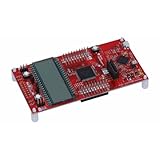
- MSP-EXP430FR6989 TI MCU LaunchPad
- ISOW774x digital isolators
- DP83TG720-Q1 automotive Ethernet PHY
- TMAG5170 Hall-effect position sensor
- DRV8311 brushless-DC motor driver
- DAC63204 digital-to-analog converter
The source did not identify which specific two or three devices would receive the added capacity, and it did not say that all five were made exclusively at RFAB2. A fab expansion increases potential manufacturing capacity; it does not by itself establish product allocation, package availability or customer delivery dates.
Why isolation was a prominent application
Isolation components separate electrical domains so that a hazardous or noisy voltage on one side does not directly reach circuitry, users or connected equipment on the other side. That function is increasingly important in high-voltage electric vehicles, charging equipment, industrial machinery, robotics and medical systems.
Windows Errors? Fix Them Before They Spread
Repair common Windows errors and clear accumulated junk for a smoother, more stable PC - no reinstall needed.Free scan · no reinstallOutdated Drivers Are Slowing You Down
One free scan finds every outdated or missing driver and matches the right update for your exact hardware.Free scan · exact hardware matchTI’s discussion included capacitive isolation, differences between automotive battery-voltage domains, and isolated USB products. Isolation can also matter in audio equipment, USB-connected devices and satellite systems. These examples illustrate demand for TI’s broader analog signal-chain portfolio; RFAB2 should not be described as a fab dedicated only to isolation chips.
Rank #4
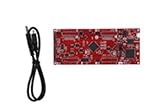
- DEVELOPMENT PLATFORM: Texas Instruments C2000 MCU F280025C LaunchPad development kit for rapid prototyping and evaluation
- CONNECTIVITY: Features USB connection cable for programming, debugging, and power supply
- PROCESSOR: Built around the F280025C microcontroller, ideal for real-time control applications and digital signal processing
- DESIGN FEATURES: Red PCB board with comprehensive development capabilities and expansion headers for additional functionality
- COMPATIBILITY: Supports TI's development ecosystem with Code Composer Studio and other programming tools
Markets behind the capacity investment
- Automotive and electrification: vehicles contain more sensing, power-management, communications and isolation circuitry, while EVs and chargers operate across higher-voltage domains.
- Industrial automation: factory equipment, motor drives and robotics require sensors, interface devices, converters and protection.
- Communications and embedded systems: Ethernet interfaces and signal-conditioning components connect control and data systems.
- Medical electronics: isolation and reliable interfaces help separate patient-facing or externally connected equipment from internal circuitry.
- Space and satellites: high-reliability analog components support power, sensing and communications functions, subject to the additional qualification and screening requirements of each application.
These are application drivers cited in the contemporary announcement, not a product-by-product revenue forecast for RFAB2.
What internal manufacturing gives TI—and what it cannot do
Potential advantages
- More direct control of capacity planning and production scheduling.
- Greater control over process transfers and qualification for long-lived products.
- Less reliance on external foundries for selected analog product families.
- Better ability to align manufacturing investment with products that customers may need for many years.
- Potentially improved cost and supply predictability when utilization and yields are strong.
Structural limits
- A company-owned fab carries substantial fixed capital and operating costs when demand weakens.
- Products must be qualified on particular processes, packages and test flows; spare capacity in another process may not help.
- Wafer fabrication is only one part of the chain. Wafer test, assembly, packaging, final test, substrates, lead frames and allocation policies can still constrain deliveries.
- Capacity added during a shortage can outlast that shortage. Utilization and profitability remain exposed to the semiconductor cycle.
QML certification and space applications
The source describes both RFAB1 and RFAB2 as Qualified Manufacturers List (QML)-certified, positioning the facilities to support space-grade products. QML status concerns qualification of a manufacturer and its quality processes for certain high-reliability and military or space applications.
It is not a blanket approval for every component made at either fab. A space application can require product-level qualification, radiation performance, screening, specialized packaging, traceability and customer documentation. Automotive qualification, industrial qualification and space qualification are distinct categories.
The Tool Desk
Outbyte PC Repair FREEClear out junk files and repair common Windows errorsFree Scan →Outbyte Driver Updater FREEFix the driver behind crashes, sound loss and screen glitchesFind Drivers →Best Value

- 1 Pcs MSP-EXP430FR5994 MSP430 MSP430FR5994 LaunchPad Dev Kit
What the announcement does not prove
- Not immediate full capacity: initial production in September 2022 was the start of a ramp, not mature output.
- Not 100 million chips from RFAB2 alone: the projection covered RFAB1 and RFAB2 together.
- Not guaranteed availability: capacity must pass process, product, package and test qualifications, and demand can exceed the ramp.
- Not exclusive production of every named device: TI publicly identified only at least two or three cited products as expected users of added capacity.
- Not a specified leading-edge node: the source supports a 300-mm analog-fab description, not a particular process-node claim.
- Not universal space qualification: QML-certified facilities do not make every product suitable for spaceflight.
Why RFAB2 remains strategically important
RFAB2 represents a capacity-and-control investment tailored to analog semiconductors. Analog products often remain in production for long periods, and customers value stable qualification, reliability and supply continuity alongside electrical performance. A connected 300-mm campus gives TI more scale for those products while preserving the specialized processes they require.
The most accurate reading of the 2022 announcement is therefore measured: RFAB2 had begun production and was intended to ramp over several years, while TI projected more than 100 million combined analog chips per day from RFAB1 and RFAB2. That is a significant manufacturing expansion, but it is not evidence by itself that the target had already been reached or that every TI part would immediately become available.
Quick Recap
Product prices and availability are accurate as of the date/time indicated and are subject to change. Any price and availability information displayed on Amazon at the time of purchase will apply.




