Windows Errors? Fix Them Before They Spread
Repair common Windows errors and clear accumulated junk for a smoother, more stable PC - no reinstall needed.Free scan · no reinstallOutdated Drivers Are Slowing You Down
One free scan finds every outdated or missing driver and matches the right update for your exact hardware.Free scan · exact hardware matchThe Justice Department sued on January 30, 2025, to block Hewlett Packard Enterprise’s proposed $14 billion acquisition of Juniper Networks, arguing that it would weaken competition in enterprise wireless networking. The case did not end in a trial ruling on those allegations: HPE and Juniper settled with the DOJ, and on August 12, 2026, a federal court approved the settlement and entered final judgment after review under the Tunney Act.
Why did the Justice Department sue over HPE’s Juniper acquisition?
HPE agreed to acquire Juniper Networks on January 9, 2024, in a transaction announced at approximately $14 billion. The DOJ filed suit in the U.S. District Court for the Northern District of California on January 30, 2025, seeking to block the deal under Section 7 of the Clayton Act. The DOJ described HPE and Juniper as the second- and third-largest U.S. providers of enterprise-grade wireless local area network (WLAN) solutions.
Enterprise WLAN technology lets organizations connect to their own networks and the internet wirelessly. The government’s case concerned competition in enterprise-grade WLAN solutions—not every networking product or business sold by either company.
The government’s competition allegations
The DOJ alleged that HPE and Juniper competed directly and that combining them would eliminate important head-to-head competition. It argued that the deal could raise prices, reduce innovation, and limit customer choice. These were the government’s claims in its complaint; because the case was resolved by settlement, a trial court did not decide whether those original antitrust allegations were proven.
#1 Best Overall

- Smart-managed layer 2+ Ethernet switch series ready to deploy in 8-, 24- and 48-port for non-PoE and Class4 PoE models
- PoE to power APs and IoT devices like IP phones, surveillance cameras and door locks
- Two (2) dedicated 1G SFP fiber ports on 8-port models, and four (4) dedicated 1G/10G SFP+ fiber ports on 24-/48-port models to eliminate traffic bottlenecks across your network
- Security controls let you define access in each area of your network, keeping your business data safe
- Convenient mobile app and webbased GUI for set up, management and troubleshooting
What did the DOJ settlement require?
In June 2025, the DOJ announced that the parties had agreed to remedies that would allow the merger to proceed. The settlement’s principal requirements addressed HPE’s Instant On WLAN business and Juniper’s Mist AI Ops software.
- Divest Instant On: HPE must sell its global Instant On campus and branch WLAN business—including associated assets, intellectual property, research and development personnel, and customer relationships—to a DOJ-approved buyer. The DOJ’s June 2025 announcement set a 180-day deadline for the divestiture.
- License Juniper Mist AI Ops source code: The settlement provides for an auction of up to two perpetual, non-exclusive licenses to Juniper’s AI Ops for Mist source code, which the DOJ described as an important part of Juniper’s WLAN systems. The arrangement allows optional transitional support and personnel transfers.
The remedies were intended to preserve competitive options in the WLAN area at issue while permitting the transaction to move forward. They did not amount to a court finding that the DOJ’s original theory was correct or incorrect.
Rank #2

- ARUBA HPE NETWORKING INSTANT ON 1930 8G 2SFP SWITCH US
Did HPE buy Juniper, and what is the case’s status?
The proposed deal was not blocked after the settlement. On June 27–28, 2025, the parties and DOJ submitted the settlement package, and the DOJ said the agreed remedies would permit the merger to continue. The court later reviewed the proposed consent decree under the Antitrust Procedures and Penalties Act, commonly called the Tunney Act.
After a hearing on March 23, 2026, the district court granted the motion for entry of final judgment on August 12, 2026. HPE’s SEC filing reports that the court found the settlement to be in the public interest. The court’s ruling approved the decree; it was not a trial verdict on whether the merger violated the Clayton Act.
Free tools Windows power users keep installed
One-click scans. No signup required.
Rank #3

- Streamline IT with modern Layer 2 switches offering entry-level, reliable, and convenient wired access
- Effortless support for access points, clients, and IoT devices with built-in 1 GbE uplinks and up to 740W of Class 4 PoE
- Space-saving 12-port PoE model with a compact, fanless design for limited spaces
- Seamless configuration management with HPE Aruba Networking Central, Switch Multi-Edit Software, user-friendly Web GUI, or standard CLI
- Prepped for software-defined networking with REST APIs
What did the court decide under the Tunney Act?
The Tunney Act requires a court to assess whether entry of a proposed antitrust consent decree serves the public interest. The court explained the limited scope of that review: “Under the Tunney Act, it is not the Court’s role to opine on the ultimate merits of the DOJ’s original challenge to the merger under the Clayton Act; the Court can only determine whether entry of the proposed consent decree would serve the public interest.”
Twelve states and the District of Columbia intervened to oppose approval. The court concluded they had not shown that entering the amended judgment would be against the public interest. That determination resolved the consent-decree review, not the underlying merits through a trial.
Rank #4
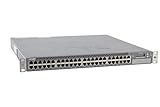
- Item Package Dimension: 24.0L X 21.0W X 6.0H Inches
- Item Package Weight - 22.2 Pounds
- Item Package Quantity - 1
- Product Type - Electronic Switch
What the outcome means for readers
The case is a merger-enforcement dispute over competition among business-networking suppliers, not a consumer-finance matter with a direct change to household accounts or borrowing. Its practical outcome was that the acquisition could proceed subject to the settlement’s divestiture and licensing terms. The distinction matters: the DOJ alleged potential competitive harm, the settlement imposed remedies, and the court approved those remedies under the public-interest standard without deciding the original allegations after trial.
Quick Recap
Best Value

- Item Package Dimension: 13.7L x 10.8W x 2.9H inches
- Item Package Weight - 1.2 Pounds
- Item Package Quantity - 1
- Product Type - COMPUTER COMPONENT
Product prices and availability are accurate as of the date/time indicated and are subject to change. Any price and availability information displayed on Amazon at the time of purchase will apply.




