Recommended Free Tools
Tesla still has a substantial regulatory head start in Washington, but that is not the same as having a guaranteed sales lead. The state’s model-year-2024 compliance table lists 214,888 battery-electric-vehicle (BEV) credits for Tesla, more than any other manufacturer shown. Yet Washington’s purchase-tax exemption ended July 31, 2025, federal EV purchase credits ended September 30, 2025, and the state’s Advanced Clean Cars II requirement rises to 35% in model year 2026. Meanwhile, buyers can choose from about 100 light-duty EV models, compared with six in 2020.
Those changes can reduce Tesla’s pricing power and early-mover advantage. Official sources document Washington’s statewide EV growth and Tesla’s credit balance, but they do not establish Tesla’s current percentage of Washington retail EV sales.
Tesla’s 214,888 credits are a cushion, not a sales count
Washington Department of Ecology’s model-year-2024 table lists 214,888 BEV credits for Tesla, the largest balance among the manufacturers shown. A credit bank can help a manufacturer meet regulatory requirements or provide flexibility when its own sales mix does not generate enough credits.
It does not show how many Teslas Washington consumers bought, Tesla’s current market share, or whether Tesla led the state’s retail market in 2025 or 2026. Treating the credit figure as a sales total would overstate what the data proves.
#1 Best Overall
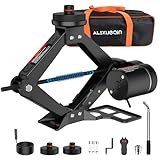
- The electric jack for tesla is designed specifically for Tesla vehicles and perfectly matches most Tesla models (Model Y/3/S/X), saving you the trouble of modifying other jacks
- The tesla electric jack is made of high-strength alloy steel, sturdy and durable, with a maximum lifting weight of 3 tons (6614 lbs) and a lifting range of 5.2 inches to 12.6 inches
- The electric car jack kit for tesla is equipped with a full copper motor, which provides strong power, stable output, and enables one click lifting, making it convenient and effortless
- The tesla jack kit matches your car's 25mm holes perfectly to protect your car's battery without modification, and two compatible non-slip jack pads protect your car from steel beam scratches when lifting and lowering
- The car jack kit for tesla comes with a wrench, socket, gloves, storage bag, and more to help you quickly and easily replace tires in any emergency situation
| Figure | What it establishes | What it does not establish |
|---|---|---|
| 214,888 Tesla BEV credits (model year 2024) | Tesla had the largest listed compliance-credit balance and significant regulatory flexibility. | Tesla’s Washington deliveries, current market share, or consumer loyalty. |
| About 20% of Washington’s new-vehicle sales were electric or plug-in hybrid in 2025 | Electrified vehicles had become a substantial part of the statewide market. | Tesla’s share of those sales. |
| About 100 light-duty EV models available in 2026, versus six in 2020 | Consumers have far more alternatives than they did when Tesla faced little direct competition. | Which brand or model is winning the most Washington sales. |
The incentive cliff makes price comparisons more direct
Two major purchase incentives disappeared within roughly two months, removing subsidies that had softened differences between Tesla and competing vehicles.
Washington’s state exemption ended July 31, 2025
Washington’s clean-alternative-fuel and plug-in-hybrid sales/use-tax exemption expired on July 31, 2025. The former program applied to qualifying new vehicles priced at $45,000 or less and used vehicles priced at $30,000 or less, with limits on the amount of the purchase or lease payment that could be exempted. Buyers who transact after the expiration date cannot assume the former tax treatment still applies.
Federal purchase credits ended September 30, 2025
Washington’s Office of Financial Management and the Washington State EV Council identify September 30, 2025 as the effective date for the complete removal of the federal purchase incentives. The change removed the federal credit of up to $7,500 for a qualifying new EV and up to $4,000 for a qualifying used EV.
Rank #2

- Bluetooth Control: Download the mobile App to easily adjust the temperature without approaching the control panel, allowing convenient management even while driving and making outdoor travel smarter and more convenient
- Temperature Range: The car refrigerator supports both freezing (-8℉ to 32℉/-22℃ to 0℃) and refrigeration (32℉ to 50℉/0℃ to 10℃), with switchable fahrenheit and celsius, so you can easily adjust the temperature based on your food storage needs
- Compatible with Tesla: This electric cooler is compatible with the Tesla Model Y,you can place it in the space under the trunk, where it fits flush without protruding
- Fast Cooling: Enjoy fast and efficient cooling with our compressor electric cooler, featuring an upgraded compressor that cools from 68℉ to 32℉(20℃ to 0℃) in 35 minutes, keeping food fresh and drinks ice-cold
- 36.98 QT/35L Car Refrigerator: This portable car refrigerator is compatible with tesla and can store seafood, snacks, meat, and beverages to meet the needs of short trips and camping
Without either credit, the relevant comparison is the vehicle’s actual transaction cost, financing or lease terms, insurance, charging expenses, and expected service costs. A Tesla that looked less expensive after incentives may now face a closer price comparison with similarly priced Hyundai, Kia, Ford, Volkswagen, Toyota, Rivian, and other EVs.
Do these 3 things before closing this tab:
1Clear out junk files and repair common Windows errors2Fix the driver behind crashes, sound loss and screen glitches3Repair Windows errors before they cause bigger problemsWashington’s 2026 rule brings more rival EV inventory
Washington’s Advanced Clean Cars program requires manufacturers to earn and manage zero-emission-vehicle credits. The state says the model-year-2025 requirement translated to roughly 8% to 10% of new light-duty sales. Advanced Clean Cars II raises the requirement to 35% in model year 2026, with the rule ultimately reaching 100% of new passenger vehicles sold in 2035 under the state framework; plug-in hybrids are allowed under the rule described by Ecology.
Ecology reports that manufacturers collectively exceeded the 2025 requirement. As the percentage rises, established automakers have a stronger reason to ship, advertise, and support EVs in Washington. More inventory can weaken Tesla’s scarcity advantage even if Tesla’s credit bank gives it substantial compliance flexibility.
Rank #3
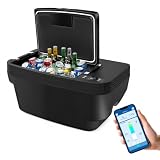
- FITS MODEL Y 5-SEATER ONLY - 2020-2026 incl. Juniper. Drops into the rear sub-trunk well; no drilling, no brackets, no trimming. NOT for the 7-seater or Model Y L.
- REAL COMPRESSOR, NOT THERMOELECTRIC - R600a behind 45mm insulation; 50F to -4F in about 30 minutes, held in any weather; ECO 36W, MAX 45W, under 45dB.
- THE TRUNK COVER STILL CLOSES - included EVA vent tabs lift the cover a quarter inch so the compressor can breathe; flat load floor, bags still stack on top.
- KEEP ACCESSORY POWER ON WHEN PARKED - OR IT STOPS. Controls > Charging > Keep Accessory Power On, or the car cuts 12V minutes after you walk away. Not in Low Power Mode.
- 35QT (33L), 20+ bottles upright; 12/24V DC; CFridge app + LED panel. In the box: fridge, DC cable, EVA vent tabs, towel, manual; 1-year CARFROZEN warranty.
| Timing | Policy change | Likely market effect |
|---|---|---|
| July 31, 2025 | Washington clean-alternative-fuel and plug-in-hybrid sales/use-tax exemption expired. | Most buyers lost a state tax benefit that had reduced the effective purchase or lease cost of qualifying vehicles. |
| September 30, 2025 | Federal new- and used-EV purchase credits were removed. | Price differences between Tesla and competing EVs became more visible at the point of purchase. |
| Model year 2025 | Requirement translated to roughly 8%–10% of new light-duty sales; Washington’s EV/PHEV share was about 20%. | Manufacturers were already selling more electrified vehicles than the minimum implied by the requirement. |
| Model year 2026 | Advanced Clean Cars II requirement rises to 35%. | Automakers have a stronger incentive to offer and promote a broad Washington EV lineup. |
| 2035 | Rule reaches 100% of new passenger vehicles sold under the state framework, with plug-in hybrids permitted as described by Ecology. | Electrified products become central to every manufacturer’s Washington strategy. |
Consumers no longer have to shop in a Tesla-shaped market
Ecology’s comparison—about 100 light-duty EV models available in 2026 versus six in 2020—captures how quickly the choice set has expanded. A buyer can now evaluate vehicles across several dimensions rather than defaulting to Tesla because few alternatives existed.
Price after incentives
Compare the negotiated purchase price or lease cost after all available discounts, not a former tax-credit estimate. The Washington State EV Council reported that the average Washington light-duty EV transaction price rose from $53,364 in August 2024 to $56,593 in August 2025, a statewide measure that does not isolate Tesla. The increase illustrates the affordability pressure after federal credits disappeared.
Body style and size
Cross-shop the vehicle type that fits the household: sedan, hatchback, crossover, SUV, pickup, or another format. A broader lineup means a buyer can prioritize cargo space, seating, towing, or maneuverability rather than compromise on body style.
Rank #4

- Compatibility: Tesla Model 3 (2017-2023.09) / Model 3 Highland (2023.10+) / Model Y (2020-2025.02) / Model Y Juniper (2025.03+)
- Max Heat & UV Shield: Advanced dual-layer fabric with titanium sun-blocking layer delivers 99% light blockage and heat insulation. Blocks harmful UV rays to protect skin and prevent interior fading/cracking.
- Smart Auto-Retraction: Quiet yet powerful motor enables one-touch automatic deployment and retraction. Dual-button controller allows custom positioning for precise coverage.
- Smooth & Durable Performance: High-quality materials ensure long-lasting durability. Operates smoothly with zero jamming, reliable every time.
- Easy Installation & OBD Power: Tool-free, adhesive-free setup in seconds via strong silicone suction cups. Draws safe low-voltage power from car’s OBD-II port—works even when vehicle is off.
Range and charging
Evaluate real travel patterns, winter conditions, home-charging access, workplace charging, and the locations used on longer trips. Published range alone does not show how convenient a vehicle will be for a particular Washington household.
Software and driver-assistance features
Feature names and capabilities differ by manufacturer, trim, subscription, and software version. Confirm what is included at delivery, what requires a paid service, and what the system can legally and reliably do; marketing labels are not interchangeable.
Service and repair access
Consider the distance to an authorized service location, mobile-service availability where offered, collision-repair options, parts access, and likely wait times. This can matter as much as the purchase price when a vehicle is kept for several years.
What’s actually slowing this PC down?
Pick the symptom - the matching free tool is one click away.
Best Value

- ❤ [Equipped with Nema 14-50 plug, Compatible with 110-120V Nema 5-15p to 14-50r EV Adapter(Not packaged) or the other EV Adapter Cable]: Suggest install the 240V Nema 14-50 plug-in socket. [Kindly Note When Using the 5-15P Adapter]: 1. The RV Adapter cable doesn't work for EV chargers, please order the correct EV adapter cable. 2. It will become slow level 1 ev charging and some cars may drop to 12A, the max charging rate is 1.32-1.8kW(110V*12A-120V*15A).
- ❤ [Features a North American Charging Standard (NACS) Connector for All Tesla EVs/Nacs Connector EVs/PHEVs. For j1772 EVs, This will Require an Tesla to j1772 Adapter]: Compatible with Tesla Models S/X/3/Y & Fits for Nac connector-Kia EV6 2025/EV9, Ariya 2025&2025 loniq 5, not work for j1772 connector cars. [6X Faster Charging with ETL, FCC Listed, Meets the Safety Criteria Defined by: UL2231-1/-2, UL 991, UL 2231, UL 2251, UL1998 and UL 2594]: Say goodbye to slow level 1 ev charger, enjoy safe charging and 6X faster charging.
- ❤ [Up to 7.68kWh High Speed Charging, Adjustable Amperage from 16A to 32A & Requires a 20A to 40A circuit]: Maximum current output of 32 Amps for 40A circuit breaker, 24 Amps for 30A circuit breaker, or 16 Amps for 20A circuit breaker (Please pull out the charging gun, long press "A" button to change the current). You can also adjust the current/amperage by APP before the charging.
- ❤ [2 Operating Modes: Plug-charge(The Default Setting) or APP Start Mode & Smart Touch Screen]: The LED Screen Clearly show the Amperage, charging speed, input voltage, delay time, etc. For the touch buttons: 1. Pull out the charging gun before press the button, otherwise no respond; 2. Long press "Ⓐ" or "Time" button to adjust the amperage from 16A to 32A freely or Set the charging start time; 3. You can do "factory reset" if doesn't charging.
- ❤ [Smart WIFI APP, You can Set the Charging Period]: Check the charging cost, history, fully-charged notification, track the charging status, during off-peak period, etc. ❤ [Wi-Fi Reset/Factory Reset Function, Add New Device Quickly]: If you can't find your device or you have replaced a new phone, just pull out the charging gun, simultaneously long press the Ⓐ button and time adjustment button on the product screen until it shows "Factory Reset", then re-start your device. (Kind note: Switch the router from dual brand (2.4 GHz & 5 GHz) to only 2.4 GHz for the first connection.)
Brand and personal fit
Buyers may weigh cabin design, controls, warranty terms, resale expectations, environmental priorities, or the manufacturer’s public reputation. Washington’s expanded market lets those preferences influence the decision more than they could when only a handful of EVs were available.
Independent reader supportYour contribution helps us test, update, and keep practical guides available for everyone.Does Tesla still dominate Washington EV sales?
The available official figures do not answer that question. They show Tesla’s large model-year-2024 BEV credit balance, Washington’s roughly 20% statewide EV/PHEV share in 2025, and the expansion to about 100 light-duty EV models. They do not provide Tesla’s current percentage of Washington new-EV sales or Tesla’s 2026 Washington deliveries.
Consequently, two statements would both go beyond the evidence: that Tesla has already lost Washington, or that it still dominates the state. A defensible conclusion is narrower: Tesla retains substantial compliance leverage, while the end of purchase incentives and the arrival of many more competitors make its historical sales advantage less secure.
What would signal a real loss of Tesla’s advantage?
- Manufacturer-level Washington registrations: sustained declines in Tesla’s share would demonstrate a sales change, unlike a credit-bank comparison.
- Transaction-price and incentive data by brand: this would show whether Tesla is losing on effective price after discounts and financing.
- Model-level availability: consistent inventory across competing body styles would indicate that buyers can switch without sacrificing vehicle type or use case.
- Ownership and service measures: repair access, charging convenience, and satisfaction could explain why buyers stay with or leave a brand.
Until those measures are available, Washington’s policy timeline and expanding model count support a risk assessment rather than a definitive claim about Tesla’s current rank.
Windows Errors? Fix Them Before They Spread
Repair common Windows errors and clear accumulated junk for a smoother, more stable PC - no reinstall needed.Free scan · no reinstallCrashes, No Sound, or Screen Glitches?
Random freezes, missing sound and display glitches usually trace back to one bad driver. Find and replace yours safely.Free scan · under a minuteQuick Recap
Product prices and availability are accurate as of the date/time indicated and are subject to change. Any price and availability information displayed on Amazon at the time of purchase will apply.




