PC Slower Than It Used to Be?
A free scan shows the junk files, broken settings and background clutter dragging Windows down - then fixes them in one click.Free scan · Windows 10 & 11Crashes, No Sound, or Screen Glitches?
Random freezes, missing sound and display glitches usually trace back to one bad driver. Find and replace yours safely.Free scan · under a minuteSony shifted production of cameras destined for Japan, the United States and Europe from China to Thailand, with the transfer reported complete by the end of 2022. It did not move all camera production out of China: Sony retained production for the Chinese market. The clearest business benefit is a more diversified supply chain, not a publicly documented camera-cost saving or a promise of lower prices.
What Sony moved—and what stayed in China
The camera shift was a market-specific change. Nikkei-linked reporting said Sony moved production serving Japan, the United States and Europe from China to Thailand, while keeping China-based production principally for Chinese customers. Sony was also reported to have said it had no plan to leave China. Anbound’s January 2023 report describes the split; Sony’s later manufacturing list confirms that China remains in its camera-related production network.
Sony’s May 8, 2026 major-manufacturing-operations document lists facilities in Chonburi and Bangkadi, Thailand, for digital still cameras, interchangeable-lens cameras and lenses for interchangeable-lens cameras. It also lists camera-related production in China. This confirms that Thailand is an established camera and lens base, not that every Sony camera, lens or component is made there.
The reported transfer concerns digital still-camera production, including interchangeable-lens camera categories. It should not be conflated with Sony’s separate domestic Japanese manufacturing consolidation: in June 2023, Sony said broadcasting, professional and cinema-camera operations would move from its Kosai site to Kohda, with Kosai manufacturing scheduled to cease after transfers were completed by the end of June 2024. That was a separate site-to-site move within Japan, not the China-to-Thailand export-production shift. Sony’s announcement describes the Japanese consolidation.
Free tools Windows power users keep installed
One-click scans. No signup required.
#1 Best Overall

- 20.1MP stacked back illuminated 1" Exmor RS CMOS sensor w/ DRAM, large aperture 24-70mm1 F1.8-2.8 ZEISS Vario-Sonnar T lens
- Enhanced subject capture: wide 425 Phase/ 425 contrast detection points over 84 percent of the sensor
- Fast and accurate: Up to 11Fps continuous shooting at 24.2 MP raw with crisp, clear natural colors
- Multiple movie functions: Make time lapse movies or slow/quick motion videos without post processing
- Tiltable LCD screen: customizable for vlogging, still photography or recording a professional film
How the camera move differs from Sony’s smartphone move
Sony’s 2019 smartphone decision is a useful comparison, but it was a different event with a different stated rationale. On March 28, 2019, Sony announced the closure of its Beijing smartphone plant and the transfer of smartphone production to Thailand. Sony’s stated aim was to halve manufacturing costs and help make its loss-making mobile business profitable, according to contemporaneous reporting.
That cost target applies to smartphones, not cameras. For cameras, the reported sequence was a transfer completed by the end of 2022 and reported on January 29, 2023. Sony’s current manufacturing disclosure shows Thai camera operations continuing in 2026. The available reporting does not establish a camera-specific cost target or show that the smartphone rationale carried over.
Rank #2

- 33MP1 full-frame Exmor R back-illuminated CMOS sensor
- 8x more powerful2, next generation BIONZ XR image processing engine
- Up to 4K 60p11 10-bit 4:2:2 w/ full pixel readout in all rec. formats
- Real-time Eye-AF for humans, animals, birds for photo and movie
- Advanced movie features; Focus Map16, Breathing Comp14., S-Cinetone, S-log3, HLGAF Assist17
Why Thailand makes strategic sense
It gives Sony another production base for export markets
When production for several major markets is concentrated in one country, a shutdown, transport restriction or other local disruption can affect supply across all of them. Using Thailand for cameras bound for Japan, the United States and Europe, while retaining China-oriented production, spreads that exposure across two countries. This is the strongest supported strategic interpretation of the reported market split; Sony has not published a figure quantifying the resulting reduction in risk.
Sony already had relevant operations there
Thailand was not a factory location Sony had to build from scratch for this shift. Sony’s sustainability materials identify Sony Technology (Thailand) and Sony Device Technology (Thailand) among its electronics manufacturing facilities, and its current operations list includes camera bodies and related lenses. Existing sites and experience likely lower the execution burden compared with creating a new manufacturing base, although Sony has not disclosed relocation savings for cameras. Sony’s 2020 sustainability report identifies the Thai operations.
Rank #3

- 24.2MP APS-C Exmor CMOS Sensor and fast BIONZ X processor
- 4K Movie oversampled from 6k w/ full pixel readout, no pixel binning
- Product Showcase Setting transitions focus from face to object
- Background Defocus button instantly toggles between defocus effect on/off
- Easy live streaming w/ single USB cable and no extra hardware/software
It reduces exposure to China-specific disruption and policy risk
The move gives Sony more flexibility if China-linked factory operations, logistics or trade conditions are disrupted. During the COVID-19 period, Sony described travel restrictions that made it harder to send engineers to manufacturing hubs in China and Southeast Asia for product launches and manufacturing support. In March 2020, the company said its China and Thailand camera and smartphone factories were operating as usual at the time of its disclosure, even as other parts of its supply chain faced shutdowns or component delays. Sony’s statement illustrates both the value and limits of multiple operating locations.
Separate production channels may also help Sony manage regional inventory and allocation. That is a plausible operational benefit of making China-market products in China and export-market products in Thailand, not a specific benefit Sony has quantified publicly. The evidence does not establish that a particular tariff, U.S. policy or trade dispute directly caused the move.
Rank #4

- 33MP full-frame Exmor R back-illuminated CMOS sensor.Operating temperature : 0 to 40 °C (32 to 104 °F), Rated input : 100 - 240 V , 50/60 Hz, 0.2 A.
- 8x more powerful, next generation BIONZ XR image processing engine
- Up to 4K 60p 10-bit 4:2:2 w/ full pixel readout in all recording formats
- 7K oversampling full-frame 4K 30p 10-bit 4:2:2 w/ no pixel binning
- Beautiful color expression made simple with S-Cinetone color profile
It may support efficiency, but camera savings are unproven
Existing Thai capacity, local supplier networks, labor economics and factory utilization can all affect manufacturing costs. They make efficiency a reasonable possibility, but Sony has not disclosed a camera-specific savings amount in the reporting cited here. Nor does a factory-cost reduction, if achieved, automatically mean a lower retail price: pricing also reflects components, distribution, currency, taxes, product positioning and market conditions.
Environmental improvements are a secondary benefit, not an established motive
Sony has described energy and emissions projects at Thai facilities. One factory-system change using waste heat and revised airflow was associated with estimated emissions falling from about 9,300 to about 4,400 tons of carbon dioxide—roughly 52% lower than the prior configuration. Sony has also described plans at a Thai image-sensor production center to move toward 100% renewable electricity. These disclosures show environmental work at Thai operations; they do not demonstrate that sustainability was the main reason for the camera relocation. Sony’s account and its Thailand manufacturing-footprint page provide those facility-specific details.
The Tool Desk
Outbyte Driver Updater FREEFix the driver behind crashes, sound loss and screen glitchesFind Drivers →Outbyte PC Repair FREERepair Windows errors before they cause bigger problemsFix Now →Best Value
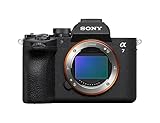
- A partially stacked Exmor RS CMOS image sensor features high-speed circuitry above and below the sensing layer. Sensor readout is approx. 4.5 x*1 faster than the α7 IV, maximum shutter speed is 1/16000 s, *2 blackout-free bursts at up to 30 fps are available with AF/AE tracking, *3 and video can be recorded at 4K 120p.*4 This advanced sensor contributes up to an unprecedented 16 stops of dynamic range*5 with smooth gradations.
- The new BIONZ XR2 processing engine delivers dramatic improvements in image and sound quality, communication, integration, and operation. It also incorporates AI-based Real-time Recognition AF and*6 Real-time Tracking, *7 plus accurate, stable color reproduction. A lightweight RAW format has been included, while user interface, networking, and file management functions have been refined for smooth workflow.
- The new 33.0-megapixel*8 sensor and BIONZ XR2 processing engine work together to deliver up to 16 stops of dynamic range. *9 Lifelike gradations from shadows to highlights enable highly effective HDR processing when needed, and effective noise reduction applied at all sensitivities achieves high resolution throughout the ISO 100-51200 still and movie range (expandable to 50-204800 for stills and 100-102400 for movies).
- An advanced optical stabilization unit, gyro sensors, and algorithm accurately detect and correct image shake. Up to 7.5-step central and 6.5-step peripheral stabilization*14 allows handheld shooting without having to boost sensitivity. The body also works with compatible lenses*15 for even better stabilization. Even shake that is amplified at telephoto focal lengths is effectively suppressed.
- AI processing in the new BIONZ XR2 processing engine improves recognition by approximately 30% over the α7 IV. Human pose estimation technology uses detailed form and pose data to achieve reliable human eye recognition as well as accurate recognition of body and head position, even with challenging subjects. Multiple subjects can also be recognized, making it possible to track the desired subject.
The trade-offs: diversification moves risk rather than erasing it
A second manufacturing base can improve resilience, but it also creates coordination needs. Sony must manage production planning, suppliers, freight, customs, inventory and engineering support across locations. Thailand is not immune to natural disasters or operational interruptions: Sony documented severe flooding at a Thai image-sensor facility in 2011. That event does not establish a camera-factory disruption, but it is a reminder that geographic diversification is not risk elimination.
- Country concentration: Shifting export production away from China reduces one concentration, but overreliance on Thailand could create another.
- Logistics: Serving distant markets from Thailand still requires reliable shipping, customs handling and inventory buffers.
- Supplier and capacity constraints: A factory move depends on suitable component supply, trained workers, equipment and quality processes; Sony has not published figures here that quantify those constraints.
- Political and economic exposure: The change reduces some China-linked exposure but redistributes production risk rather than making the supply chain independent of regional conditions.
What the move means for camera buyers
“Made in Thailand” is not, by itself, evidence that a camera is better or worse. Product quality depends on design, components, tooling, process controls and inspection; the manufacturing country alone does not establish a performance difference. The available evidence does not show that the move automatically lowers camera prices or changes reliability.
Country of manufacture can vary by model, sales market, production batch and date. A camera assembled in Thailand may contain parts made elsewhere; a body’s country-of-origin marking does not mean every component came from that country. Check the marking on the body or box and the documentation for the specific unit rather than inferring origin from the brand or product family. Lens origin can differ from camera-body origin.
For an imported camera, country of manufacture is also separate from warranty region. Check whether the seller is authorized in your market and confirm regional warranty and support terms before buying; an origin label alone does not establish local warranty coverage.
The business takeaway
Sony’s Thailand shift is best understood as a supply-chain hedge: it created an established production base for cameras serving major non-Chinese markets while preserving China-oriented manufacturing. That gives Sony more options when disruption or geopolitical friction affects one location, but public evidence does not show a camera-specific cost saving, consumer price cut or quality change.
Quick Recap
Product prices and availability are accurate as of the date/time indicated and are subject to change. Any price and availability information displayed on Amazon at the time of purchase will apply.




