Developers usually remove the upfront price so more people will try a game. The business then recovers its costs through some mix of advertising, optional in-game purchases, and ongoing content that keeps a game running after launch. That is a business strategy, not a promise that every player will spend or that every free game uses the same revenue model.
What “free” means in game pricing
Three terms cover most free games, and they are often used interchangeably. They describe how a game is priced and where its money comes from. They are explanatory categories rather than legal definitions, and one title can combine more than one of them.
| Model | What you pay to start | How the business earns money | Typical examples |
|---|---|---|---|
| Free-to-play (F2P) | Nothing upfront | Ads, microtransactions, or both, often over a long period | Cosmetics, battle passes, extra lives, characters, game modes |
| Freemium | Nothing for the free entry point | Paid upgrades, items, features, or an option to remove ads | Premium features, ad removal, paid items. The line between free and paid content varies by game. |
| Free-to-start (FTS) | Nothing for a demo or opening section | A one-time purchase that unlocks the full game | A free trial of the opening chapters, followed by a purchase prompt |
The distinction that matters most to a buyer is between F2P and free-to-start. Free-to-start is closer to a sample followed by a normal purchase. F2P relies on continuing transactions and ongoing post-launch support, so the spending can continue for as long as the game is played.
Why developers choose the model
Meta’s developer guidance on free-to-play describes the model as free player access funded by ads and/or microtransactions. Several reasons for choosing it appear repeatedly in developer and regulator material.
Quick wins for a faster PC:
Fix the driver behind crashes, sound loss and screen glitchesFind Drivers →Clear out junk files and repair common Windows errorsFree Scan →Scan for outdated or missing drivers - takes under a minuteDriver Scan →#1 Best Overall

- Compatible with Windows and Android.
- 1000Hz Polling Rate (for 2.4G and wired connection)
- Hall Effect joysticks and Hall triggers. Wear-resistant metal joystick rings.
- Extra R4/L4 bumpers. Custom button mapping without using software. Turbo function.
- Refined bumpers and D-pad. Light but tactile.
A lower barrier to entry
Removing the initial charge lets people try a game they would never have bought blind. Meta describes this as an extremely broad top-of-funnel: the first step in drawing in a large audience, most of whom will never pay.
Revenue from a larger audience
Ads and optional purchases can earn money from a share of players while the rest keep playing for free. At a 2019 workshop, the Federal Trade Commission reported that panelists considered in-game purchases one factor that had helped make more free-to-play games possible and had kept prices from rising. That is the view of the panelists, not a proven universal result.
Long-term engagement
A game that keeps receiving modes, seasonal challenges, and features can stay in players’ routines for years. Meta says live-service updates can support continued engagement and revenue over time.
Rank #2
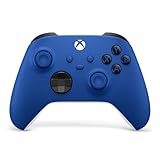
- MODERNIZED DESIGN — Experience the modernized design of the XBOX Wireless Controller with sculpted surfaces and updated geometry that enhances comfort and control during long gaming sessions.
- PRECISION PERFORMANCE — Stay on target with a hybrid D-pad and textured grips on triggers, bumpers, and back case for improved accuracy and handling.
- SHARE BUTTON: Seamlessly capture and share content such as screenshots, recordings, and more with the new Share button.
- VERSATILE CONNECTIVITY — Connect via USB-C for plug-and-play on console and PC, or quickly pair and switch between supported devices with XBOX Wireless and Bluetooth support.
- BUILT-IN AUDIO SUPPORT — Plug in compatible headsets using the 3.5mm audio jack for direct voice chat and immersive in-game sound.
Expression and convenience for paying players
Purchases are often sold as identity, status, or convenience: cosmetics, new characters, game modes, or consumables. Meta presents these as the things players buy. They are examples of what a game may sell, not evidence that every purchase is good value.
Ongoing support costs
Unlike a one-time sale, a live-service F2P game needs continued development and maintenance. Meta names this as a challenge of the model and notes that only a small percentage of the player base typically spends. It does not give a figure, and no reliable industry-wide spending share is established in the sources reviewed here.
How free games make money
Most free games combine several of these methods. Which ones dominate depends on the title.
Rank #3

- With broad game support, the Logitech Gamepad F310 works with old standbys to today's biggest titles, so it's easy to set up and use with your favorite games.
- Profiler software allows the gamepad to be programmed to perform keyboard and mouse commands for games without gamepad support.* * Requires software installation.
- A familiar control layout that doesn't require a learning curve to be able to use, with all the same buttons as on an Xbox 360.
- The unique floating D-pad rests on four switches-instead of a single pivot point-making it responsive to quick changes in direction.
- The six-foot cord lets you lean back and play a comfortable distance from your PC monitor.
Microtransactions
Small payments inside the game buy cosmetics, characters, consumables, or extra lives. Individually they are often low-cost, which is why their total can be hard to track.
Battle passes and seasonal content
Progression tracks and time-limited challenges usually come with recurring content updates. Meta lists battle passes and seasonal challenges as part of the F2P model. Some progression tracks include free rewards alongside paid tiers, and others are paid only.
Advertising
Some games show ads, sometimes alongside purchase prompts. Ads are not present in every F2P title, so check each game rather than assuming.
Rank #4

- Compatible with Wide Range of Consoles: This controller works with consoles such as Switch 2, Switch, Switch Pro, Switch Lite, and Switch OLED. (Please note): The controller's “HOME” button cannot wake up the Switch 2 console and does not have the C button for voice chat functions. However, all other functions are fully usable, including: dual vibration, 6-axis gyroscope, screenshot function, Hall effect buttons, and turbo.
- Cool and Colorful Lighting Switch Controller Wireless: It features 7 colors of RGB lighting (Red - Orange - Yellow - Green - Cyan - Blue - Violet) and 4 light modes (Dazzle - Monochrome - Monochrome Breathe - Monochrome Breathe Cycle).
- Hall Effect Technology for Switch Pro Controller: Experience zero drift and unmatched accuracy with our Hall effect joystick switch. Adaptive trigger feedback with adjustable resistance levels lets you feel every action. With <0.1 ms response time and 256 levels of pressure sensitivity, enjoy instant trigger detection in FPS games. 3+ million clicks on the controller mean a long service life.
- Dual Motor Vibration, Turbo Function and 6 Axis Gyroscope: The switch 2 controller has two vibration motors with three intensity levels—off, low, and high—and provides exceptional haptic feedback to enhance the gaming experience. The controller also offers three adjustable turbo speeds (5-10-15 Hz), which are particularly suitable for first-person shooter games. In addition, it features a 6 axis gyroscope chip for precise motion control. The physical movements of the players are precisely matched to the actions of their game characters.
- Reliable After-Sales Support You Can Count On: Your satisfaction is our top priority. Should you experience any quality concerns with your gaming controller, simply reach out to us via our customer service email, and we’ll respond promptly. We stand behind our product with a hassle-free replacement policy—ensuring you’re back to gaming without worry, no questions asked.
Randomized rewards
Loot boxes give uncertain virtual rewards, and some can be bought with real money or with in-game currency. Because the outcome depends on chance, the odds and the real-money cost are both central consumer issues. The FTC and the Australian Competition and Consumer Commission (ACCC) both raise them.
Player data and targeted advertising
The Consumer Financial Protection Bureau (CFPB), in an issue spotlight on banking in video games and virtual worlds, discusses how game companies may collect behavioral and other player data and use it for targeted advertising or monetization. This is a concern the report raises. It is not something that can be assumed about every free game.
Where the trade-offs show up
A free game can be easy to start and still cost more than its price tag suggests. The following are patterns to watch for, not features of all F2P games.
Recommended Free Tools
Best Value

- Feel physically responsive feedback to your in-game actions through haptic feedback
- Experience varying levels of force and tension at your fingertips with adaptive triggers
- Chat online through the built-in microphone and connect a headset directly through the 3.5mm jack
- Switch voice capture on and off using the dedicated mute button
- Play on more devices using the USB Type-C cable or Bluetooth to connect easily to Windows PC and Mac computers, Android and iOS mobile phones as well as your PlayStation 5
Purchase pressure
The ACCC lists hidden costs, freemium pressure to pay for gameplay or items or to remove ads, nagging prompts, loot boxes, and urgency claims such as limited-time offers as practices to watch for. A game can also make progress slow enough that paying becomes the easiest way forward.
Paying versus non-paying players
Whether a purchase affects competition depends on the game. A cosmetic changes how a character looks. A purchase that gives stronger equipment or faster progression can change outcomes against other players. Meta identifies perceived inequality between paying and non-paying users as a possible disadvantage for players.
Virtual currency and odds
Virtual currencies, such as gems or coins, can separate the price you see from the amount you actually spend. Converting currency back into real money is often harder than it looks. The FTC has raised concern about young players understanding real-money conversion and loot-box odds.
Dependence on continued service
Online play and paid in-game content can depend on the developer continuing to run the game. The ACCC notes that if a developer stops supporting an online game, players may lose access to online play and in-app purchases. Money spent on a game that later shuts down may not be recoverable, so check what a game’s terms say about this before spending heavily.
Do these 3 things before closing this tab:
1Clear out junk files and repair common Windows errors2Scan for outdated or missing drivers - takes under a minute3Repair Windows errors before they cause bigger problemsA case example: the HoYoverse allegations
In January 2025, the FTC published business guidance on a settlement involving Genshin Impact developer HoYoverse. According to that guidance, the FTC alleged that virtual-currency steps obscured the real cost of purchases and that players, including children and teens, were misled about the odds of obtaining certain rewards. These are allegations, and the proposed order was described as needing a federal judge’s approval before taking effect. The guidance does not establish that the allegations are true, and it is not a finding about the wider industry. Check the FTC’s website for the order’s current status, since it may have changed since the guidance was published.
Quick Recap
How to evaluate a specific free game before spending
- Check how much you can play without paying. Look at the store page, the game’s description, and the first session. Note which features, levels, or modes require payment.
- Classify each purchase. Ask whether it is cosmetic, a convenience item, or something that affects progression or competition with other players.
- Look for ads. Note whether ads appear between sessions, during play, or only when you choose to watch them.
- Find the odds for random rewards. If a game has loot boxes or gacha-style draws, look for disclosed odds in the game or its store listing before buying draws.
- Convert the currency to real money. Work out the real-world price of the item you actually want, including any bonus packs that are only offered in certain sizes.
- Check whether the game depends on online service. Consider what you would lose if the servers were shut down.
- Set spending limits. Turn on purchase controls. Parental purchase controls may be available through the game, the console, or the device, so check those settings before a child plays. Many platforms also let you require a password or confirmation for each purchase.
What the sources do and do not establish
- Meta’s developer guidance on F2P models was last updated August 21, 2025. Platform rules and game terms change, so check current policies.
- The FTC’s 2019 material on loot boxes and the 2025 HoYoverse guidance are the regulator statements most relevant here. Their statements about specific practices date from those years.
- The ACCC’s “Online and mobile games” guidance is undated in the version available here, so treat its dates as unconfirmed.
- No reliable figure for how many players of free games pay, or how much they spend, is available from these sources. Be wary of any article that gives one without naming who measured it and how.
“
Product prices and availability are accurate as of the date/time indicated and are subject to change. Any price and availability information displayed on Amazon at the time of purchase will apply.




