Microsoft says it is expanding AI and cloud infrastructure in Europe to meet customer demand, make computing capacity available closer to customers, offer more choices over data location and operational control, and support European competitiveness and digital resilience. The spending is a mix of datacenters, other infrastructure, operations, skills programs, startup support and partner-provided computing capacity—not one construction budget. The company’s stated aims are clear; the announcements alone do not prove that every project has been completed or will deliver the promised economic benefits.
Why Microsoft says it is investing in Europe
Microsoft’s public explanation combines commercial demand with regional access and strategic positioning. These are the company’s stated reasons, not independent measurements of demand or proof of the results.
To add capacity for cloud and AI workloads
Microsoft describes its projects as responses to demand for cloud services, AI and high-performance computing. More computing capacity can support workloads that require substantial processing, including the development and delivery of AI services. The announcements do not provide independent demand figures for each project, or establish how much capacity customers will use.
To offer regional access and data choices
Datacenters and cloud regions can give customers options about where data is stored and processed. Microsoft presents those choices as useful for customers with regional requirements or workloads in regulated sectors. Its description of Microsoft Cloud for Sovereignty refers to technologies and configurations intended to provide more control over data location, encryption and administrative access. Microsoft also describes partner-operated arrangements in France and Germany. “Sovereign” is not, by itself, a single technical or legal guarantee: customers still need to assess the particular service, configuration and applicable requirements.
#1 Best Overall

- Built for Local AI Development: AMD Ryzen AI Halo is designed for local AI development and inference, featuring 128GB unified memory and support for up to 200B parameter models to build and run intensive AI workloads locally.
- 128GB Unified Memory: Features 128GB LPDDR5x unified memory at 8000 MT/s with 256 GB/s memory bandwidth, providing a shared memory pool across the CPU, GPU, and NPU to support larger AI models.
- AMD Ryzen AI Max+ 395 Processor: Features 16 cores, 32 threads, and Zen 5 architecture, paired with AMD Radeon 8060S integrated graphics featuring 40 RDNA 3.5 compute units and an AMD XDNA 2 NPU with up to 50 TOPS.
- Linux AI Developer Platform: Purpose-built for Linux-based AI development with full AMD ROCm software support and preloaded tools, models, and workflows optimized for local AI development.
- Compact, Connected Design: Includes a 2TB M.2 SSD, 10GbE LAN, Wi-Fi 7, Bluetooth 5.4, USB-C connectivity, and HDMI 2.1b.
To compete for Europe’s AI and cloud business
Microsoft links cloud and AI capacity to European competitiveness, business growth and digital resilience. The European Commission’s 2026 Cloud and AI Development Act proposal provides policy context: the Commission says Europe needs more cloud and datacenter capacity alongside AI factories, and identifies research and development, capacity and autonomy as objectives. The proposal is not enacted law, and neither it nor Microsoft’s announcements demonstrates that a particular investment will produce those outcomes.
To combine owned, leased and partner capacity
The strategy is not limited to Microsoft-built datacenters. Microsoft describes a flexible infrastructure model that combines its own facilities with leased space and partner-provided capacity. Its July 2026 agreement with Mistral, for example, is based on Europe-based GPU capacity rather than only a new Microsoft-owned site.
What the announced European investments include
The announcements span different countries, dates, currencies and types of spending. The table summarizes what Microsoft said; the figures should not be read as independently audited expenditures or confirmed project completions.
Rank #2

- EVOLUTION AMD RYZEN AI MAX+ 395 MINI PC - GMKtec EVO-X2 is the next evolution in AI mini PC Ryzen Strix Halo series. Thanks to AMD Simultaneous Multithreading (SMT) the core-count is effectively doubled, to 32 threads. Ryzen AI Max+ 395 has 64 MB of L3 cache and can boost up to 5.1 GHz, depending on the workload. The Ryzen AI Max+ 395 is currently rated as the "most powerful x86 APU" on the market for AI computing.
- AI NPU with XDNA 2 ARCHITECTURE - Powered by 16 “Zen 5” CPU cores, 50+ peak AI TOPS XDNA 2 NPU and a truly massive integrated GPU driven by 40 AMD RDNA 3.5 CUs, the Ryzen AI MAX+ 395 is a transformative upgrade and delivers a significant performance boost over the competition. The Ryzen AI Max+ 395 excels in consumer AI workloads like the llama.cpp-powered application: LM Studio. Shaping up to be the must-have app for client LLM workloads, LM Studio allows users to locally run the latest language model without any technical knowledge required and unleash their creativity and productivity.
- AMD RADEON 8090S iGPU GAMING PC - The AMD Radeon RX 8060S offers all 40 CUs with up to 2.9 GHz graphics clock and uses the new RDNA 3.5 architecture. The powerful iGPU is positioned between an RTX 4060 and 4070 laptop GPU and therefore enables gaming in FHD at maximum details in most demanding games. The 8060S can also utilize the full 64GB pool, which is perfect for running LLMs such as Deepseek 32B, which runs comfortably on this machine.
- EIGHT CHANNEL LPDDR5X - LPDDR5X is a new ground breaking memory small form factor installed on-board. With blazing speeds up to to 8000MT/s, it runs 1.5x faster than the DDR5 SODIMMs; 90% better performance over DDR5 SODIMMs in video conferencing and photo editing; 30% better performance in productivity apps; 4% better performance in digital content workloads.
- QUAD SCREEN 8K DISPLAY SUPPORT - EVO-X2 AI Mini PC support 4-screen 4K/8K output via HDMI 2.1 (8K@60Hz), DisplayPort 1.4 (4K@60Hz), and dual USB 4 40Gbps Transfer speed (supporting PD3.0/DP1.4/DATA). Ideal for gaming, video editing, and multitasking, it provides expansive and crisp multi-display support.
| Location and announcement | What Microsoft said | How to interpret it |
|---|---|---|
| European portfolio, February 2025 | Microsoft said it had announced more than $20 billion in AI and cloud infrastructure investments over the preceding 16 months across 15 European countries. | This is the company’s aggregate announcement figure, not an audited total of money spent. Microsoft described a broader datacenter expansion and supplier chain across multiple EU countries and the UK. |
| Poland, February 2025 | Microsoft said it would invest another $700 million by mid-2026 to expand computing capacity, building on its initial $1 billion investment to launch a Polish cloud region in 2023. | The additional amount and deadline were announced plans. The announcement also covered cybersecurity cooperation with Poland’s National Defense. |
| France, May 2024 | Microsoft announced a €4 billion package covering cloud and AI infrastructure, AI skills and French startup support. Its plans included up to 25,000 GPUs by the end of 2025, expanded datacenter footprint around Paris and Marseille, and planning for a new Grand Est campus. | The package is broader than infrastructure construction. The GPU figure was an announced target; the announcement does not independently verify that the target or construction plans were completed. |
| United Kingdom, 2025–2028 | Microsoft announced $30 billion of investment over four years, including $15 billion in capital expenditure for cloud and AI infrastructure plus ongoing operations. Its project with Nscale was to build a supercomputer with more than 23,000 NVIDIA GPUs. | The $30 billion headline is not $30 billion of datacenter construction: Microsoft identified $15 billion as capital expenditure and included operations in the total. The supercomputer figure is part of the announced project. |
| Switzerland, June 2025 | Microsoft said it would upgrade four datacenters near Zurich and Geneva, citing more than 50,000 existing customers and plans to add AI capability for regulated sectors. | These are company-reported plans and customer numbers. Microsoft said customers could keep data within Swiss borders. |
| Europe-based Mistral capacity, July 2026 | Microsoft and Mistral announced a multibillion-dollar agreement to expand European AI infrastructure using Mistral’s Europe-based GPU capacity, drawing on thousands of NVIDIA Vera Rubin GPUs. | The companies connected the arrangement to AI development and delivery of Microsoft cloud and AI services. The announcement also said Mistral Medium 3.5 and OCR 4 were available in Microsoft Foundry, and Medium 3.5 in Copilot Studio. |
Why the headline amounts are not directly comparable
“Billions” can describe very different commitments. Before comparing announcements, separate the total amount from the type of spending, time period and infrastructure model.
PC Slower Than It Used to Be?
A free scan shows the junk files, broken settings and background clutter dragging Windows down - then fixes them in one click.Free scan · Windows 10 & 11Crashes, No Sound, or Screen Glitches?
Random freezes, missing sound and display glitches usually trace back to one bad driver. Find and replace yours safely.Free scan · under a minute- Package versus construction: France’s €4 billion package included skills and startup support as well as infrastructure. The UK’s $30 billion total included ongoing operations, while Microsoft specified $15 billion of capital expenditure.
- Different currencies and periods: The announcements use both euros and US dollars and cover different years. The figures do not share a common accounting period or currency basis.
- Different infrastructure models: A datacenter upgrade, new campus, cloud region, supercomputer partnership and supplier-provided GPU capacity are not interchangeable projects.
- Announcements versus delivery: A target or commitment is not confirmation that construction finished, equipment arrived or capacity became available. For example, the France GPU target was for the end of 2025, and the Poland announcement set a mid-2026 investment deadline; the cited announcements do not independently establish completion.
- Investment versus impact: Announced spending does not by itself establish customer usage, economic returns, local job creation, or effects on electricity and water systems.
What this could mean for Europe’s energy needs
AI and cloud infrastructure requires facilities and computing equipment, so power is a material part of the expansion story. Microsoft said in 2024 that approximately 100 MW of new renewable energy projects were expected to come online in France by the end of that year. That was a stated expectation, not evidence in the announcement that the projects did come online. The cited announcements do not independently establish the portfolio’s realized electricity or water impact, or how local grids will accommodate each project.
Independent reader supportYour contribution helps us test, update, and keep practical guides available for everyone.What the investment story does—and does not—tell customers
More regional capacity can widen service and deployment choices, but a headline investment does not tell an organization whether a particular workload is available in a particular location, how it is configured, or what contractual and legal protections apply. Customers considering a regulated or location-sensitive workload need to check the specific cloud service, region, data handling, administrative access and applicable terms rather than treating an investment announcement as a blanket sovereignty commitment.
Rank #3
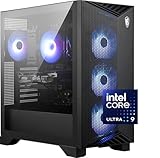
- Intel Core Ultra 9 285 Processor: Newly developed cores deliver ultra-smooth and responsive gameplay. AI accelerators prepare users for the next era of gaming on an AI PC.
- Simplistic Design: Enjoy the latest generation of Windows 11 Home for your everyday needs. *MSI recommends Windows 11 Pro for business use.
- NVIDIA GeForce RTX 5070 Ti GPU
- Cool While Gaming: In conjunction with an RGB CPU Air Cooler, the Aegis RS features four system cooling fans; three in the front and one in the rear to pull in cool air and push heat out of the PC.
- Turn on the Bright Lights: With the built-in RGB lighting, take your gaming experience to the next level by pressing the MSI LED button to cycle through lighting options. Customize lighting even further with MSI Center software.
For personal-finance readers, the same distinction applies when interpreting corporate spending headlines: a large commitment is not the same as money already spent, revenue earned or a return delivered. Microsoft’s announcements explain its strategic rationale and planned capacity, but they do not establish project-by-project profitability or a financial outcome for investors.
The policy backdrop is still developing
The European Commission’s 2026 Cloud and AI Development Act is a proposal, not an enacted requirement. Its stated focus on capacity, research and development, and autonomy helps explain why cloud and AI infrastructure has become a European policy issue. It should not be treated as proof that Microsoft’s individual projects are required by the proposal, nor as evidence that the projects have already achieved the Commission’s broader objectives.
Free tools Windows power users keep installed
One-click scans. No signup required.
Quick Recap
Product prices and availability are accurate as of the date/time indicated and are subject to change. Any price and availability information displayed on Amazon at the time of purchase will apply.




