Recommended Free Tools
Coca-Cola’s July 2025 announcement introduced an additional U.S. cane-sugar product; it did not announce that the company was replacing the sweetener in its existing core U.S. formula. Cane sugar has been more expensive than high-fructose corn syrup (HFCS) in the cited wholesale comparison, but the available figures do not establish Coca-Cola’s product-level costs or show that this one offering will materially hurt U.S. farmers.
What Coca-Cola actually announced
The July 2025 announcement described a cane-sugar U.S. offering intended to expand Coca-Cola’s trademark product range. It should not be read as a wholesale formula change across the company’s existing U.S. products. That distinction matters: an additional product may affect demand at the margin, while replacing HFCS throughout the U.S. portfolio would be a much larger change. S&P Global reported the announcement and the company’s stated context.

Why cane sugar can cost more than HFCS
The clearest cited comparison is historical wholesale pricing, not Coca-Cola’s own ingredient bill. AP reported USDA prices for the prior year of 49.4 cents per pound for HFCS-55, 60.1 cents for refined cane sugar, and 51.7 cents for refined beet sugar. The AP excerpt does not identify the calendar year, so these figures should be treated as a reported prior-year comparison—not current quotes or a forecast of what Coke pays.
| Sweetener | Reported wholesale price | Qualification |
|---|---|---|
| HFCS-55 | 49.4 cents per pound | USDA price for the prior year, as reported by AP; calendar year not stated in the displayed excerpt. |
| Refined cane sugar | 60.1 cents per pound | USDA price for the prior year, as reported by AP; calendar year not stated in the displayed excerpt. |
| Refined beet sugar | 51.7 cents per pound | USDA price for the prior year, as reported by AP; calendar year not stated in the displayed excerpt. |
HFCS is made by wet-milling corn, and USDA identifies HFCS-55 as the type chiefly used in beverages. Its historical expansion reflected sugar being more expensively priced in some uses. Sugar prices, meanwhile, are shaped in the United States by policies including marketing allotments, the sugar loan program, and tariff-rate quotas; global prices are also affected by varied national policies. Those differences help explain why the ingredients do not move through identical cost structures. USDA’s sugar and sweetener background describes these production and policy factors, while AP’s report gives the price comparison.
What’s actually slowing this PC down?
Pick the symptom - the matching free tool is one click away.
#1 Best Overall

- All the Classic Soda Pop Flavors From Your Past! Now Delivered Direct to Your Door!
- BUY FROM THE BEST AND AVOID THE MESS! All our Spot Beverage Classic Soda Products are packaged in our Exclusive SAFE-SHIP Boxes, ensuring all your products arrive to your door fresh, clean, in tact & ready for you to enjoy!
What a cane-sugar formula could mean for Coca-Cola’s costs
A higher historical wholesale price for refined cane sugar makes a higher ingredient cost plausible, all else equal. But the published comparison is not a Coke-specific cost analysis: it does not account for the company’s contracts, quantities, packaging, transport, or the terms of its bottling arrangements. Nor do the cited sources quantify the conversion expense or realized cost of the announced offering. A precise estimate of how much more the product costs to make—or whether consumers will pay more—cannot be derived from these figures.
There can also be operational considerations beyond the sweetener’s price. Ingredient sourcing, handling, and bottling arrangements may need to accommodate a different formulation. The available reporting identifies these kinds of supply and operational issues but does not put a dollar value on Coca-Cola’s actual changes. S&P Global’s coverage addresses the announcement and related supply considerations.
Would the offering hurt U.S. farmers?
HFCS demand links beverage makers to corn processing and, indirectly, to corn growers. Coca-Cola’s 2023 disclosure described HFCS as its principal nutritive sweetener in the United States and identified the U.S. as the largest single-country source of its corn, primarily from the upper Mississippi River basin. The company also discussed drought-related procurement-price risks and supplier and farmer programs. That disclosure establishes relevant sourcing context; it does not measure the effect of the later cane-sugar offering. Coca-Cola’s 2023 CDP response provides the company-reported details.
The widely cited estimate of a $5.1 billion loss in farm revenue and corn prices up to 34 cents per bushel lower comes from the Corn Refiners Association and was reported by S&P Global in 2025. It describes a hypothetical scenario in which HFCS is eliminated from the entire U.S. food and beverage supply. It is not a forecast for Coca-Cola’s additional product, and it should not be used to calculate the effect of that announcement on farmers.
Rank #3

- Glass Bottle
For perspective, USDA says sweeteners accounted for about 6 percent of U.S. corn production in 2019. That is historical, not a current estimate of corn use. USDA also reports that sugar crops averaged less than 1 percent of total U.S. farmer cash receipts across the crop years it cites; that measure concerns sugar-crop receipts and does not capture the broader effects of sweetener procurement on corn growers. These figures describe different slices of agriculture and should not be treated as a direct comparison of the farmer impact of Coke’s product choice. USDA ERS’s background page provides the historical figures and policy context; S&P Global reports the industry-wide elimination estimate.
Independent reader supportYour contribution helps us test, update, and keep practical guides available for everyone.What the available cost studies can—and cannot—tell you
USDA ERS lists historical production-cost analyses for Mexican cane sugar, U.S. cane sugar, U.S. beet sugar, and HFCS, including reports from 2011 and 2014. These can help explain how the commodities are produced, but they are not a current Coca-Cola cost study and cannot establish the economics of its 2025 offering. USDA ERS’s readings page lists those analyses.
Quick Recap
Best Value
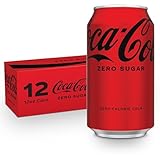
- Coca-Cola Zero Sugar sodas deliver cola taste with zero sugar and zero calories for endless refreshment
- This zero-sugar soda delivers iconic cola flavor in every sip
- Delicious and bold, Coca-Cola Zero Sugar is the refreshing drink that brightens your day
- A carbonated soda pop with a smooth cola taste, best enjoyed chilled for maximum refreshment
- 12 pack, 12 fl oz cans of Coca-Cola Zero Sugar, the refreshingly fizzy no sugar drinks to enjoy alone or paired with your favorite meals
Rank #4
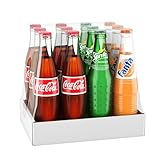
- Twelve (12), 12 fl. oz. glass bottles of Coca-Cola (6), Sprite (3), Fanta Orange (3)
Product prices and availability are accurate as of the date/time indicated and are subject to change. Any price and availability information displayed on Amazon at the time of purchase will apply.




