Windows Errors? Fix Them Before They Spread
Repair common Windows errors and clear accumulated junk for a smoother, more stable PC - no reinstall needed.Free scan · no reinstallOutdated Drivers Are Slowing You Down
One free scan finds every outdated or missing driver and matches the right update for your exact hardware.Free scan · exact hardware matchCloud repatriation is back on CIO agendas, but that does not mean enterprises are abandoning public cloud. The change is from “cloud first” to workload-by-workload placement: choosing the environment that best balances cost, performance, control, resilience and operational demands. Some steady, data-heavy or sensitive workloads may fit private infrastructure better; elastic and rapidly changing services may still fit public cloud best.
What cloud repatriation means—and what it does not
Cloud repatriation is the movement of a workload, service or data from public cloud to an enterprise data center, private cloud, managed private-cloud platform, colocation facility, sovereign cloud or another hosting environment. It can involve one component rather than an entire application.
It is distinct from several related choices:
| Term | Meaning |
|---|---|
| Optimization | Reduce waste or change the architecture while keeping the workload in public cloud. |
| Repatriation | Move a workload or data out of public cloud. |
| Rebalancing | Split components across public, private and on-premises environments. |
| Cloud exit | A broader departure from one or more cloud providers. |
| Sovereign cloud | A cloud environment designed to meet specified jurisdictional, operational or data-control requirements. |
Repatriation does not necessarily mean rebuilding a traditional data center or giving up automation, containers, infrastructure as code, SaaS or managed services. A company might keep an application frontend in public cloud, run its database privately and retain public-cloud storage or burst capacity.
Is repatriation really increasing?
Available surveys point to more active workload-placement decisions, not a wholesale retreat from cloud. The figures measure different things and should not be treated as a single count of workloads moved.
What’s actually slowing this PC down?
Pick the symptom - the matching free tool is one click away.
#1 Best Overall

- Ventilation Fan: Designed to quietly ASUS GT/RT- AC5300 , cool Xboxs, CPU/ GPU, Playtations, Rokus, TVs, receivers, mondems, routers, DVRs, window fans ,network appliances, DIY aquarium cooling and other audio video electronics
- Variable Speed Control: 110V - 220V Fan power supply with speed control function, turn the knob to adjust the speed, 4V - 12V adjustable fan speed,and can turn off the fan . | Input: 100V - 240V 50/60Hz | Output: DC 3-12V 200-2000ma
- DIY Vertical Window Fan: Can both vertical and horizontal, provide efficient cooling and ventilation. Mining rigs rely on the cooling power of fans for optimal operation.Double Metal Protective, the fan is equipped with double metal protective net
- Easy to Install: Draw out air in refrigerators, provide ventilation in greenhouses, prevent amplifier overheating, and vent hot air from living room consoles like PS4. Y cable connects 2 fans, two fans can be 42cm/16.5 in far away from each other
- Dual Ball Bearing: 240mm x 240mm x 25mm / 9.45in(L) x 4.72in(W) x 1in(H) in in total. | Rated Voltage :12V | Rated Current: 0.93A at full speed | Airflow: (82CFM)x4 at 12V | Speed: 2500 RPMx4
- Broadcom’s Private Cloud Outlook 2026, based on a web survey of 1,800 senior IT decision-makers at enterprises with 1,000 or more employees in eight countries, conducted February 11–March 13, 2026, reports that 83% were considering or had already undertaken repatriation; 50% said they had already repatriated some workloads. The study is sponsored by Broadcom, a private-cloud vendor. “Considering” does not mean an approved or completed migration, and the results are survey responses rather than an audited market tally.
- Flexera’s 2026 State of the Cloud Report, which includes 753 respondents—620 from enterprises and 133 from small and midsize businesses—reports a two-percentage-point year-over-year increase in the share of cloud workloads respondents said they had repatriated, and the same increase for cloud-based data. Flexera also describes migration and repatriation happening at the same time.
Broadcom’s survey also reports rising private-cloud priorities and spend intentions, but stated intentions are not realized spending. Together, the surveys support a narrower conclusion: some organizations are moving selected workloads back while others continue to migrate to public cloud.
Gartner’s September 8, 2025 publication, “Should Cloud Repatriation Be a Part of Your I&O Strategy?”, is evidence that repatriation has become a formal infrastructure-strategy question. Its public abstract does not establish that the market is undergoing a mass exodus.
Why the economics are being reconsidered
Steady workloads can lose the elasticity advantage
Public cloud is particularly useful when demand changes quickly and on-demand capacity has business value. A workload that runs continuously at high, predictable utilization may warrant a dedicated-infrastructure comparison. But the cloud invoice cannot fairly be compared with a server purchase alone. The private option also needs to account for capacity headroom, facilities, power, platform licenses, operations, security, refresh cycles and disaster recovery.
Data movement and managed services affect total cost
Large or frequently accessed datasets can bring costs and complexity beyond compute: outbound transfer, cross-region and cross-zone traffic, replication, backups, API requests, and synchronization with other environments. A managed database, analytics service or observability platform may reduce staffing needs while adding a service premium or making the architecture more dependent on provider-specific features.
Rank #2
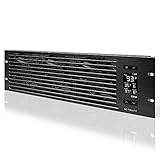
- An intelligent fan system designed for cooling audio video, DJ, server, network, and IT equipment racks.
- Protects rack-mount equipment from overheating, performance issues, and shortened lifespans.
- Programmable thermostat controller with automated speed control, alarm warnings, and backup memory.
- Premium anodized aluminum construction with CNC-machined detailing for a professional appearance.
- Size: 3U Rack Space | Design: Intake | Airflow: 60 to 300 CFM | Noise: 12 to 38 dBA | Bearings: Dual Ball
Those charges are not automatically waste. The decision is whether the services’ operational and business value justify their cost, and whether an alternative can provide comparable capability.
FinOps now spans more than public-cloud bills
The FinOps Foundation’s 2025 report says 63% of its respondents were managing AI spend, up from 31% the prior year. The community survey covered organizations responsible for more than $69 billion in cloud spend. It also describes “Cloud+” FinOps practices extending into SaaS, licensing, private cloud and data centers. That broader view matters: placement decisions should compare total technology cost and business value, not just a cloud bill against a hardware quote.
How AI changes the placement decision
“AI workload” is too broad to determine where infrastructure belongs. Experimentation, training, fine-tuning, batch inference, real-time inference, retrieval, data preparation and monitoring can have different utilization, data and latency requirements.
When dedicated or private infrastructure may fit
- Accelerators are expected to run steadily enough to justify reserved or owned capacity.
- Inference needs consistent latency or proximity to users, equipment or operational systems.
- Training data or model-serving systems require a tightly controlled access boundary.
- Large data pipelines would otherwise incur substantial transfer or storage costs.
- Public-cloud capacity, quotas or price variability are material constraints.
When public cloud may fit
- Demand is bursty, experimental or difficult to forecast.
- A team needs specialized accelerators without committing capital to them.
- Global reach, rapid scaling or managed model services are important.
- The workload is too small to keep dedicated capacity productively occupied.
- The organization lacks the skills to operate accelerator clusters reliably.
Broadcom’s 2026 sponsored survey reports that 43% of organizations considering or undertaking repatriation identified AI training, large-language-model or inference workloads. It also reports that public-cloud use for production inference among its survey respondents fell from 56% in its 2025 survey to 41% in 2026, while private-cloud use rose from 55% to 56%. These are respondent-reported survey results, not measurements of the entire market or proof that private infrastructure is cheaper for AI generally.
Quick wins for a faster PC:
Clear out junk files and repair common Windows errorsFree Scan →Scan for outdated or missing drivers - takes under a minuteDriver Scan →Sovereignty, regulation and resilience are part of placement
Data residency is only one part of sovereignty. A workload review may need to establish where primary data, backups, logs and telemetry reside; who can administer the environment; where encryption keys are controlled; which support personnel or subcontractors can access systems; and where failover sends data. Requirements depend on the organization, workload and applicable law.
Rank #3

- [Adjustable] Adjustable temperature control helps ensure optimal performance for your rackmount such as network, server, music, and AV cabinets
- [Quiet and powerful] Equipped with three powerful 4” (120mm) noise control ball bearing fans capable of pumping 225 CFM of air, preventing overheating of expensive equipment
- [Optimal Airflow] This three fan cooling system will provide excellent cooling with its high-performance fans, which keep the hot air stream away from your setup with its top exhaust cool air system.
- [Compact Design] Device is standardized to mount to any 19" server rack or cabinet while taking only a single unit (1U) of space and has a wide variety of applications.
- [Programmable] Equipped with a programmable thermostat sensor controller for better temperature monitoring that will trigger fans based on your parameter configuration.
In Europe, GDPR and the Digital Operational Resilience Act (DORA) are among the regulatory considerations. DORA began applying to relevant financial entities in January 2025; its applicability depends on the entity and scope. Public-cloud providers offer sovereignty-related configurations, including AWS European Sovereign Cloud, Microsoft EU Data Boundary and Google Cloud sovereignty controls. Their service scope and access model differ, so the label alone does not establish that a workload meets a particular obligation. A sovereign public cloud or dedicated hosting environment may meet the need without a full return to company-owned facilities.
Resilience presents a similar two-sided question. Public cloud can offer multiple regions and availability zones, but an organization may still depend heavily on one provider’s identity system, control plane, proprietary services, networking or contractual terms. Repatriation can reduce some concentration risks, but a single, under-resourced private site can be less resilient than a well-designed public-cloud deployment.
Alternatives include multi-region architecture, cross-provider backups, active/passive recovery, colocation, sovereign cloud and tested portability. The important test is whether the organization can operate and recover during a provider, region, network or geopolitical disruption—not whether it has merely named a second environment.
Which workloads should CIOs evaluate first?
Start with workload behavior and business requirements rather than an industry-wide claim that a particular sector should repatriate.
Rank #4

- Adjustable temperature control helps ensure optimal performance for rackmount such as network, server, music, and AV cabinets
- Noise controlled fans makes the cooling system useful for a quiet office or business space
- Compact design mounts to any 19" inch cabinet and takes up only 1 unit of space
- Simple and easy to use LCD display allows user to control temperature
- Air pumped through to the top exhaust system of the fan
| More promising to evaluate | Often a weaker repatriation candidate |
|---|---|
| High, steady utilization; predictable demand | Highly elastic, seasonal or unpredictable demand |
| Data-intensive workloads with substantial transfer or replication | Short-lived projects or early product experiments |
| Latency-sensitive services close to users, devices or operations | Global services that need rapid geographic expansion |
| Business-critical or compliance-sensitive systems with specific control needs | Workloads that rely on several valuable managed services |
| AI inference with sustained utilization or costly data movement | Low-utilization accelerator workloads or bursty experimentation |
| Applications whose unit economics remain poor after cloud optimization | Applications for which private operations skills or recovery capacity are missing |
Broadcom’s survey identifies high-security or compliance workloads, data-intensive workloads, business-critical applications and AI among categories respondents were repatriating or considering. That is useful as a shortlist, not as a prescription for any particular organization.
Independent reader supportYour contribution helps us test, update, and keep practical guides available for everyone.How to make a defensible 12–36-month placement decision
1. Compare environments against separate criteria
For each workload, assess public cloud, private cloud, colocation and hybrid options. Score technical fit, economic fit and strategic risk separately so that a critical compliance or recovery gap cannot be obscured by an attractive blended score. Include utilization, elasticity, transfer volume, latency, security, sovereignty, recovery objectives, skills, migration complexity, managed-service dependencies, hardware availability, deployment time, refresh obligations and the value of cloud-native capabilities.
2. Build a complete total-cost model
Model three to five years where the workload’s life and investment horizon justify it, and use a 12–36-month review to reassess placement as demand, pricing and requirements change. For public cloud, include compute, storage, databases and other managed services, network transfer, backup, observability, security, support, software licenses, commitments, idle capacity, FinOps labor and required architecture changes.
Recommended Free Tools
For private infrastructure, include servers or accelerators, storage and networking, software and platform licenses, colocation or facilities, power and cooling, maintenance, spare capacity, refresh, backup and disaster recovery, security, monitoring, staffing, training, on-call coverage, procurement lead time, migration and decommissioning. Compare unit economics—such as cost per transaction, query, inference or terabyte processed—where they better reflect business value than monthly totals.
Best Value
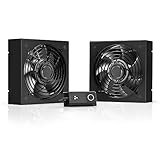
- A quiet fan kit designed for standard 19” racks, to be mounted on the roof or to replace existing fans.
- Features a speed controller utilizing PWM which can control the fan's speed without generating noise.
- Compatible with CLOUDPLATE series rack fans and can be linked to share the same programming.
- Heavy-Duty steel construction with spiral fan guards, mounting hardware, and power adapter.
- Size: Standard 120mm Rack Fans | Fans: 2 | Airflow 200 CFM | Noise: 26 dBA | Bearings: Dual Ball
3. Test assumptions, not just the base case
Model low-growth, expected-growth and high-growth demand. Test a 20–30% utilization change, higher egress, hardware delays, accelerator price or availability shifts, increased staffing costs, a second-region recovery requirement and a six-to-twelve-month migration delay. These are scenario tests, not forecasts. Verify utilization assumptions against peak headroom, maintenance, nonproduction needs, failure tolerance, disaster recovery and growth rather than assuming hardware will stay full.
4. Separate optimization from relocation
Before moving a workload solely because its bill is high, check rightsizing, autoscaling, idle-resource cleanup, storage tiers, commitment discounts, database consolidation, transfer patterns, observability cardinality and contract terms. If costs or risks remain unacceptable after feasible changes, compare the cost and risk of relocation with the cost of continuing to optimize in place.
5. Include the operating model and exit path
Private infrastructure shifts responsibility; it does not remove it. Confirm ownership for patching, platform upgrades, identity, security monitoring, incident response, capacity planning, backup and recovery. Record dependencies, data-export methods, licensing constraints and decommissioning steps. A container or Kubernetes deployment may improve portability, but it does not automatically carry over managed databases, storage behavior, networking, identity, observability, APIs or operating expertise.
The Tool Desk
Outbyte PC Repair FREEClear out junk files and repair common Windows errorsFree Scan →Outbyte Driver Updater FREEScan for outdated or missing drivers - takes under a minuteDriver Scan →Alternatives when moving the workload is not the answer
- Optimize in place: often the first step for workloads that benefit from elasticity or managed services.
- Renegotiate or redesign the commercial model: review commitments, enterprise agreements, private offers, regions, storage and network architecture.
- Use a second public cloud: may support resilience or bargaining objectives, but adds operational complexity and is not automatically cheaper.
- Choose sovereign or dedicated public cloud: may address jurisdiction or locality needs while retaining public-cloud capabilities, subject to the offering’s scope.
- Use colocation or managed private cloud: can provide dedicated placement without building and operating a complete corporate data center.
- Keep a hybrid portfolio: assign different components to different environments under explicit placement rules.
The result should be a workload portfolio, not a universal rule for or against public cloud. Revisit placements when demand, unit economics, regulation, provider terms or operating capability changes.
Quick Recap
Product prices and availability are accurate as of the date/time indicated and are subject to change. Any price and availability information displayed on Amazon at the time of purchase will apply.




