Apple bought Beats in 2014 not just for headphones or a small streaming service, but for a bundle of assets that would have taken time to build: a premium audio brand, music-industry relationships, streaming experience, and people who understood how music reaches consumers. The deal was a strategic shortcut into subscription music and personal audio. Its value is clearest when judged across those capabilities—not by whether Beats Music survived as a separate app.
What Apple acquired—and what it paid
Apple announced the acquisition on May 28, 2014, and completed it on July 31. The transaction covered both Beats Electronics and Beats Music. Apple announced consideration of approximately $3 billion: about $2.6 billion in purchase price and roughly $400 million that would vest over time. Apple’s announcement described the hardware, audio software, and streaming service, and said founders Jimmy Iovine and Dr. Dre would join Apple. Apple’s filing records the closing date and accounting treatment (SEC filing).
- Beats Electronics: Headphones, earphones, speakers, audio software, product expertise, brand recognition, and distribution relationships.
- Beats Music: A subscription streaming service launched earlier in 2014, with a product, music programming, and experience negotiating the practicalities of an on-demand service.
- People and relationships: Iovine, Dr. Dre, and employees with experience in music licensing, artist relations, product development, and marketing.
Apple was buying a portfolio of businesses and capabilities, not simply a subscriber base or a set of audio designs. Beats says it was founded by Dre and Iovine in 2006 and acquired by Apple in July 2014 (Beats company history).
Why the timing mattered: music was shifting from ownership to access
Apple’s iTunes model had made buying and downloading individual songs convenient. By 2014, however, on-demand streaming was changing the consumer proposition: instead of purchasing a collection track by track, listeners could pay for access to a large catalog. Contemporary coverage identified that shift and competition from services such as Spotify as central context for Apple’s move (TIME’s 2014 report).
What’s actually slowing this PC down?
Pick the symptom - the matching free tool is one click away.
#1 Best Overall

- Custom acoustic architecture and updated drivers for powerful Beats sound.
- Personalized Spatial Audio with dynamic head tracking.
- Ultralight ergonomic design for all-day comfort. Flex-grip headband and ergonomically angled, adjustable ear cups for a stable fit.
- UltraPlush ear cushions are designed for comfort and durability.
- Up to 50 hours of battery life.
Apple already had a major music storefront, devices, billing, and distribution. What it did not yet have was a mature subscription service of its own. Beats Music offered a working product and a team with firsthand experience in streaming and discovery. The strategic need was less “buy a huge streaming audience” than “move faster into a model that could become central to music listening.” That is an interpretation of the deal’s logic, not a claim that Apple publicly identified one sole motive.
Why buy instead of build?
Apple could have built a streaming service internally. It had the customer base, payment systems, software teams, and iTunes infrastructure. Buying Beats therefore involved paying a premium for assets Apple might eventually have replicated. The trade-off was speed and access: a functioning service, music-industry relationships, and people already working through the commercial and editorial challenges of subscription listening.
| Buy Beats | Build internally |
|---|---|
| Faster entry, an existing subscription product, and access to music relationships and service expertise. | More direct control over design and integration, while avoiding the purchase price and some integration challenges. |
| Could bring cultural credibility and a recognizable audio brand that Apple could not create by engineering alone. | Would rely on Apple’s own brand and teams to develop those capabilities, potentially taking longer and carrying its own execution risk. |
| Required Apple to integrate a young service and preserve useful parts of Beats’ identity and expertise. | Would avoid acquiring an existing organization, but would not automatically supply its accumulated knowledge or relationships. |
The purchase can be understood as buying organizational shortcuts. Apple had infrastructure and reach; Beats brought capabilities and market access that complemented them. The European Commission’s merger decision describes the parties’ businesses and competitive overlaps, but it does not establish Apple’s internal valuation of those assets (European Commission decision).
Rank #2

- Custom acoustic architecture and updated drivers for powerful Beats sound.
- Personalized Spatial Audio with dynamic head tracking.
- Ultralight ergonomic design for all-day comfort. Flex-grip headband and ergonomically angled, adjustable ear cups for a stable fit.
- UltraPlush ear cushions are designed for comfort and durability.
- Up to 50 hours of battery life.
Why Jimmy Iovine mattered beyond his fame
Iovine’s potential value was not reducible to celebrity. He had worked across records, production, labels, artists, and commercial negotiations. For Apple, that experience could help translate between a technology company’s product priorities and an entertainment business shaped by licensing, relationships, and the interests of artists and rights holders.
Recommended Free Tools
Those connections and negotiating skills are plausible strategic assets, especially for a company entering subscription music. But Apple did not publish a separate dollar valuation for Iovine’s contribution, so his importance is best treated as a reasoned explanation of the deal rather than a measured line item. Contemporary reporting emphasized both Iovine and Dre as significant parts of the acquisition (The New York Times, May 2014).
Why headphones were a strategic asset, not just hardware
Beats had made headphones conspicuous, premium-positioned products associated with music, fashion, sport, and celebrity culture. That mattered to Apple because audio hardware could produce sales directly while also strengthening customers’ connection to music and devices. Apple said Beats products would be offered more broadly through its distribution network, alongside its acquisition of the company and service (Apple’s announcement).
Rank #3
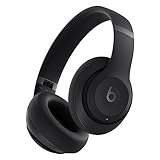
- INCREDIBLE SOUND: Custom acoustic platform delivers rich, balanced audio for music, calls and everyday listening.
- LOSSLESS AUDIO SUPPORT: USB-C lossless audio and sound profiles optimize music quality across devices and environments. Additional option to use the 3.5 mm cable for a standard analog experience.
- ACTIVE NOISE CANCELLING (ANC): block distractions at work, on flights or during your daily commute. Or use Transparency mode to let the sounds of your environment mix in with your music.
- SEAMLESS WIRELESS CONNECTIVITY: One-touch pairing with Apple & Android for easy switching across devices.
- SPATIAL AUDIO IMMERSION: Personalized dynamic head tracking, 360-degree sound for movies, music and immersive everyday listening.
Some audiophile critics questioned Beats products’ sound quality or pricing. That criticism is not the whole business case: a consumer product can succeed through design, brand, distribution, and emotional appeal as well as technical performance. Apple was buying a brand with existing cultural meaning, not merely trying to acquire a particular acoustic specification.
Dr. Dre mattered, but the deal was not just a celebrity bet
Dre brought music credibility, product association, and marketing reach. Yet treating him as the entire rationale misses how the brand was built: product design, distribution, endorsements, advertising, and timing reinforced one another. The founders joining Apple was prominent in the company’s announcement, but the acquisition also included a service, employees, and operating knowledge. Celebrity could draw attention; it could not by itself supply the capabilities Apple needed to expand in music.
Quick wins for a faster PC:
Repair Windows errors before they cause bigger problemsFix Now →Scan for outdated or missing drivers - takes under a minuteDriver Scan →From Beats Music to Apple Music
Beats Music did not remain Apple’s long-term standalone consumer service. Apple Music launched in 2015 as a broader Apple product combining on-demand listening with human curation, radio, and artist-facing programming. Apple’s launch announcement presented it as an all-in-one music offering, not simply a new name for Beats Music (Apple Music launch announcement).
Rank #4

- BUILT FOR ATHLETES WHO DON'T STOP: After 1,500 hours of testing across athletes of every ear shape and intensity level, Powerbeats Pro 2 delivers a secure-fit earhook that stays locked on — whether you're in a sprint, a heavy lift, or a full class.
- TUNE OUT THE GYM. TUNE INTO YOUR WORKOUT: Active Noise Cancelling (ANC) designed specifically for training environments — filters the noise floor so you can lock on, with Transparency mode to let in what matters when it matters.
- YOUR HEART RATE, RIGHT FROM YOUR EARS: Built-in sensors pulse 100+ times per second for real-time heart rate tracking without a chest strap or watch. Train smarter and keep your hands free. IPX4 rated for sweat and water resistance.
- 45 HOURS. ENOUGH FOR THE WHOLE WEEK: Powered by the Apple H2 chip, Powerbeats Pro 2 delivers up to 45 hours of total listening time with the charging case — the first wireless Qi-charging case from Beats. Running low? Fast Fuel means a 5-minute charge gives you 1.5 hours of playback.
- WORKS SEAMLESSLY WITH APPLE AND ANDROID: One-touch pairing, automatic device switching, and hands-free Siri on Apple. Full feature access including Heart Rate Monitoring, customizable controls, and battery widgets on Android via the Beats app for Android.
The sensible conclusion is that Beats’ service experience, people, programming ideas, and music relationships contributed to Apple’s next strategy. Apple combined those inputs with its own platform, distribution, and resources. The transition is evidence of integration and strategic reuse; it does not prove that every feature of Apple Music came from Beats or that the acquisition alone determined the service’s later performance.
Was approximately $3 billion a rational price?
There is no single objective answer because much of the deal’s proposed value lay in assets that are difficult to price separately: brand, relationships, talent, and time saved. The announced consideration was approximately $3 billion, not the earlier widely reported $3.2 billion figure. Apple’s announcement provides the transaction amount and broad structure; contemporary reporting also discussed the price and the founders’ roles (TIME’s 2014 coverage).
Why the price could make sense
- Apple acquired two businesses plus people and capabilities, rather than paying only for a young streaming service.
- Buying could accelerate entry into subscription music and provide industry access that would be difficult to reproduce quickly.
- Apple could use its retail and online distribution to extend the reach of Beats hardware.
- The company had the financial capacity to make a large strategic investment.
Why it was still a risk
- Beats Music was young and did not have the scale of the largest established streaming services.
- Music subscriptions carry substantial royalty obligations, limiting the simplicity of the margin story.
- Apple already had considerable music infrastructure and could have chosen to build.
- Integrating Beats into Apple risked weakening the distinct culture and brand that made the acquisition attractive.
- The price depended on Apple executing a broader strategy after closing, not merely keeping the original businesses unchanged.
How to judge the deal now
Beats Music’s disappearance as a separate Apple service is not, by itself, proof that the acquisition failed; nor does the continued existence of Beats products prove every part of the original thesis succeeded. Apple still sells Beats products in its U.S. store, including headphones, earbuds, and speakers (current U.S. Beats lineup). That shows Apple retained the brand as a distinct product family. It does not establish the acquisition’s standalone financial return.
Free tools Windows power users keep installed
One-click scans. No signup required.
Best Value

- Custom acoustic architecture and updated drivers for powerful Beats sound.
- Personalized Spatial Audio with dynamic head tracking.
- Ultralight ergonomic design for all-day comfort. Flex-grip headband and ergonomically angled, adjustable ear cups for a stable fit.
- UltraPlush ear cushions are designed for comfort and durability.
- Up to 50 hours of battery life.
Apple does not report Beats as an isolated business, so the deal’s return cannot be cleanly separated from Apple Music, audio hardware, accessories, and broader services. A more useful assessment asks whether the assets endured in some form: whether Apple established a subscription-music offering, preserved a differentiated audio brand, and used Beats’ expertise within its larger platform. The evidence supports a capability-and-brand acquisition that helped Apple move into the future of music and personal audio, while leaving the exact financial payoff undisclosed.
That is why the headline price should not be judged against headphone revenue alone or against whether Beats Music remained independent. Apple paid for speed, people, cultural relevance, service knowledge, and a brand—and the ultimate value depends on what Apple built with them.
Quick Recap
Product prices and availability are accurate as of the date/time indicated and are subject to change. Any price and availability information displayed on Amazon at the time of purchase will apply.




