There is no single payer. A data center may pay for the facilities built specifically to connect it, while broader transmission upgrades can be recovered through regulated rates if regulators approve that treatment. Local distribution costs and retail bills are generally governed by state or local authorities. The project’s tariff, contract, location, and protections if the expected demand does not arrive determine who ultimately bears each cost.
Which grid costs are we talking about?
A power line described as being “for” a data center is not necessarily dedicated to that facility. It may be a customer-specific connection, a regional transmission project serving many users, or local distribution work. Those categories can overlap, and they may have different payers and approval processes.
| Cost category | Typical treatment | Who sets or approves the treatment? |
|---|---|---|
| Dedicated connection facilities | Costs for facilities serving one customer may be assigned directly to that customer under the applicable utility rules or agreement. | The utility’s rules, tariff, and contract, subject to the relevant regulator. |
| Shared transmission upgrades | Regional network costs may be allocated among customers and recovered through regulated transmission rates; the allocation depends on the applicable planning and tariff rules. | For interstate transmission, FERC-regulated processes and regional methods apply. |
| Local distribution and retail charges | A data center’s rate class or special tariff may determine how local investment and retail charges are recovered. Other customers’ bills may be affected, but that is not automatic. | Generally state or local authorities. |
These are broad categories, not a formula for every project. The utility filing and regulator’s order are more useful than a project announcement for identifying the facilities, the approved cost allocation, and the customers assigned the expense.
How can a data center’s costs reach other customers’ bills?
If an upgrade is treated as a shared network investment, its costs may be recovered through regulated transmission rates rather than charged entirely to the data center. Whether that recovery is approved, and which customers pay under the regional allocation method, depends on the project and applicable rules. For local distribution and retail charges, state or local decisions and the data center’s rate terms matter.
#1 Best Overall

- 8 POWERFUL NEMA C13 OUTLETS: Rack mount PDU provides up to 16A/120V (1920VA) or 20A/240V (4800 VA) for servers & equipment; 1U rack space for easy accessibility; 10ft/3m C19 to NEMA5-20p cord incl.
- 3600 JOULE CIRCUT PROTECTION: Built-in resettable circuit breaker that acts as a surge protector or shields from unintentional overloads in data center; Safety listed for performance and peace of mind
- CONFIGURABLE EIA-310D COMPLIANT DESIGN: Installable in standard 19in. 2 or 4 post rack using incl. cage nuts/screws; C20 power cord allows any local plug config for 120 or 240 V single phase in/out
- SPECS: 1U 19in. Horizontal PDU | 8x IEC C13 Pwr out | C20 Pwr input (1 phase) | Load cap. @ 120V/16A (1920VA) |Load cap. @240V/20A (4800VA) | 3600 J surge sup. w/breaker |EIA-310D |Mounting H.W. incl.
That means a federal transmission decision alone does not answer whether a household’s retail bill will rise. FERC regulates interstate transmission and wholesale power matters; distribution and retail electric rates are typically handled by state or local authorities. A bill impact also depends on how the utility recovers approved costs, not simply on whether a line serves an area with data centers.
Nor does building an upgrade during a period of data-center growth prove that data centers alone caused it. Reliability requirements, planned generation retirements, and other load growth can also drive system investment.
Rank #2

- Versatile and Space-Saving: This 1U Rack mount PDU features a compact design that allows for efficient use of space in standard 19-inch racks. 16 rear-facing plug outlets and three front-facing outlets provide ample connectivity for your devices
- Efficient USB Power: Featuring four USB ports, it enables simultaneous power supply to your favorite devices, ensuring convenience and productivity
- Built-in Circuit Breaker: The PDU is equipped with a built-in 12-Amp circuit breaker that protects against circuit overloads. This ensures reliable performance and helps prevent damage to your equipment
- Heavy-Duty Construction: The power distribution unit is designed with heavy-duty components and a sturdy metal housing for durability and long-lasting use
- Convenient Mounting: The PDU features mounting ears on the back panel for easy installation in a standard 19-inch rack
What happens if the planned data center does not use the power?
Stranded-cost risk arises when a utility builds capacity for a forecast customer and that customer later delays, downsizes, or cancels. If the expected load does not materialize, regulators must determine who bears any unrecovered cost under the applicable tariff and rate rules.
Large-load tariffs and contracts can address that risk through customer commitments. Relevant terms may include security requirements, minimum obligations, ramp schedules, and exit terms. Their details differ by utility, region, and regulatory case; the existence of a planned data center does not by itself establish what protections apply.
Recommended Free Tools
Rank #3
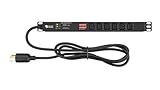
- Reliable Power Distribution - Backed by a 3 year warranty, this power strip surge protector can deliver 120, 125, or 240V AC at 15 or 30A, optimized for networking, telecom, crypto mining, or security.
- Designed For Your Safety - This rack mount PDU has a built-in surge protector to help minimize overloads. It also has volt and amp meters in it with a clear display for convenient monitoring of loads.
- Power Up Your Server - This PDU power strip can fit in 1U of EIA-standard 19” server racks with two or four posts. It’s switchless to avoid accidental shutdowns that can lead to costly downtimes.
- Connect Multiple Loads - Our rack mount power strips have 6 or 8 C13 rear outlets, a NEMA L6-30P input plug, and a 6’ or 10’ heavy-duty cable for connecting to a utility outlet, generator, or UPS.
- Easy Installation - This power strip has a reversible 19" metal case so it can face either the front or rear of your rack. Ears and fittings are included in the rack mount for faster PDU installation.
The U.S. Department of Energy identifies mitigation of stranded-asset risk as a consideration in large-load rate design. For a specific project, the practical questions are whether the customer has a minimum payment or demand commitment, what security it must provide, and what happens if it exits before the utility recovers its investment.
What do recent cases and rules show?
PJM’s reliability projects
In a 2024 market report, FERC described approximately $5 billion in proposed PJM reliability projects approved in December 2023. The projects were presented in the context of PJM preparing for 7,500 MW of planned data-center demand in Virginia and Maryland and more than 11 GW of planned generation retirements. Those figures describe planning context; they do not establish that data centers alone caused the projects or were assigned all of their costs.
Rank #4
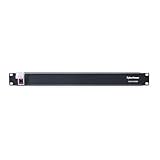
- 100-125V/15A Basic Power Distribution Unit (PDU) delivers AC power to data centers, network closets, and other electrically demanding applications
- OUTPUT: 10 Rear NEMA 5-15R Outlets; INPUT: NEMA 5-15P straight plug with 15 ft power cord
- VERSATILE RACKMOUNT OPTIONS: Allows for the PDU to be installed vertically or horizontally
- ADDITIONAL FEATURES: Network-grade plugs and outlets, durable metal housing, and cord retention tray
- 3-YEAR LIMITED WARRANTY (This unit does not provide surge suppression)
Minnesota’s state-specific approach
The Minnesota Public Utilities Commission says data centers must pay for necessary electrical system upgrades and buildouts serving them. Minnesota also has other requirements for qualifying large-scale facilities. This describes Minnesota’s requirements and guidance, not a national rule; the applicable law and commission record must be checked for a project in another state.
PJM co-location and broader federal reform
In December 2025, FERC directed PJM to revise tariff rules for co-located loads and address fair transmission cost responsibility, including an interim service framework while infrastructure is built. A commissioner’s concurrence explains the order but is not itself the complete operative tariff, so the revised rules and their status matter when assessing a particular arrangement.
Crashes, No Sound, or Screen Glitches?
Random freezes, missing sound and display glitches usually trace back to one bad driver. Find and replace yours safely.Free scan · under a minutePC Slower Than It Used to Be?
A free scan shows the junk files, broken settings and background clutter dragging Windows down - then fixes them in one click.Free scan · Windows 10 & 11Best Value

- 【Heavy-Duty 9 Outlet PDU】 Designed for standard 19" server racks, this 1U rack mount power strip provides 9 US standard outlets (15A/125V/1875W), ideal for data centers, network cabinets, and audio-visual setups needing reliable power distribution.
- 【Individual Switch Control】 Each outlet is equipped with its own illuminated on/off switch, so you can manage connected devices individually instead of unplugging them. The switch modules are fully independent: if one outlet trips, only that outlet shuts down while all remaining outlets keep running normally — no whole-strip shutdown, no interruption to your other equipment. A tripped switch also tells you exactly which device has reached its load limit, giving you faster, more sensitive overload protection and a clear visual cue for troubleshooting.
- 【Overload Protection & Power Monitoring】 Equipped with overload protection and a digital power monitoring display, this PDU safeguards your equipment from overloads while providing real-time voltage and current data for secure operation. The switch will automatically trip if the current exceeds 15A. Simply having wires or cables touch the switch will not cause it to trip — the switch only responds to an overload condition.
- 【Durable Metal Construction】 Built with a sturdy metal housing and a 14AWG heavy-duty 6.5FT power cord, ensuring durability and stable performance even in high-demand environments like professional server rooms and industrial settings.
- 【Versatile Installation】 Ideal for studios, labs, and data centers, ensuring peak performance and reliability. Designed for 1U rackmount for hassle-free cable management. Supports horizontal installation in server racks with included mounting brackets.
In 2026, FERC directed all six jurisdictional regional grid operators to justify or reform tariffs for data centers and other large energy users. Those proceedings remain in progress; this is an active reform direction, not a completed national policy assigning every grid upgrade to data centers or other ratepayers.
Independent reader supportYour contribution helps us test, update, and keep practical guides available for everyone.How to check who pays for a specific project
- Identify the utility and jurisdiction. Determine which utility serves the site and which state commission regulates its distribution or retail rates. For interstate transmission issues, identify the relevant regional transmission process and FERC docket.
- Find the exact facilities. Look for the project description in utility filings and regulatory orders. Separate a dedicated customer connection from shared transmission or local distribution upgrades.
- Read the cost-allocation terms. Check the applicable tariff, contract, and commission approval for upfront customer payments, recurring charges, security, minimum obligations, ramp schedules, and exit terms.
- Check the decision’s status. Distinguish a utility proposal or forecast from a regulator-approved plan and from costs actually assigned to customers. For an active proceeding, note what remains unresolved.
- Trace the fallback if demand falls short. Find out who bears unrecovered costs if the data center delays, reduces its load, or cancels. That answer is central to whether projected investment could shift to other customers.
Because tariffs, state requirements, and regulatory proceedings can change, use the current utility filing and commission order for the project rather than relying on an older summary or a general statement about data centers.
Quick Recap
Product prices and availability are accurate as of the date/time indicated and are subject to change. Any price and availability information displayed on Amazon at the time of purchase will apply.




