Quick wins for a faster PC:
Fix the driver behind crashes, sound loss and screen glitchesFind Drivers →Clear out junk files and repair common Windows errorsFree Scan →Scan for outdated or missing drivers - takes under a minuteDriver Scan →T-Mobile US acquired Sprint on April 1, 2020, and Sprint is no longer an independent U.S. wireless carrier. T-Mobile controls the former Sprint business; Deutsche Telekom is T-Mobile’s controlling stockholder. But not everything associated with Sprint went to T-Mobile: DISH Network acquired Sprint’s divested prepaid business, including Boost Mobile and Sprint-branded prepaid customers.
The ownership answer at a glance
| What “Sprint” means | Who controls or owns it now |
|---|---|
| Former Sprint Corporation and the business retained in the merger | T-Mobile US, Inc. Sprint and its subsidiaries became wholly owned consolidated subsidiaries of T-Mobile when the merger closed on April 1, 2020. T-Mobile’s SEC filing describes the transaction. |
| T-Mobile US | Deutsche Telekom AG is its controlling stockholder, not its sole owner. T-Mobile’s 2026 proxy reports approximately 54.5% voting control as of March 31, 2026. T-Mobile’s 2026 proxy statement |
| Sprint’s divested prepaid wireless business, including Boost Mobile | DISH Network acquired the prepaid business in a transaction completed July 1, 2020. The Department of Justice confirmed the closing. |
| Sprint as a separate national consumer carrier | It is no longer marketed as the surviving national carrier brand; T-Mobile became the customer-facing brand. |
In short: Deutsche Telekom controls T-Mobile, T-Mobile owns the former Sprint business that it retained, and DISH owns the divested Sprint prepaid business. Those are different links in the chain, not competing answers.
How Sprint moved from SoftBank to T-Mobile
Before the merger, Sprint Corporation was controlled by Japan-based SoftBank Group. The Justice Department’s merger-case announcement identified SoftBank’s control of Sprint and described the remedy that allowed the transaction to proceed. DOJ final-judgment announcement
- SoftBank controlled Sprint before the merger. SoftBank was the key owner of the U.S. operating company in the years before T-Mobile acquired it.
- T-Mobile and Sprint agreed to combine in 2018. The proposed transaction faced federal regulatory review and state antitrust challenges.
- Regulatory approval came with conditions. The federal settlement required the divestiture of Sprint’s prepaid business and included a separate remedy concerning Sprint’s 800 MHz spectrum.
- The merger closed April 1, 2020. Sprint and its subsidiaries became wholly owned consolidated subsidiaries of T-Mobile under the merger structure.
- The customer and network transition followed over time. The closing date was not the date every account, store, device, plan, or network component changed.
SoftBank did not remain the owner of Sprint as an independent company after closing. It received an equity interest in the combined T-Mobile under the merger arrangements, which is different from continuing to own Sprint. Immediately after the merger, Deutsche Telekom held approximately 43.6% and SoftBank approximately 24.7% of T-Mobile’s outstanding common stock, according to T-Mobile’s 2020 filing. Those are historical merger-era figures, not current ownership percentages. T-Mobile’s 2020 filing
Recommended Free Tools
#1 Best Overall
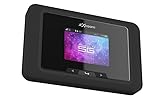
- Superior 5G Connectivity: Experience lightning-fast internet speeds with this Franklin Wireless JEXtream RG2100 mobile hotspot router, compatible with T-Mobile's 5G network coverage
- Wi-Fi 6 Technology: Enjoy seamless connectivity for multiple devices with the reliable Wi-Fi 6 technology, providing blazing fast speeds simply and securely
- Advanced Security Features: Keep your connection secure with WPS, ensuring easy and secure setup for remote work, outdoor meetings, and travel
- High-Performance Connectivity: Benefit from 1 Gbps LAN port bandwidth, dual-band frequency, and 4 ports to connect all your devices with ease
- Sleek and Portable Design: The compact and stylish black design makes it perfect for travel, with a touch control method for added convenience
For the current control figure, T-Mobile’s 2026 proxy reports Deutsche Telekom’s approximately 54.5% voting control as of March 31, 2026. That makes Deutsche Telekom the controlling stockholder, but does not mean it owns all of T-Mobile; T-Mobile remains a publicly traded company with other shareholders. T-Mobile’s 2026 proxy statement
What T-Mobile acquired—and what was separated
The former Sprint business retained by T-Mobile
The transaction was a corporate merger, not merely a purchase of the Sprint name. Sprint’s corporate subsidiaries and the business retained in the combination became part of T-Mobile’s structure. The merger involved customer operations, contracts, network assets and spectrum, as well as corporate obligations. Sprint ceased to operate as an independent national carrier, while integration of customers and infrastructure took place in stages.
Rank #2
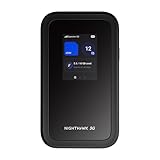
- WIFI 7 SPEEDS UP TO 3.6 GBPS, ANYWHERE YOU GO: Powered by a 5G or 4G cellular connection, M7 delivers fast, reliable WiFi 7 performance. Real-world speeds depend on carrier network, signal strength, location, and connected devices
- GLOBAL COVERAGE WITH NETGEAR eSIM IN 140+ COUNTRIES: Purchase 5G or 4G data plans from the Nighthawk app with no contracts. Requires free NETGEAR account. Coverage and speeds vary by country and carrier
- US CARRIER SUPPORT: The M7 is certified for AT&T and T-Mobile, unlocked for flexible use across compatible carriers. For US local carrier eSIM or SIM activation and data plan details, contact your carrier directly
- POWERFUL BUILT IN SECURITY - includes firewall protection, WPA3 encryption, and automatic firmware updates help protect your data when using public WiFi
- CONNECT UP TO 32 DEVICES AND FREE UP YOUR PHONE: A dedicated hotspot outperforms phone tethering. Connect laptops, tablets, and smart devices simultaneously while keeping your phone free
The prepaid business acquired by DISH
As a condition of the merger settlement, DISH acquired Sprint’s prepaid wireless business, including Boost Mobile, Virgin Mobile and Sprint-branded prepaid operations. The DOJ announced that the transaction closed July 1, 2020. DISH’s annual filing describes its acquisition of the prepaid business and entry into retail wireless with more than 9 million customers under the Boost brand. DISH’s 2020 annual filing
The transaction was described as approximately $1.4 billion for the prepaid business. A separate part of the DOJ remedy provided for DISH to acquire Sprint’s nationwide 800 MHz spectrum licenses for approximately $3.6 billion. These were distinct arrangements, not one transfer of every Sprint asset to DISH. T-Mobile’s announcement of the DOJ settlement
Rank #3

- Blazing 5G & Wi-Fi 6 Speeds: Transform next-gen 5G into ultra-fast Wi-Fi. This 5G hotspot device delivers multi-gigabit 5G performance with seamless 4G LTE fallback, plus Wi-Fi 6 connectivity for faster throughput. It's the powerhouse mobile router for high-speed streaming, gaming, and work anywhere.
- All-Day Battery Life & Power Bank: Built-in 5050mAh battery provides all-day usage. With Qualcomm Quick Charge, recharge quickly and stay connected. The MiFi M2000 even doubles as a portable power bank, charging your phone or tablet on the go.
- Connects Up to 30 Devices: Equipped with advanced Wi-Fi 6 tech, it can link as many as 30 smartphones, tablets or laptops simultaneously. Perfect for homes, offices or family outings, this mobile hotspot device keeps multiple users online with reliable performance.
- Unlocked & Prepaid-Ready: This hotspot device is GSM-unlocked (original carrier T-Mobile), so you can use any carrier’s SIM card. Ideal for mobile hotspot prepaid plans or roaming, simply insert a local SIM for mobile data in travel - no carrier lock-in required.
- Ultra-Portable Design: Weighing just 7.4 oz (5.9 x 2.2 x 0.7 inches), the sleek MiFi M2000 is a compact portable internet hotspot you can carry anywhere. Slip it into your pocket or car console to create instant Wi-Fi on the road or at your hotel.
DISH’s ownership of the divested Boost business should not be confused with network operation. T-Mobile provided certain network services and infrastructure support to DISH under transitional and network-access arrangements described in T-Mobile’s filings. A company can own a wireless business while purchasing access to another company’s network; network access by itself does not make T-Mobile the owner of Boost. T-Mobile’s 2020 annual filing
Independent reader supportYour contribution helps us test, update, and keep practical guides available for everyone.What happened to Sprint’s network and spectrum?
“Sprint’s network” can refer to several different things: the former CDMA network, radio equipment and sites, spectrum licenses, or the services customers received. They did not all have the same destination or end on the same day.
Rank #4

- 5G High-Speed Internet Gateway Designed for fast and stable connectivity using T-Mobile 5G network
- Model G5AR-1 Official T-Mobile gateway device
- Dual-Band WiFi Support Provides reliable wireless connections for multiple devices simultaneously
- Wi-Fi 7
- Wide Device Compatibility Works with PCs, smart TVs, smartphones, gaming consoles, and smart home devices
- Network integration and retirement occurred in stages. T-Mobile integrated or repurposed parts of the former Sprint network and migrated customers toward T-Mobile systems and service. The merger closing date should not be treated as a single shutdown date for all legacy infrastructure.
- The 800 MHz spectrum was a specific regulatory carve-out. The DOJ remedy addressed Sprint’s nationwide 800 MHz licenses for acquisition by DISH; it did not transfer all Sprint spectrum to DISH.
- Other Sprint-associated spectrum and assets were handled separately. The merger included assets retained and integrated by T-Mobile, so it is inaccurate to say either that all Sprint spectrum went to DISH or that every asset went to T-Mobile.
- Temporary network access did not change ownership. Transitional services enabled continuity while DISH developed its wireless business; service provider, spectrum owner and retail brand are distinct roles.
What happened to Sprint customers?
Former Sprint postpaid customers generally became T-Mobile customers through a phased transition of accounts, billing and network service. Depending on the account and device, a customer might have needed a replacement SIM or a compatible phone. Former Sprint prepaid customers could instead have been part of the business transferred to DISH. A Sprint logo on an old phone, bill or plan does not establish which company currently serves the account.
To identify the current provider for a particular line, check:
What’s actually slowing this PC down?
Pick the symptom - the matching free tool is one click away.
- The company named on the current bill or payment receipt.
- The account website or app used to manage service.
- The carrier profile associated with the SIM or eSIM.
- The current account type: T-Mobile postpaid, Boost prepaid, or another service.
- The device’s current network connection and compatibility with the provider’s service.
For former Sprint shareholders, the merger changed Sprint’s corporate ownership structure and provided consideration under the merger agreement; Sprint is no longer a standalone public-company investment under its old identity. T-Mobile’s merger-information page provides transaction details for former shareholders. T-Mobile merger information
Does Sprint still exist?
| Meaning of “Sprint” | Answer |
|---|---|
| Independent U.S. national carrier | No. The merger closed in 2020, and T-Mobile became the surviving national carrier brand. |
| Former corporation and legal entities | Sprint and its subsidiaries became wholly owned consolidated subsidiaries of T-Mobile at closing. That does not establish that every legal entity, contract, license or obligation ended on that date. |
| Consumer brand | Sprint is effectively a retired legacy brand for nationwide wireless service; T-Mobile is the surviving consumer brand. |
| Prepaid operation | The divested Sprint prepaid business, including Boost, went to DISH rather than remaining with T-Mobile. |
Why the answer can seem contradictory
“Sprint” can mean the former corporation, the national carrier, a customer’s old account, a brand, a network, spectrum, or the prepaid operation. Those meanings split across different companies after the merger. Someone with a former Sprint postpaid account may now deal with T-Mobile, while a former Sprint prepaid customer may have ended up in the DISH-owned Boost business. Likewise, T-Mobile may provide network access to DISH without owning the Boost business.
Quick Recap
Product prices and availability are accurate as of the date/time indicated and are subject to change. Any price and availability information displayed on Amazon at the time of purchase will apply.




