The Tool Desk
Outbyte PC Repair FREEClear out junk files and repair common Windows errorsFree Scan →Outbyte Driver Updater FREEFix the driver behind crashes, sound loss and screen glitchesFind Drivers →Farmland is not disappearing everywhere at once. Between 2001 and 2024, global cropland expanded while permanent meadows and pastures shrank by more, so total agricultural land fell. Cropland growth was concentrated in Africa, South America and South-eastern Asia, and the Food and Agriculture Organization of the United Nations (FAO) attributes about 72% of forest land loss over the same period to cropland expansion.
These are net global figures. They describe how each land category changed in total, not where every hectare that left agriculture ended up.
FAO’s land-statistics release of 17 July 2026 states: “FAOSTAT data reveal a shift in global land use patterns, with cropland expanding while total agricultural land declines.”
Three land categories moving in different directions
“Farmland” is a loose term. FAO’s series separates cropland from permanent meadows and pastures, and the two together make up agricultural land. Each category moved differently between 2001 and 2024.
Do these 3 things before closing this tab:
1Fix the driver behind crashes, sound loss and screen glitches2Clear out junk files and repair common Windows errors3Scan for outdated or missing drivers - takes under a minute#1 Best Overall
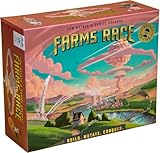
- BIGGER, BETTER, AND NUKIER THAN EVER – Everything you love about Farms Race, now expanded for 2–5 players with the new Rabbit species. Adds fresh asymmetric mutations, extra chaos, and the same darkly strategic humor that made the original a blast.
- INCLUDES STANDARD EDITION CONTENT — AND MORE – Comes with everything from the Standard Edition plus an expansion’s worth of new material, upgraded components, and bonus goodies to supercharge your game.
- 8 NEW MUTATIONS, 6 NEW SPIES – More broken abilities, more authoritarian antics, and 3,400 % more ways to regret your alliances. Every game feels different, devious, and delightfully unpredictable.
- PREMIUM MAYHEM – Features a metal Current Player Token, wooden tokens, extra dice, a canvas bag, and two tuck boxes for sleeved cards (sleeves sold separately). All packed in a taller box with space for player mats (sold separately).
- THE DEFINITIVE EDITION – The original game plus a full expansion’s worth of new content and upgraded components in one box. If you think peace is overrated, this is your version of utopia.
| Land category (FAO series) | Change, 2001 to 2024 | Direction in FAO’s summary |
|---|---|---|
| Cropland | +92 million hectares | Expanded |
| Permanent meadows and pastures | −238 million hectares | Declined |
| Total agricultural land | Amount not stated in FAO’s summary | Declined |
In 2024, FAO recorded 4.6 billion hectares of agricultural land globally, more than one-third of the world’s total land area. Adding the two category changes above gives a net decline of about 146 million hectares. That sum is our arithmetic from FAO’s two figures, not a number FAO reports for total agricultural land.
Where cropland is growing and shrinking
FAO’s 2001 to 2024 comparison names Africa as the main driver of cropland expansion, followed by South America and South-eastern Asia. FAO’s regional breakdown for 2001 to 2023 gives the following changes in cropland area.
Rank #2

- IMMERSIVE GAMEPLAY: Dive into the charming village of Arle and experience 18th-century rural life.
- FAMILY TASKS: Manage peat dehydrating, farmland plowing, and animal breeding with your family.
- CRAFTSMANSHIP: Enhance your skills and construct vital buildings in this strategic board game.
- SEASONAL CHALLENGES: Adapt to changing seasons as you assign tasks and plan your moves.
- TRADE AND UPGRADE: Utilize vehicles for resource exchange and improve your goods.
| Region | Cropland change, 2001 to 2023 |
|---|---|
| Africa | +75 million hectares |
| South America | +25 million hectares |
| South-eastern Asia | +20 million hectares |
| Northern America, Eastern Europe and Southern Europe | Reductions; amounts not stated in FAO’s release |
The regional figures come from a different release period than the 2001 to 2024 global totals. Keep them in their own frame and do not add them to the global numbers as if they were one dataset.
Where land that leaves agriculture goes
“Where is farmland going?” can mean three different things, and the evidence answers two of them more clearly than the third.
Rank #3

- Award Winner: Spiel des Jahres Game of the Year 2022. American Tabletop Award for Best Strategy Game (2022), Board Game Geek's Light Game of the Year (2021)
- Family-Friendly Fun: exciting strategy board game with family mode for new gamers.
- Easy to Teach and Learn: elegantly simple gameplay, teach in 2 minutes, plays in 15-30 minutes, for 1-4 players.
- Spatial Puzzle Game: build nature corridors, attract wildlife.
- Multiple Ways of Scoring Points : balance building your habitat corrdiors with placing your wildlife in the best possible configurations.
- Where cropland is expanding: mainly Africa, South America and South-eastern Asia, according to FAO’s 2001 to 2024 comparison.
- Which agricultural category is shrinking: permanent meadows and pastures, which lost 238 million hectares in the same period.
- What replaces land converted out of agriculture: FAO’s summary does not enumerate these destinations. Urban development, infrastructure, restoration and abandonment are all possible, but the summary does not measure how much land went to each.
Pasture decline is therefore not proof that the land became cropland or built-up land. The forest link is also narrower than it sounds. The 72% figure is FAO’s attribution within its land-statistics account. It is not a parcel-by-parcel record of what happened to each cleared forest.
Indicators that describe productive capacity
Acreage alone does not show how productive farmland is or how much pressure it is under. FAO’s recent releases add the following indicators.
Rank #4
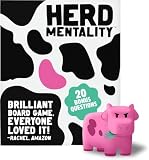
- Udderly hilarious board game for family and friends game nights. Fun for big groups of 4-20+ players
- Easy to learn, quick to play and endlessly repayable board game. This version comes with 20 extra questions
- Think the same to win the game. Flip over a question and guess what your family and friends are thinking
- If your answer is in the majority, you win cows. If you’re the odd one out, you’re stuck with the pink cow of doom
- One of the best board games for families, adults, teens and kids aged 10+. Perfect icebreaker game. Easy and fun for everyone! Perfect as a Thanksgiving or Christmas game
| Indicator | Figure | Source and year |
|---|---|---|
| Land equipped for irrigation | 351 million hectares, about 22% of cropland | FAO, 2026 (2024 data) |
| Land under organic agriculture | 121 million hectares | FAO, 2026 (2024 data) |
| Cropland per person | About 20% lower than in 2001 | FAO, 2026 |
| Land productivity | Nearly 68% higher than in 2001 | FAO, 2026 |
| Human-induced land degradation occurring on agricultural land | More than 60% | FAO, 2025 |
| Freshwater withdrawals attributed to agriculture | More than 70% | FAO, 2025 |
FAO links rising productivity and irrigation to intensification, and it also reports continuing pressure on forests and land resources. These indicators are descriptions of the same period, not measurements of cause and effect. FAO’s 2025 land and water assessment treats degradation, water scarcity and climate change as pressures on agricultural production and ecosystems. Its State of Food and Agriculture 2025 report examines land degradation across landholdings of different sizes, including effects on producers and vulnerable groups, and it discusses regulatory and incentive-based policy options.
Independent reader supportYour contribution helps us test, update, and keep practical guides available for everyone.The United States: a separate accounting system
The U.S. Department of Agriculture’s Economic Research Service (USDA ERS) tracks land under its own major-land-use categories. They do not map directly onto FAO’s series, so U.S. claims should be checked against USDA’s tables. These categories are:
Quick wins for a faster PC:
Clear out junk files and repair common Windows errorsFree Scan →Scan for outdated or missing drivers - takes under a minuteDriver Scan →Best Value
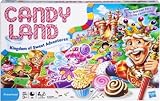
- CLASSIC BEGINNER GAME: Do you remember playing Candy Land when you were a kid. Introduce new generations to this sweet kids' board game
- RACE TO THE CASTLE: Players encounter all kinds of "delicious" surprises as they move their cute gingerbread man pawn around the path in a race to the castle
- NO READING REQUIRED TO PLAY: For kids ages 3 and up, Candy Land can be a great game for kids who haven't learned how to read yet
- GREAT GAME FOR LITTLE ONES: The Candy Land board game features colored cards, sweet destinations, and fun illustrations that kids love
- Cropland
- Grassland pasture and range
- Forest-use land
- Special-use land
- Urban land
- Miscellaneous land
USDA’s tables run through 2022. USDA ERS points to several mechanisms in U.S. farmland use: urban pressure, the relative profitability of cropland, demand for corn for ethanol, crop insurance and other farm programs, drought risk, and conservation funding. These are U.S.-specific drivers and should not be applied to other countries without separate evidence. The USDA data-product page alone does not establish how much farmland moved into each category in a given year, so check the relevant tables before quoting a state or annual figure.
Outlook: projections, not observations
The OECD-FAO Agricultural Outlook 2024–2033 projects that cropland will decrease in North America and Western Europe through 2033. The report attributes this to strict environmental sustainability rules that limit increases in crop production and the loss of natural habitats. This is a forecast under the report’s assumptions. It is not a measured change, and its regional definitions and charts should be used for any detailed projection.
What these numbers can and cannot tell a money reader
The sources above measure area, productivity and environmental pressure. They do not report farmland prices, cash rents or investment returns, so none of these figures alone supports a view on what farmland is worth or will earn. A few practical checks help when a headline links land use to money:
Quick Recap
- Separate area from value. A hectare that is no longer farmed may change price for reasons unrelated to the global cropland count.
- Match the category to the claim. “Cropland” is one FAO category, not a synonym for all farmland.
- Match the geography to the source. Use FAO for global context and USDA ERS for U.S. land categories.
- Treat degradation and water figures as context. They describe pressure on productive capacity. They are not a measure of land value.
- Use a dedicated land-value series for prices. Land-use statistics are not built to track sale prices or rents.
Product prices and availability are accurate as of the date/time indicated and are subject to change. Any price and availability information displayed on Amazon at the time of purchase will apply.




